
Fluffy mashed potatoes get a deeper, warmer kind of comfort when they’re finished with brown butter, toasted garlic, and crisp sage. The potatoes stay light and buttery, but the topping gives every spoonful a nutty edge that plain mash just can’t match. It’s the kind of side dish that disappears fast because it tastes familiar and a little more special at the same time.
The key is building the flavor in two places. Yukon golds mash into a naturally creamy base, so you don’t need to beat them into submission or risk turning them gluey. Then the butter browns in a light skillet until it smells like hazelnuts, and the garlic goes in at the end so it softens and turns sweet instead of bitter. Warming the cream and milk before they hit the potatoes keeps the texture smooth and prevents the mash from seizing up.
Below, I’ll walk through the part that matters most: how to brown the butter without burning it, how to keep the potatoes silky, and how to make the topping look as good as it tastes.
The brown butter soaked right into the potatoes and the garlic stayed sweet instead of harsh. I loved that the sage got crisp in the last minute — it made the whole dish taste like it had been cooked by someone who knows what they’re doing.
Love the nutty brown butter and crispy sage on these mashed potatoes? Save this recipe for Thanksgiving, Sunday dinners, or any meal that needs a richer side.
The Reason Brown Butter Stays on Top Instead of Going Into the Pot
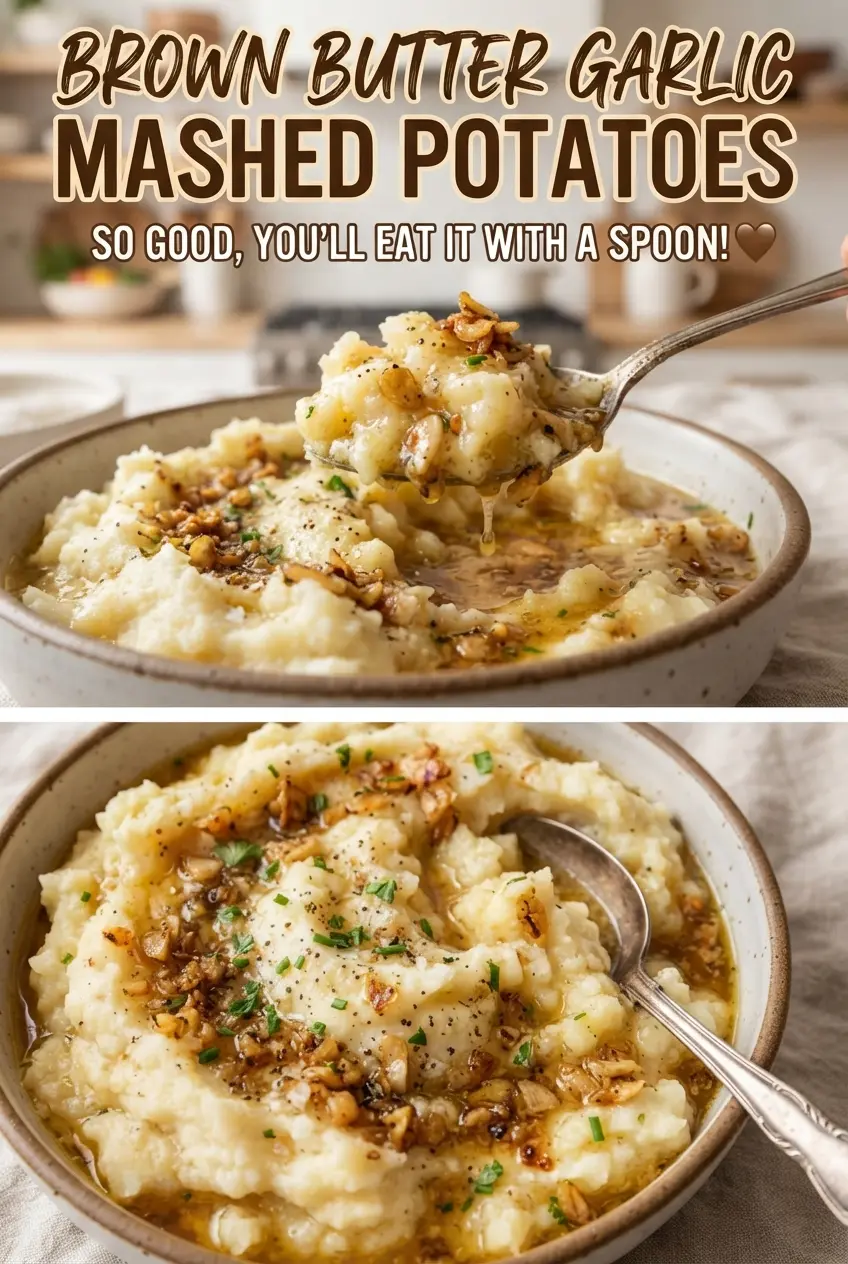
The mistake most mashed potato recipes make is adding all the browned butter straight into the bowl and calling it done. That works for richness, but it flattens the flavor. Here, most of the butter goes into the potatoes for depth, then the last bit is poured over the top with the garlic and sage so you get a hit of aroma and texture right when the spoon breaks through the surface.
There’s another small but important detail here: the butter browns in a light-colored skillet. Dark pans hide the color change, and by the time you notice the smell, the milk solids can already be too far gone. You want amber butter, not burned butter. When it turns foamy, then speckled, then smells toasted and nutty, you’re there.
What Each Ingredient Is Actually Doing in These Mashed Potatoes

- Yukon gold potatoes — These are the right potatoes for a creamy mash because they’re naturally buttery and have enough starch to thicken without turning pasty. Russets work if that’s what you have, but the texture will be drier and a little fluffier. Peel them for the smoothest result, and cut them into even chunks so they cook at the same pace.
- Unsalted butter — Browned butter is the backbone of the dish, so use a butter you trust. Unsalted gives you control over the seasoning, and the milk solids are what bring the nutty flavor. If you only have salted butter, it’ll still work, but hold back some of the added salt until the end.
- Garlic and sage — Thin-sliced garlic turns sweet and mellow in the hot butter, while sage crisps quickly and perfumes the whole topping. Garlic powder won’t give you the same result, and dried sage won’t crisp in the same way. The last minute in the pan matters because both can go from golden to bitter fast.
- Heavy cream and whole milk — Warm them before mixing them in so the potatoes stay smooth and absorb them evenly. The cream gives body, while the milk keeps the mash from feeling heavy. You can use all cream for a richer version or all milk for a lighter one, but the balance here is what keeps the texture just right.
How to Keep the Potatoes Silky and the Butter Nutty at the Same Time
Boiling Until Tender, Not Waterlogged
Start the potatoes in well-salted water and cook them until a fork slides in with no resistance, usually 15 to 18 minutes. If they’re undercooked, you’ll end up with little lumps no amount of mashing can hide. If they sit in the hot water after they’re done, they’ll soak up extra moisture and lose flavor, so drain them right away.
Letting Steam Escape Before Mashing
Once the potatoes are drained, give them a minute in the hot pot or in the colander so the steam can run off. That step keeps the mash from turning loose and watery. Mash them while they’re still hot, because cold potatoes never break down as smoothly and they need more effort, which can make the texture heavy.
Finishing With Warm Dairy and Brown Butter
Stir in the warm cream, milk, and about two thirds of the brown butter, then season from there. Cold dairy cools the potatoes too quickly and can make the mixture tighten up instead of turning silky. If the mash looks stiff after everything goes in, add a splash more warm milk and stir gently until it relaxes.
Pouring the Topper Over at the End
Keep the rest of the brown butter, garlic, and crisp sage for the finish. Spoon it over right before serving so the sage stays crisp and the garlic still has its toasted edges. That last pour gives you the glossy, restaurant-style look without any extra work.
Three Ways to Make This Mash Work at Your Table
Dairy-Free Version With Olive Oil and Oat Milk
Swap the butter for a good olive oil and use unsweetened oat milk instead of the cream and milk. You won’t get the same browned dairy flavor, but you’ll still get a rich, smooth mash with plenty of body. The garlic and sage become even more important here because they carry more of the savory note.
Extra-Rich Holiday Version
Replace the milk with more warm cream and finish with an extra tablespoon of browned butter if you want a deeper, more decadent result. The texture will be denser and silkier, which works well when these potatoes need to stand up next to gravy or roast meat. Don’t go overboard, though, or they start to feel heavy instead of creamy.
Make-Ahead and Reheat Without Losing the Texture
These potatoes hold well for a few days, and they reheat best with a little extra liquid stirred in. The potatoes will thicken as they chill, so plan on adding a splash of warm milk before serving. Reheat them low and slow on the stove or in the oven; high heat dries out the edges before the center loosens up.
Storage and Reheating
- Refrigerator: Store in an airtight container for up to 4 days. They’ll firm up as they chill, which is normal.
- Freezer: They freeze reasonably well for up to 1 month, but the texture gets a little softer after thawing. Freeze in a flat layer or smaller portions for quicker reheating.
- Reheating: Warm gently over low heat with a splash of milk or cream, stirring often. The common mistake is blasting them in the microwave or on high heat, which can make the edges dry while the center stays cold.
Answers to the Questions Worth Asking
Brown Butter Garlic Mashed Potatoes
Ingredients
Equipment
Method
- Bring a Dutch oven of salted water to a boil, then add the peeled, cubed Yukon gold potatoes. Boil for 15-18 minutes until the potatoes are tender.
- Melt the unsalted butter in a light skillet over medium heat. Cook for 4-5 minutes until browned and nutty.
- Add the thinly sliced garlic and the fresh sage leaves to the skillet. Cook for 1 minute, just until fragrant and beginning to crisp, and keep the butter warm.
- Drain the potatoes and return them to the Dutch oven. Mash until smooth.
- Pour in the warmed heavy cream and warmed whole milk. Stir until creamy and smooth, then add two thirds of the brown butter.
- Season the mashed potatoes with salt and black pepper. Stir well so the seasoning is evenly distributed.
- Spoon the remaining brown butter, garlic, and crispy sage over the top of the mashed potatoes. Serve immediately while the topping is warm and fragrant.


