Deep, glossy, and built for a spoon, slow cooker Guinness beef stew turns tough chuck into meat that falls apart in thick, dark gravy. The potatoes soak up the stout-braised broth, the carrots hold their shape without turning mushy, and every bowl lands with that rich, savory finish that makes you want bread on the side.
The key here is layering flavor before the slow cooker ever comes into play. Browning the flour-dusted beef gives the stew a deeper base and helps the final broth thicken naturally. Cooking the tomato paste for a minute or two before adding the Guinness takes away any raw edge, and scraping up the browned bits from the pan gives you the best part of the sauce. The brown sugar doesn’t make it sweet; it rounds out the bitterness of the stout and keeps the stew tasting full and balanced.
Below, you’ll find the small details that keep the beef tender, the broth rich, and the vegetables intact. There’s also a storage note for making this ahead, because this is one of those stews that tastes even better the next day.
The beef came out meltingly tender and the broth was thick enough to coat a spoon without any extra fuss. I loved how the Guinness mellowed after cooking all day — not bitter at all, just deep and savory.
Save this slow cooker Guinness beef stew for the kind of night when you want deep stout flavor, tender beef, and almost no hands-on work.
The Reason the Beef Stays Tender Instead of Turning Dry
The difference between stew meat that melts and stew meat that turns stringy comes down to heat and timing. Chuck has enough fat and connective tissue to become silky over a long cook, but it needs low, steady heat and enough liquid to keep the fibers from tightening too fast. That’s why this goes on LOW for the full eight hours instead of rushing it on high.
Browning the beef first adds depth, but it also sets a surface that holds up better in the slow cooker. The flour on the meat does double duty: it helps the sear and gives the stew a little body as it cooks. If you skip the browning step, the stew will still work, but the broth won’t taste as rich and the texture will be thinner.
- Beef chuck — This is the cut that gives you tender, spoonable stew meat. Leaner cuts dry out before the vegetables are done.
- Flour — A light coating helps the beef brown and thickens the stew without needing a separate slurry.
- Guinness stout — The stout adds roasted, malty depth. Use the full bottle; it cooks down and mellows, so it won’t taste like beer in the finished pot.
- Brown sugar — Just enough to soften the bitterness and round out the broth. Don’t leave it out unless you want a sharper finish.
What Each Ingredient Is Doing in the Pot
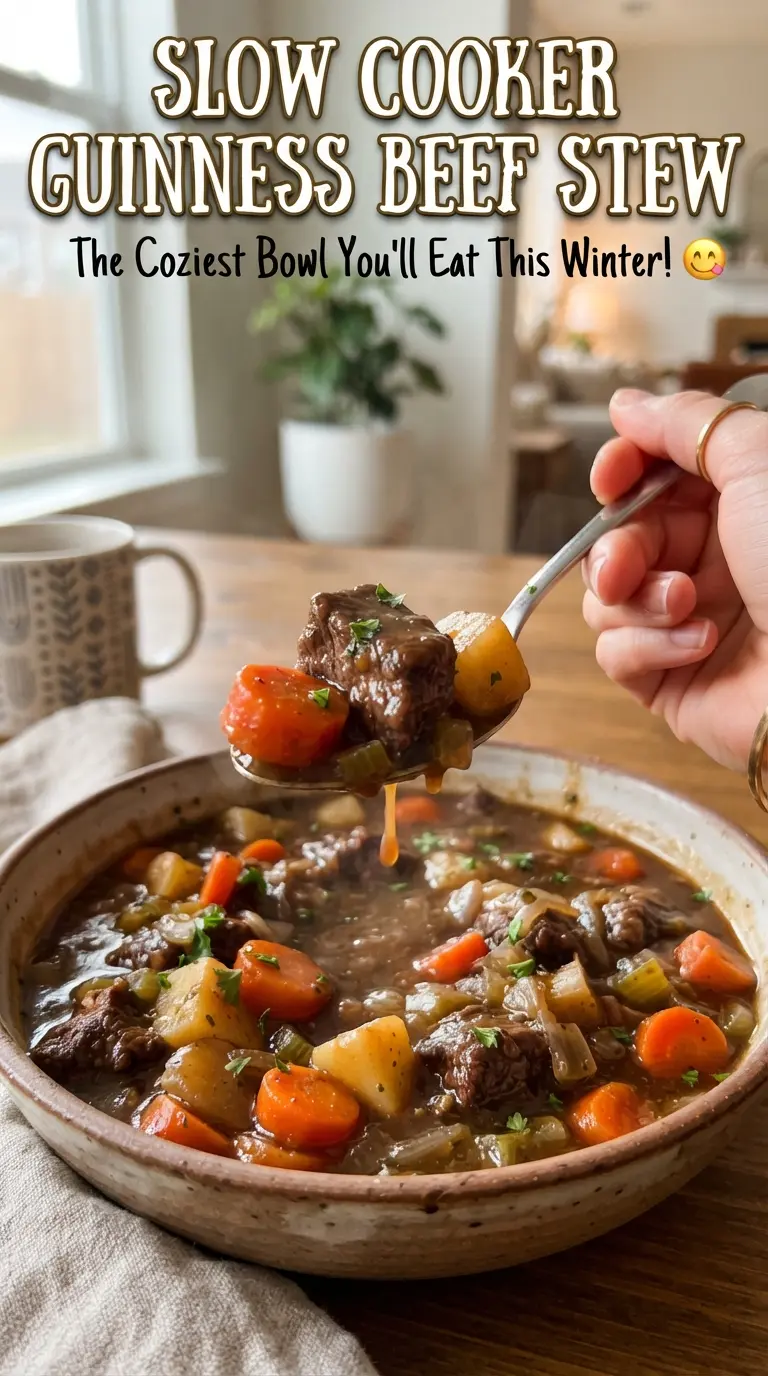
- Beef broth — This stretches the Guinness and keeps the stew savory instead of one-note. A good low-sodium broth gives you room to season at the end.
- Tomato paste — It brings body and a subtle acidity that keeps the gravy from tasting flat. Cooking it briefly in the pan deepens the flavor and removes the raw edge.
- Worcestershire sauce — This adds the kind of background savoriness you can’t get from salt alone. It disappears into the stew in the best way.
- Carrots and baby potatoes — Thick carrot slices and halved potatoes hold their shape during the long cook. Cut them too small and they’ll fade into the broth before the beef is ready.
Building the Stew So the Broth Turns Deep and Glossy
Brown the beef first
Toss the beef with flour, salt, and pepper, then sear it in hot oil in batches until the outside is deeply browned. Don’t crowd the pan, or the meat will steam and stay gray instead of picking up that dark crust. That crust is where the stew gets its backbone. Transfer the beef to the slow cooker as it finishes so the bottom of the pan stays open for the next layer of flavor.
Cook the onion, garlic, and tomato paste
The onion should soften and pick up color before the garlic goes in, and the tomato paste needs a minute in the hot pan to darken slightly. That little bit of cooking takes away the tinny, raw taste tomato paste can have straight from the tube. If the pan looks dry, the vegetables will still cook, but the flavor won’t be as round. Stir constantly so nothing burns on the bottom.
Add the Guinness and scrape up everything stuck to the pan
Pour in the stout and use a wooden spoon to loosen every browned bit from the pan. Those bits dissolve into the sauce and give the stew its deep color and roasted flavor. Let the Guinness simmer for a couple of minutes before it goes into the slow cooker so the sharpest alcohol edge softens. If you rush this part, the finished broth can taste a little raw.
Let the slow cooker do the rest
Once the broth, Worcestershire, brown sugar, thyme, carrots, and potatoes are in, cover the cooker and leave it alone. Eight hours on LOW gives the chuck time to relax into tender strands and lets the vegetables absorb the broth without collapsing. Stir only near the end if you need to check the seasoning. If the beef is still chewy, it needs more time, not more heat.
Ways to Bend This Stew Without Breaking It
Gluten-Free Version
Swap the all-purpose flour for a gluten-free flour blend that can handle browning, or skip the flour and dust the beef lightly with cornstarch instead. The stew will still thicken, but the sauce may look a touch looser until it settles near the end of cooking.
Alcohol-Free Stew
Replace the Guinness with extra beef broth plus 1 to 2 teaspoons of balsamic vinegar for a little dark tang. You’ll lose the roasted malt note, but the stew still comes out rich and savory instead of flat.
Vegetable Changes
Parsnips, celery, or mushrooms can join the carrots and potatoes if you want more body and a deeper earthy note. Just keep the pieces large enough to survive eight hours without turning to mash.
Storage and Reheating
- Refrigerator: Store in an airtight container for up to 4 days. The broth thickens as it chills, which is normal.
- Freezer: This freezes well for up to 3 months. Cool it completely first and leave a little space at the top of the container.
- Reheating: Warm it gently on the stove over low heat or in the microwave in short bursts, adding a splash of broth if needed. Fast, high heat can make the beef tough and the potatoes grainy.
Answers to the Questions Worth Asking
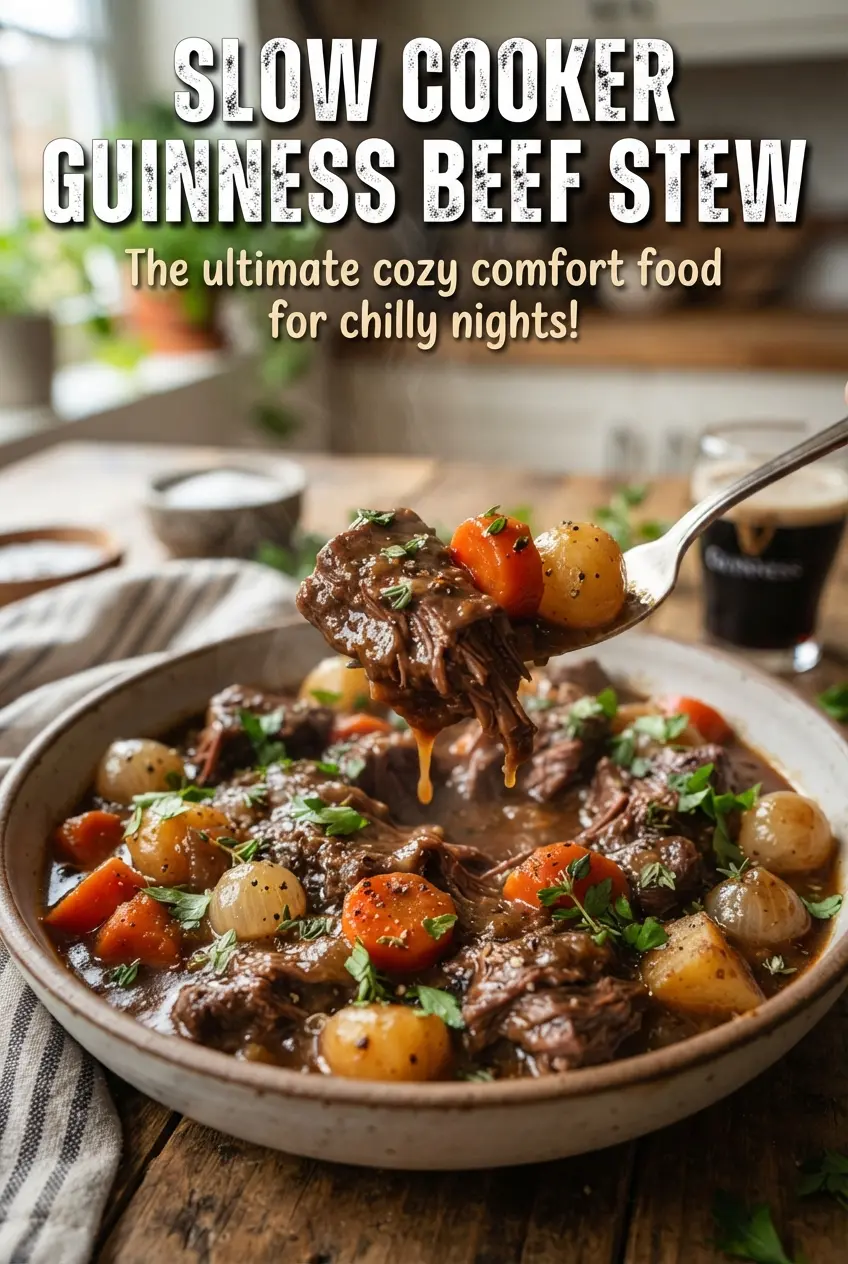
Slow Cooker Guinness Beef Stew
Ingredients
Equipment
Method
- Toss the beef with flour, salt, and black pepper until evenly coated; the pieces should look dry-dusted. Heat vegetable oil in a Dutch oven over medium-high until shimmering.
- Brown the beef in hot oil, turning as needed, until well-browned on multiple sides; transfer to the slow cooker as it finishes. Keep the oil hot for better color, aiming for a deep, crusty exterior.
- In the same pan, cook the onion, garlic, and tomato paste for exactly 3 minutes. Stir until fragrant and slightly darkened, with the tomato paste clinging to the pan.
- Pour in the Guinness stout and scrape the bottom of the pan to loosen the browned bits; simmer for 2 minutes. You should see steam and a glossy dark sauce form in the pan.
- Pour the stout mixture into the slow cooker over the browned beef. Spread it so the beef is surrounded for even braising.
- Add beef broth, Worcestershire sauce, brown sugar, dried thyme, sliced carrots, and halved baby potatoes to the slow cooker. Give everything a gentle stir so vegetables are distributed.
- Cover and cook on LOW for 8 hours until the beef is very tender and the potatoes are soft. Look for active steam and a thickened, dark-brown stew consistency around the edges.
- Season to taste with additional salt and black pepper as needed. The stew should taste balanced and rich without sounding overly bitter.
- Garnish with chopped fresh parsley right before serving. Add it at the end for a bright green color and fresh aroma on top.