Lebanese beef stew settles into the kind of deep, savory tomato broth that clings to every cube of beef and every green bean. The meat turns spoon-tender, the sauce picks up warmth from seven spice and cinnamon, and the finished bowl tastes even better when it lands over vermicelli rice to catch the juices. Toasted pine nuts on top give the whole dish a little crunch at the end, which keeps each bite from feeling heavy.
What makes this version work is the layering. The beef gets browned first, which builds real flavor before any liquid goes in. Tomato paste cooks with the onion and garlic long enough to lose its raw edge, and the stew simmers low and slow so the meat softens without falling apart in the pot. The green beans go in near the end, so they stay tender but still hold their shape.
Below you’ll find the small details that matter most: when to stop browning, why the spices go on the beef before the pot, and how to keep the sauce balanced if you need to stretch it a little farther.
The beef got unbelievably tender and the tomato broth tasted even better the next day. I added the green beans at the end like you said, and they stayed bright instead of turning mushy.
Save this Lebanese beef stew for a slow-simmered dinner with tender beef, green beans, and seven-spice tomato sauce over vermicelli rice.
The Secret to Tender Beef and a Sauce That Stays Balanced
This stew lives or dies on the simmer. If the heat is too high, the beef tightens up before the collagen has time to melt, and the tomato base can taste sharp instead of rounded. Keep it at a quiet bubble after the liquid goes in, with the lid set on top so steam can work without violently boiling the pot.
The other place people slip is with the spice and tomato paste. Browning the beef after it’s seasoned helps the surface carry more flavor, and cooking the tomato paste with the onion and garlic for a minute deepens it from flat and acidic to something richer. That step matters more here than in a quick weeknight stew because this dish depends on a long simmer, not a big pile of added seasonings at the end.
What Each Ingredient Is Actually Doing in the Pot
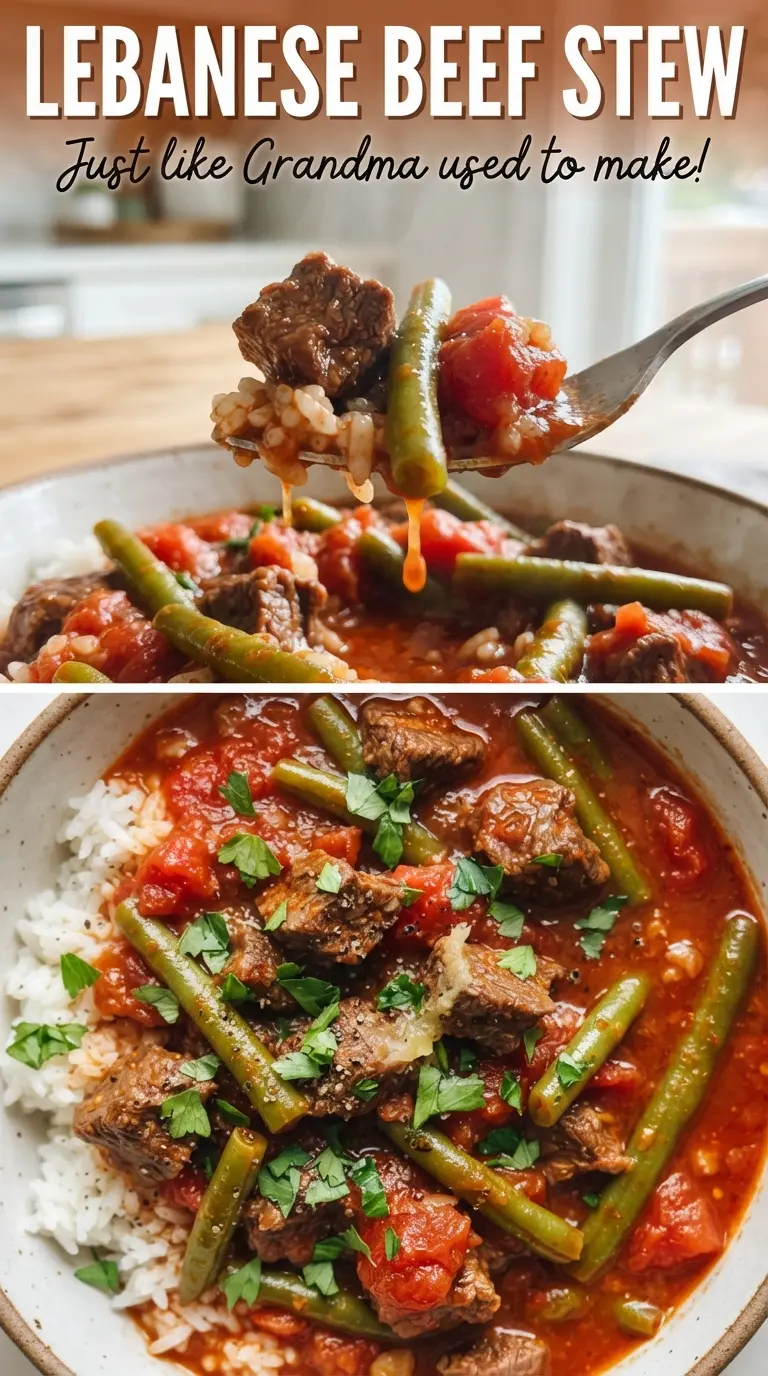
- Beef chuck — This cut has enough connective tissue to turn silky during the long simmer. Leaner stew meat can work, but it won’t give you the same rich broth or that soft, shreddable texture after two hours.
- Lebanese seven spice and cinnamon — Seven spice gives the stew its unmistakable warm backbone, while cinnamon softens the tomato and beef without making the dish taste sweet. If you only have a generic spice blend, the flavor will still be pleasant, but it won’t taste like this stew.
- Tomato paste and crushed tomatoes — The paste adds depth, while the crushed tomatoes build body for the sauce. Don’t skip the paste-cooking step; it removes the raw edge and keeps the sauce from tasting thin.
- Green beans — Add them late so they stay intact and keep a little snap. If they go in with the beef, they’ll turn dull and stringy long before the stew is done.
- Pine nuts and cilantro — The cilantro brightens the whole pot right at the end, and the toasted pine nuts add a buttery crunch that makes the finished bowl feel complete. Toast the nuts until just golden; a few seconds too long and they turn bitter fast.
Building the Stew Without Breaking the Beef
Seasoning and Browning the Meat
Toss the beef with salt, seven spice, and cinnamon before it hits the pan so the seasoning gets into the surface instead of floating in the broth later. Brown it in batches in olive oil until you get a deep brown crust on the outside; crowded beef steams, and steamed beef never gives you the same base flavor. Leave the browned bits in the pot. That’s where the stew starts tasting like itself.
Cooking the Onion, Garlic, and Tomato Paste
Once the beef is out, cook the onion until it’s soft and sweet, then add the garlic just long enough for it to smell fragrant. The tomato paste goes in next and needs that short minute of heat to darken slightly and lose its tinny taste. If it starts sticking hard, the heat is too high. Lower it and stir until the paste looks brick-red and glossy.
Letting the Beef Simmer Until It Fattens the Broth
When the tomatoes and water go in, scrape the bottom well and bring the pot to a steady simmer before the beef returns. Cover it and let it cook low and slow until the meat yields when pressed with a spoon, not a knife. If the liquid is boiling hard, the meat will toughen at the edges before the center softens. A lazy simmer is what gives you a rich broth and tender beef at the same time.
Adding the Green Beans and Finishing the Bowl
The green beans go in for the last stretch, just long enough to turn tender. They should keep their shape and stay a little bright under the sauce. Stir in the cilantro off the heat so it keeps its fresh edge, then top the bowls with pine nuts right before serving. Serve it over vermicelli rice while the sauce is still hot and loose enough to soak in.
How to Adapt This Lebanese Stew Without Losing the Character
Use Lamb Instead of Beef
Lamb shoulder gives the stew a deeper, earthier flavor that works beautifully with seven spice and cinnamon. It cooks on the same timeline as beef chuck, though the broth will taste a little richer and more distinct. Use the same method and expect a more assertive finish.
Make It Dairy-Free and Naturally Gluten-Free
The stew itself is already dairy-free and gluten-free as written, so the only thing to check is the vermicelli rice if you’re avoiding gluten. Serve it over plain rice instead, and use broth you trust if you’re not using water. The stew keeps its full body either way.
Swap the Green Beans for a Heartier Vegetable
Potatoes or carrots can step in if green beans aren’t what you have. Add them earlier than the beans and simmer until they’re fully tender, because they need more time to cook through. The stew gets a little thicker and more rustic, but it still holds onto the same spiced tomato backbone.
Make It Ahead for Better Flavor
This is one of those stews that tastes even more settled the next day. Cook it fully, cool it, and refrigerate it overnight so the spices bloom into the broth. The beans soften a touch more after reheating, but the flavor payoff is worth it.
Storage and Reheating
- Refrigerator: Store for up to 4 days in a covered container. The flavors deepen overnight, and the broth thickens a little as it chills.
- Freezer: It freezes well for up to 3 months. Cool it completely first, then freeze without the rice for the best texture.
- Reheating: Warm it gently on the stove over low heat until hot. A hard boil can toughen the beef and push the green beans past their best texture, so go slowly and add a splash of water if the sauce has tightened too much.
Answers to the Questions Worth Asking

Lebanese Beef Stew
Ingredients
Equipment
Method
- Season the beef with salt, Lebanese seven spice, and ground cinnamon, then toss until evenly coated. Brown the beef in olive oil over medium-high heat until deeply browned, stirring so the cubes pick up color on multiple sides.
- Cook the diced onion for about 5 minutes, until softened and lightly translucent with a steady sizzle. Add the minced garlic and tomato paste and cook for 1 minute, stirring until fragrant and darker in color.
- Add the crushed tomatoes and water (or beef broth) and bring the mixture to a simmer. Scrape up any browned bits from the bottom so they dissolve into the sauce.
- Return the browned beef to the pot, cover, and simmer until very tender for about 1 1/2 hours. Keep the heat at a gentle simmer, with small bubbles rising steadily around the edges as the sauce thickens.
- Add the green beans and simmer for 25 to 30 minutes, until tender but still bright. Taste and adjust seasoning if needed, watching the liquid reduce to a stew-like consistency.
- Stir in the chopped cilantro, then top with toasted pine nuts. Serve the stew over vermicelli rice while hot so the sauce coats the noodles.