Guinness beef stew lands in the bowl with deep brown gravy, fork-tender beef, and vegetables that still hold their shape instead of melting into the pot. The stout gives it a dark, malty edge that tastes richer than plain beef broth ever can, and the long simmer turns a handful of humble ingredients into something that feels built for a second helping before the first bowl is finished.
The trick is in the layers. Browning the beef in batches gives you the fond that the stew base needs, and the tomato paste cooks briefly with the onions so it loses any raw edge before the liquid goes in. Guinness adds body and bitterness, but it needs balance, which is why the Worcestershire and brown sugar matter here more than they might in a milder stew.
Below, I’ve included the details that keep the broth glossy instead of thin, plus the timing that keeps the potatoes intact and the carrots sweet. If you’ve ever had a beef stew that tasted flat or watery, this version fixes both problems.
The stew thickened up beautifully and the Guinness gave it this deep, rich flavor without tasting bitter. My potatoes stayed intact and the beef was fall-apart tender after that long simmer.
Like this Guinness beef stew? Save it for the nights when you want a dark, glossy broth, tender beef, and hearty vegetables in one pot.
The Long Simmer That Turns Guinness and Beef Into One Stew
The biggest mistake with a stout stew is rushing the simmer. Guinness needs time for the sharp edges to mellow, and chuck needs time for the collagen to loosen into that silky, spoon-coating texture people want from stew. If the heat runs too high, the liquid can reduce before the meat gets tender, and you end up with tough beef in a broth that tastes a little harsh.
Keep the stew at a gentle bubble, not a hard boil. You want the surface to move lazily and the lid to stay mostly in place while steam escapes around the edges. That low, steady heat is what keeps the beef juicy and gives the broth a darker, rounder taste instead of something thin and scorched.
What the Guinness, Tomato Paste, and Root Vegetables Are Each Doing
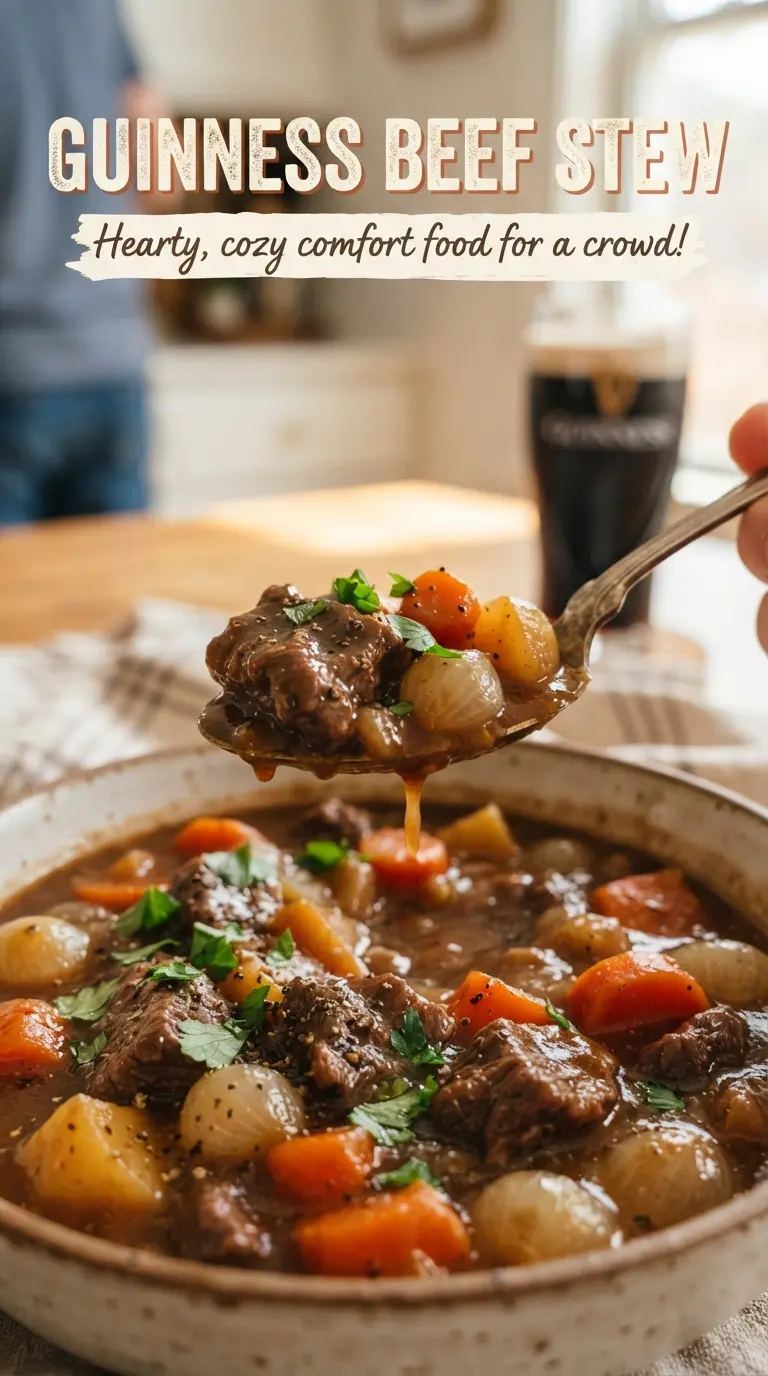
- Beef chuck — This cut has enough marbling and connective tissue to turn tender over a long simmer. Lean beef won’t give you the same body or texture, and it’s much more likely to dry out before the vegetables are done.
- Guinness stout — The stout brings color, maltiness, and depth that plain broth can’t match. Use the bottle, not a lighter beer, if you want that signature dark gravy; a milder beer makes the stew taste flatter.
- Tomato paste — Cooking it with the onions strips out the raw, tinny taste and builds a richer base. That short minute in the pan matters more than people think because uncooked paste can make the stew taste sharp.
- Parsnips and carrots — These hold up better than softer vegetables and bring a gentle sweetness that balances the bitterness from the stout. Cut them thick so they stay intact through the final simmer.
- Flour — Tossing the beef in flour before browning gives the gravy a subtle thickness as it simmers. If you skip it, the stew still works, but the broth will stay thinner and won’t cling to the meat the same way.
Building the Pot in the Right Order
Season and Brown in Batches
Season the beef first, then toss it with flour so every piece gets a light coating. Brown the meat in hot oil in batches, leaving space in the pan so the cubes sear instead of steam. You’re looking for a dark crust on the outside and browned bits stuck to the bottom of the pot. If the pan looks crowded or wet, hold back and work in smaller batches; that crust is the start of the gravy.
Cook Out the Onion and Tomato Paste
Once the beef is out, add the onions and let them soften until they turn translucent and pick up the flavor left in the pan. Garlic goes in next for just a short minute so it stays fragrant instead of bitter. Tomato paste needs that same brief cook until it darkens a shade and smells sweeter. If you add the liquid too soon, the paste never loses its raw edge and the stew tastes flat.
Use the Guinness to Lift the Fond
Pour in the Guinness and scrape the bottom of the pot with a wooden spoon. Those browned bits dissolve into the liquid and give the stew its deep, roasted backbone. Add the broth, Worcestershire, brown sugar, thyme, and bay leaves, then return the beef. The pot should smell malty, savory, and a little sweet before the lid goes on.
Add the Vegetables Late Enough to Stay Whole
Let the beef simmer first until it starts to relax, then add the carrots, parsnips, and potatoes for the final stretch. That timing keeps the vegetables from breaking down into the broth and turning the stew muddy. When they’re done, a fork should slide into the potatoes easily, but the cubes should still hold their edges. Pull the bay leaves before serving and finish with parsley for a fresh top note.
How to Adjust This Guinness Stew Without Losing the Character of the Dish
Make It Gluten-Free
Swap the all-purpose flour for a gluten-free flour blend that works for dredging, or skip the coating and thicken the finished stew with a cornstarch slurry at the end. The flavor stays the same, but the broth will need that extra thickening step if you leave the flour out.
Make It Dairy-Free and Hearty Without Changes
This stew is naturally dairy-free as written, so the main thing is not adding anything creamy at the end. The broth already has enough body from the flour-coated beef and the long simmer, which is why it doesn’t need butter or cream to taste finished.
Use Another Stout if Needed
A dry stout is the closest swap for Guinness. Avoid sweet, heavy stouts unless you want a darker, sweeter stew, because the sugar in the beer can overpower the beef and make the broth taste thick rather than balanced.
Storage and Reheating
- Refrigerator: Store in an airtight container for up to 4 days. The flavor deepens overnight, and the broth will thicken as it chills.
- Freezer: It freezes well for up to 3 months. Cool it completely first, then freeze in portions; the potatoes soften a bit after thawing, but the stew still holds up well.
- Reheating: Warm it gently on the stove over low heat, stirring now and then. High heat can make the beef tighten up and can break the potatoes apart before the center is hot.
Answers to the Questions Worth Asking
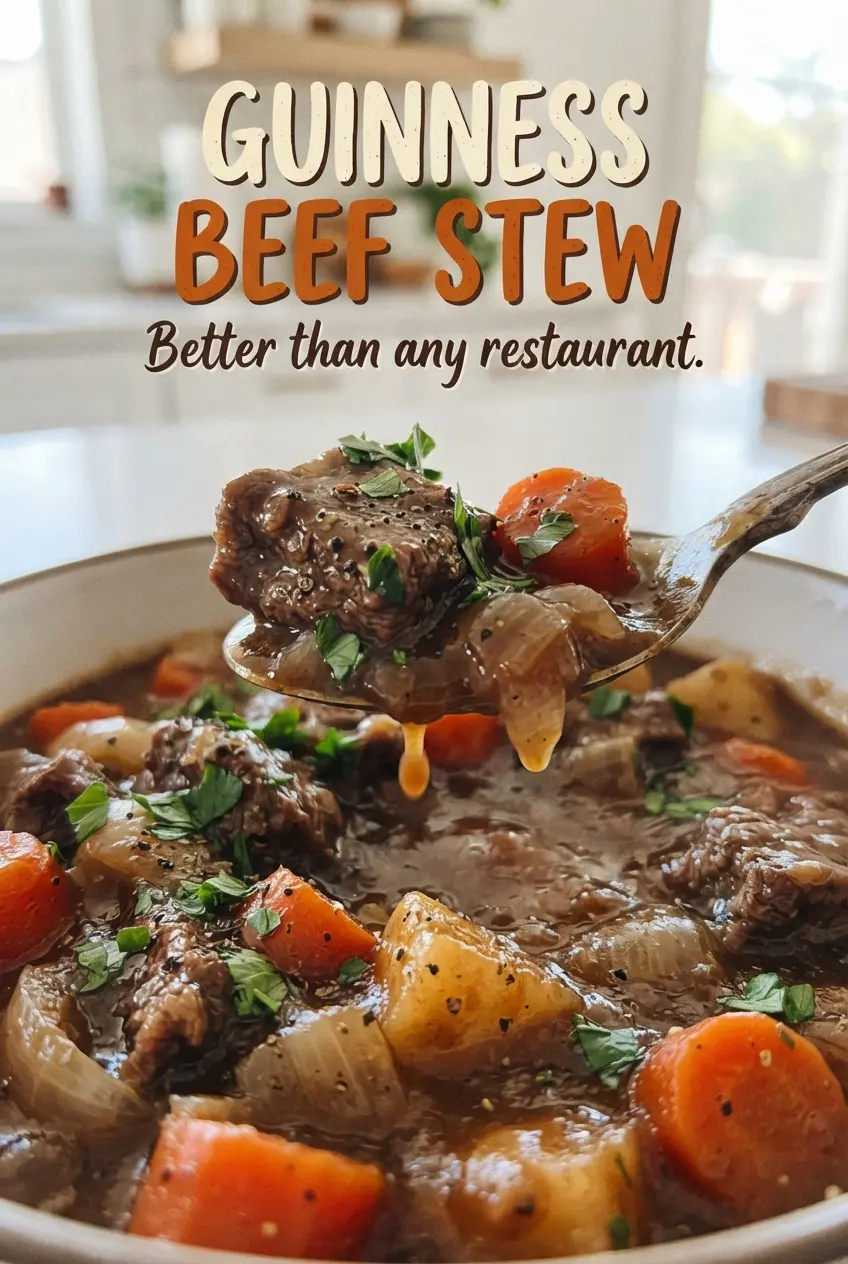
Guinness Beef Stew
Ingredients
Equipment
Method
- Season the beef with salt and black pepper, then toss with the flour to coat. The coating should look dusty and lightly matte before it hits the pan.
- Heat the vegetable oil in a Dutch oven over medium-high heat and brown the beef in batches. Cook 3 to 5 minutes per batch until browned on the outside, keeping the pieces from crowding.
- Add the chopped onions to the Dutch oven and cook for 5 minutes. Look for softened, lightly translucent onions before moving on.
- Stir in the minced garlic and tomato paste, then cook for 1 minute. The paste should darken slightly and smell fragrant.
- Pour in the Guinness and scrape the bottom of the pot to lift the browned bits. Bring the mixture to a gentle simmer so it looks thick and glossy.
- Add the beef broth, Worcestershire sauce, brown sugar, dried thyme, and bay leaves. Stir until everything is evenly combined and the liquid returns to a steady simmer.
- Return the browned beef to the pot, cover, and simmer gently. Cook at a gentle simmer for 2 hours, with occasional bubbling around the edges and tender-looking beef.
- Add the carrots, parsnips, and cubed potatoes to the pot. Submerge them in the liquid so they cook evenly.
- Simmer uncovered gently for 45 to 60 minutes, until the vegetables are tender. You should be able to pierce potatoes and carrots easily with a fork.
- Remove the bay leaves and sprinkle with chopped fresh parsley. The stew should look nearly black and glossy as the herb aroma lifts.