
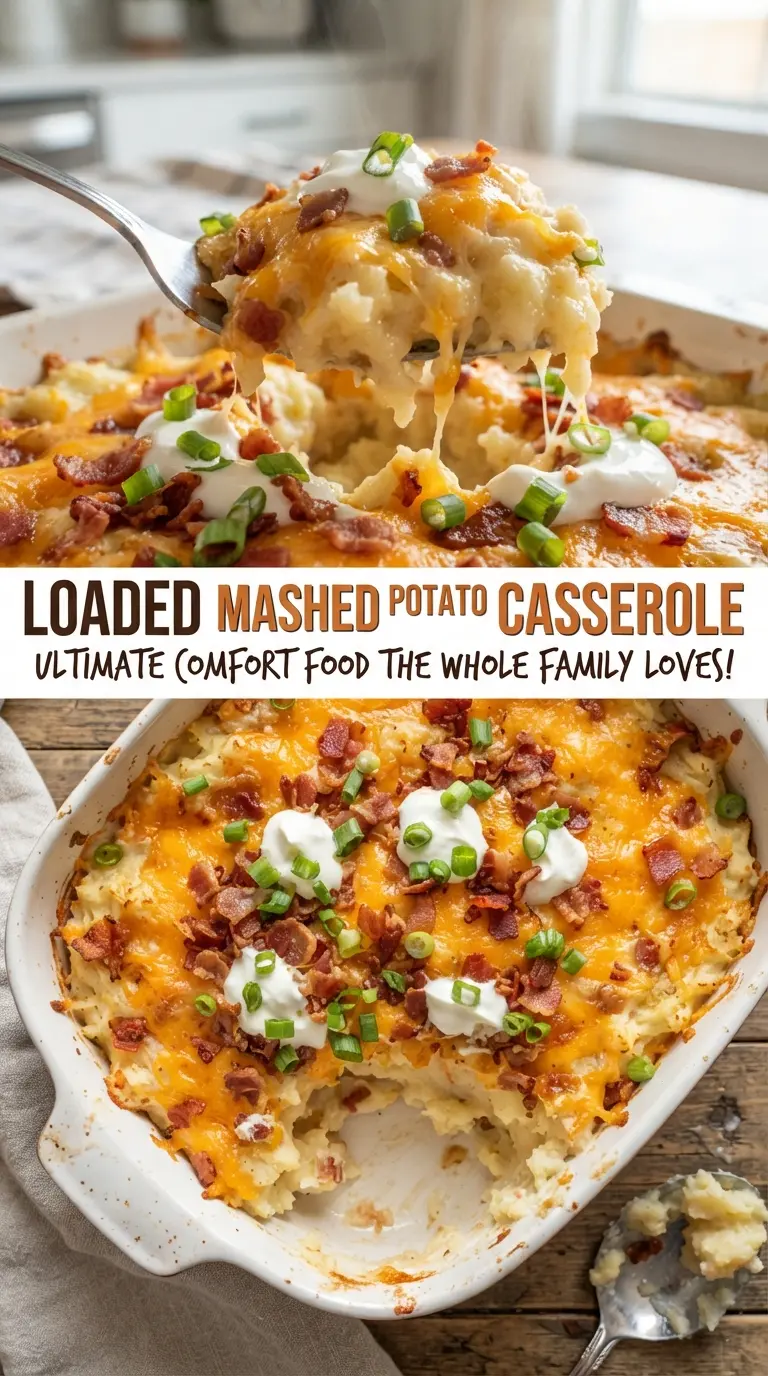
Loaded mashed potato casserole turns a plain side dish into the first pan people head for at dinner. It’s creamy in the middle, browned and bubbling at the edges, and finished with sharp cheddar, crisp bacon, and green onions for the kind of savory bite that keeps spoons going back in for “just one more.” The best part is that it slices and serves like a casserole but eats like the mash you’d pile onto a holiday plate.
This version works because the potatoes are mashed while they’re still hot, then enriched with butter, cream cheese, sour cream, and a little milk before anything else goes in. That order matters. You get a smoother base, better seasoning, and a filling that bakes up rich without turning gluey. The cheddar goes in twice: some inside for body and the rest on top for that melty, browned finish that makes the whole dish feel complete.
Below, I’ve included the small details that keep the texture light instead of heavy, plus the substitutions I’d use when you need to work with what’s already in the fridge. If you’ve ever had mashed potato casserole turn grainy or stiff after baking, the fixes here will help.
The top got beautifully golden and the center stayed fluffy, not dense. I loved that the bacon stayed crisp enough to give every bite a little crunch.
Loaded mashed potato casserole with cheddar, bacon, and green onion is the kind of side dish that disappears fast and reheats beautifully.
The Reason Most Potato Casseroles Turn Heavy Instead of Fluffy
The biggest mistake in mashed potato casseroles is overworking the potatoes after they’ve been drained. Once potatoes are cooked through, they only need enough mashing to break down the chunks and bring in the dairy. If you keep stirring or beat them hard, the starch gets overdeveloped and the texture turns pasty instead of light.
Russets are the right call here because they’re dry and fluffy to start with, which gives you a casserole that can hold the butter, sour cream, and cheese without collapsing into something soupy. The other thing that matters is heat. Hot potatoes absorb the dairy more evenly, so the base turns smooth before the cheese and bacon go in.
- Don’t overmash. A few small lumps are better than a gluey bowl of potatoes.
- Drain well. Extra water is what makes the casserole loose and flat.
- Add the dairy while the potatoes are hot. That’s what helps everything melt in cleanly.
- Fold in the bacon and green onions at the end. They stay more distinct that way, instead of disappearing into the mash.
What Each Ingredient Is Actually Doing in This Casserole
- Russet potatoes — These give the lightest, fluffiest texture. Yukon Golds work in a pinch, but they make a denser, more buttery casserole.
- Cream cheese, sour cream, and milk — This trio creates the creamy base. Cream cheese adds body, sour cream brings tang, and milk loosens the mixture just enough so it bakes up soft instead of stiff.
- Sharp cheddar — Sharp cheddar matters here because it cuts through the richness. Mild cheddar melts fine, but the flavor gets lost under the bacon and dairy.
- Bacon and green onions — Bacon adds salt and crunch; green onions keep the dish from tasting flat. If you want to save time, cook the bacon ahead, but don’t use bacon bits unless that’s all you have. They won’t give the same texture.
Building the Casserole So It Stays Creamy After Baking
Boil Until the Potatoes Collapse at the Edges
Start the potatoes in well-salted water and cook them until a fork slides through with no resistance and the edges look a little ragged. That’s the point where they’re tender enough to mash smoothly. If you pull them too early, you’ll end up with little hard pieces that never blend in later. Drain them thoroughly and let the steam escape for a minute before mashing.
Mash With the Dairy While Everything Is Still Hot
Add the butter, cream cheese, sour cream, and milk right away. The heat from the potatoes softens the cream cheese and helps everything combine without extra mixing. Stop as soon as the mixture looks smooth and spreadable. If it feels stiff, add a small splash more milk rather than beating it longer.
Layer in the Fillings and Finish on Top
Stir in part of the cheddar, bacon, and green onions, then spread the mixture into a buttered baking dish. Save some bacon and cheese for the top so the casserole bakes under a browned, melty lid instead of looking flat. Bake until the center is hot and the edges are bubbling. The top should look melted and just starting to turn spotted gold, not dried out.
How to Adapt This for a Smaller Table or Different Diets
Make-Ahead Casserole for Holiday Timing
Assemble the casserole up to a day in advance, cover it tightly, and refrigerate it before baking. Bring it out while the oven heats so it isn’t ice-cold going in. Add 10 to 15 minutes to the bake time if it starts chilled from the fridge.
Dairy-Free Version That Still Feels Rich
Use a plant-based butter, unsweetened non-dairy milk, and a dairy-free cream cheese that melts well. The texture will be a little less tangy and less plush than the original, but it still bakes into a creamy casserole if you don’t overthin it.
Gluten-Free and Naturally Safe
This recipe is already gluten-free as written, as long as your bacon and cheese are certified gluten-free if cross-contamination matters to you. The method doesn’t need any flour or starch to hold together.
Skip the Bacon for a Vegetarian Side
Leave out the bacon and add extra green onions or a handful of finely chopped chives for a fresher finish. You’ll lose the smoky, salty crunch, so bump up the seasoning a little and use an extra pinch of black pepper.
Storage and Reheating
- Refrigerator: Store covered for up to 4 days. The texture firms up a bit, but the flavor holds well.
- Freezer: It freezes well for up to 2 months. Wrap tightly and freeze before or after baking; thaw overnight in the fridge for the best texture.
- Reheating: Reheat covered in a 350F oven until hot in the center. Microwaving works for a portion, but it can make the potatoes dense if you blast them too long.
Questions I Get Asked About This Recipe

Loaded Mashed Potato Casserole
Ingredients
Equipment
Method
- Preheat the oven to 350F and butter a 9x13-inch baking dish so it’s ready for the potatoes. You should see a light sheen on the dish where butter is applied.
- Boil the russet potatoes in salted water for 15-18 minutes until tender, then drain. The potatoes are done when a fork slides in easily with little resistance.
- Mash the potatoes with unsalted butter, cream cheese, sour cream, and whole milk until smooth. Stop when the texture looks lump-free and glossy.
- Stir in 1 cup shredded cheddar, half the bacon, half the green onions, salt, and black pepper. Mix until the add-ins are evenly distributed through the mash.
- Spread the potato mixture into the buttered baking dish to level the top. The surface should be fairly even so it bakes uniformly.
- Top with the remaining shredded cheddar and bacon. You should see a thick cheesy layer with bacon peeking through.
- Bake for 25-30 minutes until hot and bubbly. Look for active bubbling around the edges and melted cheese on top.
- Sprinkle the remaining green onions over the casserole right before serving. The bright green should sit fresh on top of the melted cheddar.


