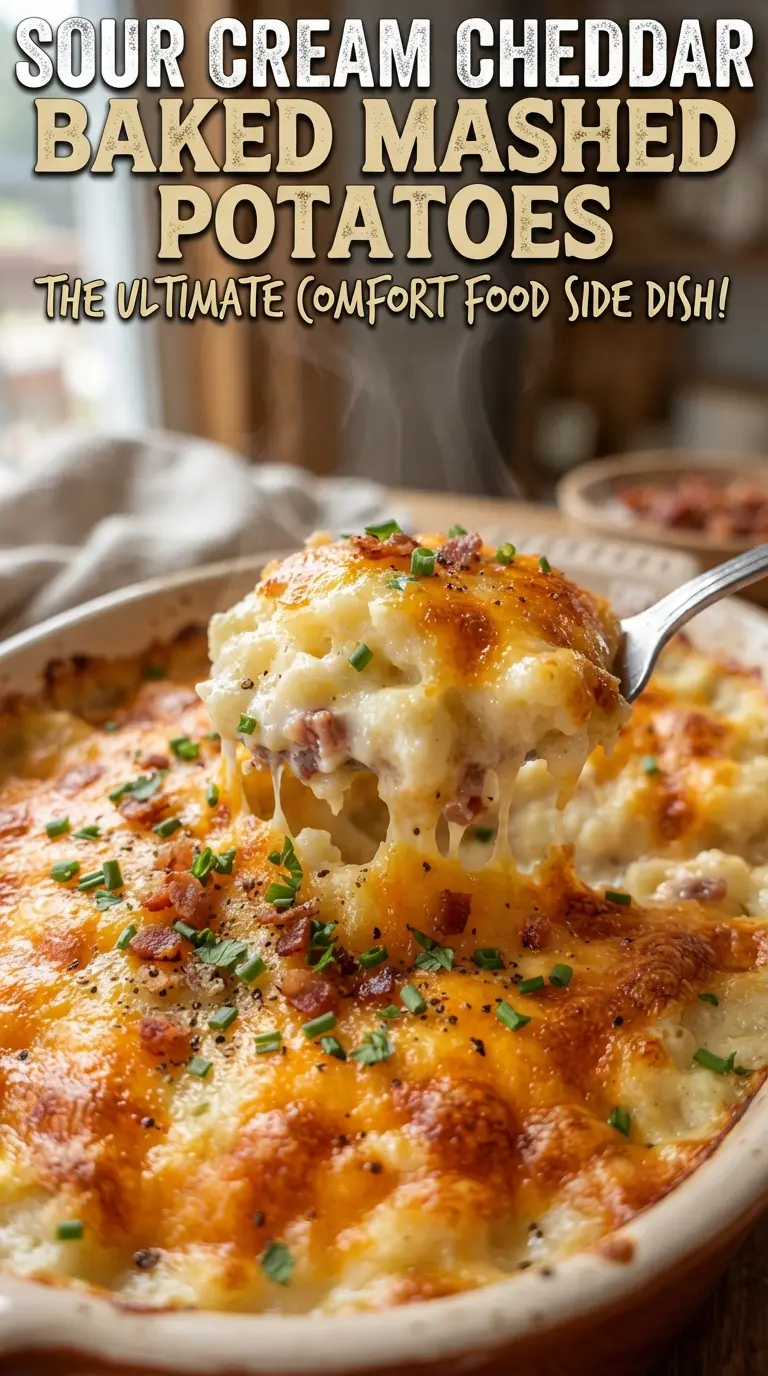
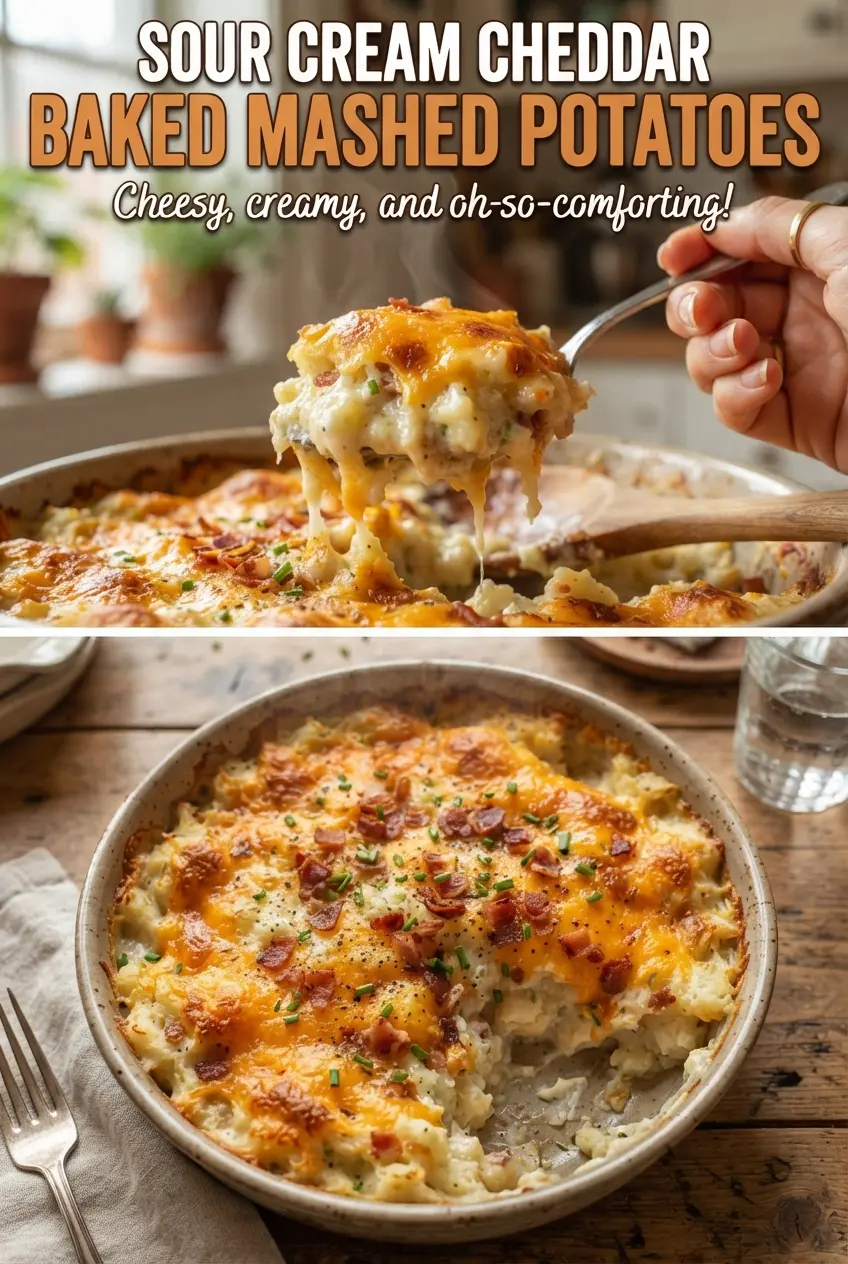
These baked mashed potatoes come out rich, fluffy, and topped with a cheddar crust that turns deeply golden and crisp at the edges. The center stays creamy and spoonable, with sour cream giving the potatoes a little tang so they don’t eat like plain buttered mash.
Russets are the right potato here because they break down into a light, fluffy mash instead of turning gummy. Warm milk blends in smoothly, and the sour cream goes in with the butter while the potatoes are still hot, which helps everything melt together into a filling that holds its shape after baking. The cheddar is divided for a reason: some melts through the potatoes, and the rest stays on top to build that bubbling lid.
Below you’ll find the small details that keep the texture right, plus a few swaps and make-ahead notes if you’re cooking for a crowd.
The potatoes stayed creamy after baking and the cheddar on top browned into the best crust. I made them ahead, baked them before dinner, and they were still fluffy instead of heavy.
Creamy sour cream cheddar baked mashed potatoes with that bubbling golden top are perfect for holiday tables and make-ahead dinners.
The Trick to Keeping Baked Mashed Potatoes Creamy After the Oven
The biggest risk with baked mashed potatoes is that they dry out or turn dense once they hit the oven. That usually happens when the mash starts out too stiff or the potatoes sit too long after draining. Hot potatoes absorb butter, sour cream, and milk more evenly, so the base needs to be mixed while they still have plenty of heat left.
Another thing that matters here is the texture before baking. You want a mash that’s loose enough to spread easily, because the oven will tighten it up a little. If it looks perfect in the bowl, it probably bakes up too thick. A softer base gives you that creamy scoop under the cheese crust instead of a heavy block on the plate.
What Each Ingredient Is Doing in These Sour Cream Cheddar Potatoes
- Russet potatoes — Their high starch content gives you fluffy mash that can handle baking. Yukon Golds work in a pinch, but they’ll be denser and a little more buttery.
- Sour cream — This adds tang and body at the same time. Full-fat sour cream gives the best texture; lower-fat versions can make the potatoes looser and less rich.
- Whole milk — Warm milk blends in without cooling the potatoes down, which helps the butter and sour cream stay smooth. Cold milk can make the mash seize up briefly and look grainy before it comes together.
- Sharp cheddar — Sharp cheese gives you enough flavor to cut through the richness. Pre-shredded cheese works, but freshly shredded melts more cleanly and makes a better top crust.
- Green onions — They keep the casserole from tasting one-note. Slice them thin so they soften in the hot potatoes without leaving sharp, raw bites.
Building the Potato Base So the Cheddar Tops Don’t Sink
Boiling Until Tender, Not Waterlogged
Start the potatoes in well-salted water and cook them until a fork slides in with no resistance. If they fall apart completely before draining, they’ll absorb extra water and the mash can turn loose and bland. Drain them thoroughly, then give the pot a minute over low heat or the burner’s residual warmth to steam off the last bit of moisture. That small step keeps the finished casserole creamy instead of watery.
Mashing While They’re Still Hot
Add the sour cream, butter, and warmed milk while the potatoes are hot enough to melt everything smoothly. If the butter lands in cold potatoes, it sits in streaks and you have to overwork the mash to fix it. Mash just until the texture is even and fluffy, then switch to a spoon for the cheese and onions. Overmixing is what makes baked potatoes gluey.
Layering for a Better Top
Stir most of the cheddar into the potatoes first, then save the rest for the top. That gives you flavor in every bite and a separate browned crust that stays visible after baking. Spread the mixture evenly in the dish so the top browns at the same rate, and don’t press it down hard. A loose surface gives the cheese room to bubble and crisp.
Make Them Ahead for a Crowd
Assemble the potatoes in the baking dish, cover tightly, and refrigerate for up to 24 hours. Let the dish sit on the counter while the oven preheats so the center isn’t ice-cold. If you bake them straight from the fridge, the edges overcook before the middle is hot.
Swap in a Different Cheese
White cheddar, Colby Jack, or a little Gruyère all work here. Mild cheeses melt well but won’t give the same sharp bite, while Gruyère adds a nuttier finish that feels a little richer. Keep at least half the cheese sharp if you want the topping to stand out.
Make It Gluten-Free and Vegetarian
This recipe is naturally gluten-free and vegetarian as written, so there’s nothing special to change. Just check that your shredded cheese has no anti-caking fillers if you’re cooking for someone with a sensitivity. The texture and baking time stay the same.
Storage and Reheating
- Refrigerator: Store covered for up to 4 days. The potatoes will firm up as they chill, but the texture comes back once reheated.
- Freezer: Freeze portions in a tightly sealed container for up to 2 months. The texture gets a little softer after thawing, but it still works well for a baked side dish.
- Reheating: Cover with foil and warm in a 325F oven until hot in the center. Uncover for the last few minutes if you want the top to crisp again. Microwaving works for small portions, but it softens the cheese crust instead of reviving it.
Answers to the Questions Worth Asking
Sour Cream Cheddar Baked Mashed Potatoes
Ingredients
Equipment
Method
- Preheat the oven to 350F and butter a 9x13-inch baking dish so the potatoes release easily.
- Boil the peeled, cubed russet potatoes in salted water for 15-18 minutes, until tender and easily pierced with a fork.
- Drain the potatoes completely, letting excess steam escape for about 1 minute so the mash doesn’t turn watery.
- Mash the potatoes with the sour cream, unsalted butter, and warmed whole milk until smooth and creamy.
- Stir in 1 1/4 cups of the shredded sharp cheddar, the sliced green onions, 1 teaspoon salt, and black pepper until evenly combined.
- Spread the mixture into the prepared dish, then top with the remaining shredded cheddar for a crispier finish.
- Bake at 350F for 25-30 minutes, until the cheese is golden and bubbly across the top.