Mashed parsnips and potatoes bring a gentle sweetness and a buttery, velvety finish that regular mash just can’t match. The parsnips soften into the potatoes and give the whole bowl a little more character without turning it into something fussy. What you get is creamy, pale, and rich, with a clean earthy note that works especially well beside roasted meats, sausages, or anything with gravy.
This version works because the parsnips and potatoes cook together in salted water until both are fully tender, then they’re dried briefly in the pot before mashing. That small drying step keeps the mash from turning loose or watery. Warm cream blends in smoothly, and the browned butter on top adds a nutty finish that makes the sweetness of the parsnips stand out instead of disappearing.
Below, I’ve included the details that matter most: how to keep the texture fluffy instead of gluey, why the butter goes in two stages, and what to change if you want to make this dairy-free or ahead of time.
The parsnips gave the mash this subtle sweetness and the browned butter on top made it taste restaurant-level. Mine stayed fluffy instead of heavy, even after sitting on the table for a bit.
Save these mashed parsnips and potatoes for a creamy British side with browned butter and thyme.
The Trick to Keeping Parsnips from Taking Over the Mash
Parsnips can go from pleasantly sweet to dominant if you use too much of them or undercook the potatoes. Here, the ratio stays balanced: enough parsnip to bring flavor, not so much that the mash turns cloying. Cooking both vegetables together works because they finish at about the same time when cut to the right size, and that keeps the texture even from the first scoop to the last.
The other detail that matters is dryness. If you skip the minute back in the hot pot after draining, the mash can hold onto extra water and go loose. That’s the difference between a bowl that sits in neat swoops and one that slumps on the plate.
- Cut size matters — Keep the potatoes in even cubes and the parsnips in similar-sized pieces so they soften at the same pace.
- Remove the woody cores — Older parsnips can be fibrous in the center, and those cores stay stringy no matter how long you boil them.
- Warmth keeps the texture smooth — Warm cream blends in cleanly; cold cream cools the mash and makes it harder to work together evenly.
What the Butter, Cream, and Nutmeg Are Doing Here
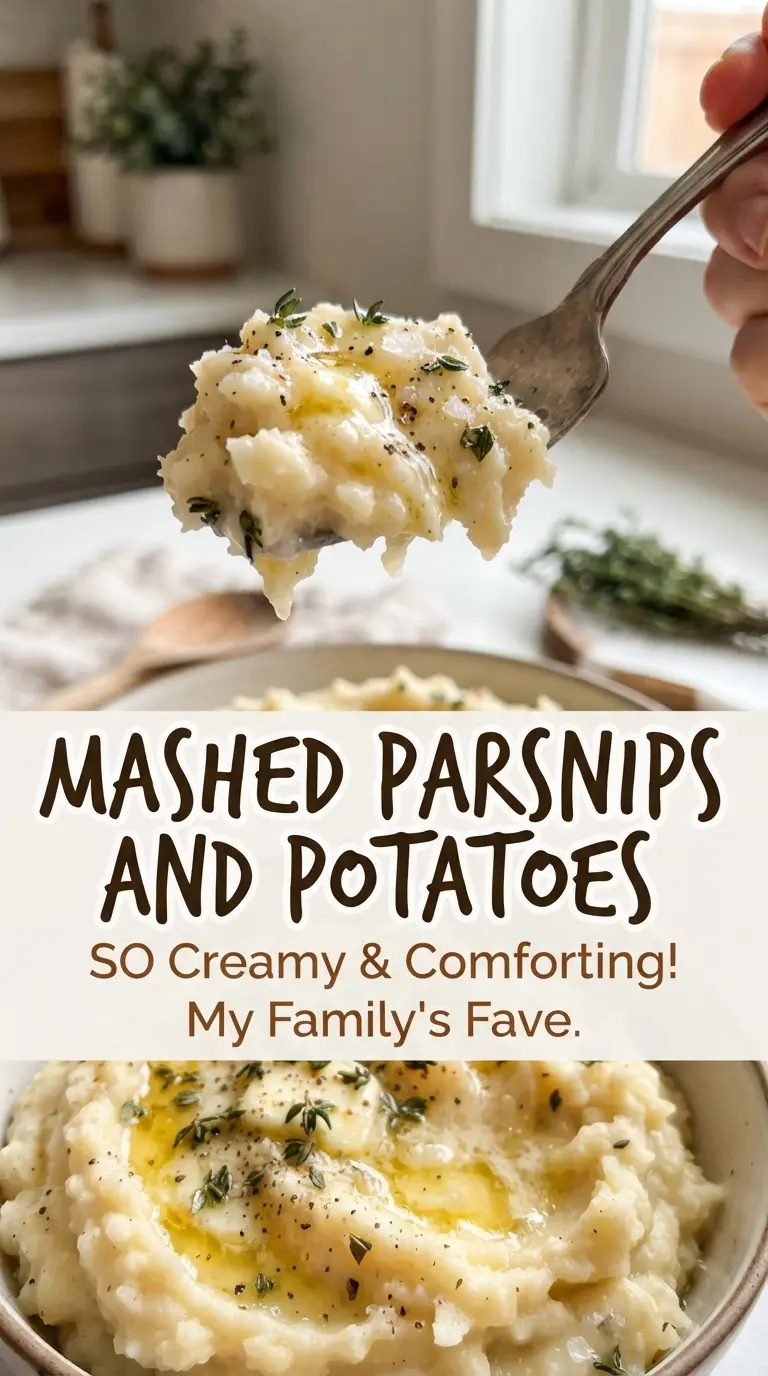
- Yukon gold potatoes — These are the right potatoes for a mash that stays creamy without turning gluey. Russets will work, but they break down drier and a little fluffier, which changes the finish. If you swap them, use a touch more cream.
- Parsnips — This is where the sweetness comes from. Choose firm parsnips that feel heavy for their size and peel away any tough outer layer. If the core looks stringy, trim it out; that step matters more than the peel.
- Unsalted butter — Using it in two stages lets you build flavor and finish the dish. Four tablespoons go into the mash for body, then the last tablespoon is browned for a nutty drizzle that lifts the whole bowl.
- Heavy cream — This gives the mash its lush texture. Half-and-half will work in a pinch, but the result won’t be as rich or as stable. Warm it first so it folds in without cooling the potatoes down.
- Nutmeg and thyme — Nutmeg quietly supports the sweetness of the parsnips, and fresh thyme keeps the dish from tasting flat. Don’t overdo either; this mash should taste rounded, not spiced.
Building the Mash Without Turning It Gluey
Boiling Both Vegetables to the Same Tenderness
Drop the potatoes and parsnips into well-salted water and cook them until a knife slides through both with no resistance. If the parsnips finish early and start falling apart, they’ll water down the potatoes and make the mash uneven, so cut everything in a size that evens out the cooking time. The goal is soft all the way through, not just tender at the edges.
Drying Out the Pot Before You Mash
Drain the vegetables well, then put them back in the warm pot over low heat for about a minute. You’ll hear a faint sizzle as surface moisture evaporates, and that’s exactly what you want. Skip this, and the mash can end up loose before you even add the butter.
Mashing, Seasoning, and Finishing
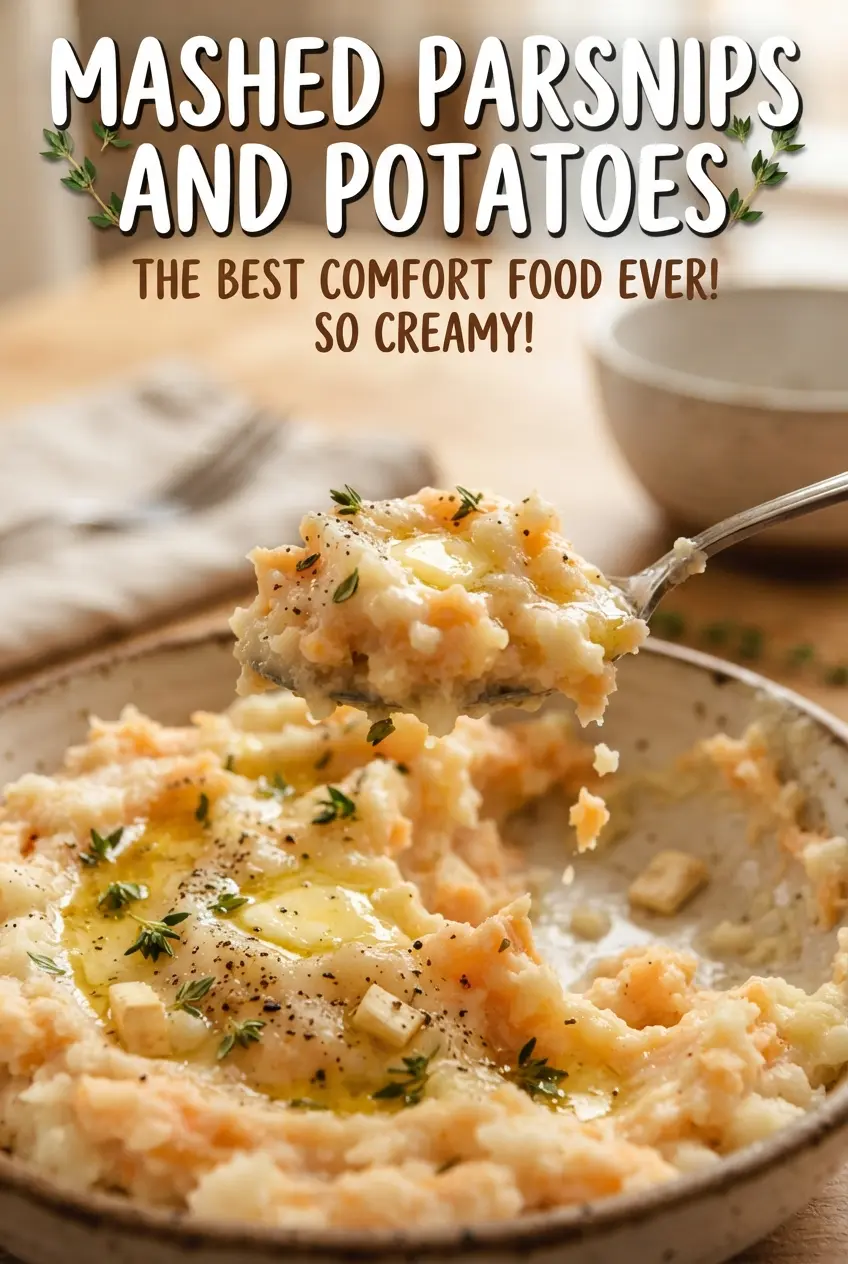
Mash while the vegetables are still hot, then add the butter first so it coats the starch before the cream goes in. Stir in the warmed cream and nutmeg, then season with salt and pepper at the end so you can taste the sweetness of the parsnips properly. Brown the last bit of butter in a small pan until it smells nutty and the milk solids turn deep gold, then drizzle it over the top and finish with thyme.
How to Adjust This for Different Tables
Dairy-Free Version with Olive Oil
Swap the butter for a good olive oil and use warm unsweetened oat milk or soy milk instead of cream. You’ll lose the browned-butter finish and some richness, but the parsnip flavor comes through even more clearly. A small drizzle of extra olive oil on top helps replace the missing gloss.
Make It Sweeter and More Root-Vegetable Forward
Use a little more parsnip and a little less potato if you want a stronger earthy-sweet flavor. The texture will be slightly lighter and less starchy, so keep the cream amount where it is and mash thoroughly. This version pairs well with roast chicken or pork.
Extra-Smooth Mash for Entertaining
Pass the hot mash through a ricer before adding the butter and cream if you want an especially silky bowl. That gives you a finer texture, but it also means you need to stop once everything is blended; overworking riced potatoes can still make them heavy.
Storage and Reheating
- Refrigerator: Store in an airtight container for up to 3 days. The texture firms up as it chills, but it loosens again with gentle reheating.
- Freezer: It freezes, though the texture is a little less silky after thawing. Pack it tightly, freeze for up to 1 month, and thaw overnight in the fridge before reheating.
- Reheating: Warm it over low heat with a splash of cream or milk, stirring often. High heat can make the mash stiff on the outside before the center is hot, which is how people end up overmixing it.
Answers to the Questions Worth Asking
Mashed Parsnips and Potatoes
Ingredients
Equipment
Method
- Add the Yukon gold potatoes and parsnips to a Dutch oven and cover with salted water. Bring to a boil and cook for 18-20 minutes, until both are very tender (a knife should slide in easily).
- Drain the vegetables and return them to the pot over low heat for 1 minute to dry (steam should look reduced).
- Mash with 4 tablespoons of unsalted butter until smooth and creamy, with no big lumps remaining.
- Stir in the warmed heavy cream and nutmeg, then season with salt and black pepper. Mix until the texture looks fully glossy and evenly combined.
- Brown the remaining butter in a small pan over medium heat until it smells nutty and the milk solids turn golden (watch closely as it can darken fast).
- Drizzle the browned butter over the mash and sprinkle with fresh thyme leaves. Finish with cracked black pepper if desired for a visible speckled top.