
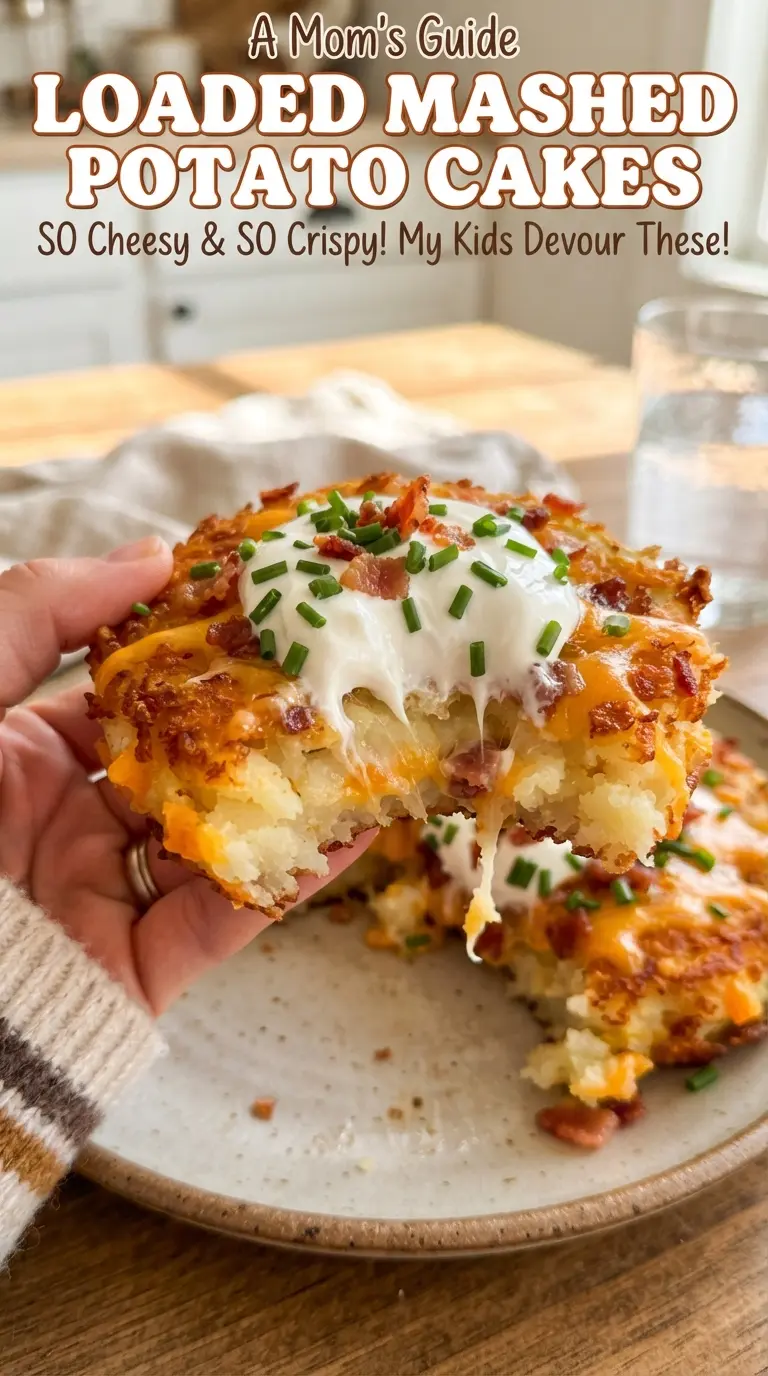
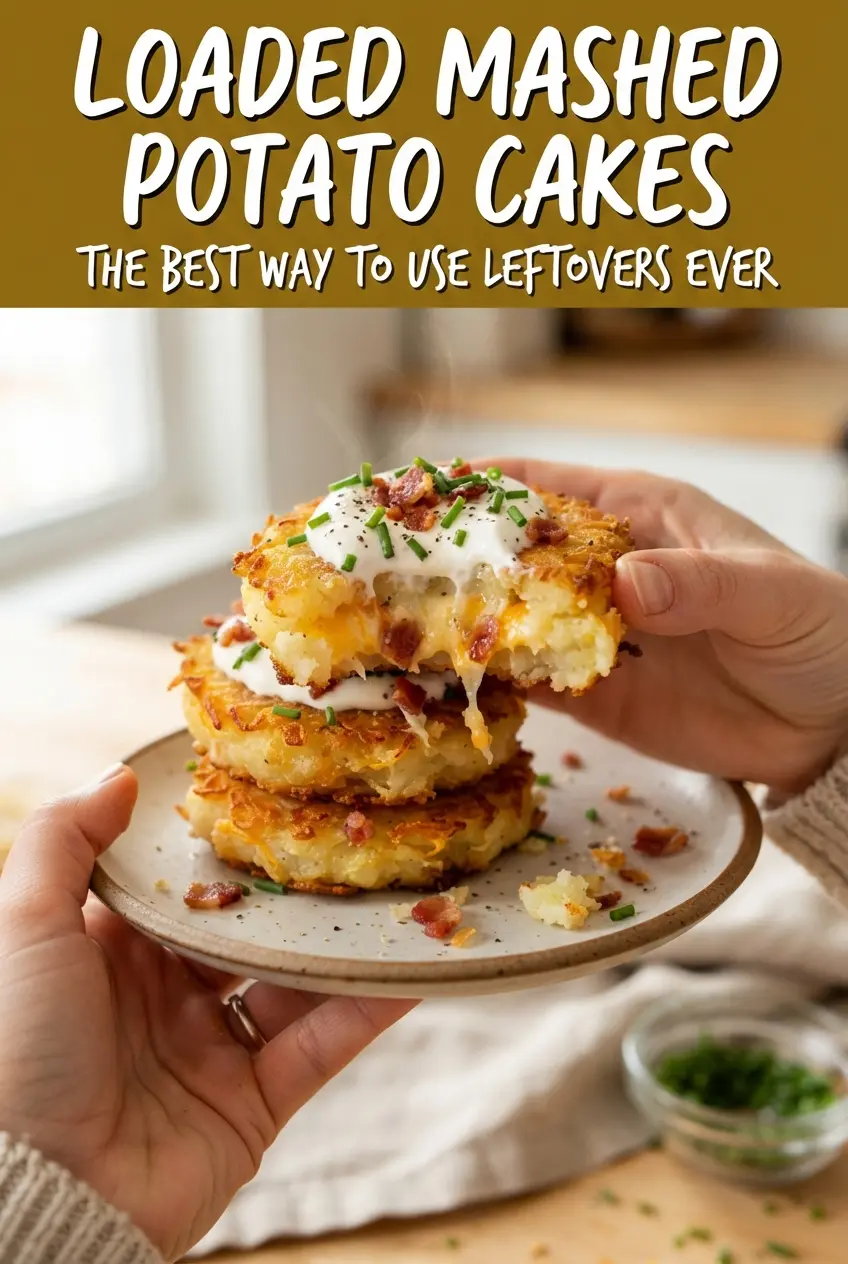
Golden, crisp-edged mashed potato cakes turn leftover potatoes into the kind of side dish people reach for first. The outside shatters lightly under the fork, then the center gives way to creamy mashed potato packed with cheddar, bacon, and green onion. They’re sturdy enough to fry without falling apart, but soft enough inside that they still taste like comfort food, not a leftover cleanout.
The trick is starting with cold mashed potatoes. Warm potatoes are too soft and sticky, which makes shaping frustrating and the patties harder to flip. A little flour and egg help bind everything, but the panko coating is what gives these cakes their real crunch. I also like shredding the cheddar instead of using pre-shredded chunks from a cheese blend; it melts into the potatoes and keeps the filling rich without turning greasy.
Below, you’ll find the small details that make these potato cakes hold together well, fry evenly, and stay crisp at the table. I’ve also included a few smart swaps, because this recipe is forgiving as long as you keep the mixture cold and the pan hot enough to brown the crust.
The patties held together on the first flip and the panko got a really good crunch. I topped mine with sour cream and chives, and even the center stayed creamy instead of gummy.
Crispy loaded mashed potato cakes with bacon, cheddar, and sour cream are perfect for saving when you need a fast side that uses up leftovers.
The Reason These Potato Cakes Stay Together in the Pan
Mashed potato cakes fall apart for one simple reason: the mixture is usually too soft. Once potatoes have been loosened with milk and butter, they need help turning back into something you can shape and fry. The egg gives the patties structure, the flour absorbs excess moisture, and the cold leftovers give you a firm base that holds the filling instead of melting into the skillet.
The other mistake is pressing too hard or flipping too soon. These cakes should feel compact, but not mashed into paste. Let the first side build a deep crust before you move them, and the crust becomes the support system. If the pan is crowded, the cakes steam instead of crisp, and you lose the texture that makes them worth making.
What Each Ingredient Is Doing in These Loaded Potato Cakes
- Cold leftover mashed potatoes — These are the backbone of the recipe. Cold potatoes are firmer and easier to shape, which matters more than almost anything else here. Fresh, warm mash usually needs extra flour and still turns softer in the pan.
- Egg and flour — Together they hold the cakes in one piece. The egg binds the mixture, while the flour soaks up moisture so the centers don’t slump. If your potatoes are especially soft, add another tablespoon of flour rather than more egg, or the cakes can turn dense.
- Cheddar — Sharp cheddar gives the filling salt and bite. Pre-shredded works, but freshly shredded melts more smoothly. If you want a milder result, use a medium cheddar; if you want more edge, go sharper.
- Bacon and green onions — Bacon adds salt, smoke, and texture, while green onion cuts through the richness so the cakes don’t taste heavy. Chop the bacon small so it distributes evenly and doesn’t tear the patties when you shape them.
- Panko — This is the difference between a soft potato patty and a proper crisp cake. Regular breadcrumbs work in a pinch, but panko makes a lighter, crunchier crust that stays distinct after frying.
- Sour cream and chives — Don’t skip the finish. The cool tang of sour cream balances the fried edges, and chives echo the green onion in a fresher way.
Getting the Crust Crisp Without Losing the Creamy Center
Mix the filling just until it comes together
Stir the potatoes, egg, flour, cheddar, bacon, green onions, garlic powder, and pepper until everything is evenly distributed, then stop. Overmixing makes the potatoes gummy and can break down the starch so the cakes get dense instead of tender. The mixture should hold its shape when squeezed, not pour or slump.
Shape, then chill if the mixture feels soft
Form 12 patties and press them gently into shape. If the mixture sticks to your hands or feels loose, chill the tray for 15 to 20 minutes before coating. That short rest firms the fats and starches enough to make the coating easier to apply and the first flip cleaner.
Use panko and keep the oil at a steady medium heat
Press each patty into panko on both sides so the crumbs cling well. Fry in enough oil to coat the bottom of the skillet, but don’t let it smoke; if the oil is too hot, the crust burns before the center warms through. You’re looking for a steady sizzle and a deep golden color after 3 to 4 minutes per side.
Drain briefly, then serve right away
Set the cakes on paper towels for just a minute or two so the outside stays crisp. If they sit too long on the towel, steam softens the bottom crust. Add sour cream and chives while they’re still hot, when the cheddar inside is still soft and the edges are at their crispiest.
How to Adapt These Potato Cakes for Different Kitchens and Leftover Situations
Dairy-Free Version
Use mashed potatoes made without butter or milk, or swap in unsweetened plant milk and a dairy-free fat. Replace the cheddar with a meltable dairy-free shred if you like, but know that the flavor will be milder and the filling a little less rich. The structure still works because the egg, flour, and panko do the real heavy lifting.
Gluten-Free Swap
Use a 1:1 gluten-free flour blend in the mash and gluten-free panko for the coating. The cakes will still crisp nicely, but gluten-free crumbs can brown a little faster, so keep the heat at medium and watch the color closely. If your potato base is very loose, let the shaped patties rest before frying so the coating hydrates and sticks.
No Bacon, Still Savory
Leave out the bacon and add an extra pinch of salt plus a tablespoon or two of finely chopped sautéed onion or a little smoked paprika. You’ll lose the smoky crunch, but the cakes stay rich and satisfying. This version works well as a vegetarian side when you pair it with eggs, salad, or roasted vegetables.
Storage and Reheating
- Refrigerator: Store cooked potato cakes in an airtight container for up to 4 days. The crust softens a little in the fridge, but the flavor holds up well.
- Freezer: They freeze well after cooking. Cool completely, freeze on a sheet pan, then move to a bag or container for up to 2 months.
- Reheating: Reheat in a skillet over medium-low heat or in a 400°F oven until the center is hot and the outside crisps again. The mistake is using the microwave, which turns the crust limp and the potatoes dense.
Answers to the Questions Worth Asking
Loaded Mashed Potato Cakes
Ingredients
Equipment
Method
- In a mixing bowl, combine cold leftover mashed potatoes, egg, all-purpose flour, shredded cheddar, bacon, green onions, garlic powder, and black pepper until evenly mixed. The mixture should hold together so it can be formed into patties.
- Divide the mixture into 12 patties and press both sides into panko breadcrumbs. Make sure the panko fully coats the surfaces for crisp frying.
- Heat the vegetable oil in a large skillet over medium heat until shimmering. The pan should feel hot before adding the cakes.
- Fry the patties for 3-4 minutes per side until deep golden and crisp. Flip only once and look for a browned, crunchy crust before turning.
- Transfer the potato cakes to paper towels to drain. They should look darker golden and stay crisp as excess oil is absorbed.
- Top the hot potato cakes with sour cream and chives right before serving. Add the garnish while the crust is still crisp.


