
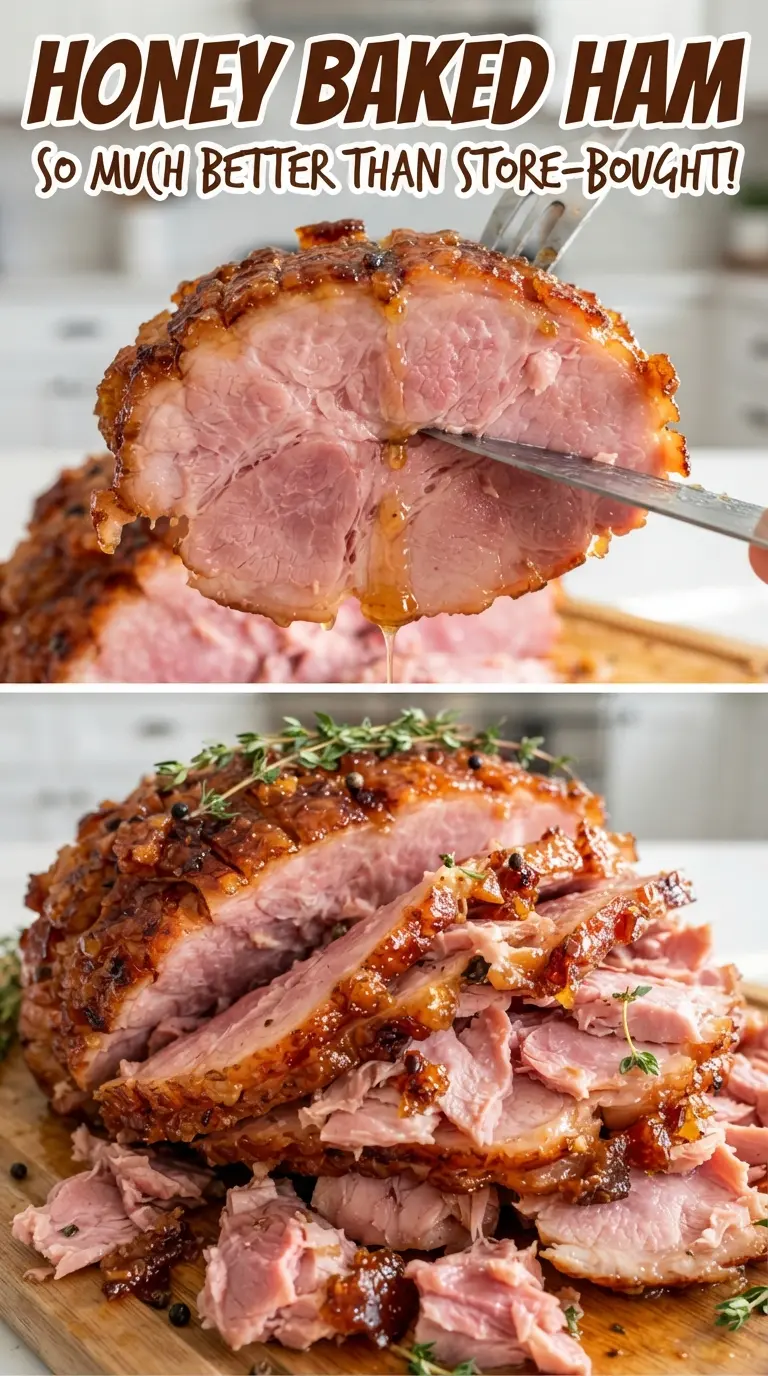
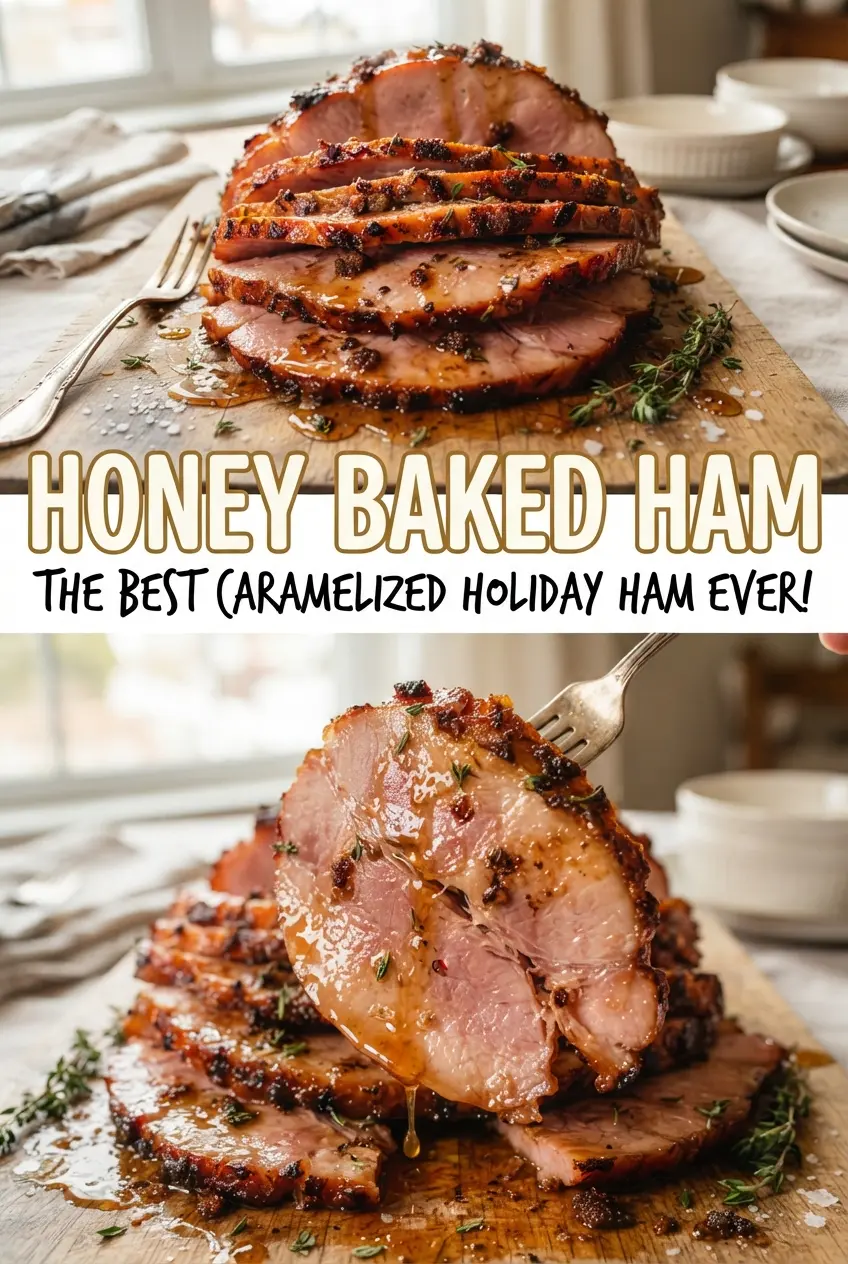
Honey baked ham comes out with that crackly, lacquered crust that shatters a little under the knife and gives way to juicy, salty slices underneath. The glaze clings in a thick shell instead of sliding off, and the spice layer brings just enough warmth to keep every bite from tasting one-note. It’s the kind of centerpiece that looks polished on the table but doesn’t ask for much hands-on work.
The trick is building the glaze in layers instead of dumping everything on at once. Honey and butter give you a sticky base that helps the sugar adhere, while the brown sugar and spices caramelize into that deep amber crust during the hot finish. Starting the ham low and covered keeps it from drying out before the glaze goes on, and the final blast of heat is what turns the coating crisp instead of grainy.
Below, I’ll walk through the timing that keeps a fully cooked spiral ham moist, the reason the sugar goes on in repeated coats, and a few practical variations if you want to adjust the spice or scale it for a smaller crowd.
The crust turned out crackly and caramelized, and the ham stayed juicy all the way through. I followed the three glaze layers and the slices came out glossy instead of sticky.
Save this honey baked ham for the holiday table when you want a crackly spiced crust and juicy spiral slices.
The Reason the Sugar Crust Stays Crackly Instead of Melting Off
The crust on a glazed ham fails when the sugar goes on too early or the oven stays too cool for the last stage. Sugar needs dry heat to caramelize, and it needs repeated contact with the surface to build that thick, crackly layer you can actually see. If you add one heavy coating and walk away, it tends to melt into syrup and run into the pan instead of setting on the ham.
This recipe solves that by using three layers of glaze and a high-heat finish. The first brushing gives the ham a sticky base, the spiced sugar starts the crust, and each repeat coat deepens the color and texture. Keeping the ham covered during the long bake protects the meat, then uncovering it only at the end lets the glaze tighten without overcooking the slices.
What Each Part of the Glaze Is Doing
- Honey — This is the sticky foundation that helps the sugar cling to the ham. A mild honey works best; darker honey brings more bitterness once it caramelizes, which can crowd out the other spices.
- Butter — Butter loosens the honey just enough to brush on evenly and gives the crust a richer finish. It doesn’t replace the sugar; it helps the glaze spread before it sets.
- Brown sugar and granulated sugar — The mix gives you both depth and a crisp set. All brown sugar makes the crust softer and a little more molasses-heavy, while all white sugar can taste sharper and less rounded.
- Cinnamon, cloves, ginger, nutmeg, allspice, and paprika — These spices turn the glaze from plain sweet into something layered and warm. The paprika doesn’t make the ham taste smoky; it adds color and a little savory edge so the crust looks as good as it tastes.
- Spiral-sliced bone-in ham — Spiral slicing gives the glaze a place to slide into every cut, and the bone helps the meat stay flavorful and moist. A boneless ham works in a pinch, but it won’t catch the glaze in the same way and the slices won’t fan out as neatly.
How to Keep the Ham Moist While the Glaze Sets
Starting Covered and Low
Set the ham cut-side down in the roasting pan and cover it tightly with foil before it goes into the oven. That first long bake at 325°F warms the ham gently and keeps the surface from drying out before the glaze is ready. If the foil is loose, steam escapes and the outer slices can turn leathery before the center is heated through.
Brushing on the Base Coat
Melt the honey and butter together until smooth, then mix the sugars and spices in a separate bowl. Brush the ham generously with the honey butter while it’s still warm, then pat the spiced sugar over the top so it sticks instead of clumping in wet patches. This is the stage that decides whether the crust looks even or patchy.
Building the Crackly Finish
Once the first coat is on, raise the oven to 400°F and return the ham for short bursts, reapplying glaze two more times. Watch for the crust to turn deep golden and look dry at the edges, not wet and glossy all over. If the sugar starts to darken too fast, the oven is too hot or the rack is too close to the heating element.
Resting Before the First Slice
Let the ham rest for 15 minutes before serving so the juices settle and the crust firms up a little more. Cutting too soon sends the glaze sliding and the slices can tear instead of fanning cleanly. A brief rest gives you neater slices and a platter that actually holds together.
Three Ways to Adjust the Glaze Without Losing the Texture
Less Sweet, More Savory
Cut the granulated sugar to 3/4 cup and keep the brown sugar as written. You’ll still get a crackly crust, but the glaze leans deeper and less candy-like, which works well if you’re serving the ham with richer sides.
Gluten-Free by Default
This recipe is naturally gluten-free as long as your ham and spices are certified gluten-free. The texture doesn’t change at all, so this is one of those cases where the swap is about choosing the right packaged ham, not changing the method.
Half-Sized Ham
For a smaller ham, keep the glaze amounts the same if you like a heavier crust, or cut everything in half for a thinner coating. The important part is watching temperature rather than trusting the clock, since a smaller ham will hit 120°F and 140°F much faster.
Storage and Reheating
- Refrigerator: Store leftovers in an airtight container for up to 4 days. The crust softens in the fridge, but the flavor stays excellent.
- Freezer: Slices freeze well for up to 2 months if wrapped tightly and packed flat. Freeze individual portions so you can thaw only what you need.
- Reheating: Warm slices covered at 300°F with a splash of water or pan juices, or reheat gently in the microwave at reduced power. High heat dries out spiral ham fast and makes the edges tough before the center is warm.
Answers to the Questions Worth Asking
Honey Baked Ham
Ingredients
Equipment
Method
- Preheat the oven to 325F, then place the ham cut-side down in a roasting pan and cover tightly with foil so the surface steams instead of browns.
- Bake at 325F for 12-14 minutes per pound until the ham reaches 120F inside, watching for consistent internal temperature rather than surface color.
- Melt the honey and butter together until smooth and glossy, stirring until no butter streaks remain.
- In a separate bowl, mix the granulated sugar and brown sugar with the cinnamon, cloves, ginger, nutmeg, allspice, and paprika until evenly speckled.
- Remove the foil, brush the ham generously with the honey butter, and pat on a layer of the spiced sugar so it adheres as a dry, sandy coating.
- Raise the oven to 400F, then bake for 5 minutes until the sugar begins to melt and tighten with visible bubbling at the edges.
- Repeat by brushing with honey butter and patting on more spiced sugar, then bake again for 5 minutes until the crust looks deeper golden and shinier.
- Repeat one more time—brush, pat on spiced sugar, and bake at 400F until the crust is deep golden and crackly and the ham reaches 140F.
- Rest the ham for 15 minutes before serving, letting the glaze set so the crackly crust stays intact when slices are fanned open.


