
Cranberry Brie Stuffed Chicken lands on the table with crisp golden edges, a juicy cut of chicken, and a center that turns molten the second your knife goes in. The brie softens into the spinach and cranberry sauce instead of disappearing into the filling, so every bite gives you creamy, tart, savory contrast instead of a bland cheese pocket. The pan sauce pulls it all together with a glossy finish that tastes like it came from a much longer dinner than this actually takes.
The trick is building layers inside the chicken breast that can handle heat without leaking out. A deep pocket gives the filling enough room to melt without tearing the meat, and a quick sear before the oven gives you color and flavor without overcooking the center. The cranberry sauce stays in two places here: a little inside the chicken for the filling, then the rest gets turned into the pan sauce with broth, honey, balsamic, and rosemary so nothing tastes flat.
Below, I’ve included the small details that matter most, like how to keep the brie from running out too early and what to look for when the chicken is ready to come out of the oven. That’s the difference between a stuffed chicken breast that holds together and one that gives you most of its filling in the skillet.
The chicken stayed juicy, the brie melted into the cranberry filling, and the sauce in the skillet thickened up just enough to spoon over everything. My husband kept saying it tasted like something from a nice restaurant.
Save this Cranberry Brie Stuffed Chicken for a juicy stuffed dinner with melted brie, tart cranberry, and a glossy rosemary pan sauce.
The Pocket Matters More Than the Filling
The biggest mistake with stuffed chicken is cutting the pocket too shallow or too wide. A shallow pocket won’t hold enough filling, and a wide one tears through the side so the brie melts out before the chicken finishes cooking. Cut almost to the far edge of the breast, but don’t slice all the way through, and keep the opening tight enough that you can press it closed around the filling.
Searing first is what gives the outside enough structure to protect the filling in the oven. If the skillet isn’t hot enough, the chicken steams in the oil instead of browning, and you lose that flavorful crust that helps the breast hold together. You’re looking for a deep golden surface that releases from the pan without sticking before it goes into the oven.
What the Brings, the Cranberry, and the Spinach Each Do Here

- Brie — This is the ingredient that gives you the creamy center. Use a wheel with the rind still on; it melts into the filling instead of turning greasy. If you swap it, go with another soft cheese like camembert or a mild goat cheese, but expect a sharper flavor and a slightly less silky melt.
- Whole berry cranberry sauce — Whole berry sauce brings texture, not just sweetness. The fruit pieces help the filling stay put, and the sauce thickens into the pan glaze later. Jellied cranberry sauce works in a pinch, but the filling will be smoother and the final sauce less interesting.
- Baby spinach — Spinach adds a little moisture and keeps the filling from becoming all cheese and sugar. Use fresh leaves and tuck them in lightly; if you pack them too tightly, the pocket can split. Frozen spinach isn’t a clean swap here unless it’s thawed and squeezed very dry, and even then it makes the filling wetter.
- Balsamic vinegar and honey — These are what turn the pan drippings into an actual sauce instead of a thin, salty skillet glaze. The balsamic adds depth, and the honey rounds out the cranberry’s tart edge. If you skip either one, the sauce tastes flatter and more one-note.
Getting the Chicken Cooked Through Without Losing the Filling
Season and stuff with restraint
Season the outside of each breast before you add the filling so the meat itself tastes seasoned, not just the sauce. Slide in the spinach first, then the brie, then the tablespoon of cranberry sauce so the cheese has something to cradle it. If you overfill the pocket, the chicken will burst open in the skillet, and the filling will end up on the pan instead of in the dinner.
Sear for color, not for doneness
Heat the oil until it shimmers before the chicken goes in. That first 3 to 4 minutes per side builds a crust and starts rendering flavor into the pan, but it won’t cook the chicken through. If the chicken sticks when you try to turn it, it isn’t ready yet; give it another minute and it will usually release on its own.
Finish in the oven and watch the temperature
Move the skillet straight into the oven so the sear stays intact. Bake until the thickest part reaches 165F, and use a thermometer instead of guessing, because stuffed chicken goes from just right to dry fast. If the filling starts to leak a little, don’t panic; that’s normal. What matters is pulling the chicken before the breast meat tightens and dries out.
Turn the drippings into sauce
Set the chicken aside briefly, then add the broth, remaining cranberry sauce, honey, balsamic, and rosemary to the same skillet. Scrape up the browned bits with a spoon and simmer until the sauce looks glossy and lightly syrupy, about 3 minutes. If it tastes too sharp, another small drizzle of honey smooths it out; if it tastes thin, give it another minute on the stove.
Three Ways to Make This Stuffed Chicken Work for Your Table
Dairy-Free Version
Swap the brie for a dairy-free soft cheese that melts, or use a thick dairy-free spread with a little extra cranberry sauce. You won’t get the same rich, buttery melt, but you’ll still get a creamy center that balances the tart fruit.
Make It Ahead for a Faster Dinner
Stuff and season the chicken up to 8 hours ahead, then keep it covered in the refrigerator until you’re ready to cook. That ahead-of-time rest helps the filling stay in place, and the chicken cooks more evenly when it isn’t going into the pan ice-cold for too long.
Gluten-Free as Written
This recipe is naturally gluten-free as long as your cranberry sauce and chicken broth are certified gluten-free. That matters more than people expect, because both packaged ingredients can sometimes hide thickeners or additives you wouldn’t guess are there.
Swap the Herb Direction
Use sage instead of thyme if you want the chicken to lean more holiday-like and a little earthier. Rosemary is already in the sauce, so keeping the filling herb lighter prevents the whole dish from tasting too piney.
Storage and Reheating
- Refrigerator: Store leftovers for up to 3 days. The chicken stays juicy, though the brie will firm up once chilled.
- Freezer: Freeze cooked stuffed chicken for up to 2 months, tightly wrapped. The texture of the brie changes a bit after thawing, but it still reheats well enough for a second meal.
- Reheating: Warm covered in a 325F oven until heated through, then spoon the sauce over the top. Microwaving too hard will make the chicken rubbery and can push the filling out of the pocket.
Answers to the Questions Worth Asking
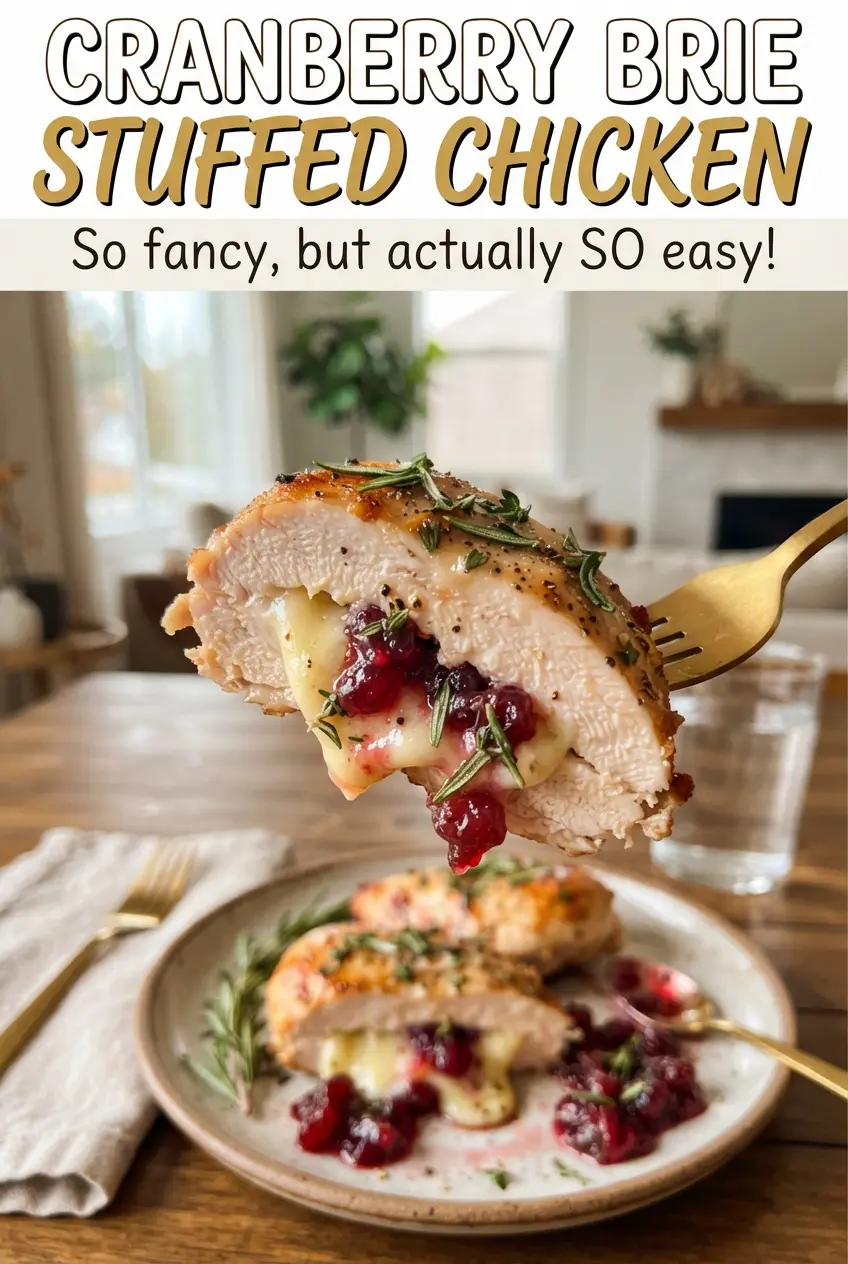
Cranberry Brie Stuffed Chicken
Ingredients
Equipment
Method
- Preheat the oven to 400°F. This sets the temperature so the stuffed chicken finishes baking right away.
- Cut a deep pocket into the side of each chicken breast, then season the outside with salt, black pepper, garlic powder, and dried thyme. Make sure the pockets are deep enough to hold the filling without tearing.
- Stuff each pocket with baby spinach, sliced brie, and 1 tablespoon whole berry cranberry sauce, then secure with toothpicks. Leave the cheese as slices so it melts into a creamy interior.
- Heat olive oil in an oven-safe skillet and sear the chicken for 3-4 minutes per side until golden. Use a golden crust as the visual cue before transferring to the oven.
- Transfer the skillet to the oven and bake 15-18 minutes until the chicken reaches 165°F. Look for the internal temperature reading as your doneness cue.
- Remove the chicken, then add chicken broth, remaining whole berry cranberry sauce, honey, balsamic vinegar, and fresh rosemary to the skillet and simmer 3 minutes. Simmer until the sauce looks slightly thickened and glossy.
- Spoon the sauce over the chicken and serve. The brie and cranberry should show through when you slice into the breasts.


