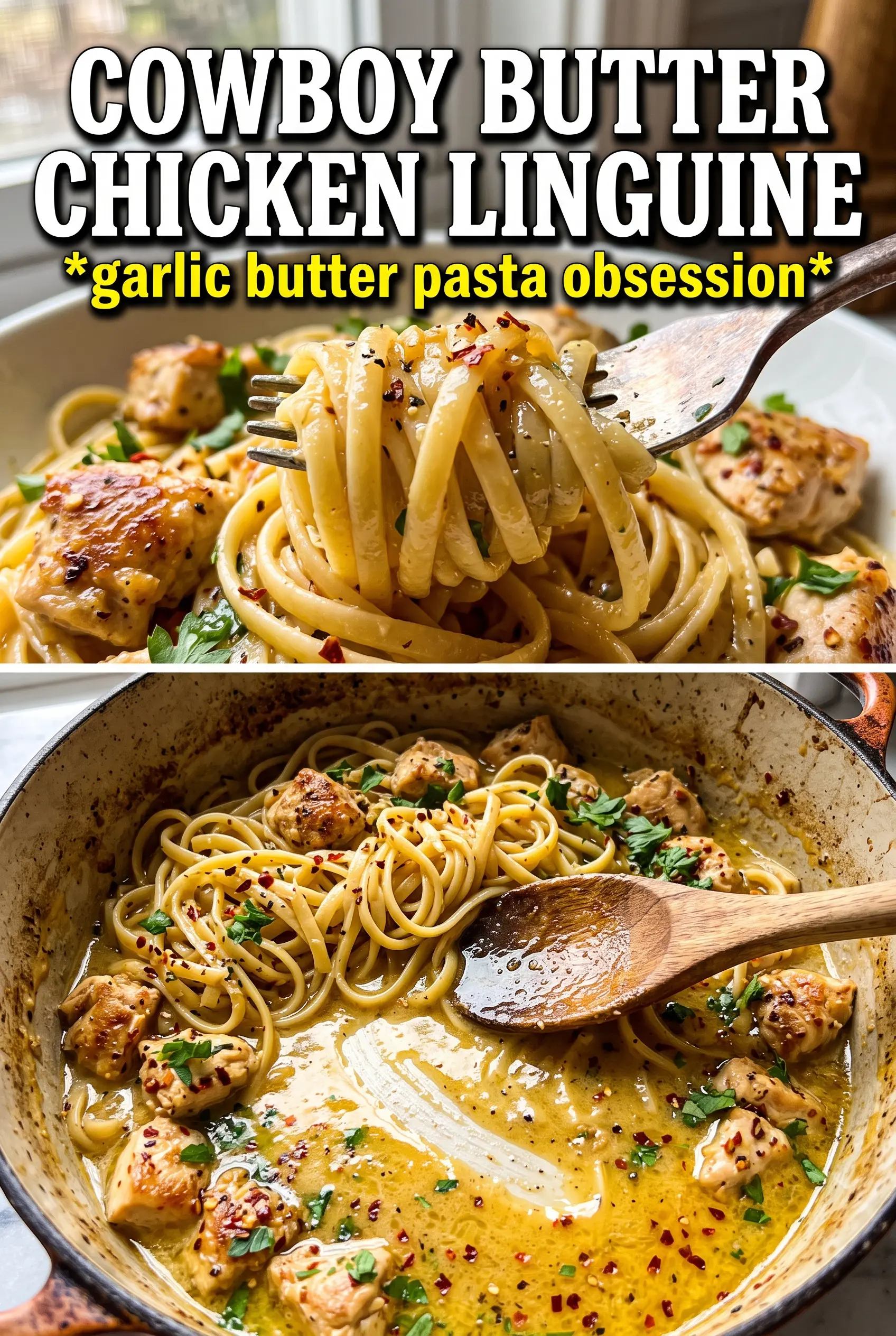

Linguine coated in cowboy butter hits fast and hard: glossy, a little spicy, rich without feeling heavy, and just sharp enough from lemon to keep you going back for another forkful. The seared chicken brings those browned edges that make the whole bowl taste bigger than the ingredient list looks on paper.
What makes this version work is the order. The chicken gets real color first, then the same skillet turns into the sauce pan, so every browned bit left behind gets folded back into the pasta. The butter carries the garlic, Dijon, smoked paprika, red pepper flakes, and cayenne, while a splash of pasta water turns it into a sauce that clings instead of pooling at the bottom of the bowl.
If you’ve had butter-based pasta sauces go greasy or flat before, the fix is in the heat level and the finishing step. A handful of parsley and chives at the end keeps the sauce bright, and the lemon juice wakes up everything else without making it taste sharp. Below, I’ve broken down the part that matters most: keeping the sauce silky and getting the chicken well browned without drying it out.
The sauce stayed silky and coated every strand of linguine, and the chicken got those browned edges without turning dry. My husband kept sneaking bites straight from the pan.
Love this cowboy butter chicken linguine? Save it for the nights when you want a bold, buttery pasta with seared chicken and a lemony finish.
The Reason the Sauce Stays Glossy Instead of Turning Oily
The mistake most people make with butter pasta is pushing the heat too high once the butter goes in. Butter doesn’t need a hard simmer to come together; it needs gentle heat and a little starch from the pasta water to turn from melted fat into a sauce that coats the noodles. If the pan is too hot, the garlic scorches, the spices get bitter, and the sauce separates before it ever reaches the pasta.
That’s why the chicken gets cooked first and removed. You want the skillet hot enough to char the strips, then calm enough for the butter to melt cleanly without frying the aromatics into dust. The leftover browned bits on the bottom are not a problem here. They’re the backbone of the sauce.
What Each Ingredient Is Actually Doing in This Bowl
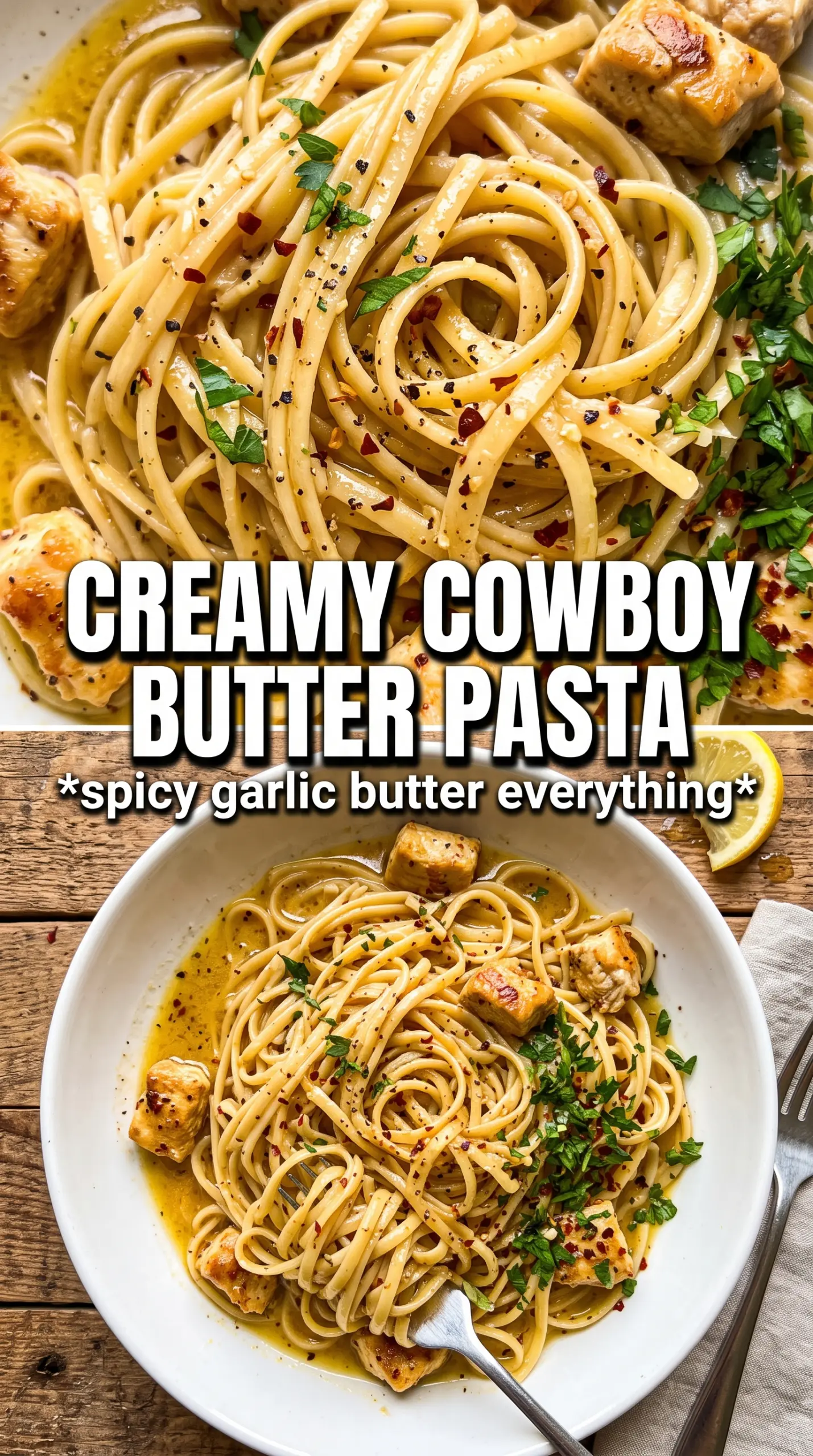
- Chicken breasts — Cut into strips so they cook fast and brown evenly. Thighs work too if you want a little more richness, but breasts keep the dish lighter and let the sauce stay front and center.
- Cajun seasoning — This gives the chicken its first layer of salt, spice, and color. If your blend is very salty, go easy on added salt until after the chicken is cooked.
- Butter — This is the sauce, so use the good stuff if you can. Salted or unsalted both work, but unsalted gives you more control because Cajun seasoning varies so much.
- Dijon mustard — It doesn’t make the sauce taste like mustard. It helps emulsify the butter and pasta water so the sauce turns silky instead of greasy.
- Smoked paprika, red pepper flakes, and cayenne — These are the heat and smoke layer. If you want a milder bowl, cut the cayenne first rather than the paprika; the smoked paprika is part of the cowboy butter character.
- Lemon juice, parsley, and chives — These go in at the end for brightness. If they cook too long, the herbs dull and the lemon loses the lift that keeps the sauce from tasting heavy.
- Pasta water — This is the quiet ingredient that makes the sauce cling. The starch helps the butter sauce hug the linguine, and adding it a splash at a time gives you control over the final texture.
Building the Cowboy Butter Sauce Without Breaking It
Getting the Chicken Browned First
Season the chicken strips well, then cook them in olive oil over high heat until the edges are deeply browned and the centers are just cooked through. You’re looking for color, not a pale steam-cooked surface, because that browning is what gives the dish its backbone. Pull the chicken out once it’s done; if it sits in the pan while you build the sauce, it’ll overcook and lose that seared texture.
Letting the Butter Melt, Not Fry
Turn the heat down to medium before the butter goes in. Once it melts, add the garlic and keep it moving for about a minute, just until fragrant. If the garlic starts to brown hard or smell sharp, the pan is too hot and the sauce will taste bitter instead of rich.
Finishing With Pasta Water
Stir in the Dijon, paprika, red pepper flakes, and cayenne, then add the lemon juice, parsley, and chives. Toss in the cooked linguine and add pasta water a little at a time until the noodles look glossy and coated. The sauce should cling to the pasta, not sit underneath it; if it looks tight or greasy, another splash of pasta water usually brings it back together.
How to Adapt This Pasta Without Losing What Makes It Work
Make It Dairy-Free
Use a plant-based butter that melts cleanly and doesn’t taste overly sweet. The sauce will still coat the pasta, but it may need a touch more pasta water to reach that silky finish.
Swap in Chicken Thighs for a Richer Bite
Boneless thighs give you a juicier, slightly richer result and can handle a little extra browning. They take a minute or two longer than breasts, so cook until the pieces are fully done and the juices run clear.
Use Gluten-Free Pasta
A good gluten-free linguine works here as long as you don’t overcook it. Keep some of the cooking water, because gluten-free pasta can go from too tight to perfectly coated with just a few spoonfuls.
Storage and Reheating
- Refrigerator: Store leftovers in an airtight container for up to 3 days. The pasta will absorb some sauce as it sits.
- Freezer: I don’t recommend freezing this one. Butter sauces and cooked pasta both lose their texture after thawing.
- Reheating: Warm gently in a skillet over low heat with a splash of water or broth. High heat will split the butter sauce and dry out the chicken before the pasta loosens up.