
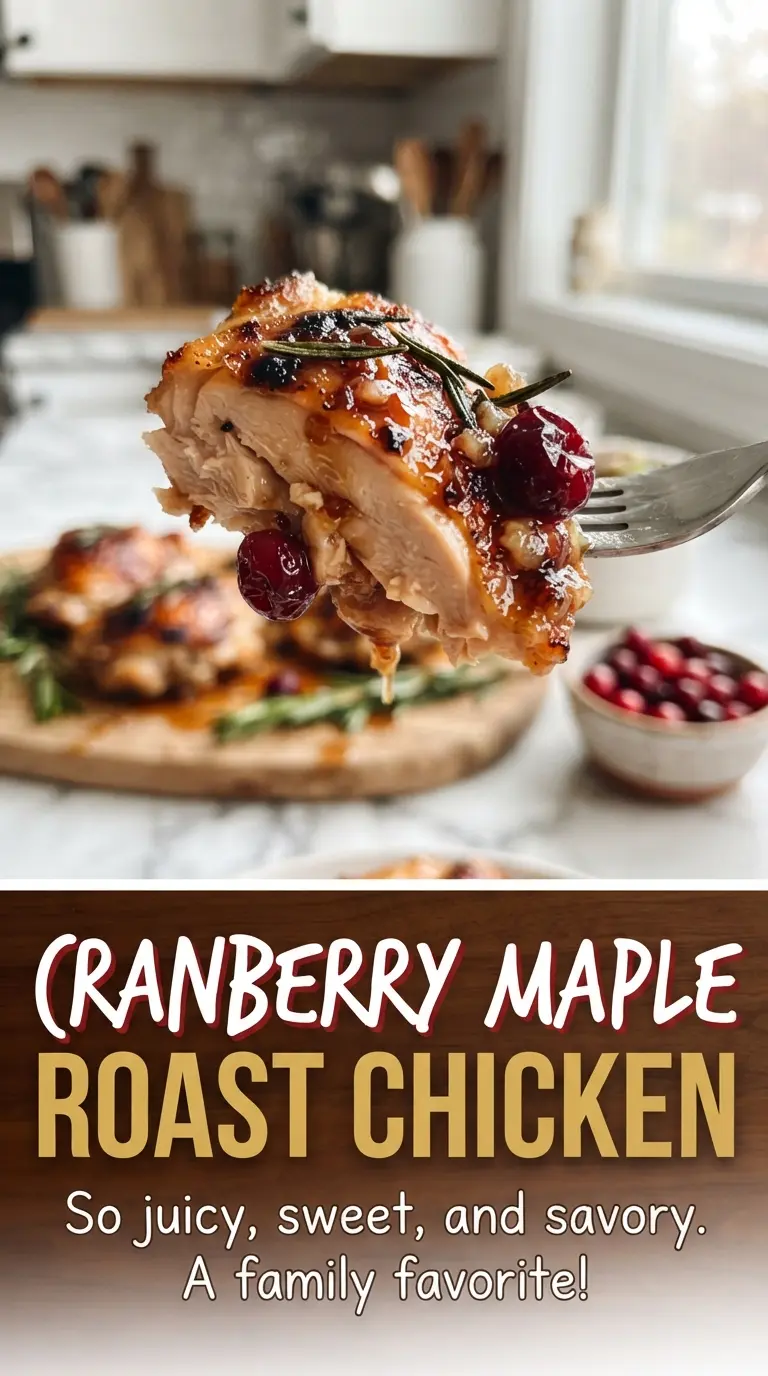
Roast chicken gets a lot more interesting when the skin turns lacquered with maple, the cranberries burst into a tangy pan sauce, and the onions soften into sweet edges underneath everything. This version lands in that sweet spot between company-worthy and practical, with a pan sauce that tastes built rather than poured on at the end.
The trick is timing. The chicken gets a long first roast to start rendering the skin and building color before the maple glaze goes on, so the sugars don’t scorch. The butter and rosemary slide under the skin and perfume the meat directly, while the orange and garlic inside the cavity keep the bird from tasting flat or one-note. When the cranberries hit the hot pan with the broth, they break down just enough to thicken the glaze without turning into jam.
Below you’ll find the part that matters most: when to glaze, how to know the chicken is actually done, and what to do if your cranberries look a little stubborn in the pan. It’s a simple roast, but the small details make it taste like much more.
The maple glaze browned beautifully and the cranberries burst right into the pan sauce instead of drying out. I was surprised how juicy the chicken stayed after the first roast, and the rosemary butter under the skin made every slice taste seasoned all the way through.
Save this cranberry maple roast chicken for the nights when you want a glossy roast with a tart-sweet pan sauce and almost no extra cleanup.
The Trick to Keeping Maple Glaze Glossy Instead of Burnt
Maple syrup is the ingredient that can make this dish look gorgeous or leave you with bitter, sticky skin if it goes in too early. The first roast gives the chicken time to cook through and the skin time to dry and brown before the glaze is added. That matters because maple burns faster than plain chicken fat will ever brown, especially in a hot oven.
The second piece is the cranberry timing. They don’t go in at the start, because they’d collapse into mush before the chicken finishes. Added near the end, they burst just enough to lend sharpness and body to the pan sauce while still holding some shape. If your glaze ever looks dull, it usually means the chicken needed more time uncovered before brushing; glossy skin comes from heat plus a mostly dry surface, not more syrup.
What the Butter, Citrus, and Cranberries Are Doing Here
- Whole chicken — A 5-pound bird gives you enough time to build color without drying out the breasts. If yours runs larger, expect a longer roast and check the thigh early with a thermometer instead of trusting the clock.
- Butter and rosemary — This is where the flavor gets under the skin, literally. Softened butter spreads cleanly and carries the rosemary into the meat; melted butter won’t cling the same way, so keep it softened, not liquid.
- Orange and garlic — The cavity aromatics steam gently from the inside, which keeps the chicken from tasting flat. The garlic turns sweet, not harsh, and the orange gives the sauce a brighter edge than lemon would here.
- Cranberries, maple, and Dijon — This trio makes the pan sauce. Maple brings sheen and sweetness, Dijon keeps it from tasting sugary, and cranberries add the sharp pop that cuts through the richness of the bird.
- Chicken broth — The broth loosens the glaze into a spoonable sauce and keeps the pan from scorching once the cranberries go in. Use a good-tasting broth here; weak broth means a thin sauce.
From Seasoned Bird to Carved Roast Without Losing the Glaze
Seasoning Under the Skin
Pat the chicken dry first. Dry skin browns; wet skin steams. Season inside and out, then work the rosemary butter under the skin where it can baste the meat as it roasts. If the skin tears a little, don’t panic — keep going, because the butter will still protect the meat and the roast will still look beautiful once it’s glazed.
The First Roast Builds the Color
Set the chicken in a roasting pan with the onion around it and roast until the skin is well on its way to golden. You’re looking for rendered fat in the pan and skin that looks taut, not pale. If the breast is browning too fast before the thigh has had time to catch up, tent just the top loosely with foil rather than lowering the oven and losing that initial roast.
Glazing and Finishing the Bird
Whisk the maple syrup and Dijon, brush on half, then add the cranberries and broth. The oven heat will loosen the glaze and let it cling to the skin instead of pooling in the pan. Brush with the remaining glaze during the last stretch, then check the thigh with a thermometer; 165°F is the number that matters. Let the chicken rest for 15 minutes before carving so the juices stay in the meat and the sauce can settle slightly.
How to Adapt This Roast for Different Tables and Leftovers
Dairy-Free Version
Swap the butter for a good dairy-free butter or olive oil. You’ll lose a little of the rich, round flavor that butter gives under the skin, but the rosemary still carries well and the skin will still brown nicely as long as the chicken is dry before it goes in the oven.
No Fresh Cranberries on Hand
Use frozen cranberries straight from the freezer. Don’t thaw them first; they’ll break down in the oven just fine, and thawing only gives you more liquid in the pan. Dried cranberries won’t give you the same tart burst or sauce body, so this is one swap that changes the dish more than it replaces it.
Smaller Chicken, Faster Dinner
A chicken under 5 pounds will cook faster, so start checking the thigh temperature sooner. The glaze still works the same way, but you may need less time after the first roast before the cranberries go in. Watch the color, not just the clock, because a smaller bird can go from golden to too dark faster than expected.
Storage and Reheating
- Refrigerator: Store carved chicken and pan sauce in an airtight container for up to 4 days. The glaze will thicken as it chills.
- Freezer: The chicken freezes well for up to 2 months, but the cranberry sauce will soften a bit after thawing. Freeze meat and sauce separately if you want the best texture.
- Reheating: Reheat covered in a 325°F oven with a splash of broth to keep the meat from drying out. Microwave reheating works in a pinch, but it tends to toughen the breast meat and dull the glaze.
Answers to the Questions Worth Asking
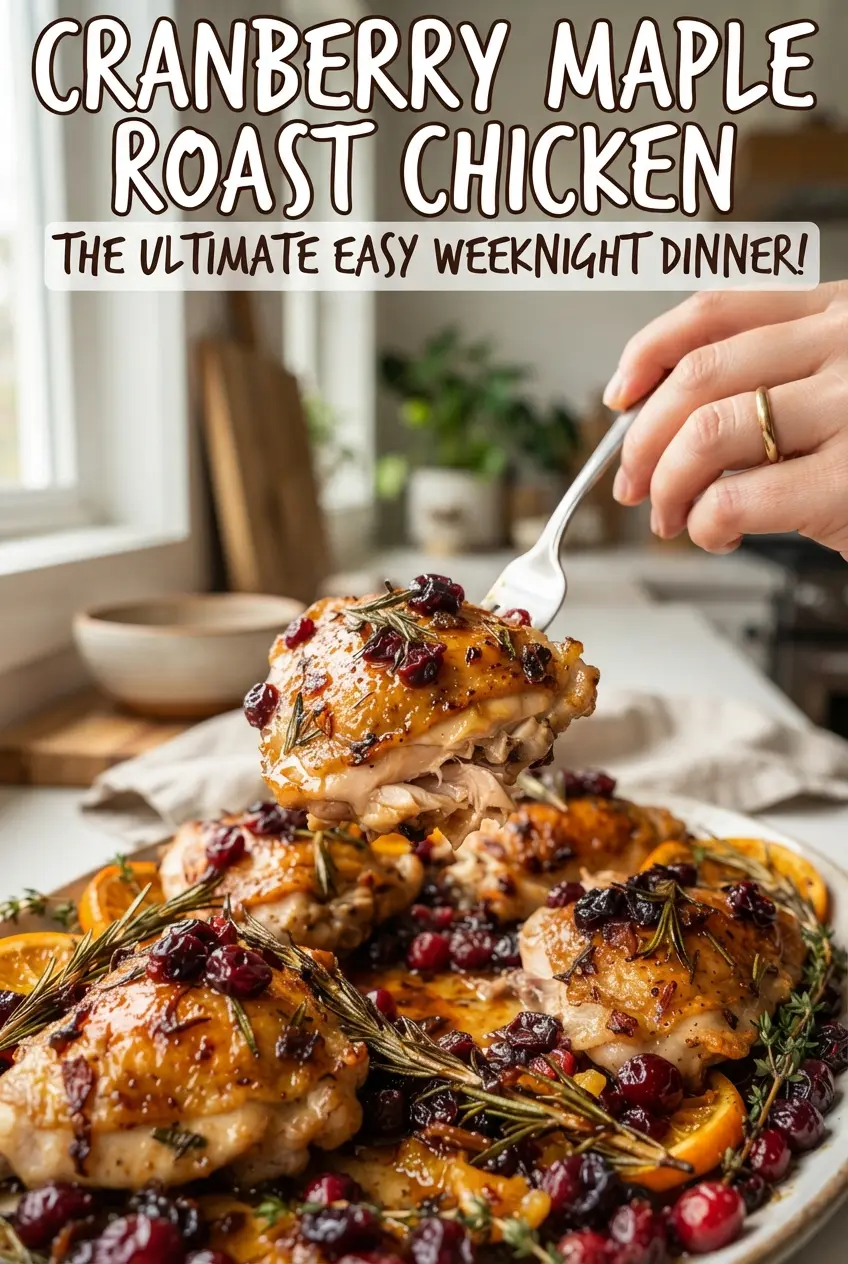
Cranberry Maple Roast Chicken
Ingredients
Equipment
Method
- Preheat oven to 425F. Pat the whole chicken dry and season inside and out with salt and black pepper.
- Stir softened butter with chopped rosemary, then rub it under and over the skin. Arrange the rosemary-butter coating so the skin looks evenly lacquered.
- Stuff the cavity with orange halves and garlic halves. Set the chicken in a roasting pan with red onion wedges all around it, so the onions sit near the drippings.
- Roast for 50 minutes at 425F. Keep the pan in the center rack so the skin browns evenly and the juices begin to render.
- Whisk maple syrup with Dijon mustard until smooth. Brush half of the glaze over the chicken and immediately add fresh cranberries and chicken broth to the pan.
- Roast 25-30 minutes more at 425F, brushing with the remaining glaze partway through. Continue until the thigh reaches 165F, with cranberries bursting and the skin turning deep golden.
- Rest chicken for 15 minutes on a cutting surface. This lets the juices set so carving stays clean and juicy.
- Carve the chicken and spoon the cranberry pan sauce over the top. Serve right away while the pan sauce is glossy and thickened.


