
Warm mashed potatoes, buttery corn, crispy chicken, and brown gravy hit the bowl in the right order and turn into the kind of dinner that disappears fast. The potatoes stay soft enough to catch the gravy, the chicken brings crunch, and the cheese melts just enough to tie everything together without turning greasy. It’s the same comfort-food combination people remember from fast food, but made fresh at home with better texture and a deeper, saltier gravy finish.
The key is keeping each layer distinct until the last minute. Warm potatoes help the gravy settle instead of clumping, and a short buttermilk soak gives the chicken a lightly tangy base before it gets dredged in seasoned flour. Frying the chicken in hot oil keeps the coating crisp, which matters because soggy chicken under gravy ruins the whole bowl.
Below, I’ve included the little details that keep the chicken crunchy, the gravy pourable, and the bowls easy to assemble without racing the clock.
The chicken stayed crisp even after the gravy went on, and the mashed potatoes soaked up just enough sauce without getting watery. My husband went back for seconds before I even sat down.
Save these KFC Mashed Potato Bowls for the nights when you want crispy chicken, creamy potatoes, and gravy all in one bowl.
The Crisp Chicken Has to Stay Separate From the Gravy
What makes this bowl work is contrast. The chicken is fried after a short buttermilk soak, and that thin layer of seasoned flour needs hot oil to turn into a shattering crust. If the oil is too cool, the coating drinks it up and goes greasy before the center cooks through. If you crowd the pan, the temperature drops and the crust softens before it even hits the bowl.
The other mistake is saucing too early. Build the bowls with potatoes and corn first, then top with chicken, then gravy, then cheese. That keeps the chicken crisp longer and lets the gravy land where it belongs. Once the gravy soaks through the potatoes, you still get texture instead of a bowl that eats like one heavy mash.
What the Buttermilk, Flour, and Gravy Are Actually Doing
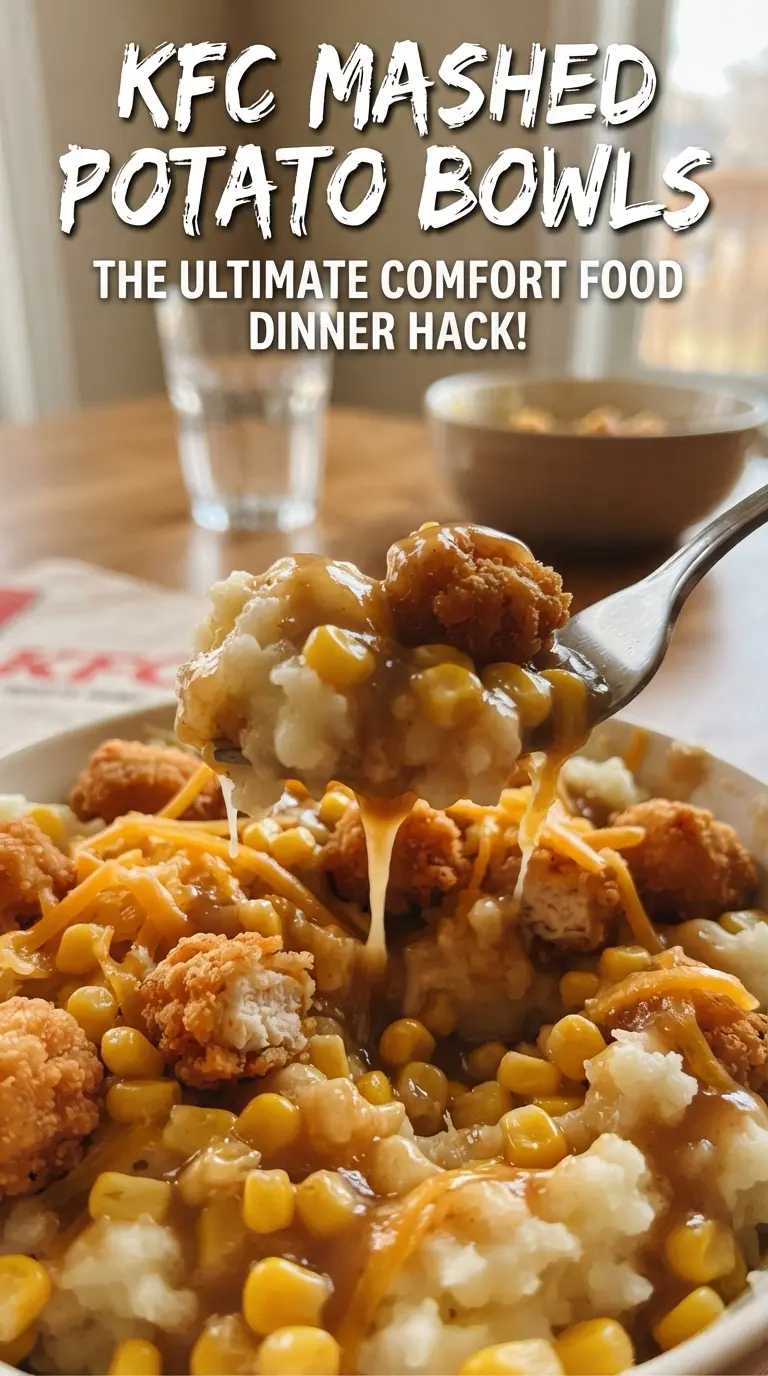
- Buttermilk — This gives the chicken a slight tang and helps the flour cling in a thin, even layer. Ten minutes is enough here; longer won’t hurt much, but it’s not a deep marinade situation. If you don’t have buttermilk, mix 1/2 cup milk with 1/2 tablespoon lemon juice or vinegar and let it sit a few minutes before using.
- All-purpose flour — This is what builds the coating. It fries into a light crust that feels like popcorn chicken instead of breaded nuggets. Don’t swap in self-rising flour unless you want a puffier, less crisp shell.
- Paprika, garlic powder, salt, and pepper — These season the crust itself, which matters because gravy on top won’t season the chicken all the way through. Paprika adds color and a warm note, and garlic powder keeps the coating from tasting flat.
- Warm mashed potatoes — Cold potatoes tighten up and turn gluey under hot gravy. Warm, fluffy potatoes hold the bowl together and help the gravy spread instead of pooling in one spot.
- Brown gravy — Use a gravy that’s already smooth and pourable. Thick gravy clumps over the chicken and cheese; thin gravy disappears into the potatoes. Warm it before serving so it doesn’t cool the whole bowl down.
- Cheese — Cheddar or a three-cheese blend melts best over the hot gravy and chicken. Shred it yourself if you can, because pre-shredded cheese has starch on it and won’t melt as cleanly.
Building the Bowls in the Right Order
Season and Dredge the Chicken
Soak the chicken pieces in buttermilk for 10 minutes, then lift them straight into the seasoned flour. Press the flour on so every side gets coated, but don’t pack it into a thick paste. The coating should look dry and craggy; that uneven surface is what fries up crisp. If the chicken starts looking gummy, the buttermilk wasn’t drained enough, and the flour will clump instead of forming a light crust.
Fry Until the Coating Turns Deep Gold
Heat the oil to 350°F and fry in batches for 4 to 5 minutes, until the chicken is golden and the center hits 165°F. You want steady bubbling, not furious splattering; that’s the sign the oil is hot enough without scorching the outside. Pull the pieces when they look a shade darker than pale gold, because they’ll keep cooking for a minute on the drain rack. Paper towels work, but a rack keeps the bottom from steaming soft.
Layer While Everything Is Hot
Spoon warm mashed potatoes into each bowl first, then add the buttered corn, then the chicken. Pour the gravy over the chicken and potatoes, then finish with the shredded cheese so the heat starts melting it right away. If you wait too long between layers, the chicken loses its crisp edge and the whole bowl feels flat. Serve immediately while the potatoes are still soft and the cheese is just starting to melt.
How to Adjust These Bowls Without Losing the Point
Oven-Baked Chicken Instead of Fried
For a lighter version, arrange the coated chicken on a well-oiled baking sheet and bake at 425°F until crisp and cooked through. You won’t get the exact same shattering crust, but you’ll keep the same seasoned chicken texture without the frying mess. A quick spray of oil on top helps the flour brown instead of drying out pale.
Gluten-Free Version
Use a gluten-free all-purpose flour blend in place of the flour for dredging and make sure the gravy is gluten-free too. The coating will still crisp, though it may be a little more delicate and sandy at the edges. Don’t skip the oil temperature check, since gluten-free coatings brown faster when the pan runs hot.
Cheesy Loaded Bowl Upgrade
Add a spoonful of cooked bacon bits or a little extra cheese over the gravy if you want a heavier loaded-bowl feel. Keep the amount modest or the bowl turns salty fast, especially with gravy in the mix. A little green onion at the end works better than piling on more dairy.
Storage and Reheating
- Refrigerator: Store the components separately for up to 3 days. The chicken will soften a bit once chilled, but it still reheats well if you keep the gravy off it until serving.
- Freezer: The fried chicken and gravy freeze better than the assembled bowls. Freeze the chicken on a tray first, then bag it; mashed potatoes can freeze, but the texture turns slightly grainy after thawing.
- Reheating: Reheat the chicken in a hot oven or air fryer so the coating crisps back up. Warm the potatoes and gravy separately, then assemble right before eating. Microwaving the full bowl softens the crust and makes the chicken limp fast.
Answers to the Questions Worth Asking
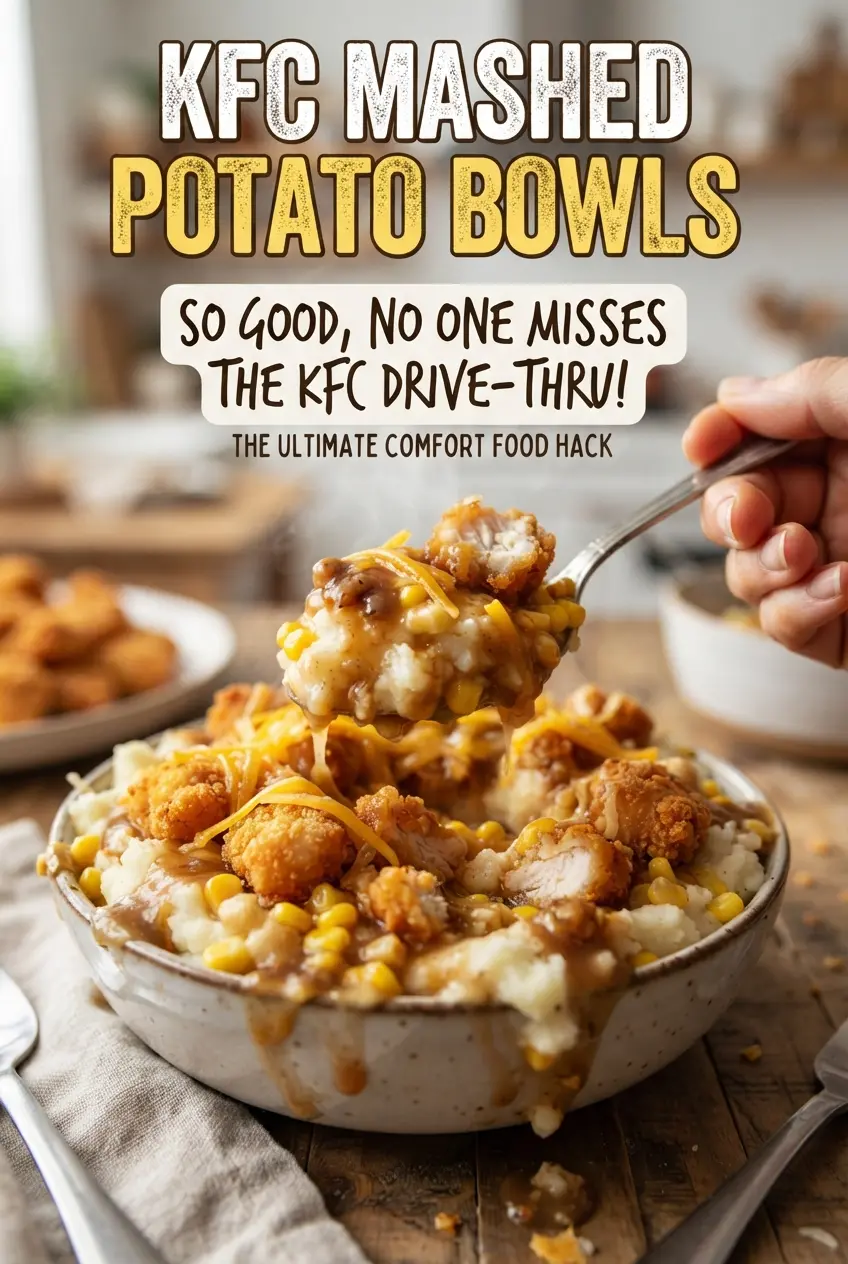
KFC Mashed Potato Bowls
Ingredients
Equipment
Method
- Soak the chicken pieces in buttermilk for 10 minutes.
- Mix flour, paprika, garlic powder, salt, and black pepper, then dredge the chicken until fully coated.
- Heat oil in a cast iron skillet to 350°F.
- Fry the chicken in 350°F oil for 4-5 minutes until golden and cooked through to 165°F, then drain.
- Divide warm mashed potatoes among 4 bowls.
- Top each bowl with buttered corn and crispy chicken.
- Pour warm brown gravy over the top and sprinkle with shredded cheese, then serve immediately.


