
These cream cheese mashed potatoes land on the table extra smooth, rich, and sturdy enough to hold their shape without turning gluey. The cream cheese gives them a tangy, velvety body that tastes fuller than plain butter-and-milk mash, and the texture stays plush long after the pot leaves the stove.
Yukon gold potatoes are the right choice here because they mash up creamy instead of dry and mealy. Warm milk matters too. Cold dairy cools the potatoes down too fast and makes the potatoes seize up before everything has a chance to blend. Softened cream cheese melts in cleanly when the potatoes are still hot, which is the difference between a silky bowl and little lumps that never fully disappear.
Below, I’ve included the one technique that keeps this mash smooth, plus a few smart swaps if you need to work with what’s already in the fridge. Once you’ve made them this way, it’s hard to go back.
The potatoes came out unbelievably smooth, and the cream cheese gave them this rich, tangy finish that made them taste like they had been whipped for ages. I served them with roast chicken and there wasn’t a spoonful left.
Save these cream cheese mashed potatoes for a silky, tangy side dish that stays fluffy and rich from first scoop to last.
The One Step That Keeps Cream Cheese Mashed Potatoes from Turning Heavy
The biggest mistake with mashed potatoes is overworking them after the dairy goes in. Once you start beating hot potatoes too hard, the starch turns gluey and the whole bowl shifts from fluffy to paste-like. This recipe avoids that by getting the butter into the hot potatoes first, then folding in softened cream cheese while everything is still warm enough to melt smoothly.
Another detail that matters is the water you cook them in. A generously salted pot seasons the potatoes from the inside out, which is why these taste finished without needing a heavy hand at the end. Yukon golds also help because they break down into a naturally creamy mash instead of a dry, grainy one that needs extra liquid just to come together.
- Yukon gold potatoes — Their buttery texture is what makes the mash taste naturally rich. Russets work in a pinch, but they’ll give you a lighter, drier result that needs a little more milk.
- Cream cheese — This is the ingredient that gives the potatoes their body and that subtle tang. Full-fat cream cheese melts the smoothest; reduced-fat versions can work, but they’re a little less plush.
- Warm milk — Warm dairy blends in without cooling the potatoes down. Cold milk can make the mash stiff before it’s fully smooth.
- Butter — Butter adds shine and roundness before the cream cheese goes in. Don’t skip it; it helps the potatoes taste rich instead of just tangy.
How to Get the Smoothest Bowl Without Overmixing

- Potatoes into salted water — Start the cubes in cold, well-salted water so they cook evenly from the outside in. They’re ready when a knife slides through with no resistance and the edges are just starting to break apart.
- Drain and dry them out — After draining, put the potatoes back in the hot pot for a minute over low heat. That step drives off extra moisture, which keeps the mash from turning loose and watery.
- Butter first, cream cheese second — Mash in the butter while the potatoes are still hot, then beat in the softened cream cheese until the mixture looks glossy and completely smooth. If the cream cheese is still cold, you’ll chase little lumps around the bowl.
- Milk at the end — Stir in the warm milk a little at a time until the texture loosens to where you want it. Stop as soon as it’s creamy; too much milk will wash out the rich texture that makes this dish work.
How to Finish These Potatoes for the Table
Building the Mash
Mash the potatoes while they’re still hot enough to steam. That heat helps the butter and cream cheese melt in without extra effort. If you wait too long, the potatoes stiffen and take more mixing, which is where texture starts going sideways.
Adding the Dairy the Right Way
Beat in the softened cream cheese until you no longer see streaks. Then stir in the warm milk slowly. If the potatoes look thick but smooth, stop there; they should hold soft peaks, not slide like soup. Salt and pepper go in after the dairy so you can taste the final balance instead of guessing early.
The Final Texture Check
These should look velvety, not whipped into air. You want a spoon to leave gentle ridges that relax slowly. Finish with chives for a fresh sharp note that cuts through the richness and keeps each bite from tasting heavy.
Ways to Adjust the Potatoes Without Losing the Creamy Texture
Garlic-forward version
Increase the garlic powder to 1 teaspoon if you want a stronger savory note without adding extra prep. It shifts the potatoes from mellow and creamy to more clearly side-dish savory, which works well next to roast beef or pork.
Dairy-free swap
Use a plant-based cream cheese and unsalted vegan butter, then thin with unsweetened warm oat milk. The potatoes will still be creamy, but they’ll taste a little lighter and less tangy than the original.
Extra rich holiday-style mash
Replace half the milk with heavy cream for a denser, more luxurious bowl. It’s not a lighter finish, but it does give you a restaurant-style texture that holds beautifully under gravy.
Make-ahead for a crowd
Cook and mash the potatoes, then hold them in a slow cooker on warm with an extra splash of milk stirred in before serving. This keeps them soft for buffet service, but too much heat for too long can dry them out, so stir once or twice if they sit for more than an hour.
Storage and Reheating
- Refrigerator: Store in an airtight container for up to 4 days. The potatoes will firm up as they chill, which is normal.
- Freezer: They freeze, but the texture softens a little after thawing. Freeze in a flat, sealed container and thaw in the refrigerator before reheating.
- Reheating: Rewarm gently on the stove over low heat or in the microwave at medium power with a splash of milk stirred in. High heat can make the dairy separate and turn the potatoes oily instead of creamy.
Answers to the Questions Worth Asking
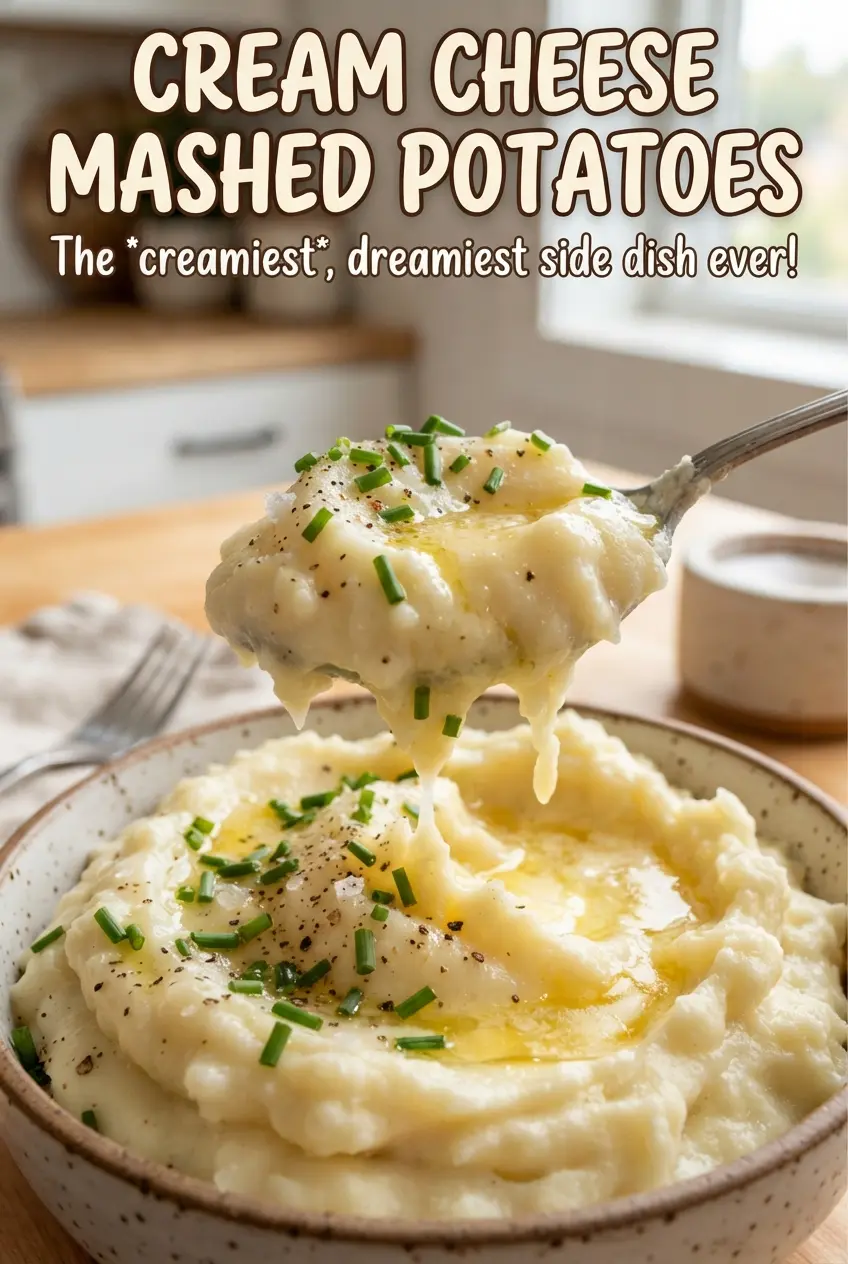
Cream Cheese Mashed Potatoes
Ingredients
Equipment
Method
- Place cubed Yukon gold potatoes in a Dutch oven and cover with salted water; bring to a boil and cook for 15-18 minutes until tender, with a visual cue of easily pierced potato cubes. Drain the potatoes and set aside.
- Return the drained potatoes to the pot over low heat and mash with unsalted butter until creamy and evenly broken down, creating a smooth, thick base with no large lumps. Keep the heat low to avoid sticking.
- Beat in softened cream cheese until fully smooth and glossy, scraping the pot as needed for an even texture. Pause until no streaks remain.
- Stir in warm whole milk and garlic powder until the mash turns silky and loosened to your preferred consistency, with a visual cue of smooth swirls. Add salt and black pepper and mix again.
- Spoon the mashed potatoes into a serving bowl and garnish with fresh chives, leaving visible green flecks on top for a fresh finish. Serve hot.


