
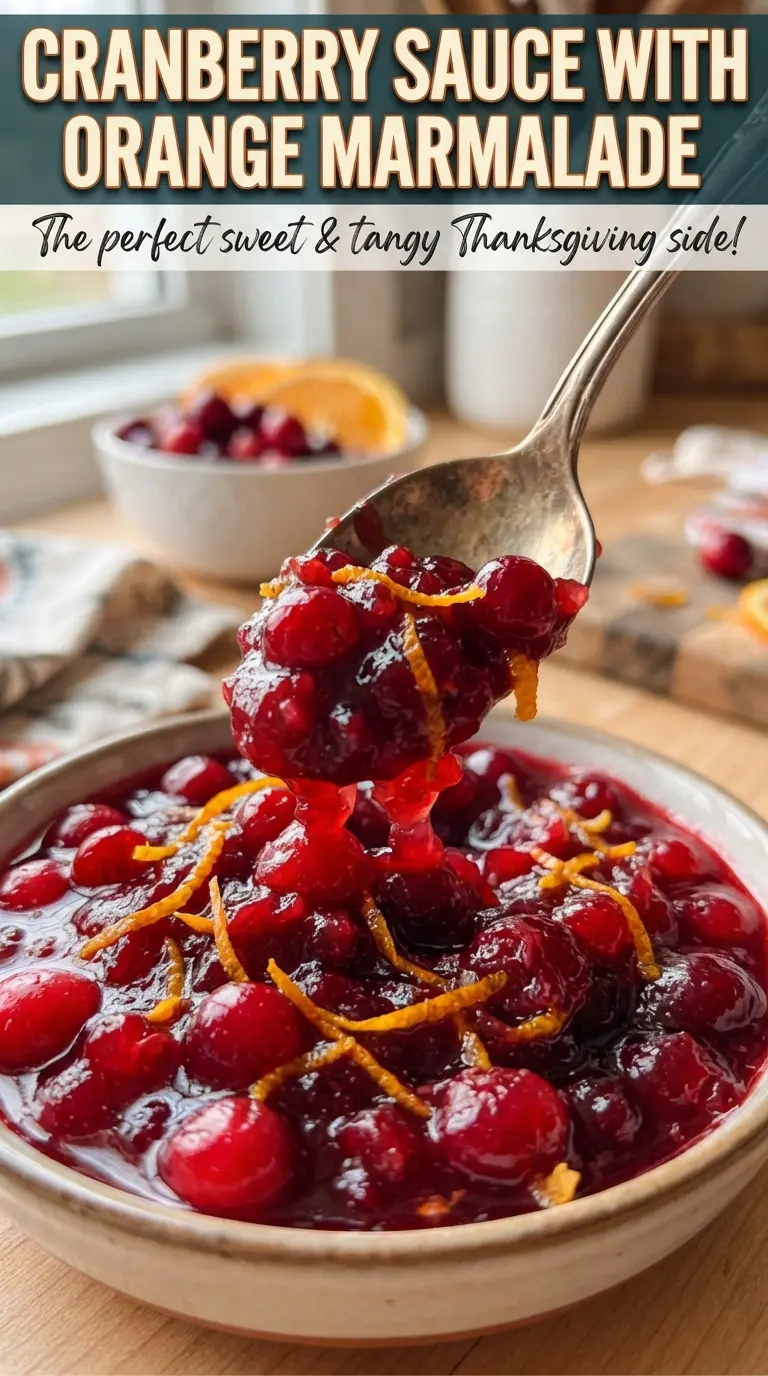
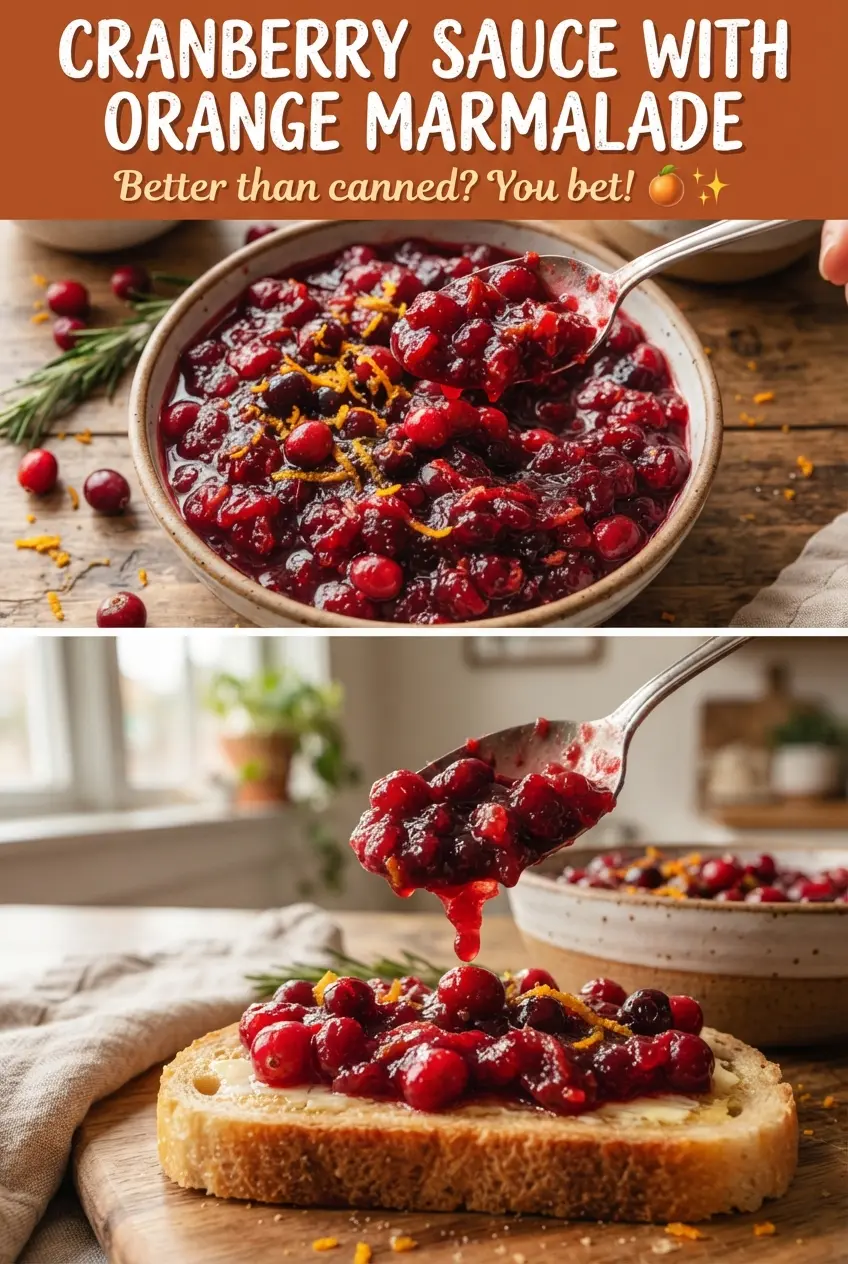
Glossy cranberry sauce with orange marmalade brings a bright, tart-sweet bite that cuts through rich holiday plates and works just as well on a weeknight pork chop or a leftover turkey sandwich. The cranberries cook down into a spoonable sauce, but they keep enough shape to look fresh instead of muddy. The marmalade doesn’t just sweeten things; it adds orange peel bitterness and a little citrus perfume that makes the whole bowl taste more layered.
The key is cooking the cranberries until they burst, then stopping once the sauce turns shiny and thick. If you cook it too long after the marmalade goes in, the citrus can taste flat and the sauce can tighten up more than you want once it chills. A small splash of lemon juice sharpens the fruit and keeps the sugar from taking over. Below you’ll find the texture cue I watch for, plus a few smart swaps and storage notes that make this sauce easy to plan ahead.
The marmalade gave it such a nice orange peel note, and it thickened up beautifully after chilling. I made it the day before, and it was perfect with roast chicken the next night too.
This cranberry sauce with orange marmalade keeps its glossy finish and bright citrus edge, so it’s worth saving for turkey, pork, or cheese boards.
The Part That Keeps Cranberry Sauce Glossy Instead of Jammy
The mistake that ruins a lot of cranberry sauce is letting it boil hard after the berries burst. Once the cranberries split, the sauce is already thickening from the natural pectin in the fruit. At that point, a gentle simmer is enough. Push it too far and you lose the bright fruit flavor and end up with a paste-like texture after chilling.
The marmalade goes in near the end because it needs just enough heat to melt into the sauce and distribute the peel evenly. Stir it in after the cranberries have broken down, then give it only a few minutes more on the stove. That short finish keeps the orange flavor fresh and keeps the sauce from tasting cooked down.
- Fresh cranberries — These bring the tart backbone and the natural thickening power. Frozen cranberries work too; add them straight from frozen and expect the simmer to take a minute or two longer.
- Orange marmalade — This is the flavor move that makes the sauce stand out. Use a marmalade with visible peel if you want a little texture and a more pronounced citrus note.
- Lemon juice — The little hit of acid keeps the sauce from tasting flat once the sugar and marmalade dissolve. Bottled lemon juice works in a pinch, but fresh has a cleaner edge.
- Sugar — It balances the cranberries without muting them. If your marmalade is especially sweet, you can pull back slightly, but don’t cut it too far or the sauce turns harsh.
What Each Ingredient Is Actually Doing in This Recipe
- Primary ingredient (the star) — Quality matters most. Choose the best you can find.
- Cooking medium (oil, butter, or broth) — This carries flavors and prevents dryness.
- Seasonings (salt, pepper, spices, herbs) — Layer flavors so nothing overpowers. Build depth gradually.
- Aromatics (garlic, onion, herbs) — Cook with fat to bloom flavors. Become the foundation.
- Supporting ingredients — Complement the main ingredient without overpowering it.
- Sauce or liquid (if applicable) — Brings flavors together. Balance richness with acid.
- Acid (lemon, vinegar, wine, or other) — Brightens and prevents flat-tasting results.
- Final finish (garnish, glaze, or sauce) — Prevents one-dimensional taste and adds visual appeal.
Cooking the Berries So They Break Down, Not Burn
Start With the Syrup
Bring the sugar and water to a full boil first so the sugar dissolves before the cranberries go in. If you add the berries too early, the sugar can cling to the bottom of the pan and cook unevenly. A saucepan with a light-colored bottom helps you see when the syrup is clear and ready.
Let the Cranberries Pop
Once the berries hit the simmer, you’ll hear a few pops almost immediately, then a steady burst of them as the sauce thickens. Stir occasionally, but not constantly; the berries need contact with the hot liquid to split. After about 10 minutes, most of them should have burst, and the liquid around them should look ruby-red and slightly syrupy.
Finish With the Marmalade
Stir in the marmalade, lemon juice, and salt once the cranberries have mostly broken down. The sauce should turn glossy and look smoother, with little ribbons of peel visible throughout. If it still seems thin, give it another 1 to 2 minutes, then stop; it thickens a lot as it cools, and overcooking is the easiest way to lose that bright, spoonable texture.
Cool Before You Judge the Texture
Cranberry sauce always looks looser in the pan than it does on the table. Let it cool at room temperature, then chill it before serving so the pectin can set. If it seems too thick after chilling, stir in a spoonful of orange juice or water to loosen it just enough.
How to Tweak the Sweetness, Citrus, and Texture
Use frozen cranberries without thawing
Frozen cranberries work well here and don’t need any special handling. Add them straight to the boiling syrup and expect a slightly longer simmer before they burst. The finished sauce tastes the same, though the pan may need an extra minute or two to return to a steady simmer.
Make it less sweet
Drop the sugar slightly if your marmalade is very sweet or if you want a sharper sauce for savory mains. Keep in mind that cranberries need some sugar to taste rounded, not harsh, and the sauce may seem more tart than you expect until it chills.
Swap the marmalade for another citrus preserve
Apricot preserves or lemon curd won’t give the same peel-and-bitter-orange character, but they can stand in if that’s what you have. Apricot makes the sauce softer and sweeter, while lemon curd pushes it toward a brighter, dessert-like finish.
Storage and Reheating
- Refrigerator: Store in an airtight container for up to 1 week. It thickens as it chills, so the texture will become more set and spoonable.
- Freezer: It freezes well for up to 2 months. Freeze in a sealed container with a little headspace, then thaw overnight in the refrigerator.
- Reheating: Serve it cold or let it come to room temperature. If you warm it, do it over low heat or in short microwave bursts, because high heat can make it loose and dull the fresh citrus notes.
Questions I Get Asked About This Recipe
Cranberry Sauce with Orange Marmalade
Ingredients
Equipment
Method
- Bring the sugar and water to a boil in a saucepan over medium-high heat. Reduce to a steady simmer as soon as you reach a bubbling boil, about 2–3 minutes.
- Add the fresh cranberries to the boiling syrup and simmer for 10 minutes. Keep it at a gentle bubble until most berries burst and the mixture begins to thicken.
- Stir in the orange marmalade, lemon juice, and salt until fully combined. Simmer for 2–3 minutes, stirring, until the sauce looks glossy and cohesive.
- Cool the cranberry sauce to room temperature. Chill before serving so it thickens and slices cleanly on a spoon.


