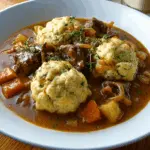
Hamburger stew lands in that sweet spot between comforting and practical: thick broth, tender potatoes, sweet carrots, and crumbled beef in every spoonful. It eats like a full meal, not a starter, and it gets better as it sits because the potatoes soak up the tomato-rich broth instead of going bland. A bowl with cornbread on the side turns into the kind of dinner people quietly go back for seconds on.
The trick is building the base in stages so the flavor tastes cooked, not just assembled. Browning the beef with the onion first gives you a deeper, meatier broth, and the Worcestershire adds that background savoriness that makes this taste bigger than the ingredient list. The vegetables go in at different times for a reason: potatoes and carrots need the full simmer, while corn and green beans only need long enough to heat through.
Below, I’m walking through the small choices that matter most — when to drain the beef, how to keep the potatoes from falling apart, and what to do if you want the stew a little thicker or a little more brothy.
The broth turned out thick and tomato-rich, and the potatoes stayed tender instead of dissolving. I added the corn and green beans at the end like you said, and they kept their bite.
Save this hearty Hamburger Stew for the nights when you want a tomato-rich beef dinner with tender potatoes and almost no fuss.
The Difference Between Tender Potatoes and Mushy Stew
The potatoes carry this dish, which is why they need to be cut evenly and simmered at a steady heat, not a hard boil. If the pot is bubbling aggressively, the outside of the potatoes breaks down before the center softens, and you end up with a cloudy stew and a few chunks that still feel raw. A covered simmer gives the starch time to thicken the broth without tearing the vegetables apart.
Drain the beef after browning if there’s a lot of fat in the pan, but leave enough behind to cook the onion and garlic. That little bit of fat holds flavor and helps the garlic bloom for just 30 seconds without burning. Once the broth goes in, scrape the bottom of the pot well; those browned bits are what keep the stew from tasting flat.
What Each Ingredient Is Doing in the Pot

- Ground beef — This gives the stew its body and savory base. Use 85/15 or 80/20 for the best flavor; leaner beef works, but the broth tastes a little thinner unless you add more seasoning.
- Onion and garlic — These build the first layer of flavor before anything else goes into the pot. Don’t rush the onion; it should turn translucent and start to smell sweet before the garlic goes in.
- Potatoes — They thicken the stew naturally as they simmer and make it filling enough for dinner. Yukon Golds stay creamier, while russets break down more and make the broth thicker.
- Diced tomatoes and tomato sauce — The tomatoes provide brightness, and the sauce gives the stew its thicker, spoon-coating texture. If you only have canned crushed tomatoes, the stew will still work, but it will be a little looser.
- Worcestershire sauce — This is the quiet ingredient that makes the broth taste deeper and less one-note. There isn’t a true equal swap, though soy sauce can stand in if that’s what you have; start with a little less because it brings more salt.
- Frozen corn and green beans — These go in at the end so they stay distinct instead of turning soft and dull. Add them straight from frozen; thawing first just makes them more likely to overcook.
Building the Stew Without Losing the Texture
Browning the Beef and Onion First
Cook the ground beef with the diced onion over medium-high heat until the meat is no longer pink and the onion has softened. You want some caramelized bits on the bottom of the pot, because that’s where the flavor starts. If there’s a pool of grease, drain it off before adding the garlic. Garlic needs only about 30 seconds; any longer and it turns bitter.
Simmering the Potatoes and Carrots
Once the broth and tomatoes are in, bring the pot just to a boil, then lower it to a covered simmer. That gentler heat gives the potatoes time to become tender without falling apart, and the carrots soften enough to taste sweet instead of raw. Stir once or twice during the simmer so nothing settles and sticks to the bottom.
Finishing With Corn and Green Beans
Add the frozen corn and green beans after the potatoes are already tender. They only need a few minutes to heat through, and adding them too early turns them dull and overcooked. Taste at the end and adjust the salt and pepper after the stew has finished simmering; once the broth reduces a little, the seasoning usually needs one last nudge.
How to Adapt Hamburger Stew for Different Kitchens
Make it thicker and more spoonable
Let the stew simmer uncovered for the last 5 to 10 minutes if you want a thicker broth. That reduces excess liquid without changing the flavor, and it works better than adding flour because the potatoes already help thicken the pot naturally.
Use ground turkey instead of beef
Ground turkey works, but it needs a little help. Add a splash of oil for browning and don’t skip the Worcestershire, because turkey brings less built-in savoriness than beef. The stew will still be hearty, just a touch lighter.
Gluten-free without changing the texture
This recipe is naturally close to gluten-free, but the Worcestershire sauce needs a label check because some brands contain gluten. Use a certified gluten-free version and the stew stays just as rich and satisfying.
Add more vegetables without weakening it
Mushrooms, peas, or diced celery all fit here, but add them with the carrots so they have time to soften. Extra vegetables stretch the stew without making it feel watery, as long as you keep the potato-to-broth balance the same.
Storage and Reheating
- Refrigerator: Store in an airtight container for up to 4 days. The potatoes soak up more broth as it sits, so the stew thickens overnight.
- Freezer: It freezes well for up to 3 months, though the potatoes soften a little after thawing. Cool it completely first and freeze in portioned containers for easier reheating.
- Reheating: Warm it gently on the stove over medium-low heat, adding a splash of broth if it has thickened too much. A hard boil can break the potatoes apart and make the beef dry.
Answers to the Questions Worth Asking
Recipe Card

Hamburger Stew
Ingredients
Equipment
Method
- In a large Dutch oven, brown the ground beef with the diced onion over medium-high heat for 8 minutes, stirring until the beef is no longer pink (visual cue: browned edges on the meat).
- Drain excess fat, then add the minced garlic and cook for 30 seconds, stirring until fragrant (visual cue: quick, light sizzling aroma without burning).
- Add the cubed potatoes, sliced carrots, diced tomatoes, tomato sauce, beef broth, Worcestershire sauce, Italian seasoning, salt, and black pepper; stir to combine (visual cue: evenly mixed red broth throughout).
- Bring the mixture to a boil, then reduce heat and simmer covered for 20-25 minutes until the potatoes are tender (visual cue: a fork slides into a potato cube).
- Stir in the frozen corn and frozen green beans (visual cue: vegetables dispersed across the surface).
- Simmer uncovered for 5-7 minutes more until heated through (visual cue: steam rises and greens turn bright).
- Taste and adjust seasoning, then serve hot (visual cue: balanced salt and pepper with no harsh tomato sharpness).