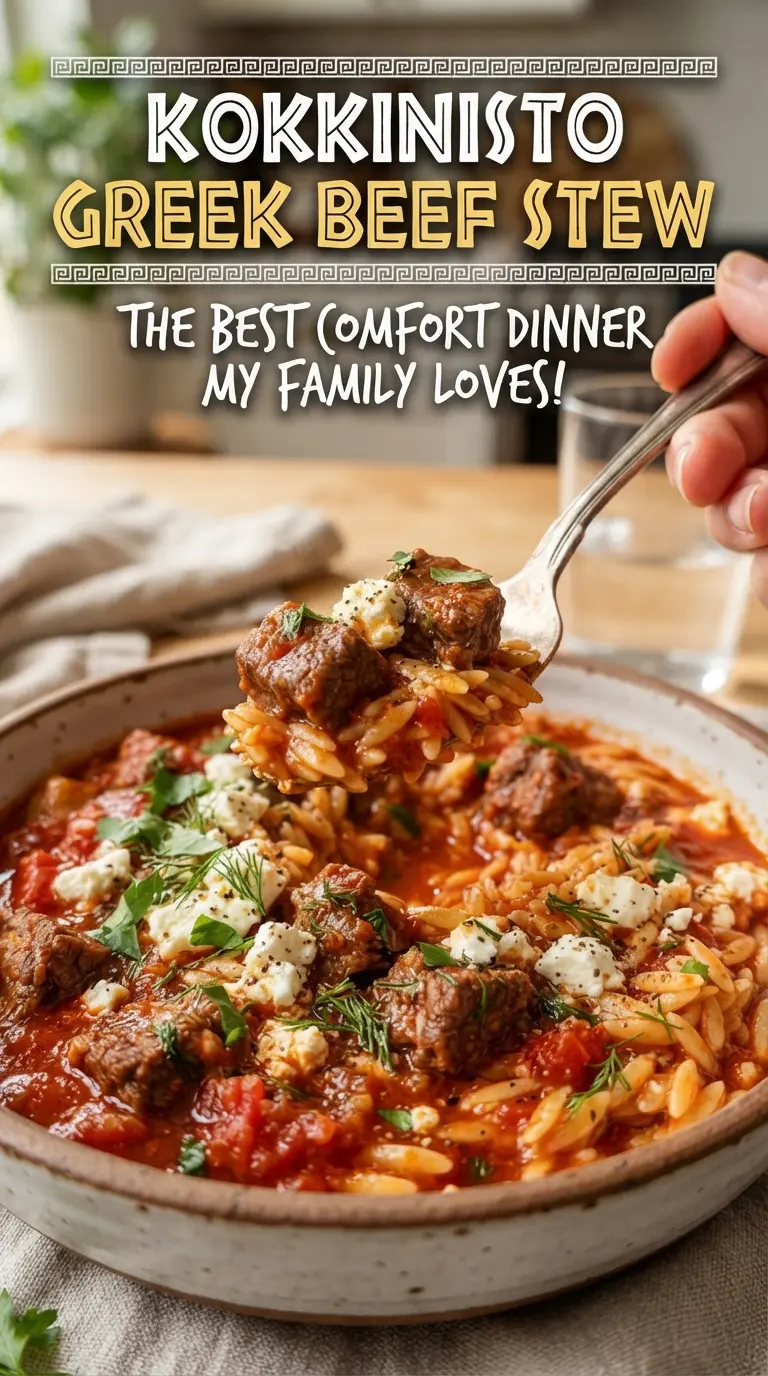
Kokkinisto turns beef chuck into something deeply comforting: tender chunks of meat in a glossy red tomato sauce that tastes slow-cooked in the best way. The cinnamon and allspice don’t read as sweet; they give the stew that unmistakable Greek backbone, warm and savory, with just enough lift to keep the tomato rich instead of flat. Served over orzo or spooned beside potatoes, it’s the kind of dinner that settles in and stays memorable.
The trick here is building flavor in layers before the long simmer does its work. Browning the beef in batches gives the sauce depth, and cooking the tomato paste briefly with the onions takes away its raw edge. A splash of red wine loosens all the caramelized bits from the pan, and that’s where a lot of the flavor lives. The spices go in whole, which keeps the sauce aromatic without turning it dusty or muddy.
Below, you’ll find the small details that make this stew worth cooking more than once, including how to keep the sauce thick and how to handle the spices so the final bowl tastes polished, not heavy.
The beef got meltingly tender and the sauce thickened into this rich, cinnamon-kissed tomato gravy after about two hours. We had it over orzo with feta and there wasn’t a spoonful left.
Save this Kokkinisto Greek Beef Stew for the nights when you want tender beef, cinnamon-scented tomato sauce, and feta over orzo.
The Step That Keeps the Sauce Rich Instead of Thin
The biggest mistake with beef stew like this is rushing the base. If the onions stay pale and the tomato paste only gets a quick stir, the sauce can taste sharp instead of rounded. Let the onions soften fully first, then give the tomato paste a full minute in the hot pan so it darkens slightly and loses that raw edge. That small extra step is what turns the sauce from basic tomato broth into something with depth.
Brown the beef in batches, not all at once. If the pan gets crowded, the meat steams and sheds liquid, and you lose the browned bits that help the stew taste built rather than boiled. Once the wine goes in, scrape the bottom well. Those stuck-on caramelized pieces dissolve into the sauce and carry a lot of the final flavor.
What the Spices Are Doing in This Pot
- Beef chuck — This is the right cut because it has enough connective tissue to turn silky during the long simmer. Lean stew meat can work, but it won’t give you the same plush texture. Cut the pieces into even chunks so they finish at the same time.
- Tomato paste — This is the concentrated backbone of the sauce. A minute in the pan deepens it and keeps the finished stew from tasting one-note. Don’t skip that brief cooking time; it matters.
- Dry red wine — Use something drinkable, not fancy. It adds acidity and helps lift the browned bits off the pan, which is where a lot of the savory flavor starts. If you don’t cook with wine, use extra water plus a teaspoon of red wine vinegar stirred in at the end.
- Cinnamon stick and allspice berries — Whole spices give the stew warmth without making the sauce gritty. Ground cinnamon is stronger and easier to overdo, so use it only if that’s what you have and keep it light. Fish out the whole spices before serving so the final flavor stays clean.
- Crushed tomatoes — Go for a good canned brand here if you can. Since the stew is tomato-forward, the quality of the tomatoes shows up in the final sauce. If your tomatoes taste very sharp, the teaspoon of sugar helps round them out.
Building the Stew So the Beef Turns Silky
Seasoning and Browning the Beef
Season the beef before it hits the pan, then brown it in batches in hot olive oil. You want a deep brown crust on the outside, not gray meat with a little color around the edges. If the pan looks crowded or wet, stop and work in smaller batches, because steam will keep the beef from browning. The browned bits left behind are part of the stew’s flavor foundation.
Softening the Onions and Toasting the Tomato Paste
Cook the onions until they’re soft and translucent, which usually takes about six minutes. They should shrink down and smell sweet, not sharp. Add the garlic and tomato paste and stir for one minute; the paste should darken a shade and cling to the onions. If the garlic starts to brown hard, the heat is too high and the stew will pick up bitterness.
Deglazing and Starting the Simmer
Pour in the wine and scrape the bottom of the pot immediately. Let it bubble for about two minutes so the sharp alcohol edge cooks off and the liquid picks up all those brown streaks. Then add the tomatoes, water, spices, sugar, and beef. The pot should come up to a gentle simmer, not a hard boil, because boiling can toughen the meat before it has time to break down.
Waiting for the Sauce to Tighten
Cover the pot and cook until the beef is tender enough to split with a spoon, usually 1 1/2 to 2 hours. Near the end, uncover the pot if the sauce still looks loose and let it reduce a little. The finished sauce should coat the back of a spoon and pool thickly around the beef. Remove the cinnamon stick, allspice, and bay leaves before serving so every bite stays smooth.
How to Adapt Kokkinisto for Different Tables and Pantries
Serve it over potatoes instead of orzo
Potatoes make the stew feel a little more rustic and absorb the sauce beautifully. Use waxy potatoes if you want the pieces to hold their shape, or mash them slightly into the sauce if you want something softer and more spoonable.
Make it dairy-free without changing the stew itself
The stew is naturally dairy-free as written, so the only swap you need is the garnish. Skip the feta and finish with parsley and a drizzle of olive oil for the same freshness without the cheese.
Skip the wine if you don’t cook with alcohol
Use an extra 1/2 cup water plus 1 teaspoon red wine vinegar or lemon juice at the end. You’ll lose a little complexity, but the acidity still keeps the sauce from tasting heavy.
Make it ahead for better flavor
This stew tastes even better the next day after the spices settle into the sauce. Cool it completely, refrigerate it overnight, and reheat it gently before serving so the beef stays tender and the sauce doesn’t break.
Storage and Reheating
- Refrigerator: Store covered for up to 4 days. The sauce thickens as it chills, which is normal.
- Freezer: It freezes well for up to 3 months. Cool completely, portion into airtight containers, and leave a little space at the top for expansion.
- Reheating: Reheat gently on the stovetop over low heat with a splash of water if needed. Don’t boil it hard, or the beef can tighten and the sauce can turn overly reduced.
Answers to the Questions Worth Asking
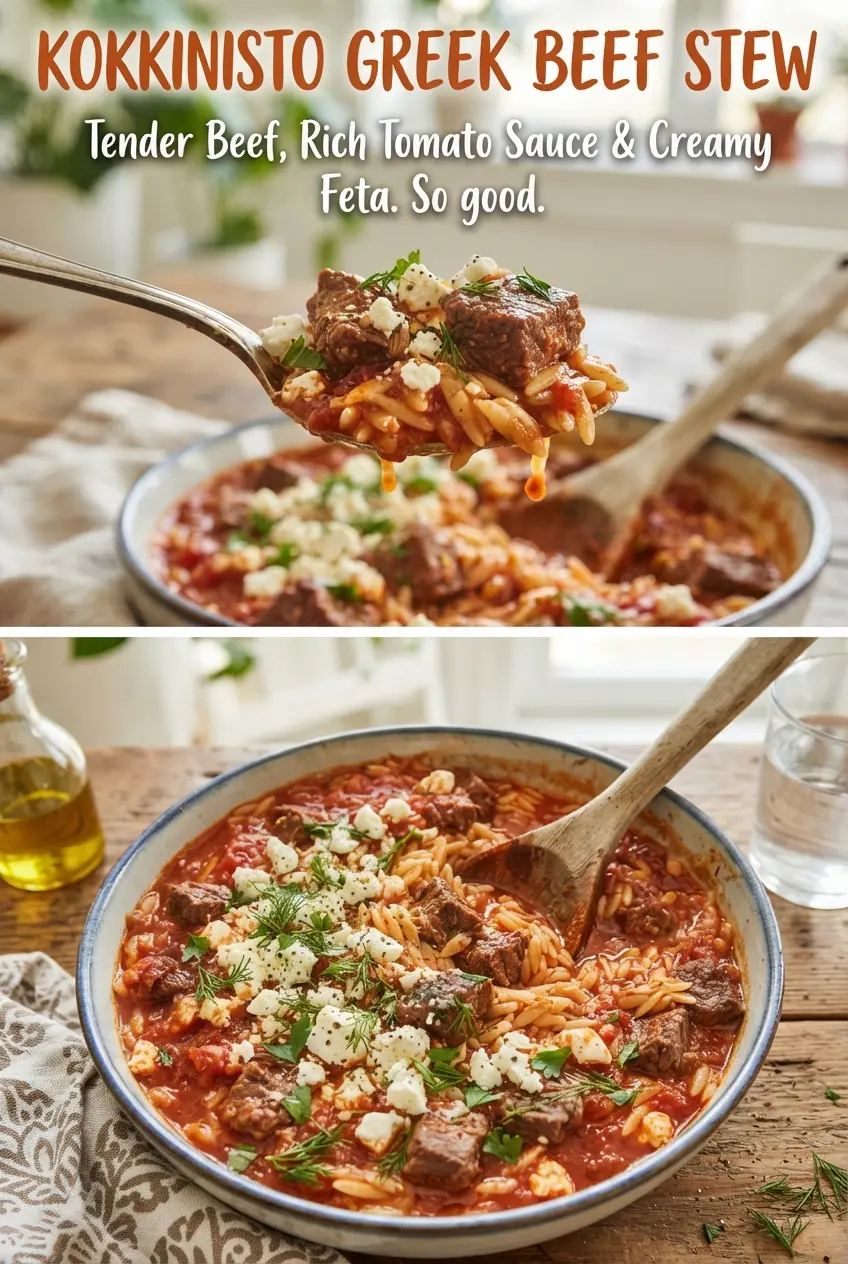
Kokkinisto Greek Beef Stew
Ingredients
Equipment
Method
- Season the beef chuck cubes with salt and black pepper, then heat olive oil in a Dutch oven over medium-high heat. Brown the beef in batches until browned on the outside, about 6 to 8 minutes total per batch, and set aside as you go.
- In the same Dutch oven, cook the onions over medium heat for 6 minutes until soft. Add the garlic and tomato paste and cook for 1 minute, stirring until fragrant.
- Pour in the dry red wine and simmer for 2 minutes, scraping the bottom of the pot to loosen browned bits. Keep the liquid at a gentle simmer so it reduces slightly.
- Add the crushed tomatoes, water, cinnamon stick, allspice berries, bay leaves, sugar, and the browned beef to the pot. Stir well so the beef is coated in the red sauce.
- Cover and simmer over low to medium-low heat for 1 1/2 to 2 hours, until the beef is very tender and the sauce is thick. Check occasionally and keep the surface at a steady simmer, with gentle bubbling around the edges.
- Remove the whole spices from the stew using a spoon or tongs, then ladle the kokkinisto into a serving bowl. The sauce should cling to the beef and look glossy and thick.
- Serve the stew over cooked orzo or potatoes, spooning sauce and beef generously on top. Finish with crumbled feta and parsley so the garnish sits fresh on the hot stew.