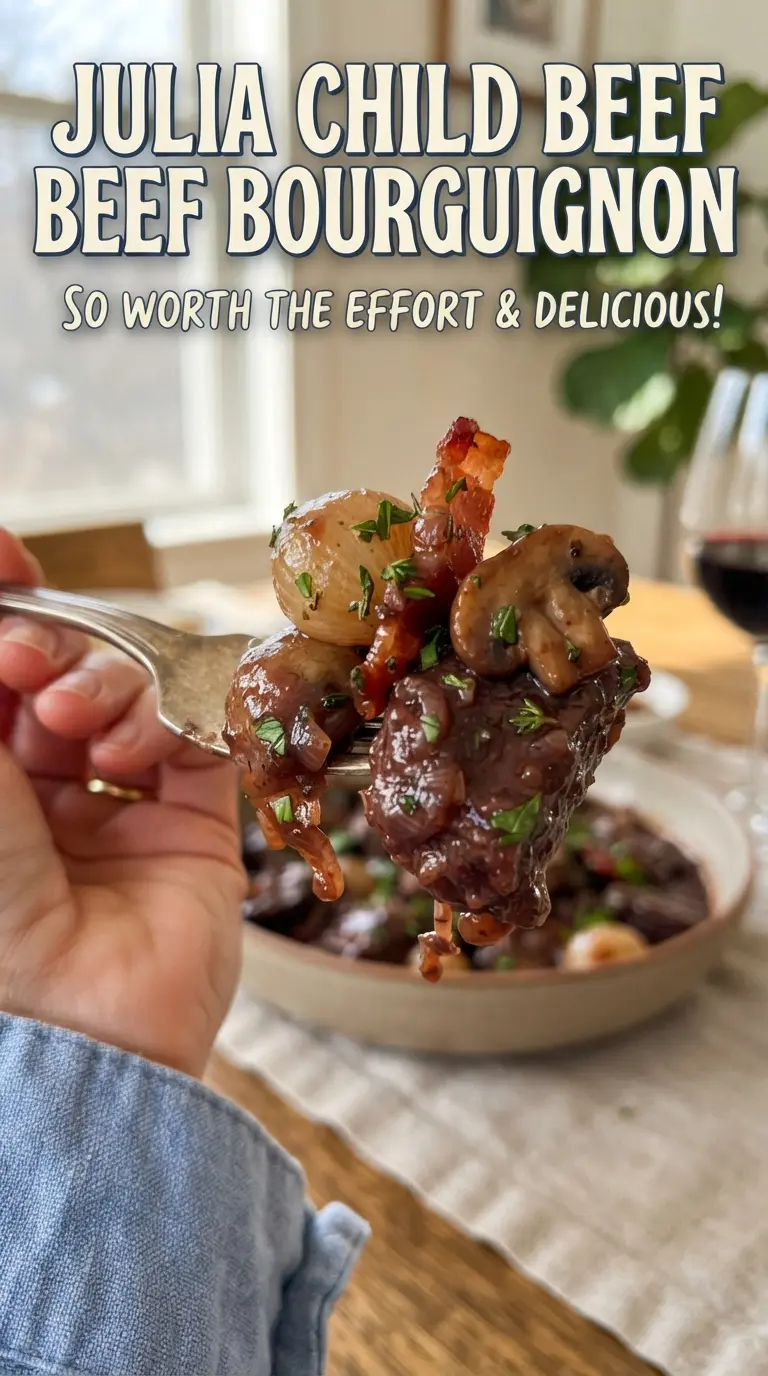
Deeply browned beef, glossy red wine sauce, and pearl onions that hold their shape make beef bourguignon the kind of stew people remember long after the bowls are cleared. The best versions don’t taste heavy or muddy. They taste concentrated, almost silky, with each part of the dish keeping its own voice: bacon for smoke, mushrooms for earth, wine for depth, and beef that yields in spoon-tender chunks.
The thing that separates a good bourguignon from a dull one is patience with the early browning. Dry beef goes into hot fat in small batches so it sears instead of steaming, and the pan gets used in layers instead of being cleaned between steps. That’s where the flavor lives. The flour cooks directly onto the meat and vegetables before the liquid goes in, which gives the sauce body without tasting raw or pasty.
Below, I’ve laid out the points that matter most: how to get the sauce to thicken cleanly, why the wine choice matters, and what to do if you want to make the dish ahead. It’s a long cook, but none of the time is wasted.
The beef turned out fork-tender and the sauce thickened into this glossy wine gravy after I strained it. My husband kept going back for more mushrooms and onions.
Like this classic beef bourguignon? Save it for the next slow-cooked dinner when you want wine-braised beef, glossy sauce, and tender pearl onions.
The Browning Step That Gives Bourguignon Its Depth
The biggest mistake with beef bourguignon is crowding the pan and rushing the sear. If the meat goes in wet or piled on top of itself, it releases liquid and starts braising before it has a chance to brown. You want dark edges and a crust that sticks briefly to the pan, then releases. That browned fond is what gives the final sauce its deep, savory backbone.
The flour goes in before the liquid, after the beef and vegetables are already coated in all those browned bits. That does two jobs at once: it helps the sauce thicken later, and it toasts the flour enough that the finished stew tastes round instead of chalky. Once the wine and stock go in, the sauce should come just up to the top of the meat, not drown it.
What Each Ingredient Is Doing in This Pot
- Bacon — The blanched lardons give the stew a smoky foundation without overwhelming the wine sauce. Blanching first keeps the bacon from turning harsh or too salty, and that step is worth doing if you want clean flavor instead of greasy smoke.
- Lean stewing beef — Chuck or another well-marbled braising cut is ideal because it turns tender over long heat. Prepping it dry is critical; moisture is the enemy of browning.
- Full-bodied red wine — This is the flavor of the dish, not just the cooking liquid. Use a wine you’d happily drink, because a thin or sharp wine will stay thin and sharp after three hours in the oven.
- Beef stock — The stock softens the wine and gives the sauce body. Start with 2 cups, then add the third only if you need enough liquid to barely cover the meat.
- Tomato paste, thyme, and bay leaf — Tomato paste adds a quiet sweetness and a little color; the herbs keep the sauce from tasting flat. Mash the garlic before it goes in so it melts into the braise instead of standing out in little sharp bites.
- Pearl onions and mushrooms — These are added at the end so they keep their shape and flavor. If you cook them in the stew for hours, the mushrooms collapse and the onions lose their clean, sweet edge.
Building the Stew So the Sauce Stays Smooth
Blanching the Bacon and Starting the Fat
Blanch the bacon first, then brown it in the casserole with the oil. That mild pre-cook removes some of the salt and keeps the finished sauce from tasting smoky in a harsh way. When the bacon has rendered and picked up color, take it out so the beef can sear in the same flavorful fat.
Searing the Beef in Small Batches
Add the beef in a single layer, with space between the pieces. If the pan looks crowded, stop and do another batch. The meat should get a deep brown crust before you turn it, and the pan should smell nutty, not watery. If liquid pools underneath, the heat is too low or the pan is overloaded, and the beef will gray instead of brown.
Coating, Baking, and Adding the Liquid
Once the flour goes in, toss until everything looks dusty but evenly coated. Bake it uncovered for the short high-heat step because that cooks off the raw flour taste and helps the coating cling. After that, the wine and stock go in with just enough liquid to barely cover the meat. Too much liquid dilutes the sauce and leaves you waiting forever for it to concentrate.
The Slow Braise and Final Finish
Lower the oven and cover the pot so the beef braises gently until a fork slides in without resistance. When it’s done, strain the sauce and skim the fat before reducing it on the stove. That last simmer is where the texture turns glossy. Stir the beef back in with the onions and mushrooms only after the sauce has thickened enough to coat a spoon.
How to Adapt This for a Different Pantry or Schedule
For a deeper, richer sauce
Use a more robust red like Burgundy, Côtes du Rhône, or a dry Pinot Noir. A lighter wine gives a cleaner sauce, while a fuller-bodied one makes the stew taste rounder and more layered. Just avoid anything sweet or heavily oaked, which can make the braise taste flat or syrupy.
Gluten-free version
Skip the all-purpose flour and use a gluten-free flour blend that can handle stovetop cooking. The sauce may take a little longer to thicken, but the texture stays close if you let it simmer uncovered at the end. Don’t use cornstarch here unless you’re willing to change the character of the sauce; it turns glossy fast but tastes more like a quick gravy than a braise.
Make-ahead dinner party timing
This dish gets better after a night in the fridge. Cool it completely, refrigerate, then remove the hardened fat before reheating slowly on the stove. The flavors settle and the sauce tastes even more cohesive the next day, which is one reason this recipe is such a reliable company dish.
More vegetables without losing the classic feel
Add extra mushrooms, or serve the stew over buttered noodles, mashed potatoes, or boiled potatoes instead of stirring more vegetables into the pot. The recipe already has a strong balance of beef, onions, and mushrooms, and keeping those proportions intact preserves the traditional texture.
Storage and Reheating
- Refrigerator: Keeps for 4 days. The sauce tightens as it chills, which actually helps the flavor.
- Freezer: Freezes well for up to 3 months. Cool it completely first, then portion it into airtight containers; the texture of the mushrooms softens a bit after thawing, but the stew still reheats nicely.
- Reheating: Warm it gently on the stovetop over low heat until hot all the way through. A hard boil can make the beef tough and can break the sauce after it has already been reduced.
Questions I Get Asked About This Recipe

Julia Child Beef Bourguignon
Ingredients
Equipment
Method
- Preheat oven to 450F. In a casserole, brown the blanched bacon in the olive oil, then remove.
- Sear the beef in the hot fat a few pieces at a time, then brown the carrot and onion.
- Return beef and bacon to the casserole and season with salt and black pepper. Sprinkle with all-purpose flour and toss until coated.
- Bake uncovered 4 minutes, then toss and bake 4 minutes more.
- Reduce oven to 325F, then stir in red wine and enough beef stock to barely cover. Add tomato paste, mashed garlic, dried thyme, and bay leaf.
- Cover and braise 2 1/2–3 hours, until the beef is fork-tender.
- Strain the sauce and skim the fat, then simmer to thicken. Pour the sauce back over the beef.
- Garnish with braised pearl onions, sautéed mushrooms, and fresh parsley.