
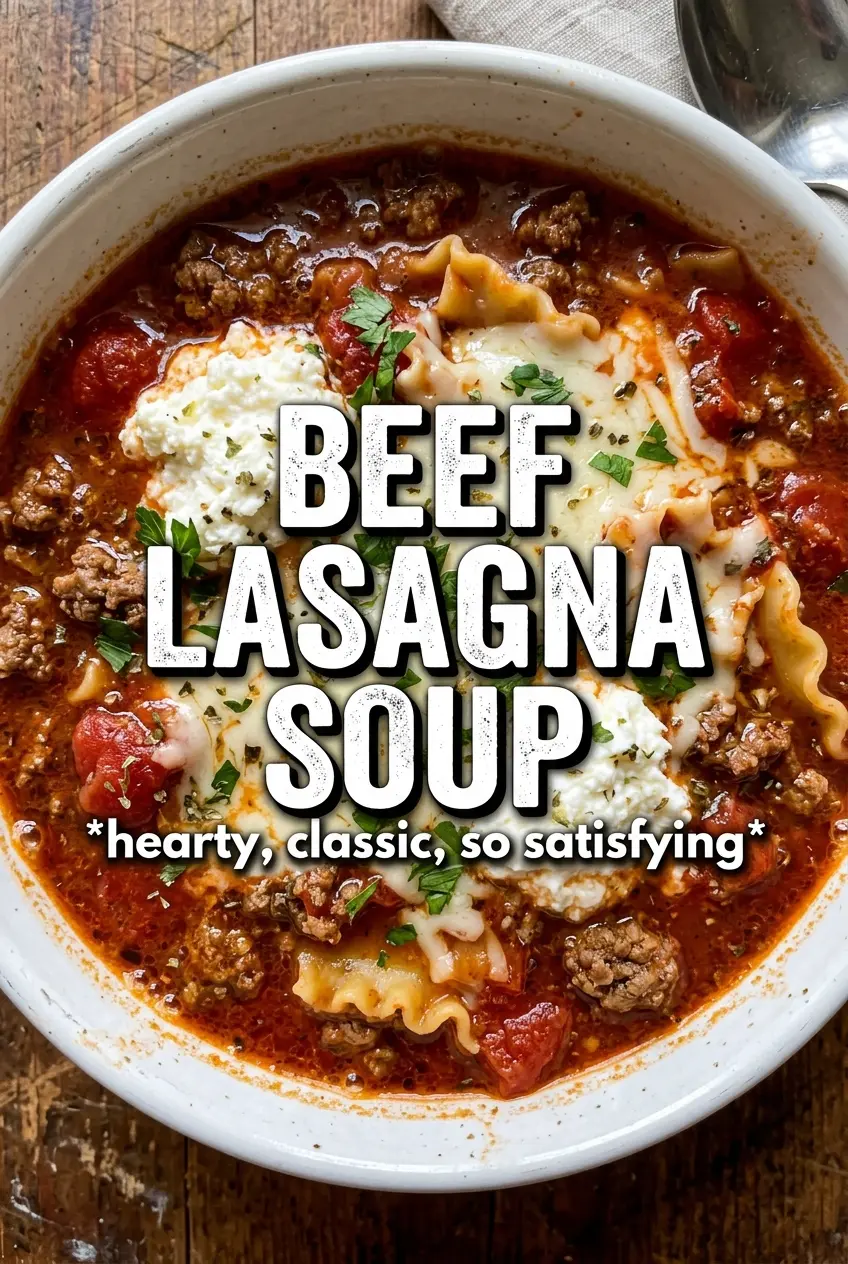
Beef lasagna soup brings all the comfort of a baked pan of lasagna into one pot, with a rich tomato broth, tender noodles, and those familiar ricotta and mozzarella pockets melting into every spoonful. It eats like a cross between soup and pasta, which is exactly why it disappears fast at my table. The broth stays hearty instead of thin, and the broken noodles catch just enough sauce to make each bite feel substantial.
The trick is starting with browned beef and giving the tomato paste a minute or two in the pot before the broth goes in. That step deepens the flavor and keeps the soup from tasting flat. I also like using both crushed and diced tomatoes: the crushed tomatoes build body, while the diced tomatoes leave little bursts of texture so the soup feels rustic instead of smooth.
Below, you’ll find the small details that keep the noodles from turning mushy and the cheese topping from getting lost in the bowl. Those two things are what make this recipe feel like lasagna, not just tomato soup with pasta in it.
The noodles stayed perfectly tender and didn’t fall apart, and that ricotta-mozzarella topping melted into the broth just like a baked lasagna. Even reheated the next day, it still tasted rich and hearty.
Save this beef lasagna soup for nights when you want a one-pot dinner with broken noodles, rich tomato broth, and that creamy ricotta-mozzarella finish.
The Step That Keeps Beef Lasagna Soup Rich Instead of Flat
Most soups like this live or die by the first few minutes in the pot. If the beef is only partially browned, the onion never has a chance to pick up those savory browned bits, and the broth ends up tasting one-note. This recipe gets its depth from building flavor in layers: browned meat first, then onion, then garlic and tomato paste long enough to lose that raw edge and turn sweet and concentrated.
The other mistake is rushing the simmer after the noodles go in. Lasagna noodles need enough time to soften all the way through, but not so much time that they break apart and thicken the soup into a paste. A steady simmer keeps the noodles tender while the broth stays spoonable.
- Browned ground beef — This is the backbone of the soup. Lean beef works well because there’s less excess fat to drain, but don’t skip the browning step; that’s where the deep, meaty flavor starts.
- Tomato paste — This is what gives the broth its lasagna-like intensity. Cooking it briefly in the pot changes the flavor from sharp and tinny to rich and sweet.
- Broken lasagna noodles — The shape matters here. They cook into wide, irregular pieces that feel like lasagna in a bowl, but they need stirring so they don’t glue themselves together at the bottom.
- Ricotta, mozzarella, and parmesan — The cheese dollop is the finishing touch, not just a garnish. Ricotta brings creaminess, mozzarella melts into the broth, and parmesan adds salt and sharpness.
What Each Ingredient Is Actually Doing in the Bowl

- Lean ground beef — Use 85/15 or 90/10 if you can. It gives enough richness without leaving a greasy surface on the soup. If you only have fattier beef, drain it well after browning.
- Onion and garlic — These build the savory base. Dice the onion small so it softens quickly, and cook the garlic just until fragrant; if it browns hard, it turns bitter in the broth.
- Crushed tomatoes and diced tomatoes — Crushed tomatoes make the soup thick and cohesive, while diced tomatoes add texture. If you only have one type, use all crushed for a smoother broth or all diced for a chunkier finish.
- Beef broth — This stretches the tomato base into soup without thinning it too far. A good broth matters here because it carries the beef flavor through the whole bowl.
- Italian seasoning, basil, oregano, red pepper flakes, and black pepper — These are the lasagna notes. The red pepper flakes don’t make it spicy; they just wake up the tomato flavor.
- Ricotta mixture — Stir the cheeses together right before serving so the ricotta stays fluffy. If you let it sit too long, the mozzarella can clump instead of melting into soft ribbons.
Building the Soup So the Noodles Stay Tender
Brown the Beef Until It Has Real Color
Put the ground beef into a large pot and let it sit long enough to brown before stirring too often. You want browned bits on the bottom, not gray steamed meat, because those drippings are what flavor the onions and tomato paste next. If there’s a lot of fat in the pot, drain it off before moving on so the finished soup doesn’t taste greasy.
Cook the Onion and Tomato Paste Together
Add the diced onion to the same pot and cook it until soft and translucent, about four minutes. Then stir in the garlic and tomato paste and cook for another minute or two until the paste darkens slightly and smells sweet. If the garlic starts to brown fast, lower the heat; burnt garlic will take over the whole pot.
Simmer the Broth Before the Pasta Goes In
Once the tomatoes, broth, and seasonings are in, bring everything to a boil, then drop it to a simmer. This gives the broth a chance to come together before the noodles start releasing starch. If you add the noodles while the liquid is still at a hard boil, they can split apart before the centers are tender.
Finish with the Noodles and Cheese at the Right Moment
Stir in the broken lasagna noodles and simmer until they’re just tender, usually 10 to 12 minutes. Stir every couple of minutes so they don’t settle into a clump at the bottom of the pot. Ladle the soup into bowls and top each one with a generous spoonful of the ricotta mixture; the heat from the soup softens it without fully dissolving it, which is what gives each bowl that lasagna feel.
Make It Spicier or Keep It Mild
Increase the red pepper flakes to 1 teaspoon if you want a little heat in the background. For a milder pot, cut them in half or leave them out entirely; the soup still tastes layered and rich from the tomatoes, beef, and herbs.
Gluten-Free Version
Swap in gluten-free lasagna noodles and check the broth label if you’re cooking for someone sensitive. Gluten-free pasta can soften faster than regular noodles, so start checking it a minute or two early and pull the pot as soon as it’s tender.
Lighter Dairy-Free Topping
Use a spoonful of plain dairy-free ricotta or skip the topping and finish with chopped basil and a little olive oil. You’ll lose the creamy lasagna contrast, but the soup itself still holds up well because the broth is built on beef and tomatoes, not cream.
Storage and Reheating
- Refrigerator: Store for up to 4 days. The noodles will keep absorbing broth, so expect the soup to thicken as it sits.
- Freezer: The base freezes well, but the noodles soften too much after thawing. For best results, freeze the soup without noodles and cook fresh pasta when you reheat it.
- Reheating: Warm gently on the stove over medium-low heat with a splash of broth or water. If you boil it hard, the noodles can break down and the soup turns overly starchy.
Answers to the Questions Worth Asking
Beef Lasagna Soup
Ingredients
Equipment
Method
- Brown the ground beef in a large pot over medium-high heat, then drain the fat when it’s no longer pink.
- Sauté the diced onion in the same pot for 4 minutes, then add the minced garlic and tomato paste and cook for 2 minutes, stirring until fragrant.
- Add the crushed tomatoes, diced tomatoes, beef broth, Italian seasoning, dried basil, dried oregano, red pepper flakes, and black pepper; bring to a boil.
- Add the broken lasagna noodles to the boiling soup, reduce the heat to a gentle simmer (about 200°F–210°F/93°C–99°C), and cook for 10–12 minutes until tender.
- Season with salt and stir occasionally so the noodles don’t stick to the bottom of the pot.
- Mix the ricotta, shredded mozzarella, and parmesan into a cheese dollop, then let it sit briefly off-heat so it holds its shape.
- Serve the soup in bowls and add a very generous spoonful of the cheese dollop to each, topping with fresh basil so it starts to melt into the hot broth.


