Brown stew chicken lands on the table with deep mahogany gravy, tender chicken, and that unmistakable savory-sweet edge that keeps you going back for another spoonful of sauce. The chicken cooks until it turns soft enough to pull apart with a fork, but the real payoff is the pan sauce: built from caramelized sugar, browned seasoning, and the juices that come off the meat as it simmers. It tastes layered, not heavy, with enough pepper, thyme, and onion to keep every bite interesting.
What makes this version work is the order. The chicken gets time to marinate, which seasons it all the way through, and then it’s browned before the broth goes in, so the pot already has color and depth before the simmer starts. The caramelized sugar does important work here too, but it needs close attention; you’re looking for a deep amber, not burnt bitterness. Once the vegetables hit the pot, they pick up all that flavor from the bottom and turn it into gravy instead of just stew liquid.
Below, I’ll walk through the part that matters most: how to get the gravy dark without making it bitter, how long the chicken needs to simmer, and what to change if you want it a little spicier, milder, or easier to make ahead.
The gravy turned this gorgeous dark brown without tasting burnt, and the chicken was falling off the bone after about 40 minutes. I served it over rice and my husband went back for seconds before I even sat down.
Save this Brown Stew Chicken for the nights when you want deep Jamaican gravy, tender chicken, and rice that soaks up every drop.
The Caramelized Sugar Is What Gives the Gravy Its Depth
Brown stew chicken gets its color from more than just the broth. The sugar goes into hot oil and turns the base of the dish from pale and thin into dark, glossy, and rich. If the sugar is rushed past amber into black, the whole pot takes on a bitter edge that no amount of broth can hide, so this is the one moment where patience matters more than speed.
The other trap is adding the chicken before the sugar is ready. It needs to be caramelized enough to stain the oil, but still fluid enough to coat the meat as it goes in. That coating is what gives the stew its signature color and keeps the chicken from tasting flat once the broth is added.
What Each Ingredient Is Actually Doing in This Stew

- Chicken thighs and drumsticks — Bone-in pieces stay juicy through the long simmer and give the gravy more body than boneless chicken ever will. Thighs bring richness, while drumsticks add extra flavor from the bone; use a mix if you can.
- Browning sauce — This deepens the color fast and gives the marinade that familiar Jamaican-style roasted note. If you don’t have it, you can still brown the sugar carefully, but the sauce adds a darker, rounder flavor that’s hard to match with substitutes.
- Thyme, all-purpose seasoning, garlic powder, and onion powder — These season the chicken all the way through before it ever hits the pan. Fresh garlic and onion help later, but the dry marinade is what makes the meat taste seasoned inside, not just on the surface.
- Bell peppers, onion, green onion, and scotch bonnet — These build the gravy’s aromatic base after the chicken is browned. If you want less heat, leave out the scotch bonnet entirely; the dish will still taste complete because the thyme, garlic, and browned sugar do the heavy lifting.
- Chicken broth — This becomes the braising liquid and then the gravy. Use a broth you’d actually drink; watery broth gives you watery stew.
Building the Pot So the Chicken Turns Tender, Not Dry
Marinating for Real Flavor
Toss the chicken with the browning sauce and dry seasonings until every piece looks coated, then let it rest for at least 2 hours. Overnight is better because the salt and seasonings have time to move into the meat instead of sitting on the surface. If you skip this step, the stew will still taste fine, but the chicken won’t have that seasoned-through depth that makes the dish stand out.
Caramelizing the Sugar Without Burning It
Heat the oil first, then add the sugar and keep the pan moving until it melts into a deep golden caramel. The color changes fast at the end, so stay close and don’t walk away once it starts to darken. If it goes too far and smells sharp or bitter, throw it out and start again; burnt sugar is the one flavor that won’t mellow out later.
Browning the Chicken and Soaking Up the Fond
Add the marinated chicken to the caramel oil and brown it on all sides until the surface looks deeply golden, not pale. Don’t crowd the pot, or the chicken will steam and the color will stay muddy. Those browned bits that stick to the pan are what give the finished gravy its backbone, so when the vegetables go in, scrape them up and let them dissolve into the sauce.
Simmering Until the Sauce Clings
After the broth goes in, bring the pot to a boil, then lower the heat and cover it so the chicken cooks at a gentle simmer. You want the gravy to bubble lazily, not boil hard, or the liquid can reduce too quickly before the chicken turns tender. In about 35 to 40 minutes, the meat should give easily at the bone and the sauce should coat the spoon instead of running thin.
How to Tweak Brown Stew Chicken Without Losing the Point
Milder Version for Heat-Sensitive Eaters
Leave out the scotch bonnet and use the bell peppers, onion, and thyme as written. You’ll still get the deep stew flavor and sweet-browned gravy, just without the sharp heat that sneaks up at the end.
Chicken Breast Swap
You can use bone-in chicken breast, but shorten the simmer and watch it closely, because breast meat dries out once it goes past tender. The gravy will still be good, but it won’t have the same richness you get from thighs and drumsticks.
Gluten-Free Dinner
This dish is naturally close to gluten-free already, but check your browning sauce and seasoning blend to be sure they don’t contain wheat or malt-based ingredients. With that one label check, the recipe stays the same and the texture of the gravy doesn’t change.
Make-Ahead and Leftover Plan
Brown stew chicken tastes even better the next day because the gravy settles and the seasoning rounds out. Let it cool, refrigerate it with the sauce, and reheat it gently so the chicken stays tender instead of tightening up in a hard boil.
Storage and Reheating
- Refrigerator: Store in an airtight container for up to 4 days. The gravy thickens as it chills, which is a good sign.
- Freezer: It freezes well for up to 3 months. Cool it completely first and freeze the chicken in its gravy so the meat doesn’t dry out.
- Reheating: Warm it covered over low heat on the stove with a splash of broth if needed. Don’t boil it hard or the chicken can turn stringy and the sauce can separate.
Answers to the Questions Worth Asking
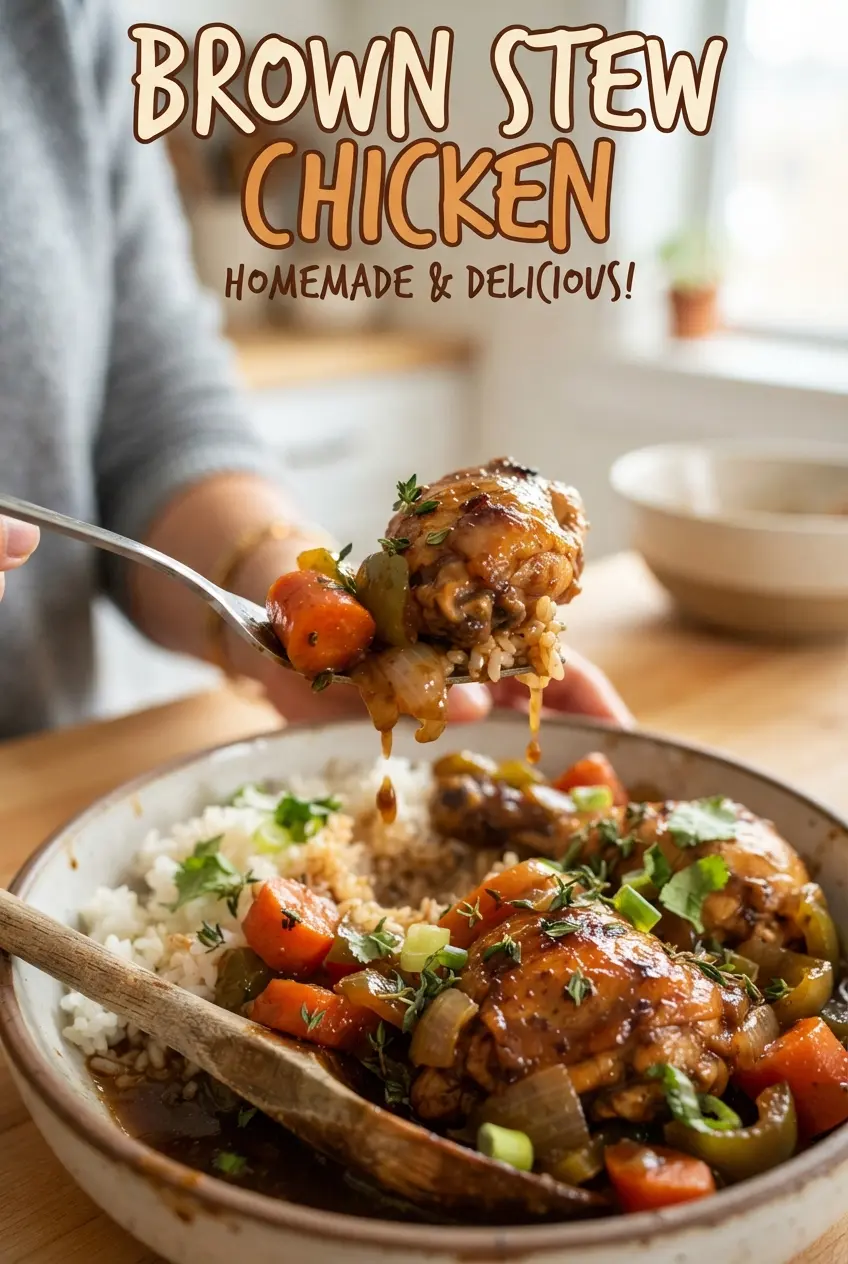
Brown Stew Chicken
Ingredients
Equipment
Method
- In a large bowl, combine browning sauce, all-purpose seasoning, garlic powder, onion powder, dried thyme, salt, pepper, and chicken, then toss to coat evenly.
- Cover and marinate for at least 2 hours or overnight in the refrigerator.
- Heat vegetable oil in a large skillet or Dutch oven over medium-high heat.
- Add sugar and cook until it caramelizes to golden brown, watching closely so it doesn’t burn.
- Add the marinated chicken pieces in a single layer and cook until deeply golden brown on all sides, then remove to a plate.
- In the same pot, sauté onion, bell peppers, garlic, green onions, and scotch bonnet for 4 minutes until fragrant and slightly softened.
- Return chicken to the pot and add chicken broth, then bring to a boil.
- Reduce heat to low, cover, and simmer for 35-40 minutes until chicken is fall-apart tender and the gravy is thick.
- Serve hot with rice and garnish with fresh thyme.