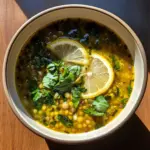
Golden broth, tender chickpeas, and silky ribbons of kale give Tuscan chickpea soup the kind of comforting, full-bodied spoonful that tastes like it simmered all afternoon. This version keeps the base clean and simple, but it still lands with plenty of depth from rosemary, garlic, fire-roasted tomatoes, and a finishing squeeze of lemon that wakes everything up at the end.
The trick is building flavor in layers. Onion gets softened first, then garlic and red pepper flakes bloom just long enough to perfume the oil without burning. A parmesan rind, if you have one, melts a subtle savory edge into the broth, and mashing a portion of the chickpeas gives the soup body without turning it heavy or creamy.
Below you’ll find the small details that matter most: when to add the kale so it stays vibrant, how to thicken the broth without extra ingredients, and the best way to finish each bowl so the soup tastes bright instead of flat.
The broth had so much more depth than I expected, and mashing a few of the chickpeas made it feel hearty without needing cream. The kale stayed tender but still had a little bite, which was exactly right.
Save this Tuscan Chickpea Soup for a brothy, rosemary-scented bowl with chickpeas, kale, and a bright lemon finish.
The Secret to Brothy Soup That Still Eats Like a Meal
Chickpea soup can end up thin and a little forgettable if everything simmers together untouched from the start. The fix here is simple: build a quick flavor base with onion, garlic, and red pepper flakes, then let the chickpeas break down just enough to give the broth some body. That partial mash is what turns this from a light vegetable soup into something you can serve as dinner without adding cream.
The parmesan rind changes the whole pot if you have one. It doesn’t make the soup taste cheesy in an obvious way; it just adds a savory backbone that makes the tomatoes, herbs, and beans taste fuller. If you skip it, the soup still works, but add a little more salt and a final shower of parmesan at the table to get that same rounded finish.
What Each Ingredient Is Actually Doing in This Soup
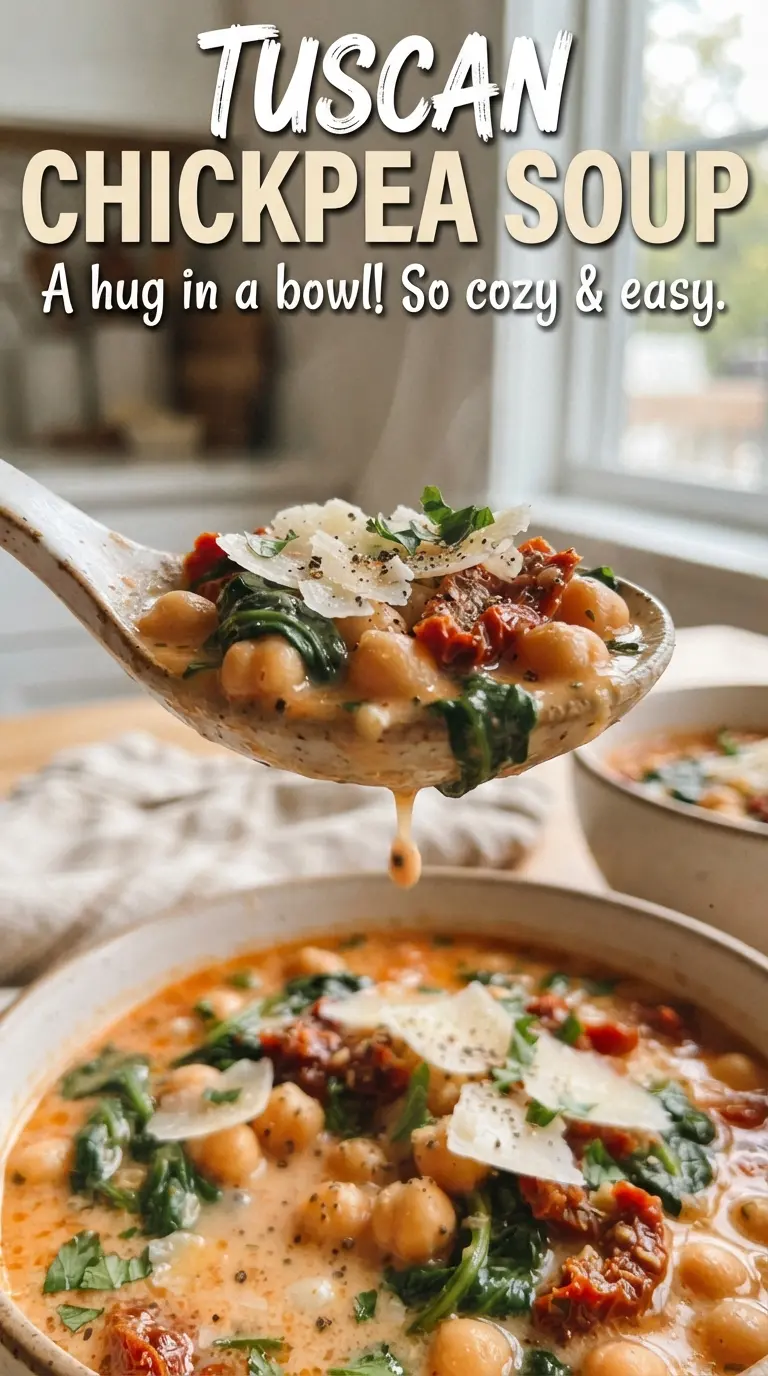
- Chickpeas — These are the body of the soup. Canned chickpeas are the right choice here because they hold their shape but soften enough to mash into the broth. If you use cooked-from-dry chickpeas, they need to be fully tender or they won’t thicken the soup properly.
- Fire-roasted diced tomatoes — Fire-roasted tomatoes bring a deeper, slightly smoky note than plain diced tomatoes. If all you have are regular diced tomatoes, use them, but the broth will taste brighter and less layered.
- Fresh rosemary — Fresh rosemary gives the broth its Tuscan-style aroma. Dried rosemary can work in a pinch, but use less and crush it well so it doesn’t stay sharp or woody in the pot.
- Kale — Kale holds up better than spinach here and keeps some texture after simmering. Chop it fairly small so it softens quickly and doesn’t feel stringy in the bowl.
- Parmesan rind — This is optional, but it’s the easiest way to add savory depth. If you don’t have one, finish with parmesan shavings and a little extra salt instead of trying to replace it with more herbs.
Building the Broth in the Right Order
Softening the Onion First
Start with the onion in olive oil and let it cook until it’s translucent and just beginning to turn sweet around the edges. That first five minutes sets the base for the whole pot; if the onion stays crunchy, the soup tastes raw no matter how long it simmers later. Keep the heat at medium so it softens without browning too fast.
Waking Up the Garlic and Pepper Flakes
Add the garlic and red pepper flakes after the onion has softened. Two minutes is enough to smell the garlic turn fragrant; any longer and it can go bitter, especially once it hits the liquid. The goal is a warm, garlicky oil, not toasted garlic bits.
Simmering for Depth
Once the broth, chickpeas, tomatoes, rosemary, Italian seasoning, and parmesan rind are in, bring everything to a boil, then drop it to a steady simmer. You want the broth to move lazily, not bubble hard enough to smash the chickpeas apart. This is the stage where the soup gets its flavor, so give it the full 20 minutes.
Thickening Without Cream
Ladle out or mash about a third of the chickpeas against the side of the pot, or blend a small portion if you want a smoother result. That starch is what makes the broth feel richer and cling a little better to the spoon. Add the kale after the thickening step so it stays green and doesn’t disappear into the soup.
How to Adapt This Pot for Different Kitchens and Different Eaters
Dairy-Free Version
Leave out the parmesan rind and finish each bowl with extra olive oil, lemon, and a pinch of salt. The soup stays fully satisfying because the chickpeas and rosemary already carry plenty of flavor; you just lose the savory richness that comes from the rind.
Make It Heartier
Stir in a handful of small pasta or a few cubed potatoes with the broth and simmer until tender. Pasta absorbs liquid as it sits, so add an extra splash of broth if you plan to store leftovers.
Use Spinach Instead of Kale
Spinach works if that’s what you have, but add it at the very end and cook just until wilted. It gives a softer texture and a milder finish than kale, which means the soup tastes a little lighter and less rustic.
Storage and Reheating
- Refrigerator: Store in an airtight container for up to 4 days. The broth thickens a bit as it sits, which is a good thing here.
- Freezer: It freezes well for up to 3 months. Cool it completely first, then leave a little room in the container because the liquid expands.
- Reheating: Warm it gently on the stove over medium-low with a splash of broth or water. If you boil it hard, the kale can go mushy and the chickpeas can split open too much.
Answers to the Questions Worth Asking
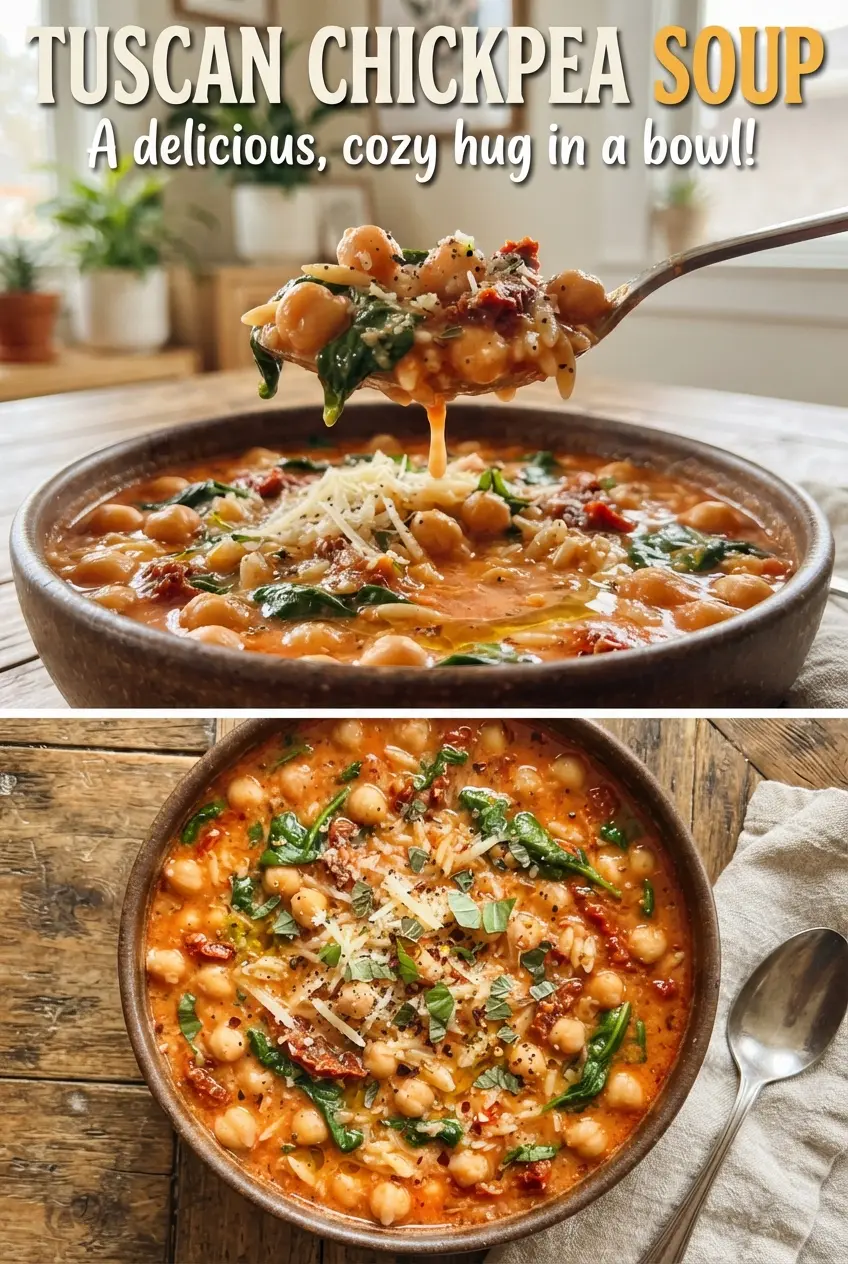
Tuscan Chickpea Soup
Ingredients
Equipment
Method
- Heat 2 tbsp olive oil in a large pot over medium heat, then sauté the onion for 5 minutes until softened and translucent, stirring occasionally (visual cue: onion looks glossy, not browned).
- Add the garlic and red pepper flakes and cook for 2 minutes, stirring, until fragrant (visual cue: you smell garlic and the spices darken slightly).
- Add the chickpeas, fire-roasted diced tomatoes, vegetable broth, rosemary, Italian seasoning, and parmesan rind (if using), then bring the mixture to a boil (visual cue: active bubbling over the whole surface).
- Reduce to a simmer and cook for 20 minutes, then remove the rosemary and parmesan rind (visual cue: chickpeas are tender and broth is lightly thickened).
- Mash or blend about a third of the chickpeas for a thicker consistency (visual cue: broth looks creamier with visible chickpea bits).
- Add the chopped kale and cook for 5 minutes until wilted (visual cue: kale turns bright green and collapses).
- Season with salt, pepper, and lemon, then drizzle with olive oil and add parmesan to serve (visual cue: top looks glossy with a fresh, bright finish).