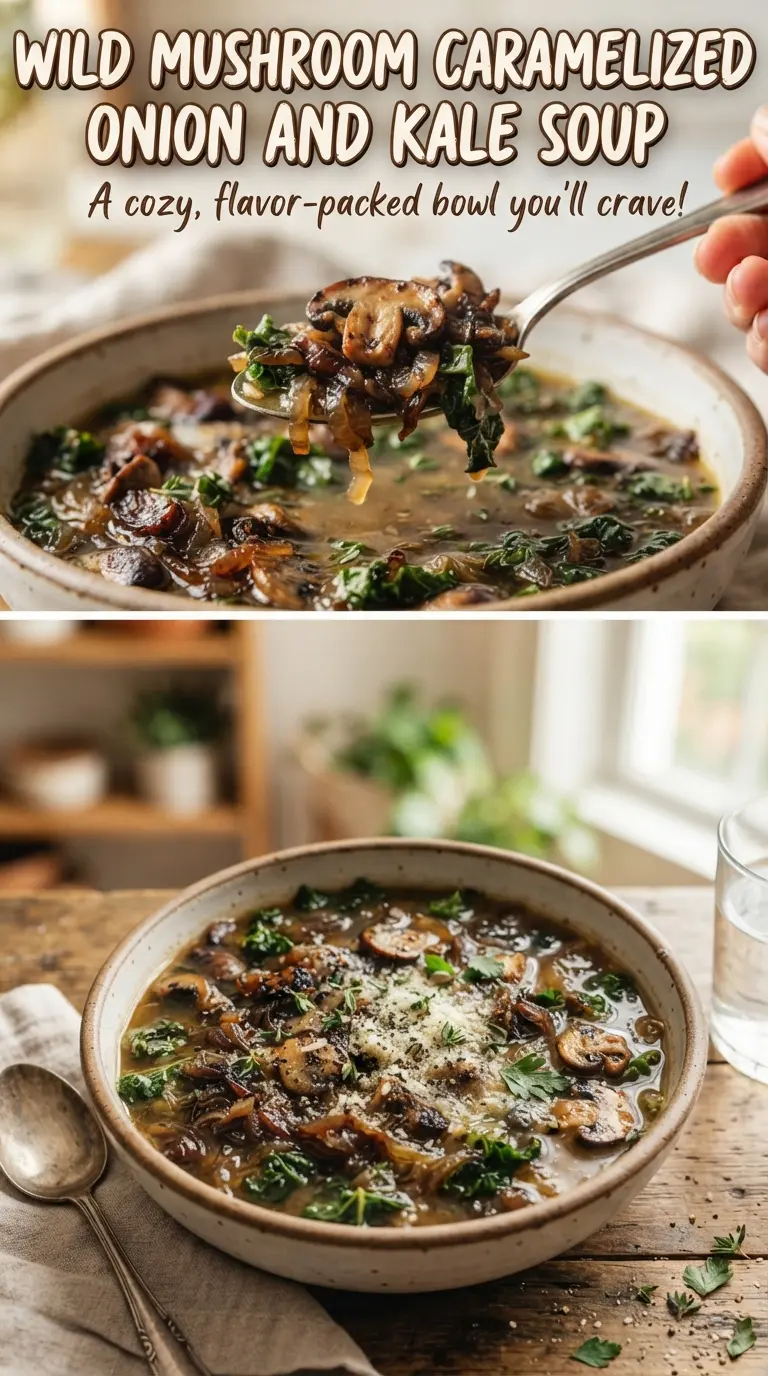
Deep, mahogany broth and tender mushrooms give this soup the kind of depth that usually takes all afternoon, but the real magic comes from the onions. They cook down until sweet and jammy, then meet sherry, porcini soaking liquid, and a splash of balsamic for a broth that tastes layered instead of heavy. The kale keeps it grounded and gives each spoonful a little bite, so the bowl lands somewhere between rustic and elegant.
The dried porcini matter here because their soaking liquid carries a concentrated mushroom flavor you can’t fake with fresh mushrooms alone. I like using a mix of shiitake, cremini, and oyster for different textures: shiitakes bring chew, cremini hold their shape, and oyster mushrooms turn silky at the edges. The onions need patience, not high heat. Rushing them gives you browned bits, not true caramelization, and the soup loses the sweetness that balances the earthiness.
Below, I’ve included the small details that make this soup taste full and finished, plus the swaps that still keep the broth rich if you need to adjust what’s in the kitchen.
The onions turned that deep sweet color and the broth had this rich, earthy taste from the porcini soak that tasted like it had been simmering for hours. I added a little extra thyme and it was perfect with the truffle oil on top.
Save this wild mushroom caramelized onion and kale soup for the nights when you want a rich broth, earthy mushrooms, and a little truffle oil finish.
The Secret to Keeping the Broth Deep Instead of Flat
Most mushroom soups lean on cream to create body, but this one gets its depth from patient browning and a layered broth. The onions need to cook until they’re truly caramelized, not just soft, because that sweetness is what keeps the mushrooms from tasting muddy. The sherry lifts everything off the bottom of the pot, and the porcini soaking liquid adds a bass note that fresh mushrooms alone can’t provide.
The other thing that matters is heat control. If the mushrooms go in before the onions are ready, they steam in the moisture already in the pot and you lose that browned edge that makes the soup taste full. Give the onions time, then brown the mushrooms in the fat already in the pot so they pick up color instead of softening into gray slices.
- Onions — These carry the sweetness and color in the broth. Yellow onions work best because they turn jammy without falling apart. Slice them thin and evenly so they caramelize at the same pace.
- Dried porcini plus their soaking liquid — This is the shortcut to deep mushroom flavor. Strain the liquid through a fine sieve or coffee filter so you don’t pour grit into the soup.
- Dry sherry or white wine — The acid sharpens the sweetness from the onions and gives the broth a cleaner finish. Use whatever dry bottle you’d cook with; sweet wine will make the soup taste cloying.
- Kale — Add it near the end so it stays green and a little firm. If you cook it too long, it turns dull and loses the bite that balances the soft onions and mushrooms.
What Each Ingredient Is Actually Doing in This Recipe
- Primary ingredient (the star) — Quality matters most. Choose the best you can find.
- Cooking medium (oil, butter, or broth) — This carries flavors and prevents dryness.
- Seasonings (salt, pepper, spices, herbs) — Layer flavors so nothing overpowers. Build depth gradually.
- Aromatics (garlic, onion, herbs) — Cook with fat to bloom flavors. Become the foundation.
- Supporting ingredients — Complement the main ingredient without overpowering it.
- Sauce or liquid (if applicable) — Brings flavors together. Balance richness with acid.
- Acid (lemon, vinegar, wine, or other) — Brightens and prevents flat-tasting results.
- Final finish (garnish, glaze, or sauce) — Prevents one-dimensional taste and adds visual appeal.
Building the Pot in the Right Order
Caramelizing the Onions
Melt the butter with the olive oil in a heavy pot and add the onions with a little salt. Medium heat is the sweet spot here; higher heat scorches the edges before the centers have time to soften. Stir now and then, but not constantly, so the onions can sit against the hot surface and turn a deep golden brown. They should look glossy, sweet, and collapsed by the time they’re done.
Brown the Mushrooms, Don’t Steam Them
Add the garlic and sliced mushrooms after the onions are ready, then let them cook until they’ve released their moisture and the liquid has mostly cooked off. If the pot looks crowded, the mushrooms will steam and stay pale, which weakens the flavor. You want browned edges and a darker pan, because that’s where the soup starts tasting like it has been simmering all day.
Deglazing and Building the Broth
Pour in the sherry and scrape up every browned bit from the bottom of the pot. That fond dissolves into the broth and carries a lot of the soup’s flavor. Add the strained porcini liquid, the broth, thyme, and balsamic vinegar, then simmer long enough for everything to marry. The broth should taste round and mushroomy before the kale goes in.
Finishing With Kale and Garnish
Add the kale during the final few minutes so it wilts but still keeps its shape. Taste the soup after the kale softens, then season with salt and pepper; the broth often needs more seasoning than people expect once the greens go in. Serve it hot with parmesan shavings and a small drizzle of truffle oil, not enough to dominate the pot, just enough to make the mushroom flavor read a little more luxurious.
How to Adapt This Soup Without Losing the Good Parts
Make it dairy-free
Use all olive oil instead of butter. You’ll lose a little roundness, but the caramelized onions and porcini broth carry enough body that the soup still tastes rich. Skip the parmesan garnish or use a dairy-free hard cheese if you like a savory finish.
Make it vegetarian
Use vegetable broth instead of beef broth. The soup stays earthy and full because the mushrooms and porcini do most of the flavor work anyway, but beef broth gives it a darker, deeper finish if you’re not avoiding meat-based stock.
Swap the kale for spinach or chard
Spinach wilts in almost instantly and gives a softer result, while chard brings a sturdier stem and a slightly sweeter green note. Add either at the very end and keep the cooking time short so the leaves stay bright instead of fading into the broth.
Storage and Reheating
- Refrigerator: Store in an airtight container for up to 4 days. The broth may thicken a little as it chills, which actually helps the flavor.
- Freezer: This freezes well for up to 2 months, but freeze it before adding parmesan or truffle oil. The greens soften a bit after thawing, though the soup still reheats nicely.
- Reheating: Warm gently over medium-low heat until steaming, not boiling. High heat can make the mushrooms rubbery and dull the fresh thyme; stir occasionally so the broth heats evenly.
Questions I Get Asked About This Soup

Wild Mushroom Caramelized Onion and Kale Soup
Ingredients
Equipment
Method
- Melt butter with olive oil in a large heavy pot over medium heat. Cook onions 35-40 minutes, stirring occasionally, until deeply golden and caramelized.
- Add garlic and fresh mushrooms to the pot. Cook 8 minutes until mushrooms are browned.
- Deglaze with sherry and cook 2 minutes to reduce slightly.
- Drain the soaked porcini mushrooms and reserve the soaking liquid. Add porcini to the pot with the strained soaking liquid, broth, thyme, and balsamic vinegar.
- Simmer 15 minutes, then add kale and cook 5 minutes until wilted.
- Season with salt and pepper to taste. Top with parmesan shavings and a drizzle of truffle oil before serving.