Beef stew earns its place in the rotation when the meat turns spoon-tender, the broth tastes deep and winey, and the carrots and potatoes hold their shape instead of collapsing into the pot. This version does that balance well. It builds a rich base first, then finishes in the oven so the beef braises gently instead of boiling itself tough.
The flour on the beef does more than thicken the stew later. It helps the cubes brown properly and gives the broth a little body without turning heavy. Red wine, tomato paste, and Worcestershire work together here: the wine brings acidity, the paste adds depth, and Worcestershire gives the savory backbone that keeps the stew from tasting flat.
Below you’ll find the timing that matters most, plus a few notes on swapping ingredients without losing the texture that makes a good beef stew worth repeating.
The broth turned out rich and glossy, and the beef was tender right at the 2-hour mark. I loved that the potatoes stayed intact and the peas stayed bright at the end.
Save this Ina Garten Beef Stew for a slow-simmered dinner with tender beef, wine-rich broth, and vegetables that keep their shape.
The Reason This Stew Stays Rich Instead of Watery
Beef stew goes bland or thin when the pot never gets enough browning before the liquid goes in. The flour-coated beef in this recipe solves part of that problem by creating a crust on the meat and a little base for the broth, but only if you brown it in batches. Crowding the pot steams the cubes, and steamed beef tastes flat no matter how long it simmers.
The other thing worth respecting is the oven. Once the pot is covered and tucked into a 300°F oven, the heat stays steady and gentle, which is what turns chuck into tender meat without shredding the vegetables. A stovetop simmer tends to fluctuate more, and that usually means the bottom gets too hot while the top never quite settles in.
- Brown in batches. If the beef goes in all at once, the pan temperature drops and you lose the browned bits that build the stew’s depth.
- Scrape the pot after the wine goes in. Those stuck-on bits dissolve into the broth and carry the flavor forward.
- Bake covered. The lid keeps the stew moist enough for the collagen in the chuck to soften instead of tightening up.
What the Wine, Tomato Paste, and Herbs Are Doing Here
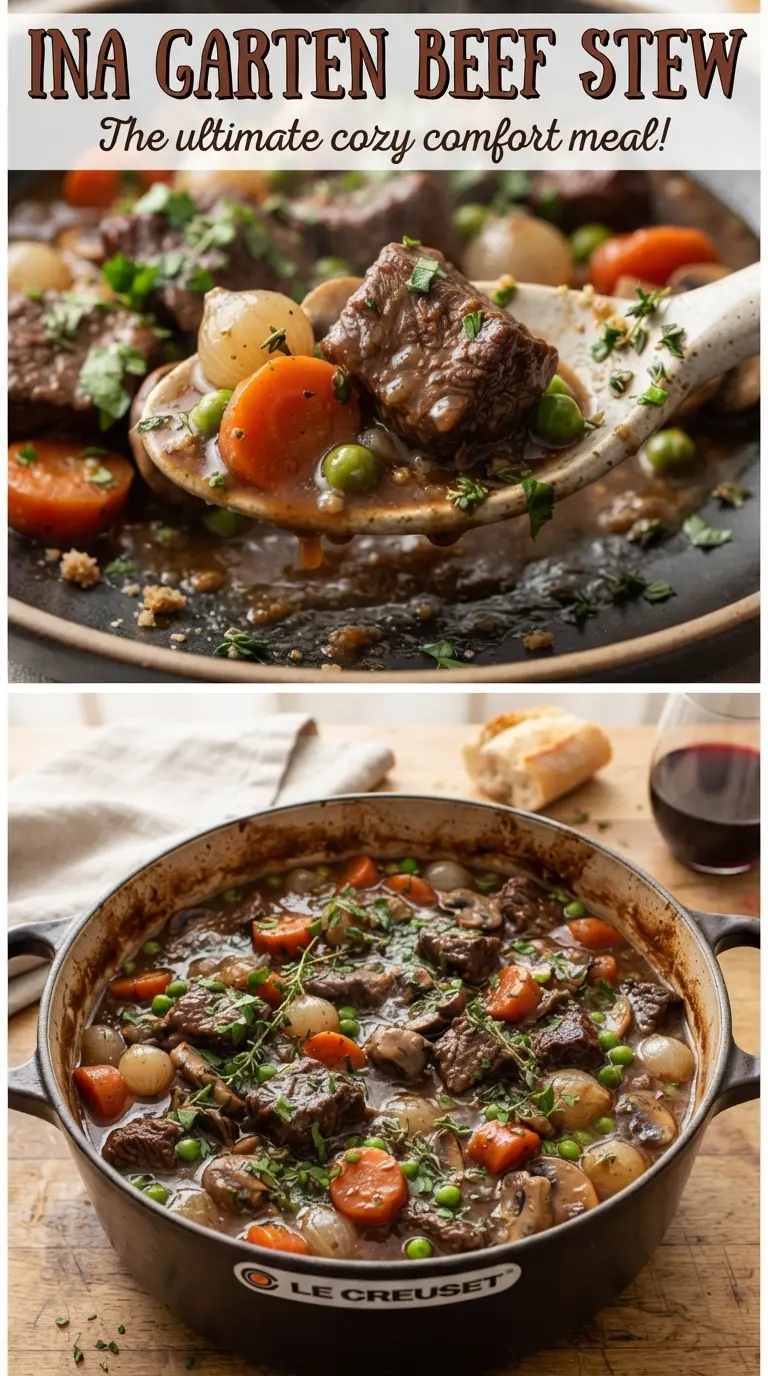
- Beef chuck is the right cut because it has enough connective tissue to turn silky during a long braise. Lean stew meat won’t give you the same texture, even if the flavor is good.
- Dry red wine adds acidity and depth, but it needs to be something you’d drink. A harsh wine will stay harsh in the finished stew, so use a decent bottle, not a cooking wine.
- Tomato paste doesn’t make the stew taste like tomato. It adds concentrated savoriness and a darker color that makes the broth taste like it cooked longer than it did.
- Fresh rosemary and thyme bring the French-inspired backbone of the dish. Dried herbs can work in a pinch, but use less and add them early so they have time to soften into the broth.
- Frozen peas go in at the end for color and sweetness. If they cook too long, they turn dull and mealy, so wait until everything else is tender.
The Part Where Tender Beef Actually Happens
Brown the Beef Until the Pan Tells You It’s Ready
Toss the beef with flour, salt, and pepper, then brown it in hot olive oil in batches. You’re looking for a deep brown crust on the outside, not just a gray surface with a little color at the edges. If the cubes stick at first, leave them alone for another minute; they’ll release when the crust forms. Pull each batch out before the pan gets crowded with juices.
Build the Braising Liquid in the Same Pot
Add the wine and scrape the bottom right away. That is where the flavor lives, and if you leave those browned bits behind, the stew loses half its depth. Stir in the broth, tomato paste, Worcestershire, and garlic until the paste dissolves into the liquid instead of floating in little clumps. The liquid should look darker and slightly thickened before the beef goes back in.
Let the Oven Do the Slow Work
Once the beef, onions, carrots, potatoes, rosemary, and thyme are in, bring the pot just to a simmer, cover it, and move it to the oven. You want the liquid barely moving, not bubbling hard. Hard boiling makes chuck seize up before it has time to relax, which leaves you with chewy meat after two hours instead of tender pieces that break apart with a spoon.
Finish with Peas and Taste the Broth
Remove the rosemary sprig, stir in the peas, and let the stew simmer on the stove for about 5 minutes. This gives the peas time to heat through without losing their green color. Taste at the end and adjust salt and pepper after the stew has reduced and the flavors have concentrated. If it tastes a little flat, it usually needs salt, not more cooking.
How to Adapt This Beef Stew Without Losing the Texture
Gluten-Free Version
Skip the all-purpose flour and coat the beef with a gluten-free flour blend or a light dusting of cornstarch instead. The stew will still thicken, though cornstarch gives a slightly silkier, less rustic broth. Use the same browning method so you keep the savory crust that gives the stew its depth.
No Wine
Replace the wine with an equal amount of beef broth plus 1 tablespoon red wine vinegar or balsamic vinegar. You’ll lose a little of the rounded wine flavor, but the acidity still keeps the stew from tasting heavy. Add the vinegar with the broth, not at the end, so it can mellow as the stew cooks.
Make It Ahead
This stew tastes even better the next day because the broth settles and the beef absorbs more of the seasoning. If you’re making it ahead, stop after the peas go in, cool it, and refrigerate it overnight. Reheat it gently on the stove so the potatoes don’t break apart from a hard boil.
Storage and Reheating
- Refrigerator: Store in an airtight container for up to 4 days. The broth thickens as it sits.
- Freezer: Freezes well for up to 3 months. Cool completely first and leave a little headspace in the container so the potatoes have room.
- Reheating: Warm gently on the stove over low heat, stirring occasionally. Don’t boil it hard or the potatoes can collapse and the beef can dry out around the edges.
Answers to the Questions Worth Asking
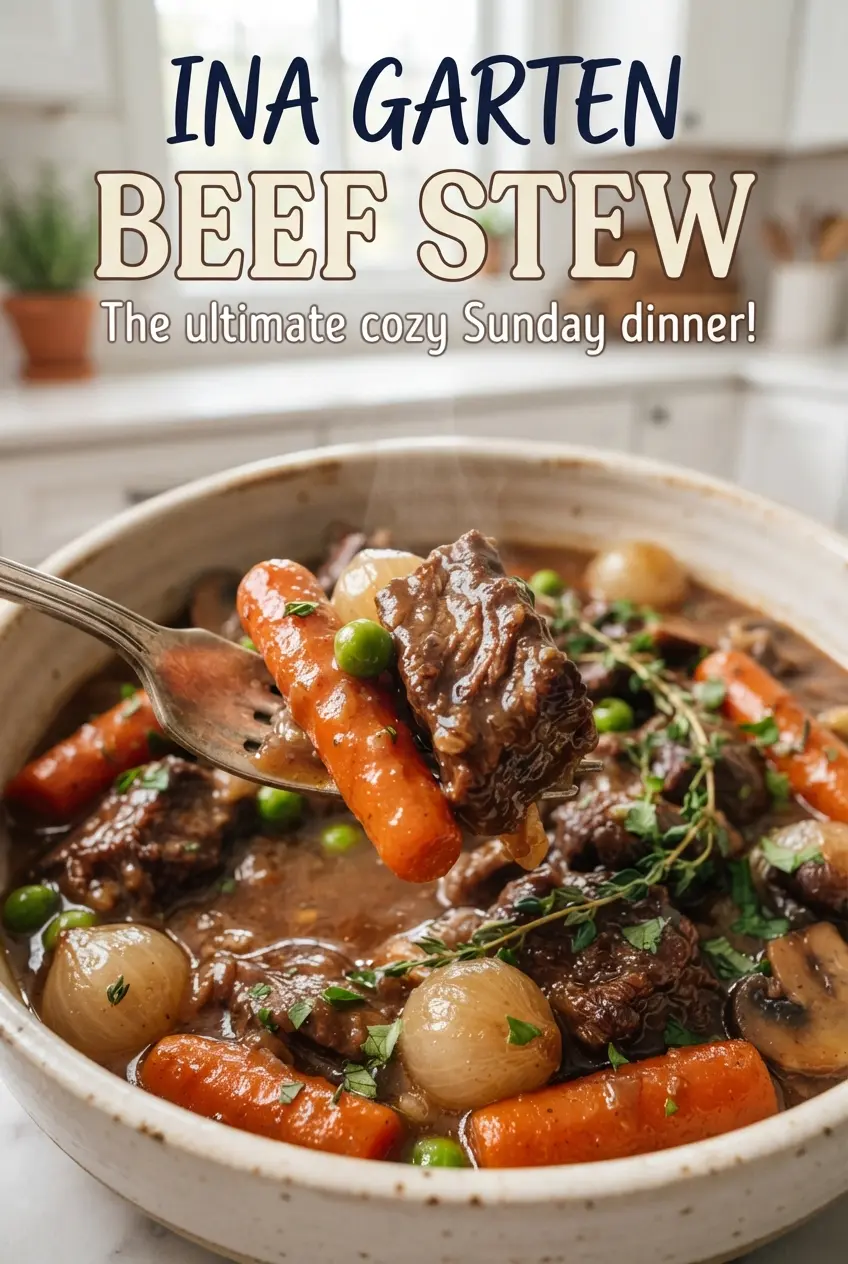
Ina Garten Style French-Inspired Beef Stew
Ingredients
Equipment
Method
- Preheat the oven to 300°F. Toss beef with flour, kosher salt, and black pepper, then brown in batches in the olive oil.
- Cook in batches so the pot stays hot and the beef develops browned edges. Continue until all beef is browned, adding more olive oil as needed.
- Add the red wine to the pot and scrape up the browned bits. Stir in the beef broth, tomato paste, Worcestershire sauce, and minced garlic.
- Return the beef to the pot and add onions, carrots, potatoes, rosemary sprig, and fresh thyme leaves. Bring the mixture to a simmer, then cover and bake for 1 3/4 to 2 hours until the beef and vegetables are tender.
- Remove the rosemary sprig and stir in the frozen peas. Simmer on the stove for 5 minutes until the peas are heated through.
- Season the stew to taste before serving. The final texture should be thick and tender with visible vegetable pieces.