Beer and horseradish beef stew lands with deep, slow-cooked richness first, then finishes with a sharp little lift that keeps every bite awake. The beef turns fork-tender, the potatoes soak up the broth, and the carrots soften just enough to hold their shape. It’s the kind of stew that tastes like it took all day because, honestly, it does — but most of that time is quiet simmering while the pot does the work.
The beer matters here. A brown ale or amber beer brings maltiness and a little bitterness that plays nicely with the beef and Worcestershire, while the tomato paste gives the broth a darker, fuller backbone. Horseradish goes in twice: once in the stew so the heat is woven through the base, and again in the sour cream so the bowl gets a cool, creamy hit right at the end. That contrast is what keeps this from tasting heavy.
Below, I’ve laid out the one step that keeps the beef from turning dull and gray, plus the easiest way to adjust the horseradish so it stays balanced instead of aggressive. If you’ve ever wanted a stew that feels sturdy but still has some brightness, this is the one to make.
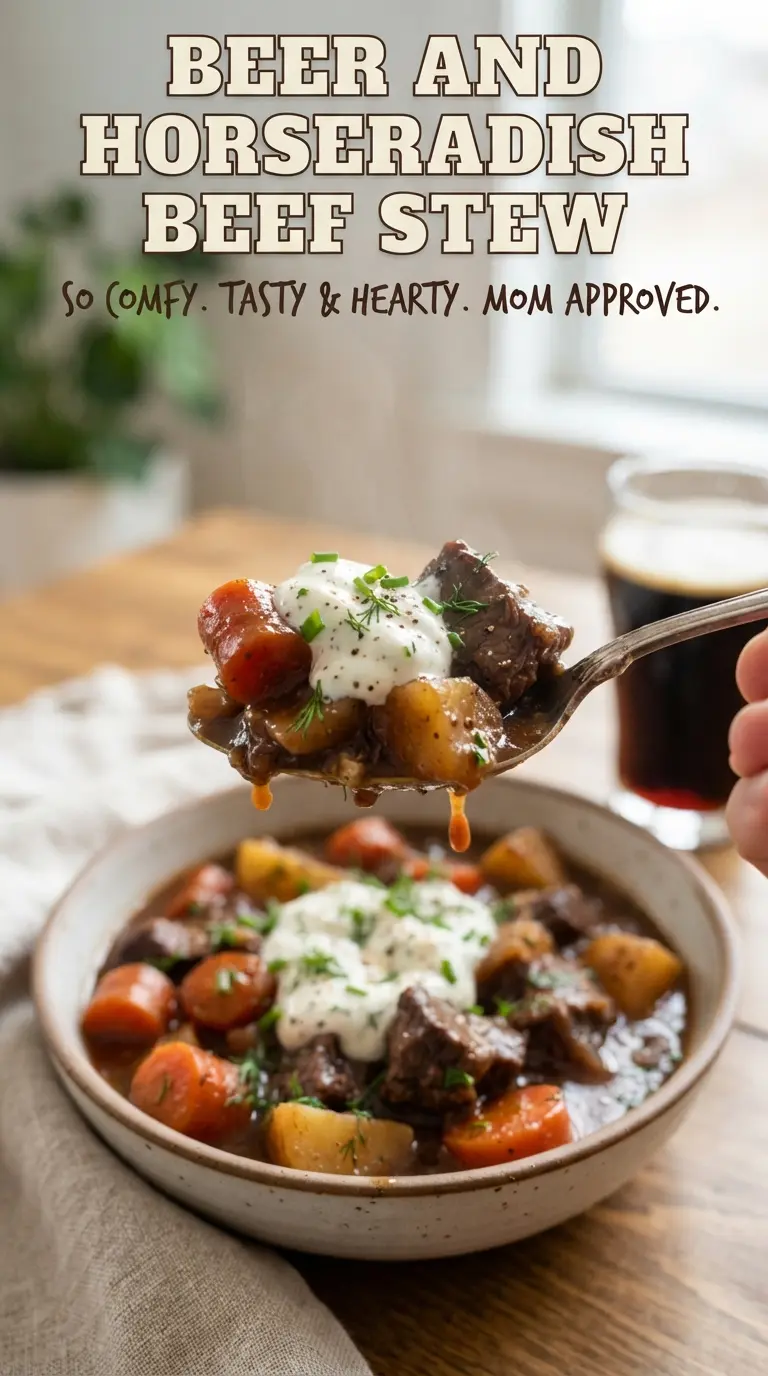
The beef got that deep brown crust before braising, and the horseradish sour cream on top made each bowl taste bright instead of heavy. My husband went back for a second bowl and kept talking about the potatoes the whole time.
Save this beer and horseradish beef stew for a night when you want tender beef, a malt-rich broth, and that creamy horseradish finish on top.
The Browning Stage That Gives This Stew Its Backbone
The biggest mistake in beef stew is crowding the pot and rushing the browning. If the meat steams, you lose the dark, savory edge that makes the broth taste built, not flat. Brown the beef in batches in hot oil and leave it alone long enough to get a real crust before turning it. That crust carries through the whole pot.
Scraping the bottom after the beer goes in matters just as much. Those browned bits dissolve into the liquid and make the sauce taste like it simmered far longer than it actually did. If the bottom of the pot looks pale, the stew will taste pale too. The goal is not just cooked beef. It’s a pot with layers.
What Each Ingredient Is Actually Doing In This Stew
- Beef chuck — This cut has enough connective tissue to go tender during the long simmer. Lean stew meat can work in a pinch, but it won’t give you the same rich texture.
- Brown ale or amber beer — This brings malt, color, and a little bitterness that keeps the stew from tasting one-note. Use a beer you’d actually drink; overly hoppy beer can turn harsh as it reduces.
- Prepared horseradish — This is the sharp finish that makes the stew stand out. Fresh horseradish is stronger and hotter, so if you use it, start with less and taste at the end.
- Tomato paste — It deepens the color and rounds out the broth without making it taste like tomato soup. Let it cook for a minute with the onion and garlic so it loses that raw edge.
- Sour cream — Stirred with the remaining horseradish, it gives the bowl a cool, creamy topping that balances the broth. Plain Greek yogurt can stand in, but it tastes tangier and a little less lush.
- Potatoes and carrots — These turn the stew into a full meal and help the broth feel hearty. Cut them into even pieces so they finish at the same time.
How To Build The Pot So The Beef Stays Tender
Season and brown in batches
Coat the beef with salt, pepper, and flour, then brown it in hot oil in batches. The flour helps the stew thicken later, but the real job here is getting color on the meat instead of dumping everything in and boiling it gray. If the pan seems dry, add a little more oil before the next batch. You want a deep brown crust, not blackened edges.
Cook the onion base until it smells sweet
Once the beef is out, cook the onion until it softens and picks up some of the browned bits from the pan. Add the garlic and tomato paste for just a minute; any longer and the garlic can turn bitter while the paste starts sticking. This short cooking window wakes both ingredients up and keeps the broth smooth.
Use the beer to lift the fond
Pour in the beer and scrape the bottom of the pot with a wooden spoon. The liquid should loosen every browned bit without scorching. Stir in the broth, horseradish, Worcestershire, brown sugar, thyme, and beef, then bring it to a gentle simmer. If it boils hard, the meat tightens up instead of relaxing into tenderness.
Add the vegetables after the beef softens
Let the stew simmer covered for about 1 3/4 hours before adding the potatoes and carrots. That first stretch is for the beef; the vegetables would collapse if they went in too early. Add them later and keep the simmer gentle until they’re tender and the beef yields easily with a fork. The broth should thicken slightly from the flour and starch without turning gluey.
Finish with the cold horseradish cream
Mix the sour cream with the remaining horseradish right before serving and spoon it over each bowl. The contrast between hot stew and cool topping is the whole point. If you stir the cream into the pot, it can separate or mute the horseradish. Keep it as a topping so every bowl gets that clean, sharp finish.
How To Adjust The Heat, Richness, Or Thickness Without Losing The Stew
Make it milder
Use 1 to 2 tablespoons of horseradish in the stew instead of the full 2 tablespoons, then keep the sour cream topping light. You’ll still get the signature bite, but it won’t dominate the beef and beer.
Go gluten-free
Swap the all-purpose flour for a gluten-free 1:1 blend, or thicken the stew at the end with a cornstarch slurry. The flavor stays the same, but the flourless version won’t build quite as much body from the start.
Make it dairy-free
Skip the sour cream topping or use an unsweetened dairy-free sour cream alternative. The stew itself is already dairy-free, so this swap only changes the finish, not the body of the dish.
If you want a thicker stew
Simmer uncovered for the last 15 to 20 minutes so some liquid reduces, or mash a few potato cubes into the broth. Both methods thicken the stew without making it pasty, but over-reducing can mute the beer and horseradish.
Storage and Reheating
- Refrigerator: Keeps for 4 days in a sealed container. The broth thickens as it chills, and the horseradish stays brighter than you might expect.
- Freezer: Freezes well for up to 3 months. Cool it completely first and leave a little headspace, since potatoes and broth expand and the texture softens slightly after thawing.
- Reheating: Reheat gently on the stovetop over low heat with a splash of broth or water if needed. A hard boil can make the beef dry and break up the potatoes.
Answers to the Questions Worth Asking
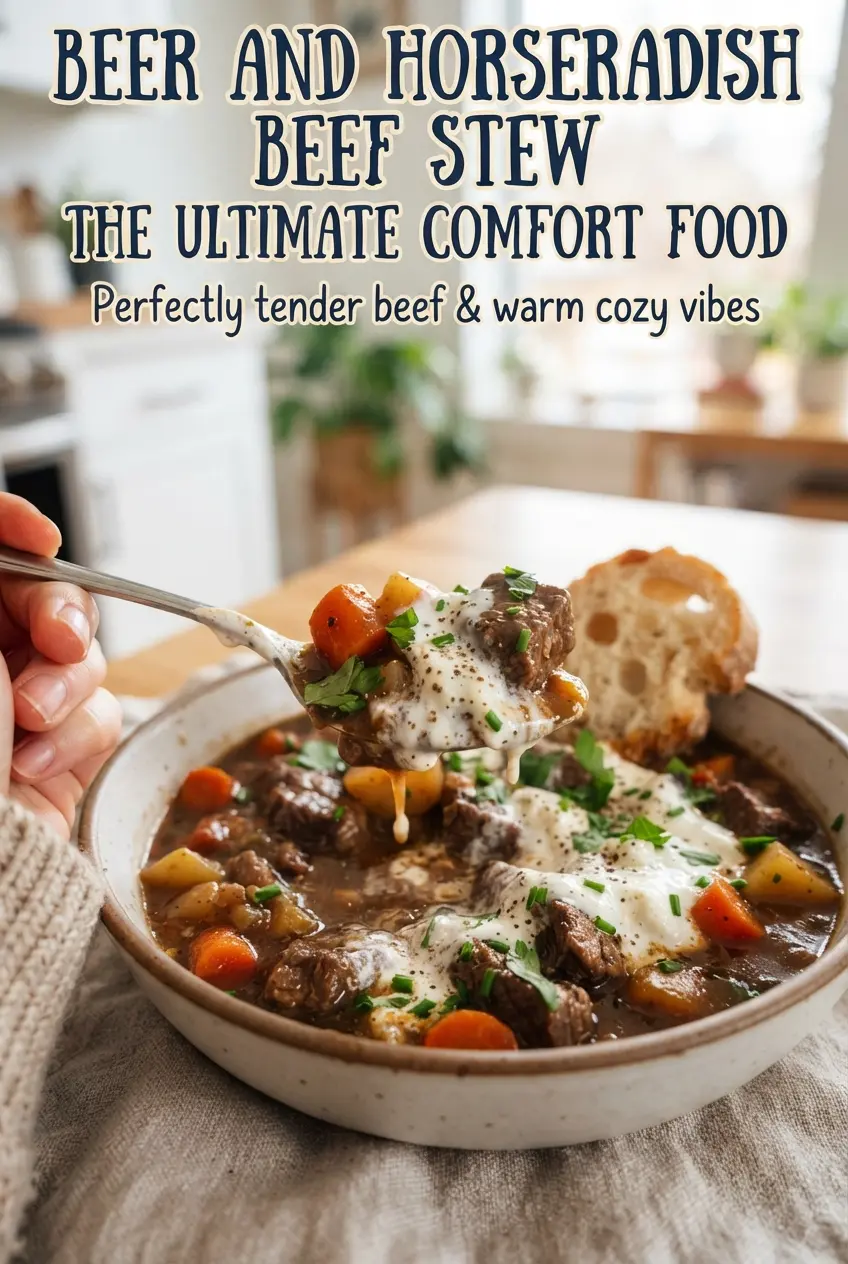
Beer and Horseradish Beef Stew
Ingredients
Equipment
Method
- Season the beef chuck cubes with salt and black pepper, then toss with all-purpose flour to coat lightly. Heat the vegetable oil in a Dutch oven over hot heat, then brown the beef in batches so the cubes get color and don’t steam.
- Return all browned beef to the Dutch oven, keeping any browned bits on the bottom for flavor.
- Add chopped onion to the Dutch oven and cook for 5 minutes until softened. Stir in minced garlic and tomato paste for 1 minute until fragrant.
- Pour in the brown ale or amber beer and scrape the bottom to loosen the browned bits. Stir in beef broth, 2 tablespoons prepared horseradish, Worcestershire sauce, brown sugar, and dried thyme.
- Cover the Dutch oven and simmer for 1 3/4 hours, stirring occasionally so the stew reduces gently. Keep the heat at a steady simmer until the beef is tender and the broth looks thickened.
- Add cubed potatoes and sliced carrots, then cover and simmer for 45–60 minutes until the vegetables are tender. Look for a stew texture that clings to the spoon and vegetables that break easily when poked.
- Mix sour cream with the remaining prepared horseradish until smooth and pale with a visible horseradish bite. Serve the stew in bowls with a dollop of the horseradish sour cream and chopped fresh chives on top.