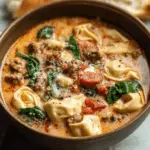
Lasagna soup with bow tie pasta gives you the same cozy, tomato-rich comfort as a baked pan of lasagna, but in a bowl that comes together fast and stays weeknight-friendly. The broth is savory and bright, the sausage adds enough richness to stand up to the tomatoes, and the farfalle holds onto the sauce in all those little folds like it was made for the job.
What makes this version work is the balance. Tomato paste deepens the base before the broth goes in, which keeps the soup tasting layered instead of flat, and the pasta cooks right in the pot so it picks up all that flavor. The ricotta-mozzarella topping matters too; it softens into the hot soup instead of disappearing, giving you the creamy, cheesy finish people expect from lasagna without turning the whole bowl heavy.
Below, you’ll find the small details that keep the pasta from overcooking, plus the easiest way to adjust the broth if the soup thickens as it sits. That one fix makes leftovers much better the next day.
The broth had that rich lasagna flavor, and the farfalle held up better than I expected. I added a splash more broth the next day and it tasted even better after sitting overnight.
Love the creamy ricotta topping and sausage-rich broth? Save this lasagna soup with bow tie pasta for an easy pasta-soup night.
The Pasta Problem Most Lasagna Soups Run Into
Lasagna soup sounds simple until the noodles take over. In a lot of versions, the pasta keeps drinking broth long after the pot comes off the heat, which leaves you with a stew instead of soup by dinnertime. Bow tie pasta is sturdier than broken lasagna sheets, but it still needs enough liquid and just enough simmer time to stay tender without bloating.
The other place this dish can fall apart is the tomato base. If you skip cooking the tomato paste with the onion and garlic, the soup tastes sharp instead of rounded out. A short sauté fixes that and gives the broth a deeper, slow-cooked taste even though the whole pot is done in under 30 minutes.
- Browned sausage gives the soup its backbone. If you only cook it until gray, the broth tastes flat. Let it get some color in the pot before you add the vegetables.
- Tomato paste needs a minute on the heat. That quick cook removes the raw edge and pulls the whole tomato base together.
- Bow tie pasta holds its shape better than broken lasagna noodles, but it still absorbs liquid fast. If the soup sits before serving, expect it to thicken and plan on adding broth.
- Ricotta and mozzarella create the lasagna effect at the finish. Stir them together just before serving so the cheese stays creamy instead of melting out into the pot.
What Each Ingredient Is Actually Doing In This Bowl
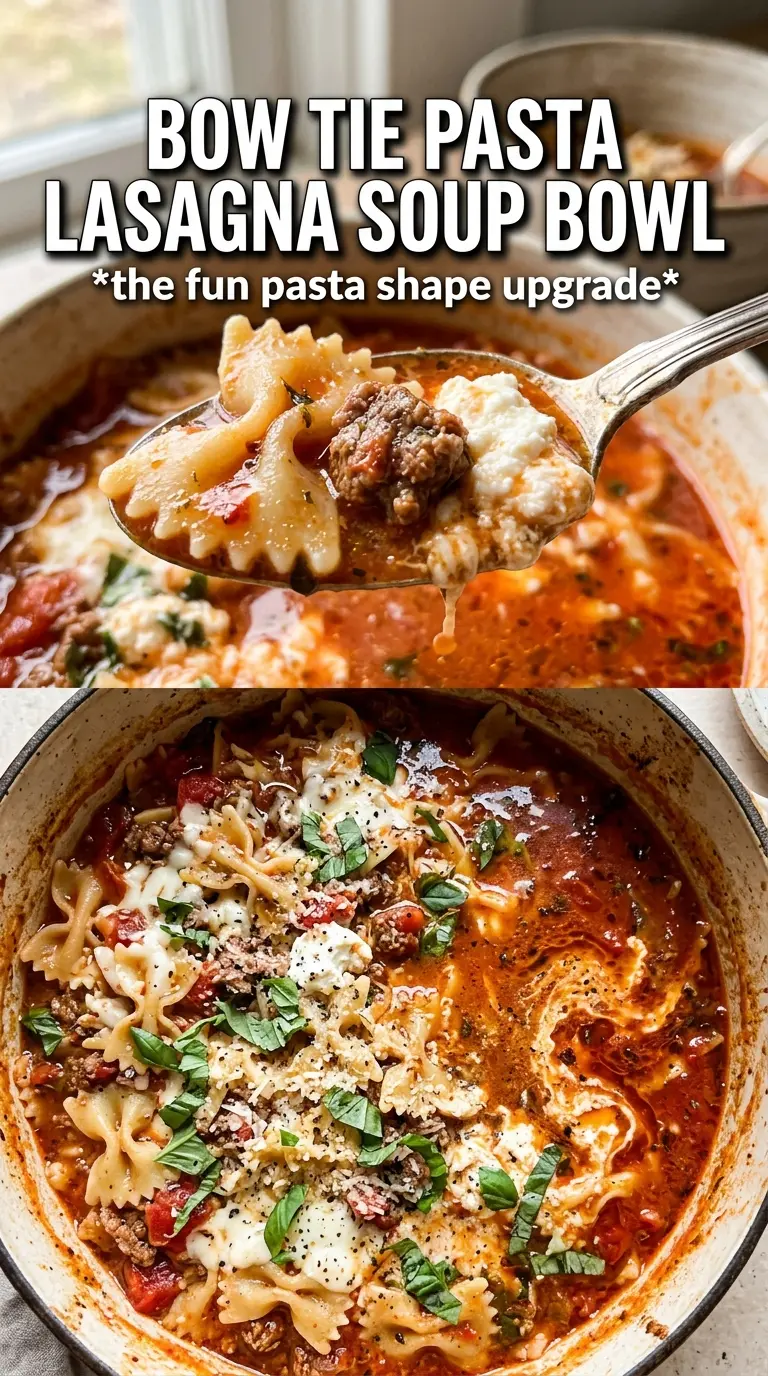
- Italian sausage is the main source of savory depth. Mild or hot both work; hot sausage gives you more heat without needing extra pepper flakes. If you use turkey sausage, add a little olive oil so the pot still has enough fat to carry the flavor.
- Crushed tomatoes plus diced tomatoes give you both body and texture. Crushed tomatoes make the broth silky, while diced tomatoes leave you with some chunks that keep the soup from feeling too smooth.
- Tomato paste is the ingredient that makes the broth taste cooked, not canned. If you only have sauce, use it sparingly because it’s thinner and less concentrated.
- Chicken broth keeps the soup light enough to balance the cheese topping. Vegetable broth works, but the final bowl will taste a little less rich unless you season carefully.
- Farfalle is the smart swap here because the shape catches bits of sausage and tomato. Broken lasagna noodles work too, but they can turn soft faster and make the soup harder to eat neatly.
- The ricotta-mozzarella topping is what gives each bowl that lasagna feel. Fresh basil on top is worth using if you have it; it lifts the whole bowl and keeps the cheese from tasting too heavy.
Building the Soup So the Pasta Stays Tender
Start With a Good Brown on the Sausage
Cook the sausage until you see dark golden spots on the bottom of the pot, not just until it changes color. Those browned bits are the first layer of flavor in the soup. If the sausage releases a lot of fat, drain enough of it off so the finished broth doesn’t feel greasy, but leave a little behind for the onion and garlic.
Cook the Tomato Paste Before the Liquid Goes In
Once the onion softens, stir in the garlic and tomato paste and give them a full 2 minutes. The paste should darken a shade and smell sweeter, not raw. If you rush this part, the broth can taste thin even when the seasoning is right.
Simmer the Pasta Just Until It’s Bite-Tender
Add the farfalle only after the soup is boiling and drop the heat just enough to keep it moving gently. Check it early, because bow ties can go from firm to overdone fast. You want al dente with a little resistance in the center; it will keep softening in the hot broth after you take the pot off the heat.
Finish With Cheese in the Bowl, Not the Pot
Mix the ricotta, mozzarella, parmesan, and basil in a separate bowl, then spoon a generous dollop over each serving. That keeps the soup from turning grainy or stringy in the pot. If you stir all the cheese into the whole batch, the texture disappears and the broth loses its clean tomato edge.
Make It Spicier or Milder
Use hot Italian sausage and keep the red pepper flakes as written for a bowl with a little heat. For a milder version, use sweet sausage and cut the pepper flakes in half. The tomato and cheese still carry the dish, so you won’t lose flavor by turning the heat down.
Gluten-Free Bowls
Swap in your favorite gluten-free short pasta and cook it a minute less than the package suggests. Gluten-free pasta can break down faster in soup, so taste it early and add extra broth if needed. The cheese topping stays the same.
Dairy-Free Version
Skip the ricotta topping and finish each bowl with a drizzle of good olive oil and a handful of fresh basil. If you want some creaminess back, stir a spoonful of plain dairy-free yogurt into the bowl right before serving. The soup itself stays satisfying because the sausage and tomatoes carry the base.
Storage and Reheating
- Refrigerator: Store the soup for up to 4 days. The pasta will keep absorbing broth, so expect it to thicken.
- Freezer: Freeze the soup without the pasta if you can. Pasta turns soft after thawing, so freeze the tomato-sausage base and cook fresh pasta when you reheat it.
- Reheating: Warm it gently on the stove over medium-low with extra broth stirred in until it loosens back up. Boiling hard is the mistake that turns the pasta mushy and makes the dairy-free reheat version taste flat.
Questions I Get Asked About This Recipe
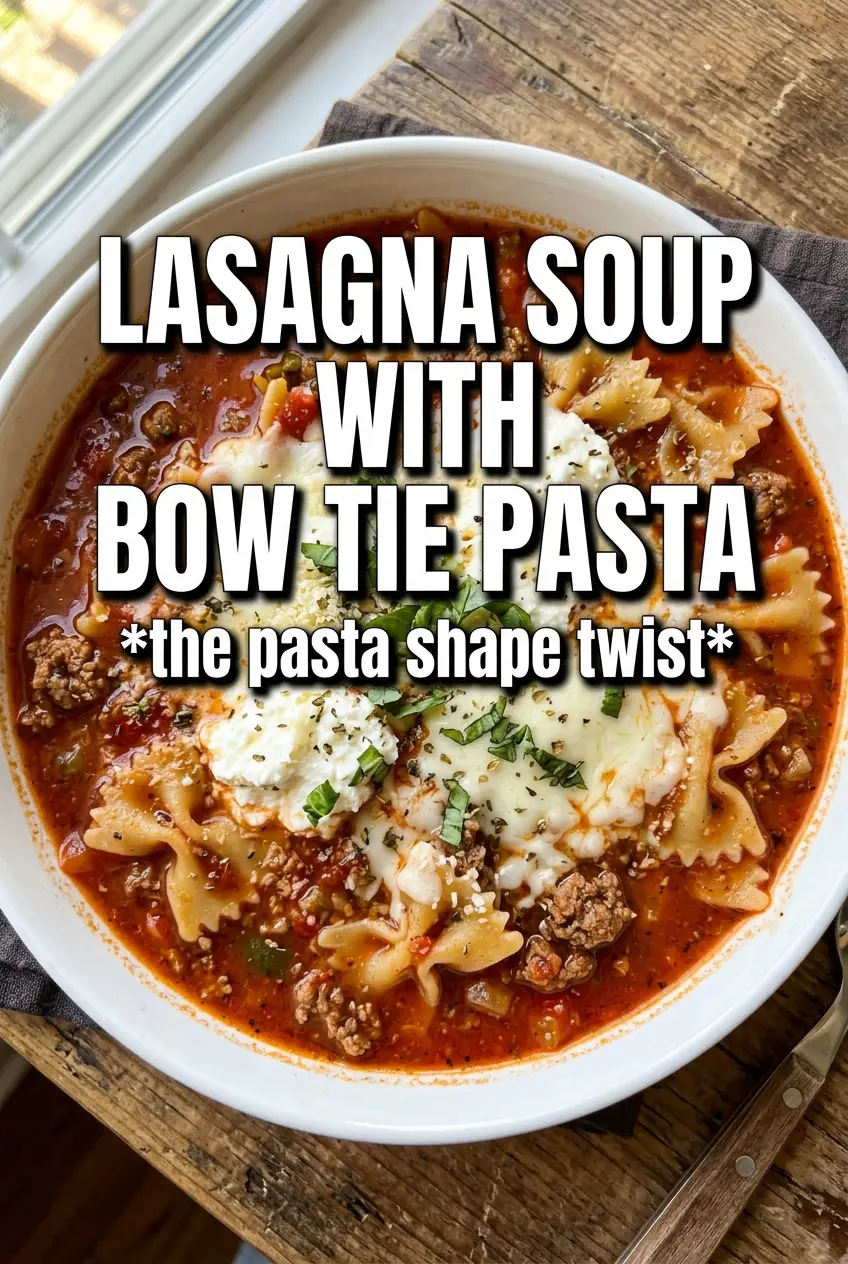
Lasagna Soup With Bow Tie Pasta
Ingredients
Equipment
Method
- Heat a large pot over medium-high heat. Brown the Italian sausage in the pot until cooked through, then drain excess fat.
- Add the diced onion to the pot and sauté for 3 minutes, stirring until softened and glossy. Add the minced garlic and tomato paste and cook for 2 minutes, until fragrant and slightly darkened at the edges.
- Pour in the crushed tomatoes, diced tomatoes, and chicken broth, then stir in Italian seasoning, dried basil, and red pepper flakes. Bring the mixture to a boil.
- Add the farfalle (bow tie) pasta and cook for 8-10 minutes, stirring occasionally, until al dente. Reduce the heat as needed to keep a steady simmer.
- Season the soup with salt and pepper to taste. Continue simmering briefly until the flavors meld.
- Mix the ricotta, shredded mozzarella, and parmesan together until evenly combined. Stir in fresh basil for a bright, herb-forward topping.
- Ladle the lasagna soup into bowls. Serve with a generous spoonful of the cheese dollop on top and finish with additional fresh basil if desired.
- If the soup thickens, remember bow tie pasta absorbs more liquid than lasagna noodles. Add extra broth in small splashes and stir until the consistency loosens to your preference.