French onion beef stew takes everything people love about classic French onion soup and turns it into a full meal with real depth. The beef goes fork-tender, the onions melt down into a sweet, savory base, and the Gruyere-topped baguette gives each bowl that familiar cheesy finish without feeling thin or brothy. It’s the kind of stew that tastes like it took all day because, honestly, it nearly did — and the slow cook is what makes every part of it worth the wait.
The key is giving the onions enough time to caramelize properly before anything else goes in. That long cook builds the sweetness that balances the beef and broth, and the wine helps lift the browned bits from the pan so none of that flavor gets left behind. A small amount of flour thickens the stew just enough to coat the meat and onions without turning it heavy.
Below you’ll find the exact timing that keeps the beef tender, the onion cue I watch for before adding the liquid, and a few ways to adapt the topping if you want to serve it a little differently.
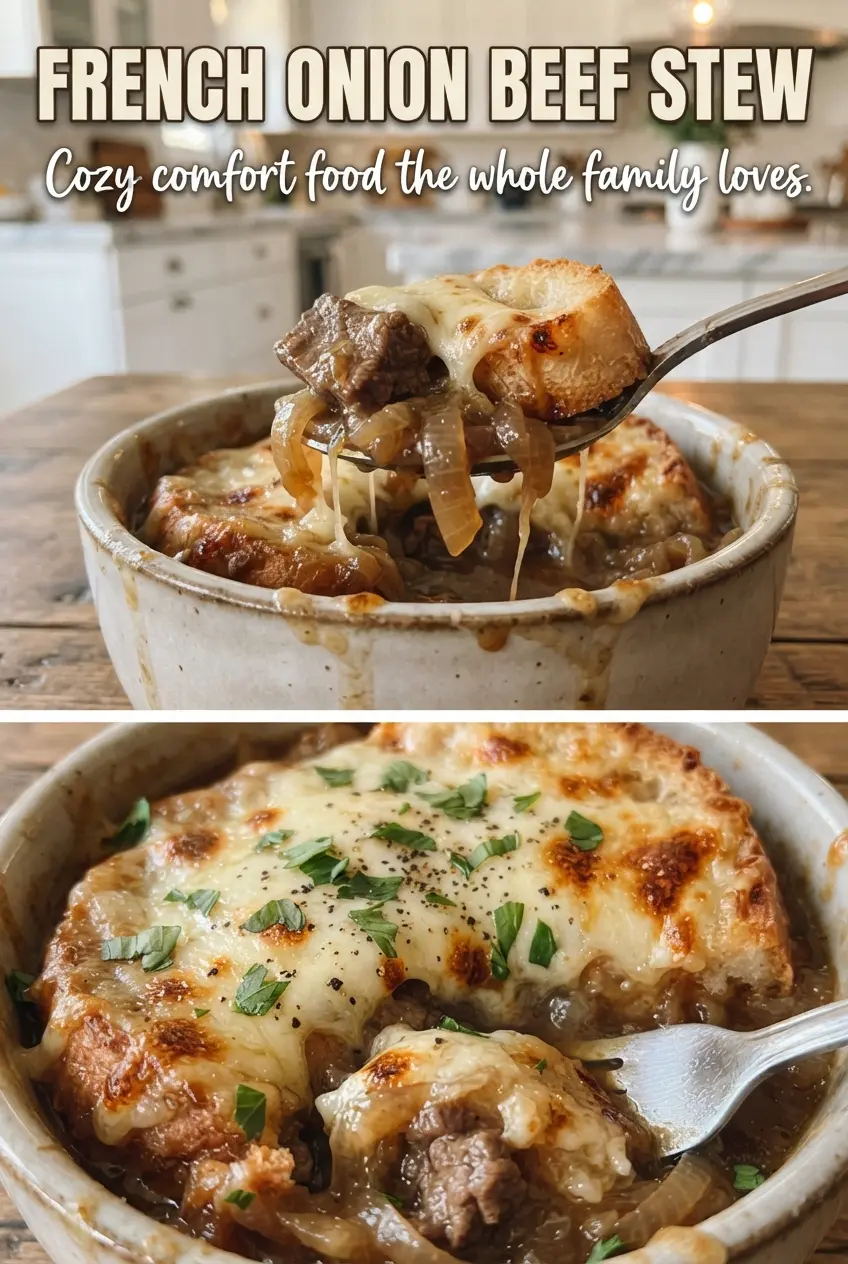
The onions turned a deep amber and the broth thickened just enough to cling to the beef. My husband kept going back for the toasted baguette on top, which stayed crisp under the cheese instead of getting soggy.
Save this French Onion Beef Stew for the nights when you want caramelized onions, tender beef, and a bubbling Gruyere baguette topping in one bowl.
The Difference Between Sweet Onions and a Flat Stew
The flavor base here comes almost entirely from the onions, so rushing them is the fastest way to end up with a stew that tastes muddy instead of rich. Thirty minutes of slow cooking changes their color, texture, and sweetness; you want them deep golden, soft enough to collapse, and just beginning to stick before the wine goes in. That sticking is useful. It means the pan has built flavor, and the wine loosens it into the stew instead of leaving it behind.
Beef chuck is the right cut because it has enough connective tissue to turn silky after a long simmer. Leaner stew meat can work in a pinch, but it won’t give you the same plush texture, and it can go dry before the onions are ready to join in. The flour only needs a minute with the garlic so it doesn’t taste raw; after that, the broth will carry it into a light, glossy body.
What Each Ingredient Is Actually Doing in the Bowl
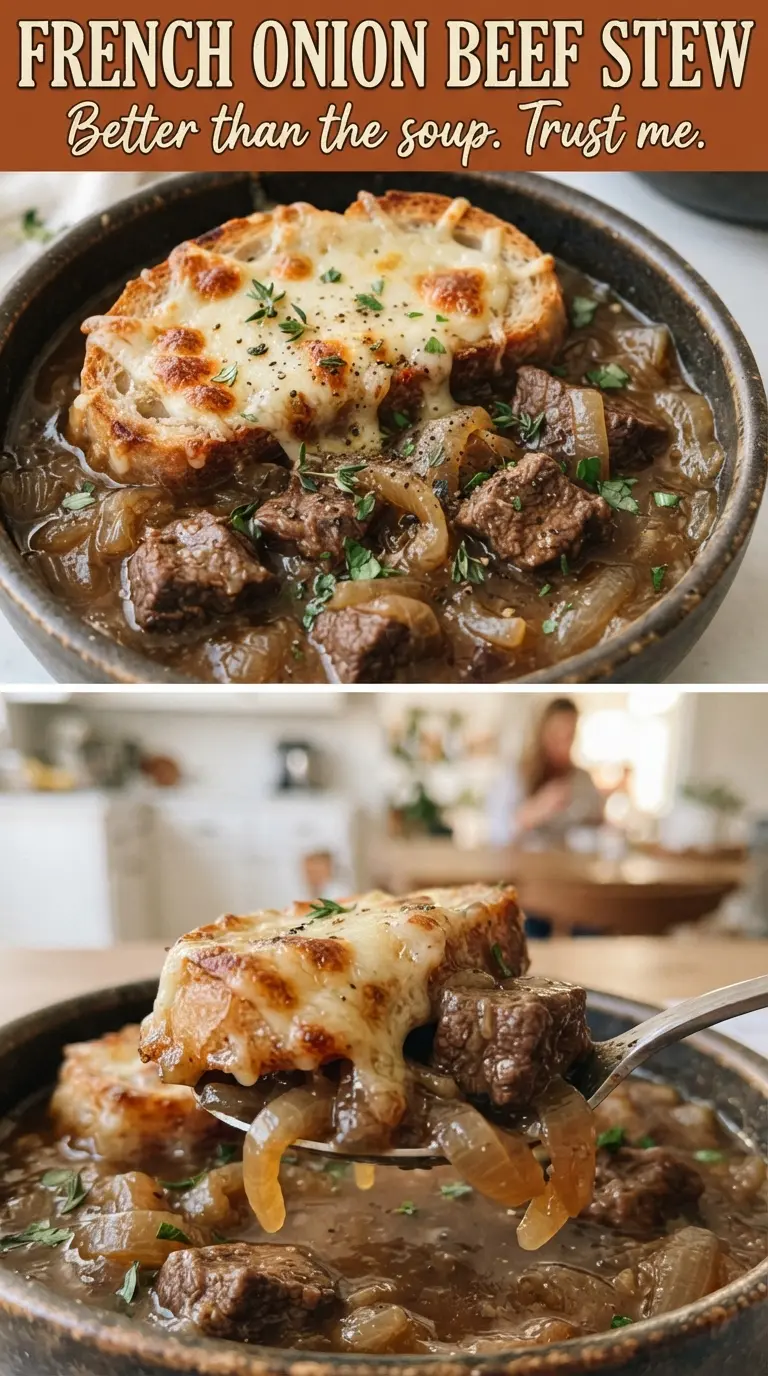
- Beef chuck — This is the backbone of the stew. It needs the long simmer, and that’s exactly why it turns tender instead of stringy.
- Yellow onions — These are the signature element, and they need time more than anything else. White onions can work, but yellow onions give you the sweetest, most balanced base.
- Dry white wine — It pulls the browned bits off the pan and gives the broth a little lift. If you don’t cook the wine for a minute or two before adding broth, the stew can taste sharp instead of rounded.
- Gruyere — This melts into that stretchy, nutty top you want on a French onion dish. Swiss cheese will melt, but it won’t give quite the same depth.
- Baguette — Toast it first so it can hold up under the cheese. If it’s soft going in, it turns soggy before the broiler has a chance to brown the top.
Building the Stew in the Right Order
Searing the Beef Without Crowding the Pan
Season the beef first, then brown it in batches in hot olive oil. If the pieces are packed together, they steam and stay pale, which costs you all the browned flavor that makes the stew taste finished. Look for a dark crust on at least two sides before moving the meat out of the pan. Those browned bits left behind are part of the sauce, so don’t wash them away.
Caramelizing the Onions Until They Turn Sweet
Add the butter, onions, and sugar, then cook them low and slow, stirring often, until they’re deep golden and soft. If the heat is too high, they’ll scorch at the edges before the whole pan has a chance to develop that sweet onion flavor. This stage takes patience, but it’s the difference between an okay stew and one that tastes like French onion soup with purpose.
Pulling the Pan Back Together
Stir in the garlic and flour for a minute, then pour in the wine and scrape firmly across the bottom. The flour should disappear into the onions and the wine should hiss when it hits the pan; that’s the sign the fond is loosening. Add the broth, Worcestershire, thyme, bay leaf, and beef, then cover and simmer until the meat gives easily with a fork. If it still feels tight or chewy after two hours, it needs more time, not more heat.
The Broiler Finish That Makes It Feel Special
Ladle the stew into oven-safe bowls, top each with a toasted baguette slice, and pile the Gruyere over the bread. Broil just until the cheese bubbles and browns in spots. Stay close, because the jump from perfect to burned is fast under the broiler. You want the cheese melted through and the edges just starting to crisp.
How to Adapt This for a Different Table
Gluten-Free Bowl Without the Bread Topping
Skip the flour and thicken the stew at the end by simmering uncovered for a bit longer, or stir in a small cornstarch slurry. Serve it without the baguette, or use your favorite gluten-free toast. The stew itself keeps all the French onion character; you just lose the gratinéed bread layer on top.
Dairy-Free Version That Still Has Richness
Use extra olive oil instead of butter for the onions and finish with a dairy-free melting cheese if you have one that browns well. The topping won’t taste exactly the same, but the long-cooked onions still give the stew its signature depth. A little extra thyme helps fill in the gap where the cheese usually brings richness.
No Wine, No Problem
Replace the wine with extra beef broth plus a teaspoon of lemon juice or a splash of red wine vinegar. You still want a little acidity to brighten the onions and keep the stew from tasting heavy. Add it gradually so the broth stays balanced instead of sharp.
Make It Ahead for Better Flavor
This stew tastes even better the next day, after the onions and beef have had time to settle together. Cook it fully, chill it, then reheat slowly before adding the bread and cheese topping. The only part that should wait until serving is the broiled baguette, since that’s what keeps the top crisp.
Storage and Reheating
- Refrigerator: Store the stew without the baguette topping for up to 4 days. The flavor deepens as it sits.
- Freezer: The stew freezes well for up to 3 months. Freeze it before adding the bread and cheese, then thaw overnight in the fridge.
- Reheating: Warm it gently on the stove over medium-low heat until steaming. Don’t boil it hard or the beef can tighten up; add the baguette and Gruyere only after the stew is hot.
Answers to the Questions Worth Asking
French Onion Beef Stew
Ingredients
Equipment
Method
- Season the beef chuck with salt and black pepper. Heat olive oil in a Dutch oven and brown the beef in batches, then set aside.
- Melt the butter in the Dutch oven. Cook the onions with sugar for 30-35 minutes, stirring often, until deep golden.
- Add the garlic and flour and cook for 1 minute. Pour in the dry white wine and scrape the bottom, lifting up browned bits.
- Add the beef broth, Worcestershire sauce, thyme, bay leaf, and the browned beef. Cover and simmer for 2 hours, until the beef is tender.
- Ladle the stew into oven-safe bowls and top each with a toasted baguette slice and Gruyere. Broil for 2-3 minutes until the cheese is bubbly and browned.