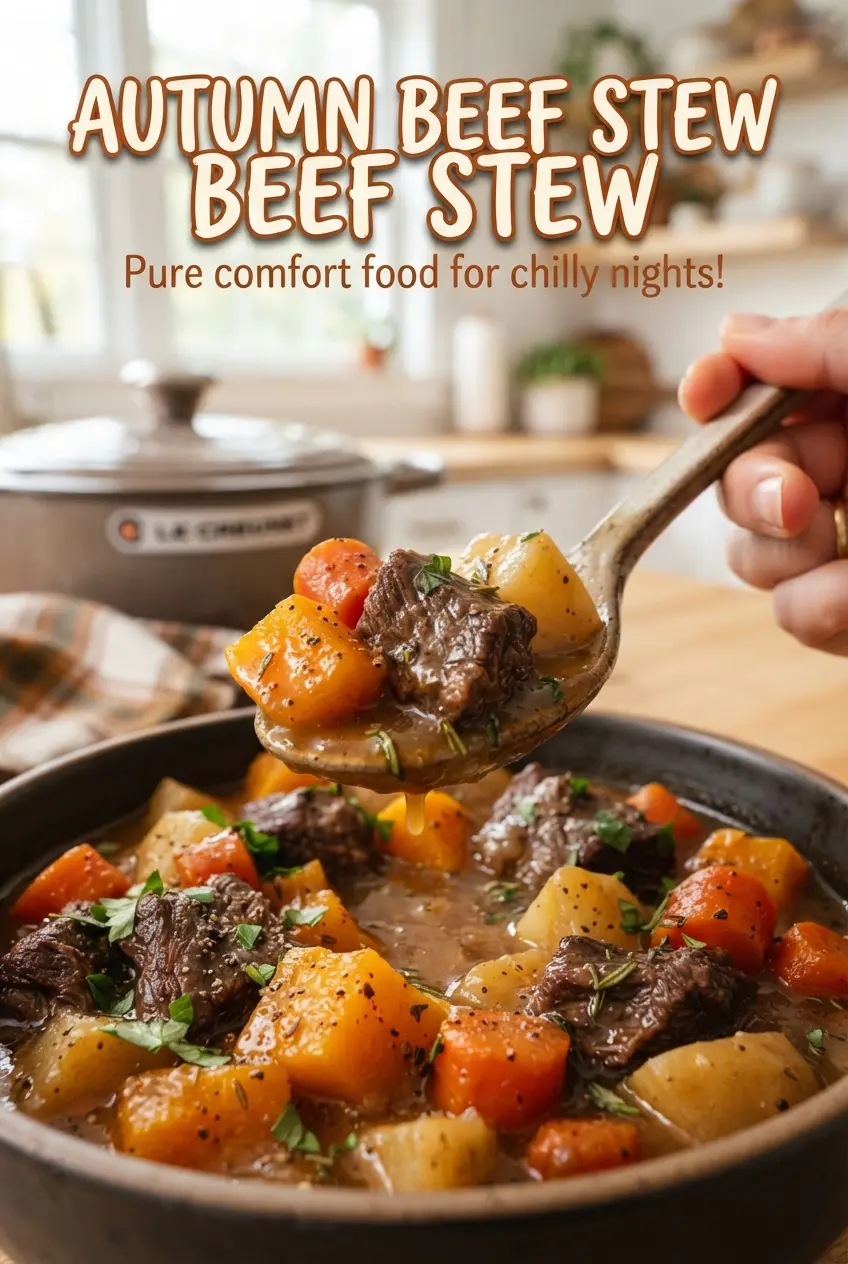

Deep, spoon-coating beef stew earns its place at the table when the broth turns glossy, the beef goes fork-tender, and the vegetables keep just enough shape to hold onto the gravy. This version leans into that balance with apple cider, maple, sage, and thyme, so every bite tastes layered instead of one-note. The dried cranberries finish the pot with little bursts of sweetness that wake up the rich, savory base.
The key is building the flavor in stages. Browning the beef in batches gives you the browned bits that make the broth taste like it simmered all day, and the flour on the meat helps the stew thicken naturally as it cooks. Apple cider brings brightness and a gentle tang, while the maple syrup rounds off the edges without making the pot taste sweet. Add the squash, parsnips, and carrots later so they stay intact instead of dissolving into the broth.
Below, I’ve included the timing that keeps the beef tender, the swaps that still work, and the one step that keeps the stew from tasting flat. If you’ve ever had a beef stew that felt heavy but not satisfying, this version fixes that.
The gravy thickened beautifully and the cider with the cranberries gave it this deep, cozy sweetness without tasting sugary. My beef was fall-apart tender at the 2-hour mark.
Save this autumn beef stew for the nights when you want tender chuck, maple-cider gravy, and root vegetables in one pot.
The Secret to Tender Beef Is Not a Faster Simmer
The mistake most stew recipes make is rushing the beef through a boil or keeping the heat too high because the pot looks inactive. That only tightens the chuck and leaves you with meat that never fully relaxes. Gentle heat is what turns tough connective tissue into that soft, shreddable texture people want in stew.
The flour on the beef helps more than thickening. It gives the meat a light coating that browns better in the pan and later helps the broth turn silky instead of thin. Browning in batches matters too; if the pan is crowded, the beef steams and you lose the deep flavor that should anchor the whole pot.
The cider and maple do important work here as well. They don’t make the stew sweet. They cut through the richness so the finished broth tastes rounded instead of heavy.
What the Cider, Maple, and Root Vegetables Are Actually Doing
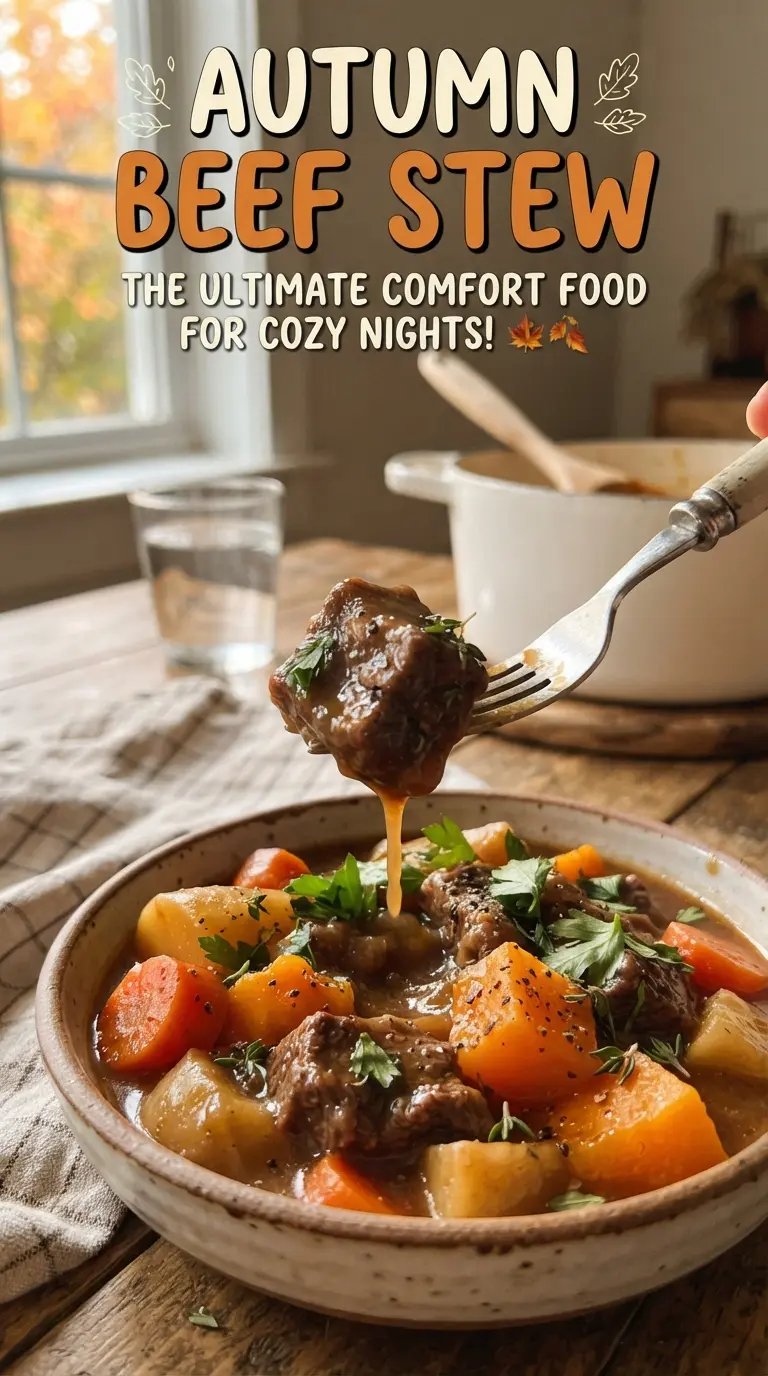
- Beef chuck — This is the cut you want because it has enough marbling and connective tissue to turn tender during a long simmer. Leaner beef gets dry before the broth develops enough body.
- Apple cider — Use a real, unsweetened cider if you can. It brings brightness and a subtle fruit note that vinegar can’t copy, and it balances the maple without making the stew taste like dessert.
- Maple syrup — Just a tablespoon is enough to smooth out the acidity from the cider and tomato paste. More than that pushes the stew in the wrong direction fast.
- Butternut squash, parsnips, and carrots — These need to go in late because they cook at different rates. If they’re added too soon, the squash breaks apart and the parsnips lose their shape.
- Dried cranberries — They’re not there for sweetness alone. They add tiny tart-sweet pops at the end, which keeps each bowl from tasting flat after a long simmer.
Building the Stew in the Right Order
Brown the Beef in Real Batches
Season the beef, toss it with flour, and brown it in hot oil without crowding the pan. You want deep brown spots on several sides, not a pale gray exterior. If the meat is packed too tightly, it releases moisture and steams instead of searing, which leaves the stew tasting dull. Pull each batch out as soon as it has color; the pot will finish the job later.
Cook the Aromatics Until They Smell Sweet
Once the beef is out, cook the onion until it turns translucent and starts to soften at the edges. Add the garlic and tomato paste and give them a full minute in the hot pan. That short cook removes the raw edge from the tomato paste and keeps the garlic from tasting sharp. If the paste sticks a little, that’s fine; the cider will loosen it.
Scrape the Pan Before the Long Simmer
Pour in the cider and scrape up every brown bit from the bottom of the pot. Those bits are concentrated flavor, and they dissolve into the liquid almost immediately. Add the broth, maple syrup, sage, thyme, and browned beef, then bring the pot to a low simmer before covering it. A hard boil here is a fast way to make the beef stringy.
Add the Vegetables When the Beef Is Nearly Tender
After the beef has simmered long enough to turn fork-tender, add the squash, parsnips, and carrots. They need just enough time to soften through without collapsing into the broth. If a knife slips into the vegetables but they still hold their shape, they’re done. Stir in the cranberries for the last 10 minutes so they plump without disappearing.
How to Adapt This Stew Without Losing What Makes It Good
For a deeper, more savory stew
Add a splash of Worcestershire sauce with the broth. It pushes the beef flavor forward without changing the texture, and it helps if your cider is especially sweet. Don’t add too much or it will overpower the sage.
Gluten-free version
Skip the all-purpose flour and brown the beef without it, then whisk 1 tablespoon of cornstarch with 2 tablespoons of cold water and stir it in near the end if you want extra body. The stew won’t get quite as plush from the start, but the flavor stays intact.
Lower-sugar swap
Replace the maple syrup with 1 teaspoon of brown sugar or leave it out entirely if your cider is already sweet. The stew will taste a little sharper, which can be nice if you like a more savory finish. Don’t remove the cranberries unless you also want to lose that last bit of contrast.
Vegetable-heavy variation
Increase the squash, carrots, and parsnips by another cup or two and use a little less beef. The stew becomes lighter and more vegetable-forward, but you still get the same cider-sage gravy and the same slow-cooked comfort.
Storage and Reheating
- Refrigerator: Keeps well for 4 days. The broth will thicken as it chills, which is a good sign, not a problem.
- Freezer: Freezes well for up to 3 months. Cool it completely first and leave a little room at the top of the container because the broth expands.
- Reheating: Warm it gently on the stove over low heat until hot. High heat can make the beef firm up again and can turn the vegetables mushy before the center is heated through.