
Greek feta roast potatoes come out with crisp, bronzed edges and a soft, almost creamy center that soaks up the lemon, garlic, and oregano in the pan. The feta goes on at the end, so it stays crumbly and salty instead of melting away into the potatoes. That contrast is what makes the whole dish worth repeating.
The trick here is roasting the potatoes in a little broth and lemon juice before the liquid has a chance to disappear completely. As the pan heats, the potatoes start cooking in the seasoned liquid, then finish in their own oil, which gives you tenderness inside and a better crust outside than a dry roast alone. Yukon golds hold their shape well and still turn buttery, which matters here because the wedges need to stay intact after flipping.
Below you’ll find the timing cue that tells you when the potatoes are ready for feta, plus a few smart swaps if you’re working with what you already have on hand.
The potatoes got those crisp, caramelized edges I was hoping for, and the lemon-garlic liquid reduced into the pan instead of pooling underneath. The feta on top kept each bite salty and bright.
Save these Greek feta roast potatoes for a lemony, crispy side with golden edges and salty feta on top.
The Reason These Potatoes Crisp Instead of Turn Soft
The biggest mistake with roast potatoes is crowding the pan and expecting the oven to fix it. If the wedges sit in a deep pile, they steam in the broth instead of roasting in it, and the edges stay pale. Spread them in a single layer and use a roasting pan with enough surface area for the liquid to evaporate.
The other piece that matters is the halfway flip. That first side needs time to set before you move anything around, or the wedges break and lose the sharp edges that brown best. Once the liquid is gone, the oil and potato starch do the work, giving you that crisp shell and tender middle.
What Each Ingredient Is Actually Doing Here
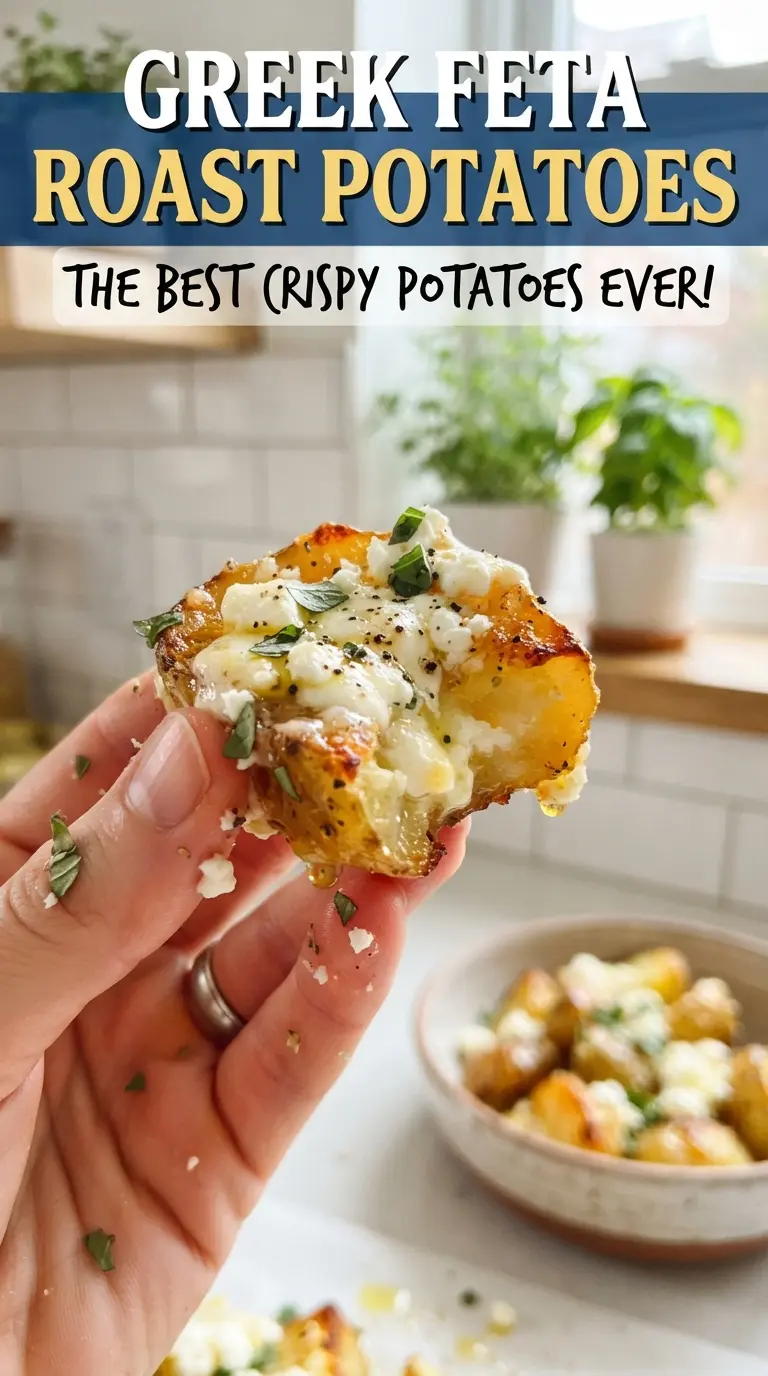
- Yukon gold potatoes — These hold their shape without turning waxy or mealy, and their natural butteriness makes the centers taste rich even before the feta goes on. Russets will get crisp, but they can fall apart more easily in a liquid-heavy roast.
- Olive oil — This is what helps the outside bronzing happen after the broth cooks off. Use a good-tasting olive oil here since the flavor stays present in the finished pan juices.
- Lemon juice and broth — The lemon gives the potatoes their sharp Greek character, while the broth keeps the wedges from drying out before they’re tender. Chicken broth adds a little more body, but vegetable broth works well if you want the dish meatless.
- Garlic and oregano — Garlic softens and perfumes the pan as it roasts, and oregano carries that unmistakable Greek flavor through every bite. Dried oregano works better than fresh here because it stands up to the heat.
- Feta and herbs — Add them at the end so the feta stays crumbly and the dill or parsley keeps its freshness. If you stir feta in too early, it disappears into the potatoes and you lose the salty finish that makes the dish pop.
How to Roast Them So the Pan Liquid Disappears at the Right Time
Coating the Wedges
Toss the potatoes directly in the roasting pan so every wedge gets coated in oil, lemon, broth, garlic, oregano, salt, and pepper. The pan should look lightly saucy, not flooded; if the liquid is sloshing around the bottoms of the wedges, the potatoes will braise instead of roast. The seasonings need to cling to the cut surfaces, because that’s where the flavor builds while the edges crisp.
The First Roast
Slide the pan into a hot 425°F oven and leave the potatoes alone long enough for the bottoms to take on color. You’ll hear a quiet sizzle and see the liquid reducing around the edges of the pan. If the oven runs cool, the liquid hangs around too long and the potatoes turn soft before they brown, so let the oven fully preheat before the pan goes in.
Flipping and Finishing
Flip the wedges once halfway through so both cut sides get a chance to brown. By the end, the liquid should be absorbed or evaporated, and the potatoes should look blistered and deeply golden in spots. If there’s still a puddle in the pan at 50 minutes, roast a few minutes longer until the bottom is dry enough to crisp.
The Feta Finish
Scatter the feta and herbs over the potatoes the moment they come out of the oven. The heat from the pan softens the feta just enough to take the edge off its saltiness without melting it into nothing. Serve right away while the outside is still crisp, because the crust softens as the potatoes sit.
How to Adapt These Potatoes Without Losing the Character of the Dish
Vegetarian version with vegetable broth
Swap the chicken broth for vegetable broth and the dish stays bright, savory, and fully meatless. Choose a broth with some body, not a thin salty one, because it helps the potatoes cook evenly before the liquid disappears.
Dairy-free finish with olives instead of feta
Leave off the feta and finish with chopped olives or a few capers for a salty pop that still fits the Greek profile. You lose the creamy-salty crumble from the cheese, but the potatoes stay bold and satisfying.
Using russet potatoes
Russets crisp up a little more dramatically, but they’re more fragile once the centers soften, so keep the wedges larger and handle them gently when flipping. They’re a solid swap if that’s what you have, just expect a slightly fluffier interior.
Storage and Reheating
- Refrigerator: Store leftovers in an airtight container for up to 4 days. The potatoes will lose some crispness, but the flavor holds well.
- Freezer: These can be frozen, but the texture turns softer after thawing. Freeze in a single layer first, then pack into a container once solid.
- Reheating: Reheat on a sheet pan in a 400°F oven until the edges crisp back up. The microwave will warm them, but it also makes the wedges limp, which is the easiest way to lose what makes them worth serving.
Answers to the Questions Worth Asking
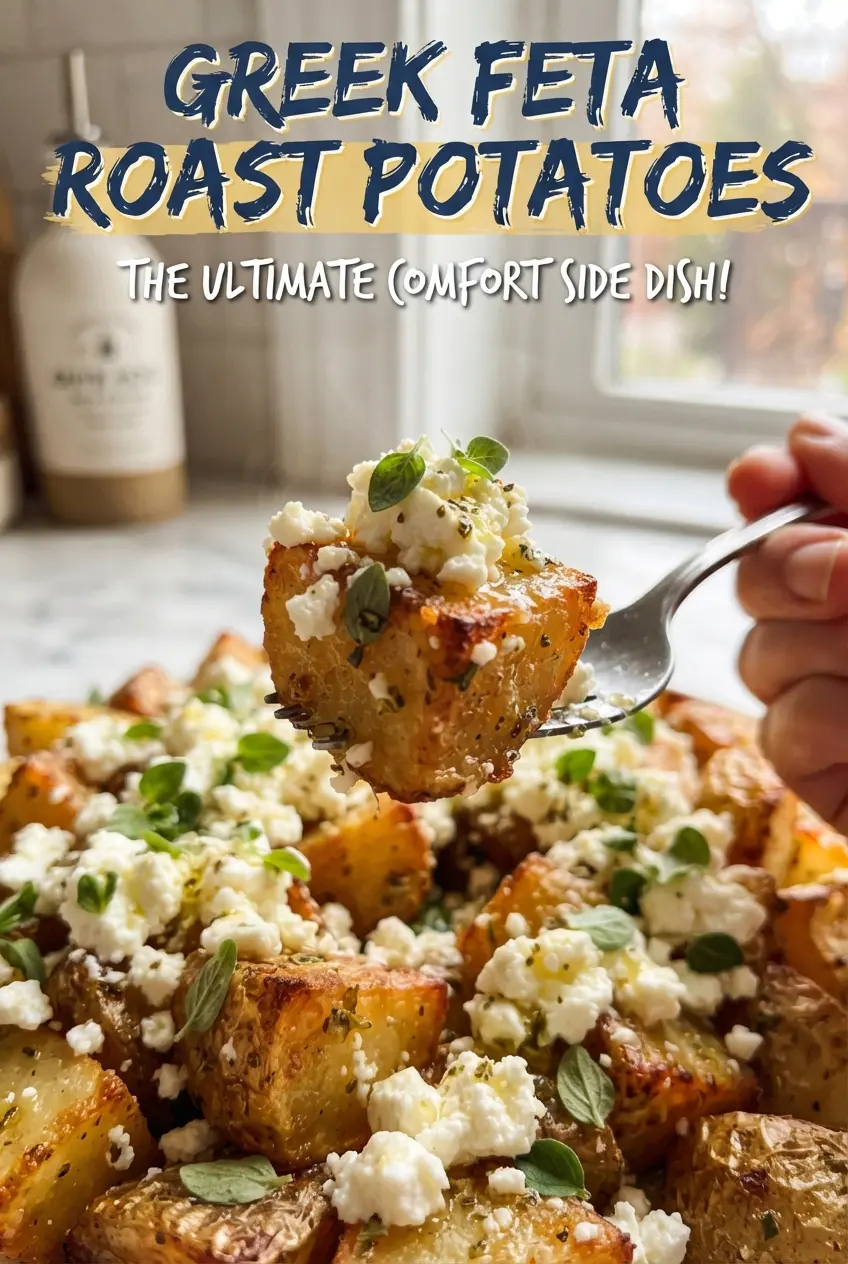
Greek Feta Roast Potatoes
Ingredients
Equipment
Method
- Preheat the oven to 425F. Set a sheet pan in the oven while it heats so the potatoes start crisping as soon as they hit the pan.
- Toss the potato wedges with olive oil, lemon juice, chicken broth, garlic, oregano, salt, and black pepper in a roasting pan. Make sure the wedges are evenly coated.
- Spread the potatoes in a single layer on the hot sheet pan. Leave space between wedges so they roast instead of steam.
- Roast for 45-50 minutes, flipping halfway through, until the liquid is absorbed and the edges are crispy and golden. Visual cue: browned edges and dry, glossy pan juices around the potatoes.
- Top the hot potatoes with crumbled feta and fresh dill or parsley. Let it sit for 1-2 minutes so the feta softens slightly, then serve hot.


