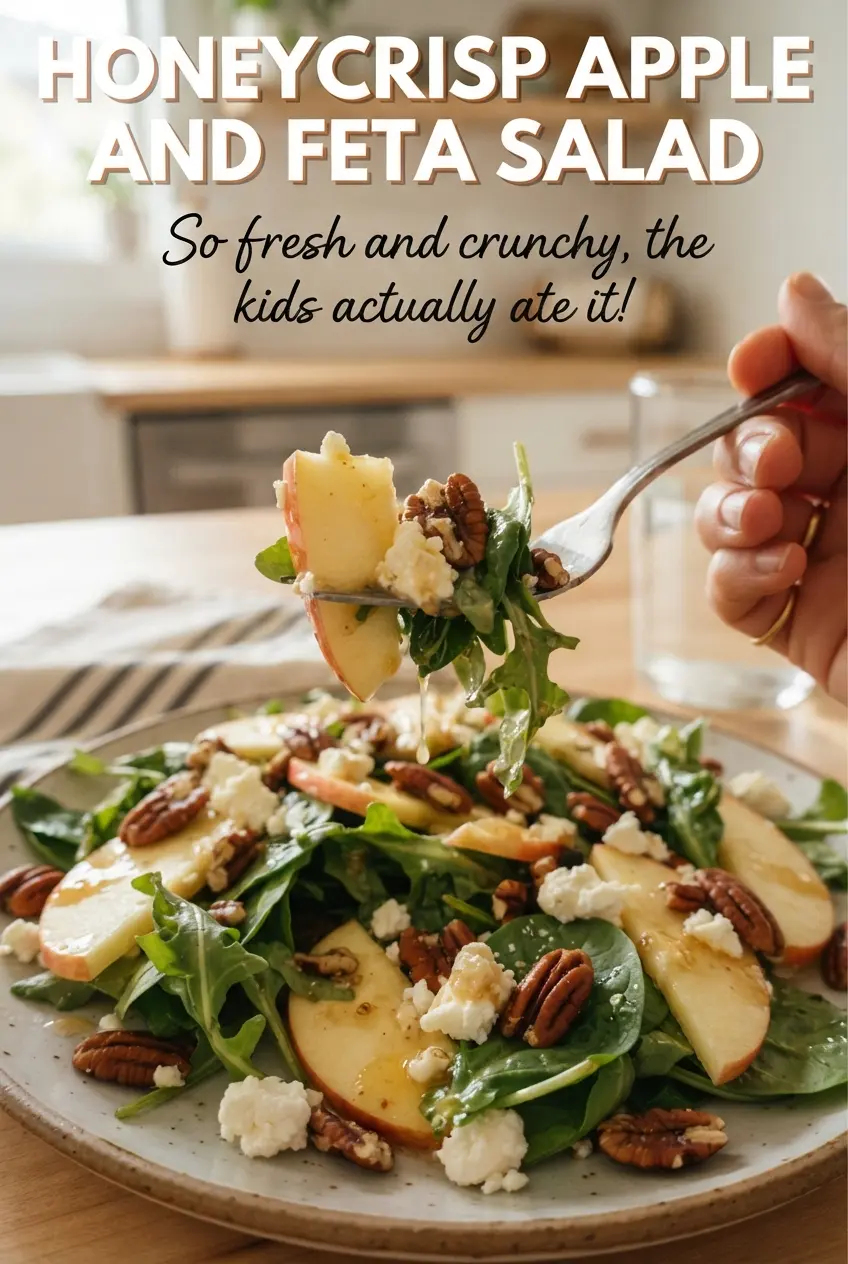

Sweet apples, salty feta, and a sharp cider vinaigrette make this salad feel crisp and balanced from the first bite. The Honeycrisp slices stay juicy and snappy against the greens, while the candied walnuts and pomegranate add the kind of crunch and pop that keeps every forkful interesting. It lands on the table looking bright and plentiful, but it still comes together in about fifteen minutes.
The trick is keeping the components distinct until the last minute. Honeycrisp apples hold their texture better than softer varieties, so they stay fresh-looking after slicing, and the vinaigrette uses Dijon to help the oil and vinegar come together cleanly instead of sliding off the greens. A light hand with the dressing matters here, because the salad should taste coated, not weighed down.
Below you’ll find the simple details that make this salad work every time, plus a few easy ways to adapt it if you need to swap ingredients or make it ahead.
The Honeycrisp stayed crisp even after I tossed it with the dressing, and the sweet-salty mix with the feta and candied walnuts was exactly right. I served it with roast chicken and the bowl was scraped clean.
Save this Honeycrisp Apple and Feta Salad for a crisp, sweet-salty side with cider vinaigrette and plenty of crunch.
The Dressing Needs to Coat, Not Soak
This salad depends on a vinaigrette that clings lightly to the greens instead of pooling at the bottom of the bowl. The honey and Dijon help the oil and vinegar emulsify just enough to give you a glossy dressing that settles onto the leaves, while the apple cider vinegar keeps the sweetness in check. If the dressing tastes flat, it usually needs a little more salt, not more honey.
Apple slices and feta both bring moisture of their own, so over-dressing is the easiest way to lose the texture that makes this salad worth serving. Tossing at the table also helps keep the apples from bruising and the greens from getting limp before anyone sits down.
What the Apples, Feta, and Walnuts Are Each Doing
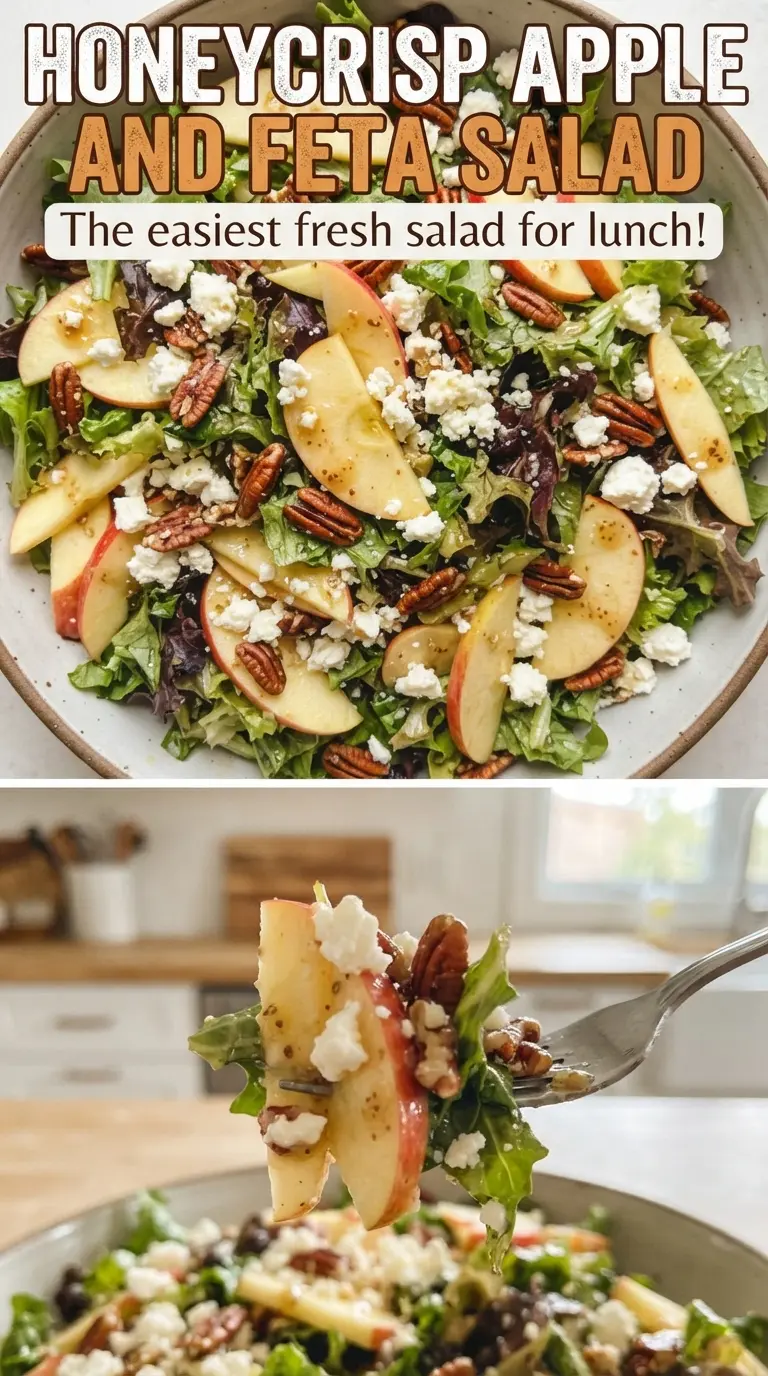
- Honeycrisp apples — These are the backbone of the salad because they stay crisp, juicy, and sweet even after slicing. A tart apple works if that’s what you have, but it won’t give the same clean crunch or mild sweetness. Slice them thin so they layer nicely and don’t overpower the greens.
- Feta — The salty, creamy crumbles balance the fruit and keep the salad from tasting like dessert. Buy a block and crumble it yourself if you can; pre-crumbled feta is drier and less tangy, though it still works in a pinch. Keep the pieces small so the salt is distributed through the bowl.
- Candied walnuts — They add sweetness and a hard crunch that contrasts with the apples and greens. Raw walnuts can be used if you want a less sweet salad, but you’ll lose that crisp, glazed edge. Chop them a little if the pieces are large so they don’t fall off the fork.
- Pomegranate arils — These add little bursts of tart juice and a bright color that makes the salad look finished. Fresh arils are best here because frozen ones turn soft and bleed into the greens. If you can’t find them, dried cranberries are the closest stand-in, but the texture shifts a lot.
How to Build the Salad So Nothing Goes Soft
Whisk the vinaigrette until it turns glossy
Start by whisking the olive oil, apple cider vinegar, honey, Dijon, salt, and pepper until the dressing looks smooth and slightly thickened. The Dijon helps the emulsion hold, so don’t skip it unless you want the oil and vinegar to separate fast. Taste it before it goes on the salad; it should be bright, a little sweet, and sharp enough to wake up the greens.
Layer the bowl before you dress it
Add the greens to a large bowl or platter first, then scatter the apple slices, feta, walnuts, pomegranate arils, and red onion over the top. Keeping the components on the surface gives you a better mix of color and texture, and it also prevents the heavier pieces from sinking to the bottom. If you’re using red onion, slice it paper-thin so it stays crisp and doesn’t dominate the salad.
Dress it at the very last minute
Drizzle the vinaigrette over the salad just before serving, then toss gently at the table. The goal is a light sheen on the leaves, not a bowl of greens swimming in dressing. If the salad sits dressed for too long, the apples soften and the greens collapse, so this is one dish where timing matters more than technique.
How to Adapt This Salad for Different Tables
Dairy-Free Version
Leave out the feta and add sliced avocado or a few extra walnuts for richness. You’ll lose the salty creaminess, so bump the salt in the dressing slightly and lean on the Dijon for more depth. The salad still feels full and balanced, just cleaner and a little lighter.
Make It Ahead Without Soggy Greens
Wash and dry the greens, slice the apples, and mix the dressing up to a day ahead, but keep everything separate until serving. If the apples need to sit for a bit, toss them with a few drops of lemon juice to slow browning. This is the best way to preserve the snap in the apples and the texture of the greens.
Swap the Nuts for a More Savory Finish
Use toasted pecans instead of candied walnuts if you want less sweetness and a deeper, more buttery crunch. You’ll get a more savory side dish that leans a little closer to a dinner salad. Toast them briefly in a dry skillet until fragrant, then cool them before adding.
Storage and Reheating
- Refrigerator: Undressed salad components keep for 1 day if stored separately; once dressed, the greens soften within a few hours.
- Freezer: Don’t freeze this salad. The greens, apples, and feta all lose their texture completely after thawing.
- Reheating: Not needed. If the dressing was chilled, let it sit at room temperature for 10 to 15 minutes and shake or whisk again before using so the honey loosens up.


