Clear vegetable soup tastes best when the broth stays bright and the vegetables keep their shape. This version gives you that clean, homey bowl with a little more presence: tender potatoes, sweet corn, green beans that still have a bite, and a broth that tastes layered instead of flat. It lands between light and satisfying, which is why it ends up being the soup I reach for when I want something simple that still feels like a full meal.
The trick is building flavor in stages instead of dumping everything in at once. Onion, carrots, and celery soften first so the broth starts with a savory base, then potatoes simmer long enough to turn creamy at the edges without falling apart. The peas and corn go in at the end on purpose; that keeps their color fresh and their sweetness intact. A bay leaf and dried thyme do a lot of work here, and the final handful of parsley wakes everything up right before serving.
Below, I’ve included the timing that keeps the vegetables from going mushy, plus the small swaps that still preserve the balance of the soup.
The broth tasted like it had simmered all afternoon, and the potatoes held their shape without turning grainy. I loved that the peas and corn stayed bright instead of getting dull and overcooked.
Save this vegetable soup for a clear, broth-based bowl with tender potatoes and bright peas and corn.
The Reason This Soup Stays Clear Instead of Turning Heavy
Vegetable soup can go cloudy and dull when it’s rushed, overcooked, or crowded with too many starchy vegetables at the start. This version stays balanced because the potatoes simmer just until tender, while the quicker-cooking vegetables wait their turn. That keeps the broth light and the pieces distinct instead of breaking down into a soft mash.
The other thing that matters is the order. Aromatics go in first to build flavor, then the broth carries that base before the green beans, peas, and corn are added near the end. If you cook everything from the beginning, the peas lose their color and the beans turn limp. Staggering the vegetables is what gives this soup its clean look and better texture.
What Each Vegetable Is Doing in the Pot

- Potatoes — They give the soup body and make it feel complete without adding cream. Waxy potatoes hold their shape best, but russets work if you don’t mind a softer edge. Cut them into even cubes so they finish at the same time as the carrots and green beans.
- Vegetable broth — This is the backbone of the soup, so use one that tastes good on its own. If your broth is bland, the soup will taste thin no matter how many vegetables you add. Low-sodium broth is the safest choice because it lets you season at the end.
- Tomatoes — The diced tomatoes add acidity that keeps the broth from tasting flat. They also give the soup a little color and a savory, rounded edge. Fire-roasted tomatoes work if you want a deeper, slightly smokier taste.
- Frozen peas and corn — Frozen vegetables are a smart choice here because they go in late and stay sweet. Fresh peas and corn work too, but they’re not necessary. Add them right at the end so they stay bright and don’t lose their pop.
Building the Broth in the Right Order
Softening the Aromatics First
Start by cooking the onion, carrots, and celery in olive oil until the onion turns translucent and the carrots lose that raw edge. You want them softened, not browned. If the pot looks dry before the vegetables are tender, lower the heat instead of adding more oil; too much heat here can make the onions catch on the bottom and throw off the whole soup.
Letting the Potatoes Simmer Before the Tender Vegetables Join In
Once the broth, tomatoes, potatoes, thyme, parsley, and bay leaf are in the pot, bring everything to a boil and then drop it to a steady simmer. The potatoes need enough time to cook through, but not so much that they start breaking apart. When a knife slips into a potato cube with a little resistance, you’re close; when they’re falling apart on the spoon, they’ve gone too far.
Adding the Quick-Cooking Vegetables at the End
Green beans go in next because they need a little time to turn tender without losing their color. The peas and corn come last, and they only need a few minutes. If you add them too early, the soup will still taste fine, but the vegetables will look tired and taste flat. Pull the bay leaf before serving and finish with parsley and black pepper while the soup is still hot.
How to Adjust This Soup Without Losing the Balance
Make it gluten-free and dairy-free
This soup already fits both of those needs as written, as long as your vegetable broth is certified gluten-free. There’s no dairy in the base, and the olive oil gives you all the richness you need. That makes it a good option when you want something simple that still works for a mixed table.
Add beans for a heartier main dish
Cannellini beans or great northern beans blend in well and turn this into a fuller meal. Stir in one drained can with the broth so they have time to absorb the seasoning. The soup gets creamier and more filling without losing its clear, brothy character.
Swap in what’s in the crisper drawer
Zucchini, spinach, diced zucchini, or chopped kale all work, but they need different timing. Tender greens go in during the last minute, while sturdier vegetables like zucchini can go in with the green beans. The rule is simple: anything delicate waits until the end, or it will disappear into the broth.
Storage and Reheating
- Refrigerator: Store in an airtight container for up to 4 days. The potatoes will absorb a little broth as it sits, so the soup thickens slightly.
- Freezer: It freezes well for up to 3 months, though the potatoes can turn a little softer after thawing. Cool it completely before freezing, and leave room at the top of the container for expansion.
- Reheating: Warm it gently on the stovetop over medium-low heat. A hard boil can break up the potatoes and make the peas look dull, so heat it just until steaming and hot through.
Answers to the Questions Worth Asking
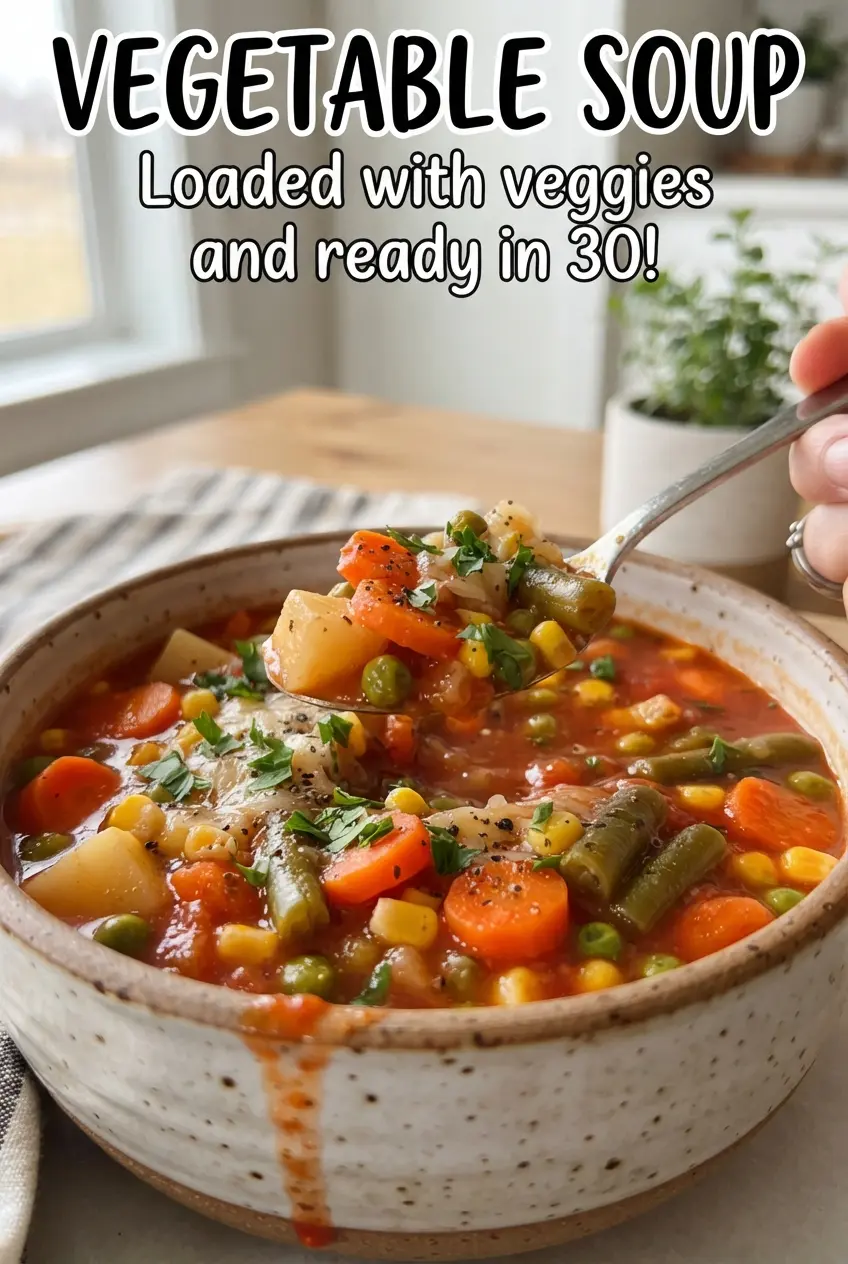
Vegetable Soup
Ingredients
Equipment
Method
- Heat 2 tbsp olive oil in a large pot over medium heat, then sauté the onion, carrots, and celery for 5 minutes until the onion looks translucent and the vegetables start to soften (visual cue: glossy, lightly fragrant vegetables).
- Add the minced garlic and cook for 1 minute, stirring constantly until fragrant and lightly golden (visual cue: bubbling at the edges, no browning).
- Add the vegetable broth, diced tomatoes, potatoes, dried thyme, dried parsley, and bay leaf, then stir well to combine (visual cue: broth turns a light golden orange as everything disperses).
- Bring the pot to a boil, then reduce to a gentle simmer and cook for 15 minutes (visual cue: small bubbles across the surface, not a hard rolling boil).
- Add the green beans and simmer for 8 minutes, until the potatoes and beans are tender (visual cue: fork-tender potatoes and crisp-tender green beans).
- Stir in the frozen corn and frozen peas, then simmer for 3 minutes (visual cue: peas turn bright green and everything is heated through).
- Remove the bay leaf, then season with salt and black pepper to taste (visual cue: broth flavor balances and vegetables look evenly coated).
- Garnish with fresh parsley and serve hot (visual cue: scattered green flecks across the golden broth).