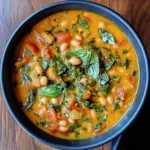
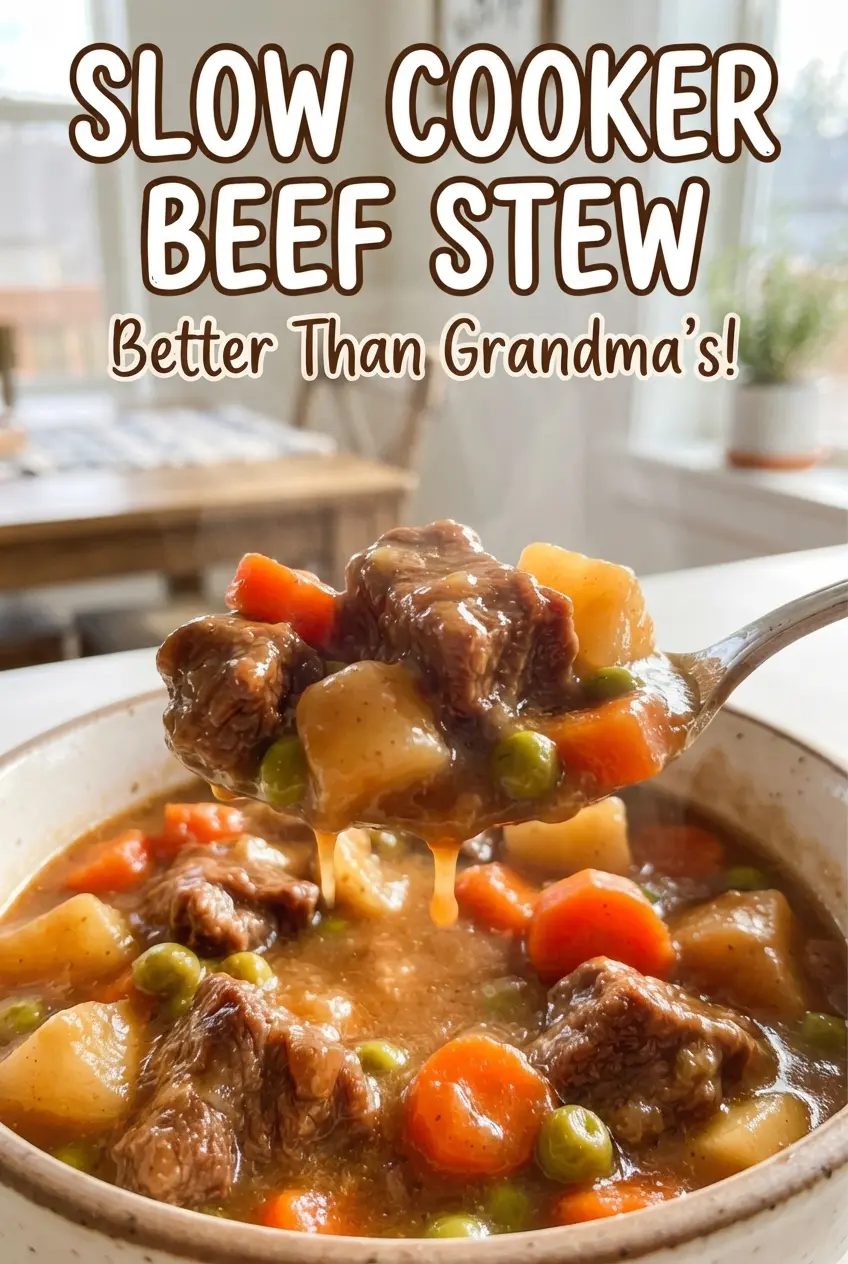
Slow cooker beef stew earns its place in the regular rotation when the broth turns rich and glossy, the beef falls apart with almost no effort, and the potatoes stay intact without getting mealy. It tastes like the kind of supper that’s been simmering all day because it has, but the slow cooker does the long work for you.
The trick is starting with a proper sear and a quick cook on the tomato paste. That first pan step builds the deep, browned flavor the slow cooker can’t create on its own, and it keeps the stew from tasting flat. A little flour on the beef helps the broth thicken as it cooks, so you get a spoon-coating stew instead of a thin soup.
Below, I’ve included the exact point where the peas go in so they stay bright, plus a few swaps and storage notes that actually matter when you’re making stew ahead.
The beef came out tender enough to break with a spoon, and the broth thickened up beautifully without needing anything extra. I loved that the potatoes held their shape and the peas stayed bright at the end.
Save this slow cooker beef stew for a thick, fork-tender dinner with buttery potatoes and bright peas.
The Browning Step That Gives This Stew Its Depth
The slow cooker does tenderness, not flavor development. That’s why the beef needs to be browned in batches first, and why the onion cooks in the same pan instead of going straight into the pot. Those dark bits on the bottom are concentrated beef flavor, and the splash of broth loosens them into the stew instead of leaving them stuck to the skillet.
The flour on the beef does two jobs: it helps the meat sear with a little crust, and it gives the broth body as it simmers for hours. If you dump the beef in wet and crowded, it steams instead of browns. That’s the difference between a stew that tastes deep and one that tastes boiled.
What Each Ingredient Is Doing in the Pot
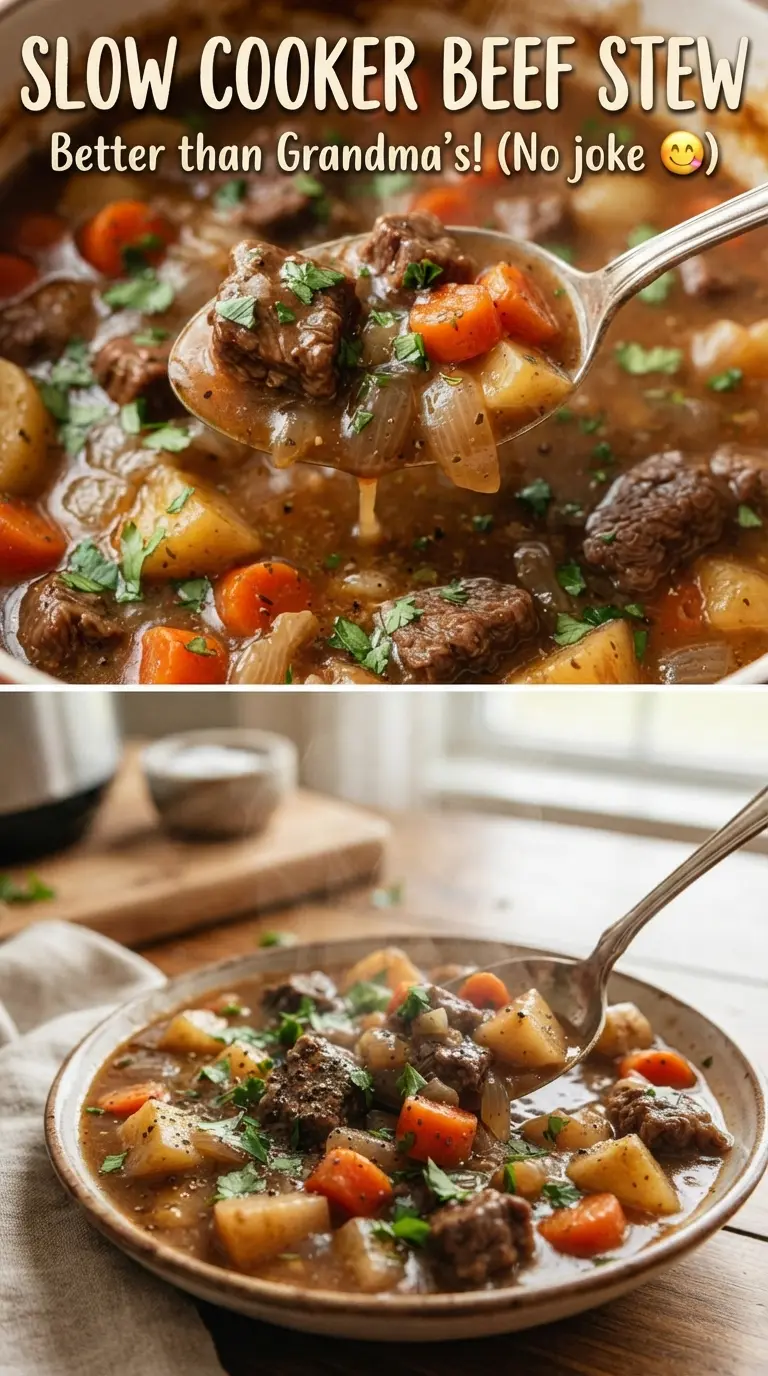
- Beef chuck roast — This cut has enough connective tissue to turn silky after a long cook. Leaner beef gets dry and stringy in a slow cooker.
- Flour — It lightly coats the beef and helps thicken the broth. If you need a gluten-free version, use a cup-for-cup gluten-free flour blend and brown the meat the same way.
- Tomato paste — It adds a quiet savoriness and helps deepen the color. Cook it in the pan for a minute so it loses the raw edge.
- Yukon gold potatoes — They hold their shape better than russets and give the stew a creamy bite without falling apart. Cut them into even chunks so they finish at the same time as the carrots.
- Worcestershire sauce — This brings a little tang and backbone. There isn’t a perfect substitute, but soy sauce plus a tiny splash of vinegar gets you close if that’s what you have.
- Frozen peas — They go in at the end so they stay sweet and green instead of dull and mushy.
Let the Slow Cooker Do the Softening, Not the Breaking
Browning the Beef in Batches
Coat the beef with flour, salt, and pepper, then brown it in hot oil without crowding the pan. You want a dark crust on the outside and some raw-looking spots still visible in the center of the batch; that’s enough. If the pan is too full, the beef releases moisture and you lose the sear, which means less flavor in the finished stew.
Building the Base in the Skillet
Cook the onion in the same pan until it softens and picks up the browned bits stuck to the bottom. Stir in the garlic and tomato paste for one minute, just until the paste darkens slightly and smells sweet instead of sharp. Then add a cup of broth and scrape until the pan looks clean; that liquid carries all the good stuff into the slow cooker.
Slow Cooking to Fork-Tender
Add the remaining broth, Worcestershire, potatoes, carrots, celery, thyme, and bay leaves, then cook until the beef yields easily when pressed with a spoon. Low for 8 hours gives the most even texture, but high works when you’re short on time. Pull the stew before the vegetables collapse; overcooking turns the potatoes grainy and the beef stringy instead of tender.
Finishing with Freshness
Stir in the peas during the last 10 minutes so they warm through without losing their color. Remove the bay leaves before serving, then finish with chopped parsley for a clean, fresh note on top of all that rich broth. If the stew seems a little thin at this stage, let it sit uncovered for 10 minutes; it thickens as it rests.
Three Ways to Adjust This Stew Without Losing the Good Part
Gluten-Free Stew
Swap the all-purpose flour for a gluten-free flour blend and brown the beef the same way. The stew will still thicken, though the broth may be a touch less velvety than the wheat-flour version. Check your Worcestershire sauce too, since some brands contain gluten.
No Peas, No Problem
Leave the peas out if that’s not your thing, or stir in green beans during the last 20 minutes instead. You still get the same rich base and tender vegetables, just with a different finish. Add any quick-cooking vegetable near the end so it doesn’t melt into the stew.
More Broth, Soupier Result
If you want a looser stew, add an extra half cup to a cup of broth before cooking. The flavor will be a little less concentrated, but the texture becomes spoonable in a more soup-like way. Keep the flour coating on the beef so the liquid still has some body.
Storage and Reheating
- Refrigerator: Store in an airtight container for up to 4 days. The stew thickens as it chills, so expect the broth to look more set the next day.
- Freezer: Freezes well for up to 3 months. Cool it completely first, then portion it into freezer-safe containers, leaving a little room for expansion.
- Reheating: Reheat gently on the stovetop over medium-low or in the microwave at medium power. Stir occasionally and add a splash of broth if needed; hard boiling can turn the beef tough and make the potatoes break down.
Answers to the Questions Worth Asking
Slow Cooker Beef Stew
Ingredients
Equipment
Method
- Toss the beef with the flour, salt, and black pepper until evenly coated. Brown in batches in hot olive oil for 4-5 minutes per batch, then transfer to the slow cooker.
- Cook the diced onion in the same pan for 4 minutes. Add the minced garlic and tomato paste and cook for 1 minute.
- Pour in 1 cup of the beef broth and scrape up the browned bits from the pan. Add the mixture to the slow cooker.
- Add the remaining beef broth, Worcestershire sauce, potatoes, carrots, celery, dried thyme, and bay leaves to the slow cooker. Cover and cook on LOW for 8 hours, or HIGH for 4-5 hours, until the beef is fork-tender.
- Stir in the frozen peas and cook for the last 10 minutes. Remove the bay leaves and top with chopped fresh parsley to serve.