
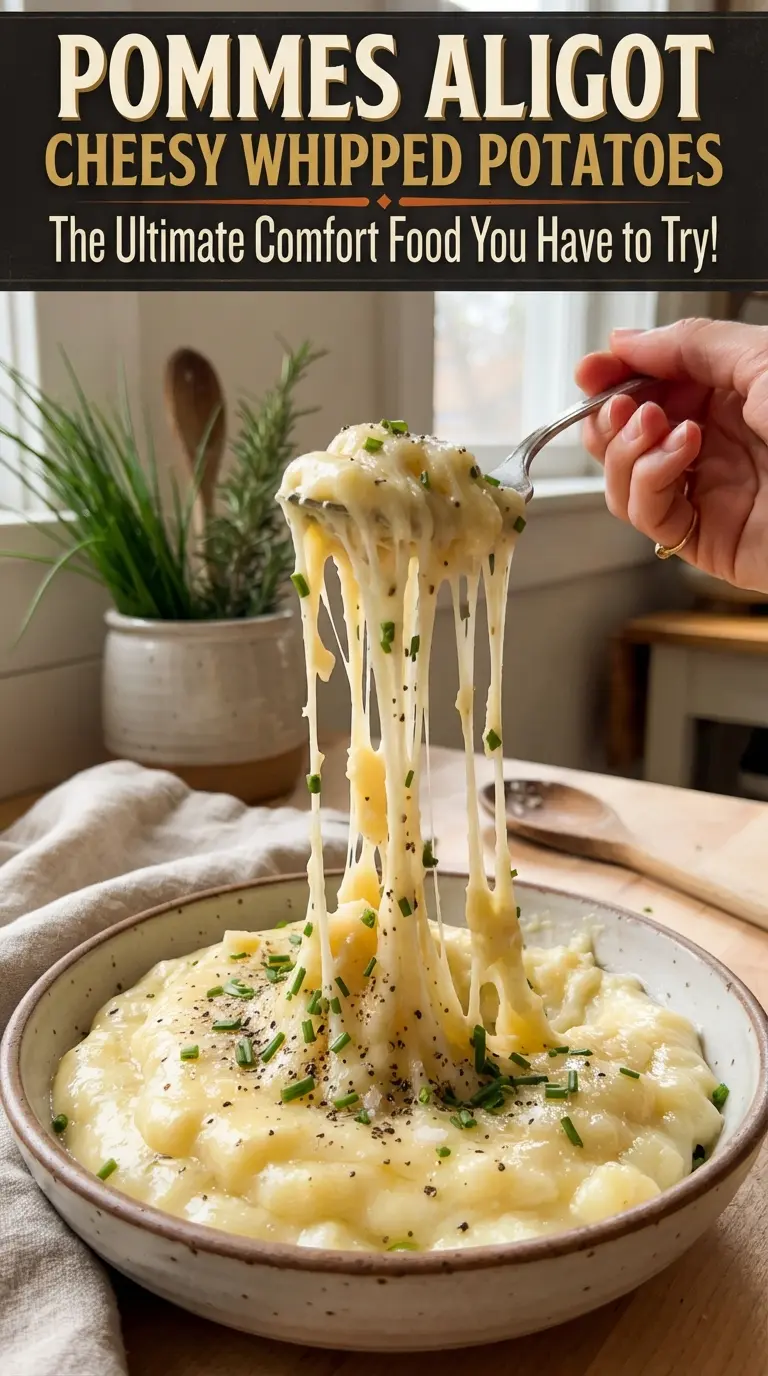
Pommes aligot lands in that rare sweet spot between mashed potatoes and the kind of cheese pull people stop talking through meals to stare at. The texture is the whole point: smooth, elastic, glossy, and just sturdy enough to lift in long ribbons from the pot. When it’s done right, it tastes rich without feeling heavy, with the mild sweetness of potatoes carrying all that Gruyere and mozzarella.
The trick is to treat the potatoes like a base that needs structure, not just comfort. Yukon golds give you enough starch and flavor to hold the emulsion, while the ricer keeps the mash light instead of gluey. The cheese goes in gradually over low heat, and that matters more than most people expect. Add it too fast or over too much heat and the texture turns grainy instead of stretchy.
Below, you’ll find the small details that make the difference between ordinary cheesy potatoes and true aligot: why the potato type matters, how to keep the mixture silky, and what to do if you need to serve it for a crowd without losing that dramatic pull.
The potatoes turned out unbelievably stretchy, and the cheese melted in smoothly once I added it in small handfuls. I served it straight from the pot and everyone kept going back for another spoonful just to get that ribbon pull again.
Love that dramatic cheese pull? Save these Pommes Aligot Cheesy Whipped Potatoes for the side dish that steals the whole table.
The reason aligot turns stretchy instead of heavy
Most cheesy potato dishes fail for one of two reasons: the potatoes were too wet, or the cheese went in too fast and seized. Aligot needs steam to leave the potatoes before the dairy goes in, because excess water works against the emulsion and makes the final texture loose instead of elastic. That one minute of drying the potatoes in the pot after draining is not filler. It’s part of the method.
The other important piece is the ricer. A masher leaves lumps and overworked pockets that fight the glossy finish, while a ricer gives the potatoes a fine, even texture that can absorb butter, cream, and cheese without turning pasty. If you only own a masher, the dish can still work, but the final pull won’t be as smooth or dramatic.
- Yukon gold potatoes — These are the right balance of creamy and starchy. Russets get fluffier but can go dry; waxy potatoes stay too dense for that signature stretch.
- Gruyere — This brings the nutty, savory backbone. If you swap it, use another good melting cheese with some character, not pre-shredded cheese with anti-caking powder.
- Mozzarella — This is what helps the long cheese pull happen. Use low-moisture mozzarella, not fresh mozzarella, or the potatoes can turn watery.
- Heavy cream and butter — These soften the starch before the cheese goes in. Warm them first so the potatoes stay hot enough to melt the cheese evenly.
What Each Ingredient Is Actually Doing in This Recipe
- Primary ingredient (the star) — Quality matters most. Choose the best you can find.
- Cooking medium (oil, butter, or broth) — This carries flavors and prevents dryness.
- Seasonings (salt, pepper, spices, herbs) — Layer flavors so nothing overpowers. Build depth gradually.
- Aromatics (garlic, onion, herbs) — Cook with fat to bloom flavors. Become the foundation.
- Supporting ingredients — Complement the main ingredient without overpowering it.
- Sauce or liquid (if applicable) — Brings flavors together. Balance richness with acid.
- Acid (lemon, vinegar, wine, or other) — Brightens and prevents flat-tasting results.
- Final finish (garnish, glaze, or sauce) — Prevents one-dimensional taste and adds visual appeal.
Building the stretch without breaking the potatoes
Boiling and Drying the Potatoes
Start the potatoes in well-salted water and cook them until they collapse at the edge of a fork. They should be tender all the way through, not just forkable on the outside. Drain them well, then return them to the hot pot for about a minute so surface moisture cooks off. If you skip that drying step, the finished mash tends to loosen as the cheese melts in.
Ricing Into the Pot
Press the hot potatoes through a ricer straight back into the pot. Work quickly while they’re still steaming, because cool potatoes tighten up and become harder to blend smoothly. This is where a wooden spoon or sturdy spatula starts doing the work that a mixer would overdo. The goal is a light base, not whipped air.
Beating in the Butter, Cream, and Garlic
Warm the butter, garlic, and cream together before adding them, then beat them into the potatoes over low heat. The garlic should soften in the warm dairy, not brown in the pot, or it can turn sharp and bitter. If the mixture looks loose at this stage, keep stirring; it tightens slightly once the cheese goes in. Low heat matters here because high heat can scorch the dairy and make the texture greasy.
Adding the Cheese in Handfuls
Add the Gruyere and mozzarella a handful at a time, beating hard after each addition until the cheese disappears before the next handful goes in. This is the stage that makes or breaks the dish. If you dump all the cheese in at once, the potatoes cool too fast and the mixture turns stringy in clumps instead of one smooth stretch. Keep the pot on low heat and keep stirring until the potatoes look glossy and can be lifted in ribbons.
Finishing for the Long Cheese Pull
Once the potatoes are smooth, stretchy, and shiny, season them with salt and white pepper and serve right away. Aligot waits for no one; as it sits, it firms up and loses the dramatic pull that makes it special. If it tightens before serving, stir in a spoonful of warm cream over very low heat to loosen it just enough. Don’t overdo it or the texture will slide from stretchy to slack.
How to adapt this without losing the stretch
Dairy-free version with less drama but good texture
Use a good dairy-free butter, an unsweetened oat or cashew cream, and a melting-style vegan cheese. The result will be creamy and rich, but it won’t have the same long cheese ribbons, because the stretch in aligot depends on dairy proteins and starch working together.
Extra-Gruyere for a deeper, nuttier finish
If you want a stronger cheese flavor, swap some of the mozzarella for more Gruyere and accept a shorter, less dramatic pull. The flavor gets more savory and complex, but mozzarella is doing a lot of the stretch work, so removing too much of it changes the texture noticeably.
Make-ahead for a dinner party
You can boil, dry, and rice the potatoes a few hours ahead, then keep them covered and warm. Hold the butter, cream, and cheese until right before serving so the final beating still gives you that glossy, stretchy finish. Once the cheese is fully mixed in, the texture is best immediately.
Storage and Reheating
- Refrigerator: Store leftovers in an airtight container for up to 3 days. The texture firms up and loses the stretch as it chills.
- Freezer: Freezing isn’t ideal. The dairy can separate and the potatoes can turn grainy when thawed.
- Reheating: Rewarm gently over low heat with a splash of cream or milk, stirring constantly. High heat is the fastest way to make it oily or grainy, so use patience and low temperature.
Answers to the questions worth asking

Pommes Aligot Cheesy Whipped Potatoes
Ingredients
Equipment
Method
- Bring a Dutch oven of salted water to a boil, then add the peeled and cubed Yukon gold potatoes. Boil for 15-18 minutes until very tender, then drain and dry the potatoes over low heat for 1 minute with steam still visible.
- Press the hot potatoes through a ricer back into the pot to create a fine, fluffy mash. Keep the potatoes warm in the same pot so they stay creamy.
- Warm the butter, garlic, and heavy cream until the butter melts, keeping the heat low to avoid scorching. Beat the warm mixture into the riced potatoes over low heat until the base looks smooth.
- Add the shredded Gruyere a handful at a time, beating vigorously with a wooden spoon after each addition until mostly melted. Repeat with the shredded mozzarella the same way so the mixture stays glossy and cohesive.
- Continue beating the aligot potatoes on low heat for 3-5 minutes until glossy, smooth, and very stretchy. Season with salt and white pepper, then serve immediately with a dramatic long stretchy cheese ribbon.


