
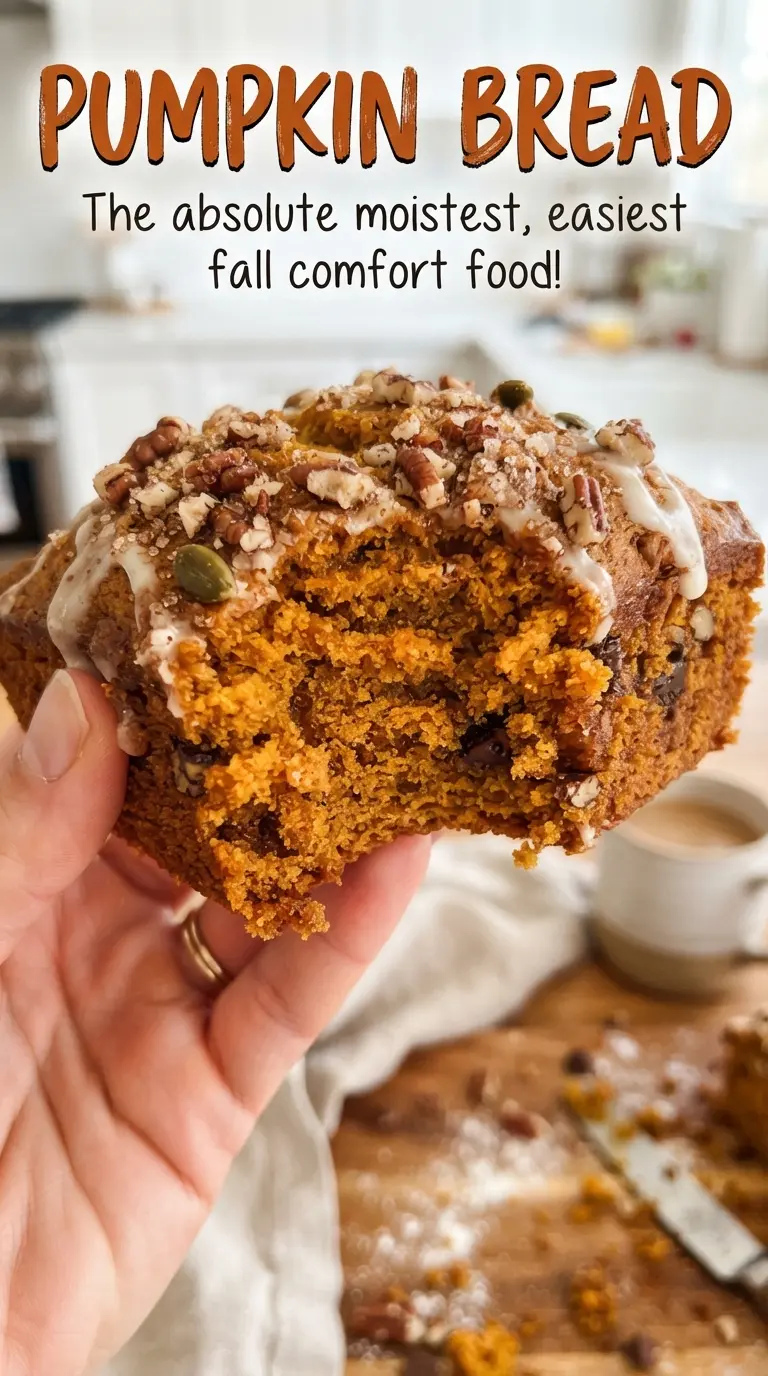
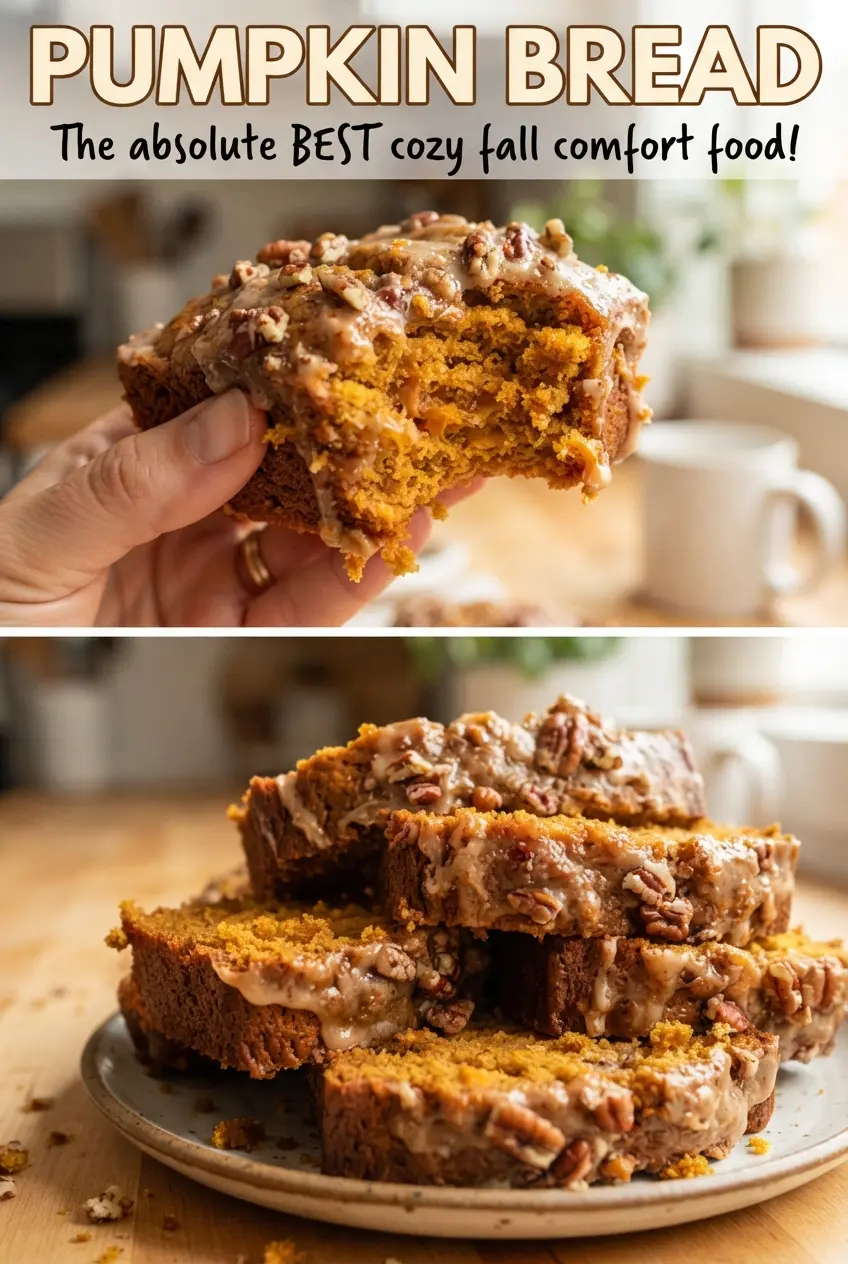
Moist pumpkin bread with a crackly sugar top is the kind of loaf that disappears fast because every slice lands somewhere between breakfast and dessert. The crumb stays tender for days, the pumpkin flavor comes through without tasting heavy, and that little sugar finish gives the top a delicate crunch that makes the whole loaf feel special without any extra effort.
This version keeps the mixing simple on purpose. Pumpkin puree brings moisture, brown sugar adds depth, and a mix of pumpkin pie spice plus cinnamon gives the loaf warmth without muddying the flavor. Oil keeps the texture soft longer than butter usually does in quick breads, and the milk loosens the batter just enough that it bakes up plush instead of dense. The key is stopping as soon as the flour disappears; overmixing is what turns pumpkin bread tight and rubbery.
Below you’ll find the small details that matter most, from the sugar topping that gives the crust its sparkle to the baking cues that tell you when the center is set. There’s also a few smart swaps and storage notes, since this loaf holds up well enough to make ahead.
The loaf rose beautifully and the top got that crackly sugar shell just like you said. Mine baked in 58 minutes and sliced clean after cooling, which never happens for me with pumpkin bread.
Save this pumpkin bread for the loaf with the crackly sugar top and soft, moist crumb.
The Trick to Pumpkin Bread That Stays Tender, Not Heavy
Pumpkin bread goes wrong when the batter gets overworked or when the loaf is pulled too soon from the oven. The pumpkin puree already brings a lot of moisture, so the batter can look thicker and more stubborn than a standard quick bread. Resist the urge to keep stirring until it looks perfectly smooth. A few small flour streaks disappearing at the end is the right stopping point.
The other common problem is a gummy middle with overdone edges. A loaf pan concentrates heat, and pumpkin bread needs enough time for the center to set without drying out the sides. The toothpick test matters here, but the best sign is the top: it should be domed, fragrant, and spring back lightly when touched in the center.
- Pumpkin puree — Use plain pumpkin puree, not pumpkin pie filling. The filling is already sweetened and spiced, which throws off the balance and can make the loaf taste flat or too sweet.
- Brown sugar — This adds a deeper, molasses-like note and helps keep the crumb moist. If you swap it for all white sugar, the loaf still works, but it tastes a little less rounded.
- Vegetable oil — Oil keeps quick breads softer than butter in a recipe like this. Melted coconut oil works too, but only if it stays liquid when mixed in.
- Pumpkin pie spice and cinnamon — The spice blend gives the bread its warm background flavor, while the extra cinnamon sharpens the crust and keeps the loaf from tasting muddy.
What Each Ingredient Is Actually Doing in This Recipe
- Primary ingredient (the star) — Quality matters most. Choose the best you can find.
- Cooking medium (oil, butter, or broth) — This carries flavors and prevents dryness.
- Seasonings (salt, pepper, spices, herbs) — Layer flavors so nothing overpowers. Build depth gradually.
- Aromatics (garlic, onion, herbs) — Cook with fat to bloom flavors. Become the foundation.
- Supporting ingredients — Complement the main ingredient without overpowering it.
- Sauce or liquid (if applicable) — Brings flavors together. Balance richness with acid.
- Acid (lemon, vinegar, wine, or other) — Brightens and prevents flat-tasting results.
- Final finish (garnish, glaze, or sauce) — Prevents one-dimensional taste and adds visual appeal.
Building the Batter So It Bakes Up Moist and Even
Mix the Dry Ingredients First
Whisking the flour with the baking soda, salt, pumpkin pie spice, and cinnamon distributes everything evenly before it ever hits the wet bowl. That matters because pumpkin batter is thick, and once the wet and dry meet, you don’t want to spend extra time stirring. If the leavening isn’t mixed through well, you can end up with a loaf that rises unevenly or has bitter pockets of baking soda.
Whisk the Wet Ingredients Until They Look Smooth
The pumpkin, oil, eggs, sugars, milk, and vanilla should become glossy and uniform before you add the flour. You’re not trying to whip air into it; you’re just dissolving the sugar enough that the batter bakes evenly. If the eggs still streak through the pumpkin mixture, keep whisking for another few seconds before moving on.
Fold, Don’t Beat
Once the dry ingredients go in, switch to a spatula and fold only until the flour disappears. The batter will be thick and orange and look a little rustic, and that’s fine. Overmixing builds gluten and turns quick bread chewy in the wrong way, especially in a loaf this moist.
Bake Until the Center Springs Back
Smooth the batter into the pan, sprinkle the tablespoon of sugar over the top, and bake until the loaf is domed and a toothpick comes out clean or with only a few moist crumbs. If the top browns too fast before the center is done, tent it loosely with foil for the last 10 to 15 minutes. Let the loaf cool for 15 minutes in the pan before moving it to a rack, because cutting too early can collapse the crumb and make it look underbaked even when it’s not.
How to Change This Loaf Without Losing the Good Texture
Dairy-Free Pumpkin Bread
Swap the milk for an unsweetened non-dairy milk such as almond, oat, or soy. The loaf still bakes up tender because the oil carries most of the moisture, and the flavor stays focused on pumpkin and spice. Choose an unflavored milk so the crumb doesn’t pick up an extra note that fights the warm spices.
Muffin-Style Bake
Divide the batter into a lined muffin tin and start checking around 18 to 22 minutes. You’ll lose the tall loaf slice, but you gain more surface area for the sugar topping and a faster bake. The batter is thick enough to hold up well in muffin cups without needing extra flour.
Less Sweet, More Spice
Reduce the granulated sugar in the batter slightly if you want a loaf that’s more breakfast than dessert, but keep the topping sugar in place. That little crust is part of what makes the loaf memorable, and it balances the soft crumb underneath. Don’t cut the sugar too aggressively or the bread will taste flatter and the top will lose its sparkle.
Storage and Reheating
- Refrigerator: Store tightly wrapped for up to 5 days. The crumb stays moist, though the sugar top softens a little after the first day.
- Freezer: This freezes well. Wrap the cooled loaf or individual slices tightly, then freeze for up to 3 months. Thaw at room temperature while still wrapped so the bread doesn’t dry out.
- Reheating: Warm slices in the toaster oven or microwave just until barely heated. Too much heat makes quick bread dry at the edges before the center warms through.
Answers to the Questions Worth Asking
Pumpkin Bread
Ingredients
Equipment
Method
- Preheat oven to 350F. Grease and line a 9x5-inch loaf pan.
- Whisk all-purpose flour, baking soda, salt, pumpkin pie spice, and ground cinnamon in a bowl until evenly combined. Stop when there are no visible spice clumps.
- Whisk pumpkin puree, vegetable oil, large eggs, both sugars, milk, and vanilla extract until smooth. Scrape the bottom and sides so no sugar pockets remain.
- Fold the dry ingredients into the wet just until no flour streaks remain. The batter should look thick and cohesive, not overmixed.
- Pour batter into the loaf pan and sprinkle 1 tablespoon granulated sugar on top for a crackly surface. Bake for 55-65 minutes until a toothpick comes out clean.
- Cool for 15 minutes in the pan, then transfer to a rack before slicing. Let it cool further so the center sets cleanly.


