
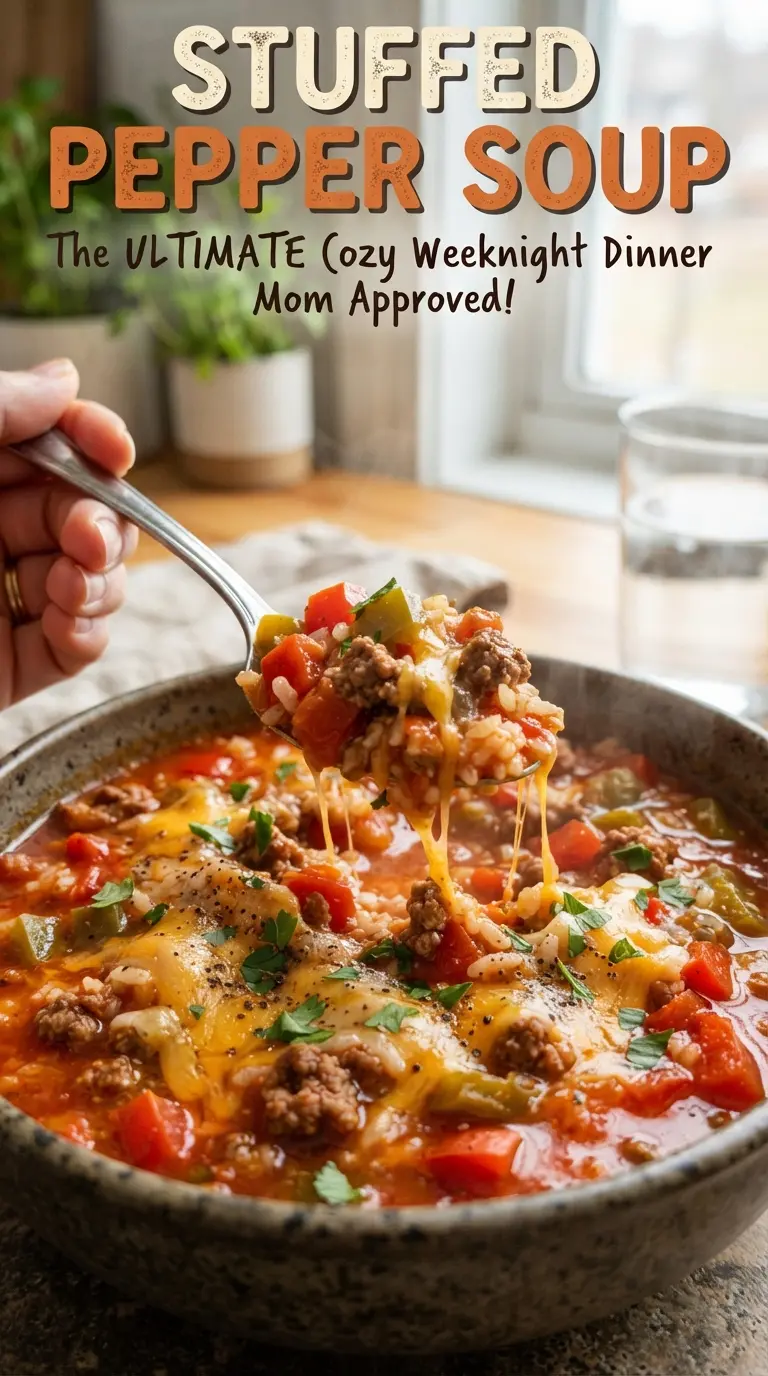
Stuffed pepper soup tastes like the best part of classic stuffed peppers without the fussy assembly. You get tender rice, sweet bell peppers, savory beef, and a tomato broth that turns rich and spoonable instead of dry or heavily sauced. It lands in that sweet spot between hearty and light enough to want a second bowl.
The trick is building the base in stages. Browning the beef first gives the broth depth, and cooking the tomato paste with the onions, peppers, and garlic takes away the raw edge that can make tomato soups taste flat. The rice cooks right in the pot, where it absorbs the broth and thickens everything naturally.
Below, I’ll show you how to keep the rice from going mushy and how to adjust the texture if you want the soup a little looser or a little thicker. There’s also a practical make-ahead note, because this one reheats well if you handle the rice the right way.
The rice stayed tender without turning mushy, and the tomato broth got thicker and richer than I expected. My husband went back for a second bowl and asked if I could put this on repeat.
Save this stuffed pepper soup for the nights when you want hearty tomato broth, tender rice, and melty cheddar with almost no cleanup.
The Rice Is Doing More Than Just Filling the Bowl
Stuffed pepper soup can go wrong in one sneaky place: the rice. If it goes in too early or cooks too hard, it drinks up the broth and turns the soup into a thick porridge by dinnertime. Add it after the broth comes to a boil, then lower the heat and simmer gently so the grains cook through without breaking apart.
The other thing that matters is the tomato base. Tomato paste needs a minute with the vegetables before the liquids go in. That short cook time deepens the flavor and keeps the soup from tasting flat or metallic. This is the difference between a thin tomato soup with beef in it and a pot that actually tastes like stuffed peppers.
- Ground beef — Use a beef with enough fat for flavor, then drain the excess after browning. Very lean beef works, but the soup tastes a little lighter and less rich.
- Bell peppers — The green peppers bring that classic stuffed pepper bite, while the red pepper softens the edge with sweetness. If you only have one color, the soup still works, but the flavor is less layered.
- Tomato paste — Don’t skip it. It gives the broth body and a deeper tomato flavor that crushed tomatoes alone won’t deliver.
- Uncooked white rice — Long grain white rice holds its shape best here. Brown rice needs more liquid and a longer simmer, and it changes the texture of the finished soup.
What Each Ingredient Is Actually Doing in This Recipe
- Primary ingredient (the star) — Quality matters most. Choose the best you can find.
- Cooking medium (oil, butter, or broth) — This carries flavors and prevents dryness.
- Seasonings (salt, pepper, spices, herbs) — Layer flavors so nothing overpowers. Build depth gradually.
- Aromatics (garlic, onion, herbs) — Cook with fat to bloom flavors. Become the foundation.
- Supporting ingredients — Complement the main ingredient without overpowering it.
- Sauce or liquid (if applicable) — Brings flavors together. Balance richness with acid.
- Acid (lemon, vinegar, wine, or other) — Brightens and prevents flat-tasting results.
- Final finish (garnish, glaze, or sauce) — Prevents one-dimensional taste and adds visual appeal.
Building the Pot in the Right Order
Browning the Beef First
Cook the beef in a large pot until the pink is gone and you have some browned bits on the bottom. That fond is flavor, so don’t rush straight to the vegetables. If there’s a lot of grease, drain most of it off, but leave a thin coating so the onions can pick up the seasoning already in the pan.
Softening the Peppers and Onion
Add the onion and bell peppers to the same pot and cook them until they start to soften and the onion looks translucent at the edges. They don’t need to collapse completely at this stage. The garlic goes in near the end so it turns fragrant instead of bitter, and the tomato paste should cook for about two minutes until it darkens slightly.
Letting the Rice Finish in the Broth
Once the tomatoes, broth, and seasonings are in, bring the soup to a boil, then add the rice and drop the heat to a steady simmer. Cover the pot and cook until the rice is tender, stirring once or twice so nothing sticks on the bottom. If the soup thickens too much before the rice is done, add a splash of broth; if it looks too loose, give it the full simmer time uncovered for the last few minutes.
Finishing with Cheese and Herbs
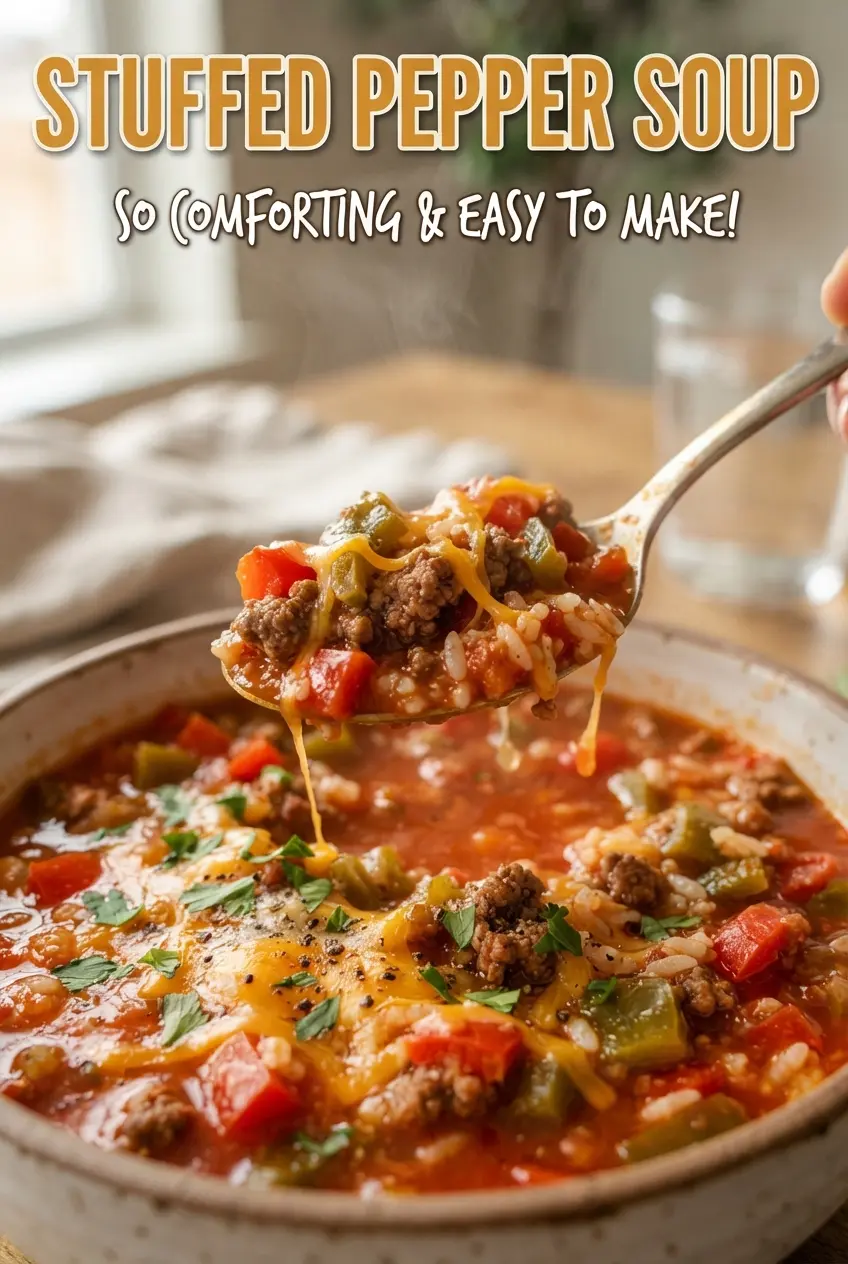
Taste the soup only after the rice is cooked. Rice dulls seasoning as it absorbs liquid, so the salt level usually needs a final adjustment right at the end. Spoon it into bowls and top with cheddar and parsley while the soup is hot enough to melt the cheese into little ribbons instead of clumps.
How to Adapt This for a Lighter Bowl or a Bigger Batch
Swap the Beef for Ground Turkey
Ground turkey works well if you want a leaner version, but it needs a little help. Use a splash of oil while browning and keep the tomato paste step, because turkey alone can taste flat without that extra base flavor. The soup will still be hearty, just a little cleaner and less rich.
Make It Dairy-Free
Leave off the cheddar or use a dairy-free shredded alternative at the bowl. The soup itself is naturally dairy-free, so this is an easy adjustment that doesn’t change the pot at all. A little extra parsley or a squeeze of lemon at the table helps replace the brightness the cheese usually brings.
Use Brown Rice Instead
Brown rice needs more time and more liquid than white rice, so add at least another cup of broth and expect a longer simmer. The payoff is a nuttier texture and a soup that eats a little heartier, but it won’t be as soft and classic as the white-rice version.
Storage and Reheating
- Refrigerator: Store for up to 4 days. The rice keeps absorbing broth, so the soup thickens as it sits.
- Freezer: It freezes, but the rice softens after thawing. For the best texture, freeze the soup before adding rice, then cook fresh rice when you reheat it.
- Reheating: Warm it gently on the stove over medium-low heat with a splash of broth or water. High heat can scorch the tomato base and push the rice past tender into mushy.
Questions I Get Asked About This Recipe
Stuffed Pepper Soup
Ingredients
Equipment
Method
- Brown the ground beef in a large pot over medium-high heat until no longer pink, then drain the fat.
- Sauté the onion and diced bell peppers in the same pot for 4-5 minutes, then add the minced garlic and tomato paste and cook for 2 minutes.
- Add the crushed tomatoes, diced tomatoes, beef broth, Italian seasoning, garlic powder, and smoked paprika, then bring to a boil.
- Add the uncooked long grain white rice, reduce heat to maintain a gentle simmer, cover, and simmer for 18-20 minutes until the rice is cooked.
- Season with salt and black pepper to taste, then serve hot, topped with shredded cheddar and fresh parsley.


