Slow cooker chicken noodle soup earns its keep when the broth turns clear and savory, the chicken falls apart with almost no effort, and the noodles come out tender without going mushy. It’s the kind of bowl that feels calm and complete: carrots that still have a little bite, celery that gives the broth backbone, and enough dill to make the whole pot taste bright instead of flat.
Bone-in chicken thighs do a lot of the work here. They hold up to the long cook, add more depth than lean breast meat, and give you broth that tastes fuller after a few hours in the crockpot. The noodles go in at the end on purpose. If you add them at the start, they’ll soak up too much liquid and turn soft before the soup is ready.
Below, I’ll walk you through the one timing detail that keeps the texture right, plus a few swaps that still give you a satisfying bowl when you’re working with what’s in the pantry.
The broth stayed clear and flavorful, and the egg noodles were perfect after 25 minutes on high. I used dill at the end like you suggested, and it tasted like something my mom would make all day.
Like this soup? Save Slow Cooker Chicken Noodle Soup for a clear broth, tender chicken, and noodles added at the very end.
The Reason the Noodles Go in at the End
The biggest mistake in slow cooker chicken noodle soup is letting the noodles ride through the whole cook. They don’t just soften; they swell, shed starch, and turn the broth cloudy and heavy. Adding them during the last 20 to 30 minutes keeps them intact and gives you that familiar noodle-soup texture instead of a pot of chicken-flavored porridge.
Bone-in thighs are another quiet insurance policy. They handle the long simmer without drying out, and the bones add body to the broth that boneless meat can’t quite match. If you swap in chicken breasts, the soup still works, but the meat needs less time and can taste a little flatter by the end of a long cook.
- Long cooking time: Builds flavor from the vegetables and herbs without making the broth taste rushed.
- Bone-in thighs: Stay juicy and give you a richer broth than leaner cuts.
- Late noodle addition: Keeps the noodles springy instead of bloated.
- Fresh garnish at the end: Dill or parsley wakes up the whole pot after the long cook.
What Each Ingredient Is Doing in the Pot
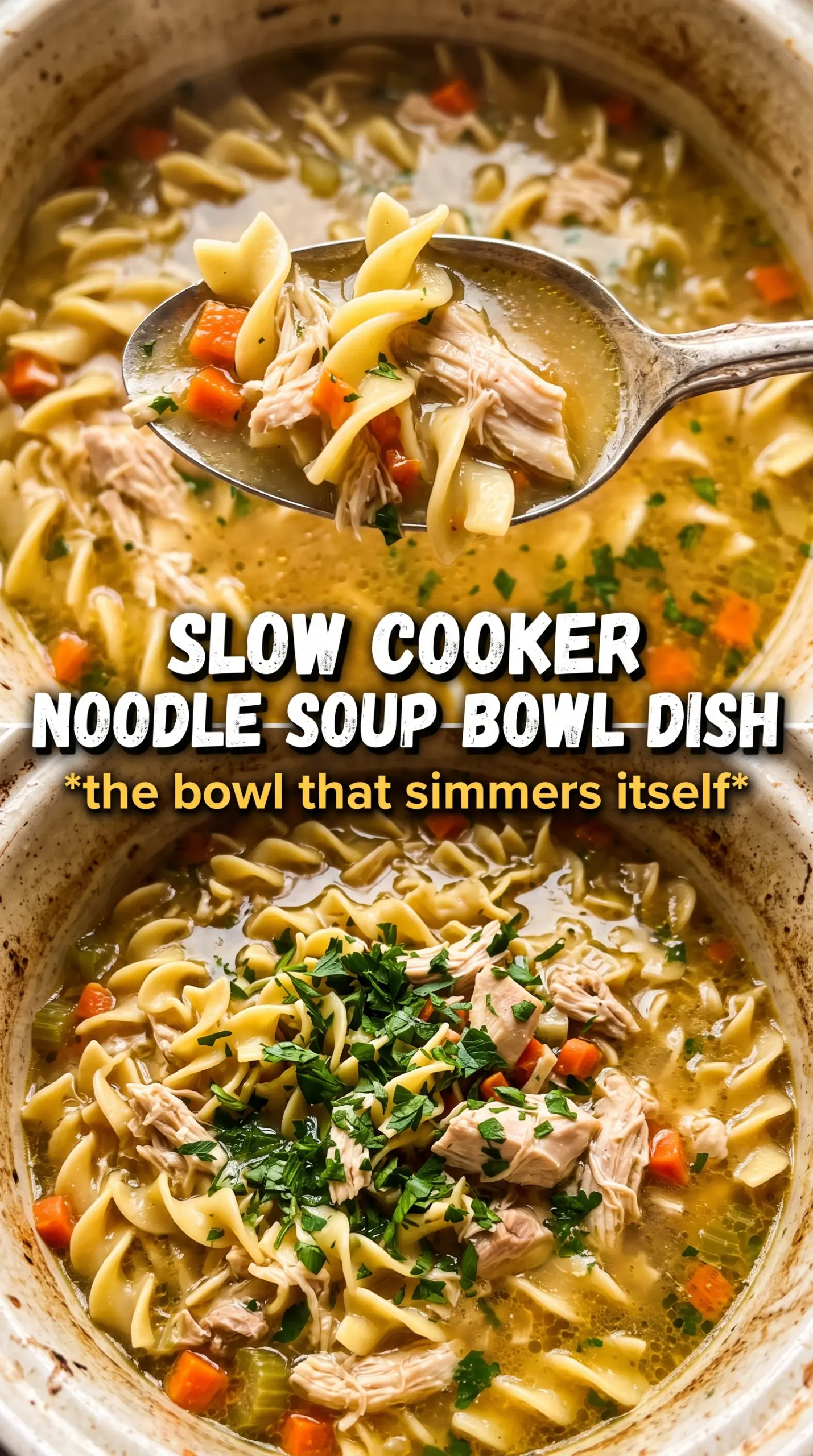
- Bone-in chicken thighs — These are the backbone of the soup. They stay moist through the long cook and give the broth more depth than boneless pieces. If you only have chicken breasts, reduce the cook time and pull them as soon as they’re cooked through so they don’t go stringy.
- Carrots, celery, and onion — This trio forms the base flavor. Slice them evenly so they soften at the same rate and don’t turn to paste before the chicken is done.
- Garlic, thyme, dill, bay leaves, garlic powder, and onion powder — The dried seasonings layer in flavor early and hold up to hours of heat. Fresh dill at the end gives a brighter finish, while the dried dill helps the broth taste like soup all the way through.
- Chicken broth — Use one that tastes good on its own. Since the soup doesn’t have a roux or cream to hide behind, a thin or bland broth will stay thin and bland in the finished bowl.
- Egg noodles — Standard egg noodles are the best fit here because they cook quickly and stay tender without falling apart. If you use a different pasta, choose one with a similar cook time and add it near the end the same way.
Building the Soup Without Turning It Mushy
Loading the Crockpot the Right Way
Start by nesting the chicken thighs in the bottom of the slow cooker, then pile the carrots, celery, onion, garlic, broth, and seasonings on top. The broth should just cover the ingredients or come close; if the pot looks overcrowded, the vegetables will steam unevenly instead of slowly softening into the soup. Give everything one stir if you want, but don’t obsess over perfect distribution — the long cook will handle that.
Letting Time Do the Work
Cook on Low for 6 to 8 hours, or on High for 3 to 4 hours if you’re short on time. Low heat gives you the cleanest broth and the most tender chicken, which is why I use it when I can. If you cook too hot for too long, the chicken can start to shred dry at the edges before you even get to the noodle stage.
Shredding and Resetting the Pot
Pull the chicken out and discard the skin and bones, then shred the meat with two forks. Remove the bay leaves before they get lost in the pot. Return the chicken to the slow cooker only after it’s shredded so it soaks up the broth without overcooking.
Adding the Noodles at the Finish
Turn the slow cooker to High and stir in the egg noodles. Cook for 20 to 30 minutes, checking near the end so they stop when they’re tender but still have a little bite. If you wait until they’re completely soft in the cooker, they’ll keep relaxing in the hot broth and go past the point you wanted by the time you serve the soup.
How to Adjust This Soup for What’s in Your Kitchen
Gluten-Free Version
Swap the egg noodles for a gluten-free noodle that can handle simmering, and add it near the end just like the original. Some gluten-free pastas break down faster, so start checking at 10 to 15 minutes instead of waiting the full half hour. The broth, chicken, and vegetables stay the same, so the flavor holds up well.
Dairy-Free and Naturally Cream-Free
This soup is already dairy-free as written, and that’s part of why the broth stays clean and light. Don’t add milk or cream unless you’re intentionally changing the style of the soup, because it dulls the dill and makes the broth feel heavier than it needs to be.
Using Chicken Breasts Instead of Thighs
Chicken breasts work, but they need a little more attention because they dry out faster in the slow cooker. Check them earlier on the low setting, pull them as soon as they’re cooked through, and shred them right away. The soup will still be good, just a little leaner and less rich.
Storing Leftovers Without Losing the Noodle Texture
If you know you’ll have leftovers, cook the noodles separately and add them to each bowl instead of the whole pot. That’s the easiest way to keep the soup from turning thick overnight. If the noodles are already in the soup, they’ll keep absorbing liquid in the fridge, so just expect the broth to loosen up again when you reheat it with a splash of broth or water.
Storage and Reheating
- Refrigerator: Store in an airtight container for up to 4 days. The noodles will continue to soften, and the broth may thicken as it sits.
- Freezer: Freeze without the noodles if possible. The broth and chicken freeze well for up to 3 months; add fresh noodles after thawing for the best texture.
- Reheating: Warm gently on the stove or in the microwave with a splash of broth or water. Don’t boil it hard, or the chicken will tighten up and the noodles will fall apart.
Questions I Get Asked About This Recipe
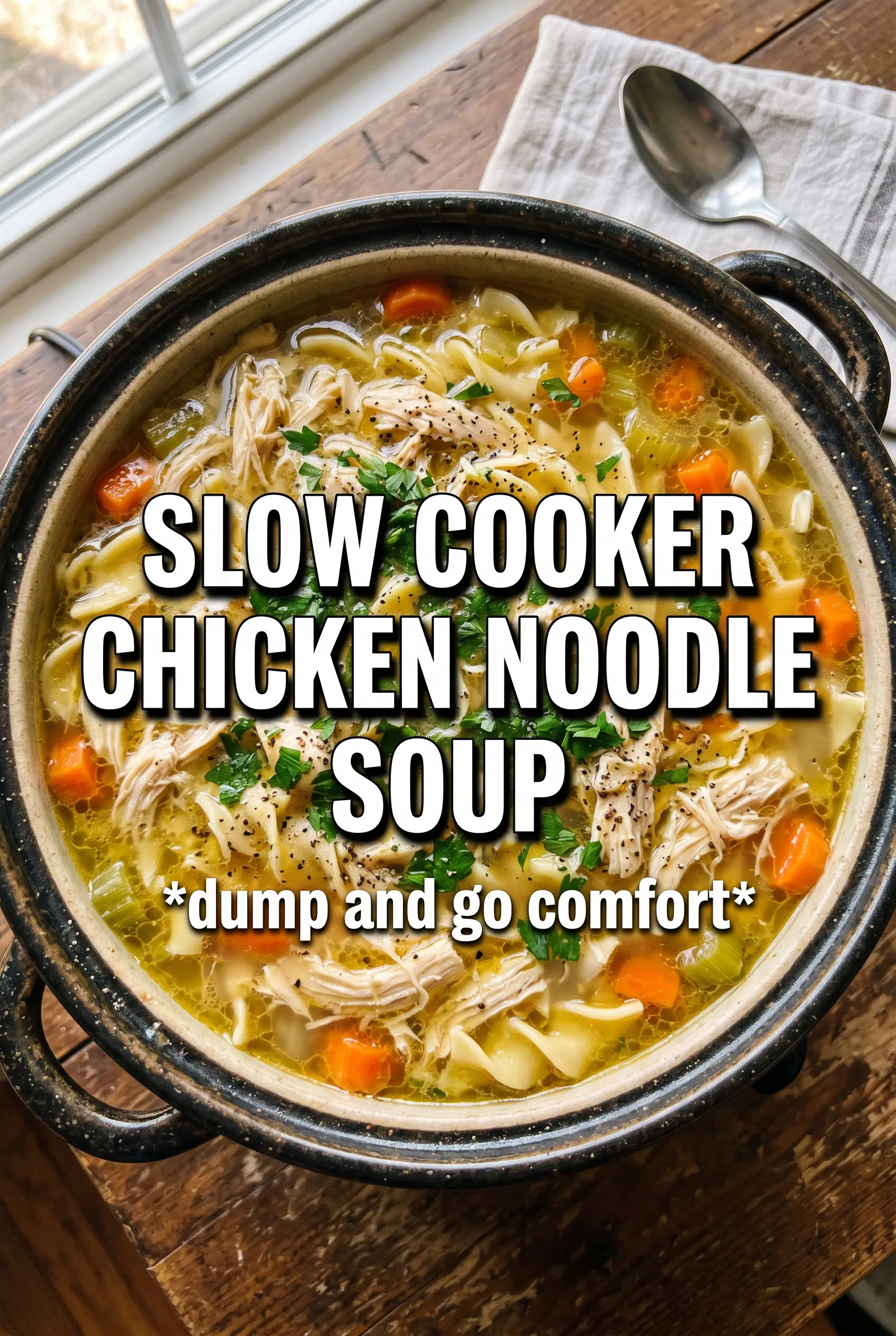
Slow Cooker Chicken Noodle Soup
Ingredients
Equipment
Method
- Add the bone-in chicken thighs to the slow cooker, then layer in the carrots, celery, onion, and garlic. Pour in the chicken broth so the ingredients are mostly submerged, and sprinkle in dried thyme, dried dill, bay leaves, garlic powder, and onion powder.
- Cover and cook on Low for 6-8 hours or on High for 3-4 hours. The chicken is ready when it is very tender and the broth smells fragrant (look for gentle bubbling around the edges).
- Remove the chicken thighs to a plate and discard the skin and bones. Shred the meat into bite-size pieces and return it to the slow cooker.
- Remove the bay leaves from the broth. Return the shredded chicken to the slow cooker so the soup base is well mixed.
- Add the egg noodles and cook on High for 20-30 minutes until tender. Stir once or twice so the noodles cook evenly and you can see them soften (they should be tender but not mushy).
- Season the soup generously with salt and pepper. Taste and adjust so the broth is well balanced.
- Garnish with fresh dill or parsley right before serving. Add it on top so the herbs look bright against the golden broth.