Chicken noodle soup from scratch has a way of tasting deeper, cleaner, and more comforting than anything poured from a carton. The broth carries the real work here: gentle chicken flavor, sweet carrots and celery, a little onion, and enough thyme and parsley to make the whole pot taste like it simmered with care. The noodles stay tender, the chicken shreds into soft pieces, and every spoonful feels balanced instead of one-note.
What sets this version apart is the broth-building step. Starting with a whole chicken gives you both meat and bones for body, and simmering everything from cold water helps draw out flavor slowly instead of clouding the pot. Skimming the foam early keeps the broth clearer, and straining out the cooked vegetables gives you a cleaner finish before you add the fresh vegetables and noodles.
Below, I’ve included the small details that matter most: when to salt the broth, how to keep the noodles from going mushy, and what to do if you want to make the soup ahead without losing that just-cooked texture.
The broth came out clear and rich, and the noodles stayed just tender instead of falling apart. My husband kept going back for more, and the shredded chicken made it feel hearty enough for dinner.
Save this chicken noodle soup from scratch for the days when you want a deeply savory broth and noodles that still hold their bite.
The Broth Needs a Slow Start, Not a Hard Push
Most people rush the broth and end up with something thin or cloudy. Starting with cold water gives the chicken time to release flavor gradually, and that slow rise in temperature helps the broth taste fuller. Skimming the foam in the first part of the simmer matters too, because that’s where the murky bits collect before they spread through the pot.
The other mistake is boiling the broth hard the whole time. A lively simmer is fine, but a rolling boil can make the chicken stringy and the broth harsh. You want the liquid moving gently, with just a few bubbles breaking the surface. By the end, the chicken should be falling-apart tender and the broth should look golden, not greasy.
What Each Ingredient Is Actually Doing in This Pot

- Whole chicken — This is the backbone of the soup. You get meat for shredding and bones for a broth with real body. Chicken parts can work, but a whole bird gives you the best balance of flavor and richness.
- Carrots, celery, and onion — These build the base flavor twice: once in the broth, then again with the fresh vegetables added at the end. That second round keeps the soup tasting bright instead of cooked down.
- Fresh parsley stems — The stems belong in the broth pot because they add herb flavor without turning muddy. Save the leaves for the finish so the soup tastes fresh right before serving.
- Wide egg noodles — These hold up well and give the soup the right old-school texture. Thin noodles soften too fast and can disappear in the broth. If you need a gluten-free swap, use a sturdy gluten-free egg-style noodle and cook it separately so the soup stays clear.
- Dried thyme and bay leaves — These are quiet but important. Thyme gives the broth warmth, and bay leaves add a subtle savory depth that you miss if they’re left out.
Building the Soup in Layers So Nothing Turns Mushy
Starting the Broth
Put the whole chicken and all the broth ingredients in a very large pot, then cover everything with cold water. Bring it up to a boil just to get the pot moving, then lower the heat so the liquid settles into a steady simmer. As foam rises, spoon it off from the surface. If you skip that step, the broth can taste a little muddy and look cloudy before it even has a chance to develop.
Straining and Shredding
When the chicken is very tender, lift it out and strain the broth through a fine strainer. Discard the cooked vegetables from the broth stage; they’ve already given up their flavor. Shred the chicken once it’s cool enough to handle, pulling it into bite-size pieces instead of fine strands. That gives you a better texture in the finished soup and keeps the meat from disappearing.
Cooking the Fresh Vegetables and Noodles
Return the clear broth to the pot and season it with salt before adding the fresh carrots, celery, and onion. Let those cook until they’re just tender, then add the noodles. The noodles need only 6 to 8 minutes, and that short window matters because they keep cooking in the hot broth even after the heat is off. If you boil them too long, they’ll swell and turn soft fast.
Bringing It Together at the End
Stir the shredded chicken and chopped parsley into the pot during the last few minutes. This keeps the chicken tender and the herbs bright. Taste the soup after everything is in, then adjust with salt and pepper. The broth should taste clean but full, with enough seasoning that the noodles and vegetables don’t seem flat.
How to Adapt This Soup for Different Pans, Diets, and Leftovers
Gluten-Free Version
Swap in a sturdy gluten-free noodle, but cook it separately and add it to each bowl before serving. Gluten-free noodles can go soft faster in the broth, so keeping them apart gives you a better texture and keeps the soup from getting starchy.
Extra-Hearty Vegetable Soup
Add more sliced carrots and celery, or stir in a handful of chopped spinach at the end. The broth stays the same, but the bowl feels fuller and a little lighter on the meat. Spinach should go in at the very end so it stays bright instead of turning dull.
Make-Ahead for Better Weeknights
Cook the broth and chicken ahead, then refrigerate them separately from the noodles. When it’s time to eat, bring the broth back to a simmer, add the fresh vegetables, and cook the noodles right before serving. That keeps the texture clean and stops the noodles from soaking up all the broth overnight.
Storage and Reheating
- Refrigerator: Store for up to 4 days. The noodles will absorb broth, so expect the soup to thicken a bit.
- Freezer: Freeze the broth, chicken, and vegetables without the noodles for up to 3 months. Add fresh noodles after thawing for the best texture.
- Reheating: Warm gently on the stove over medium-low heat until steaming. Don’t boil it hard or the noodles will break apart and the chicken can turn dry.
Answers to the Questions Worth Asking
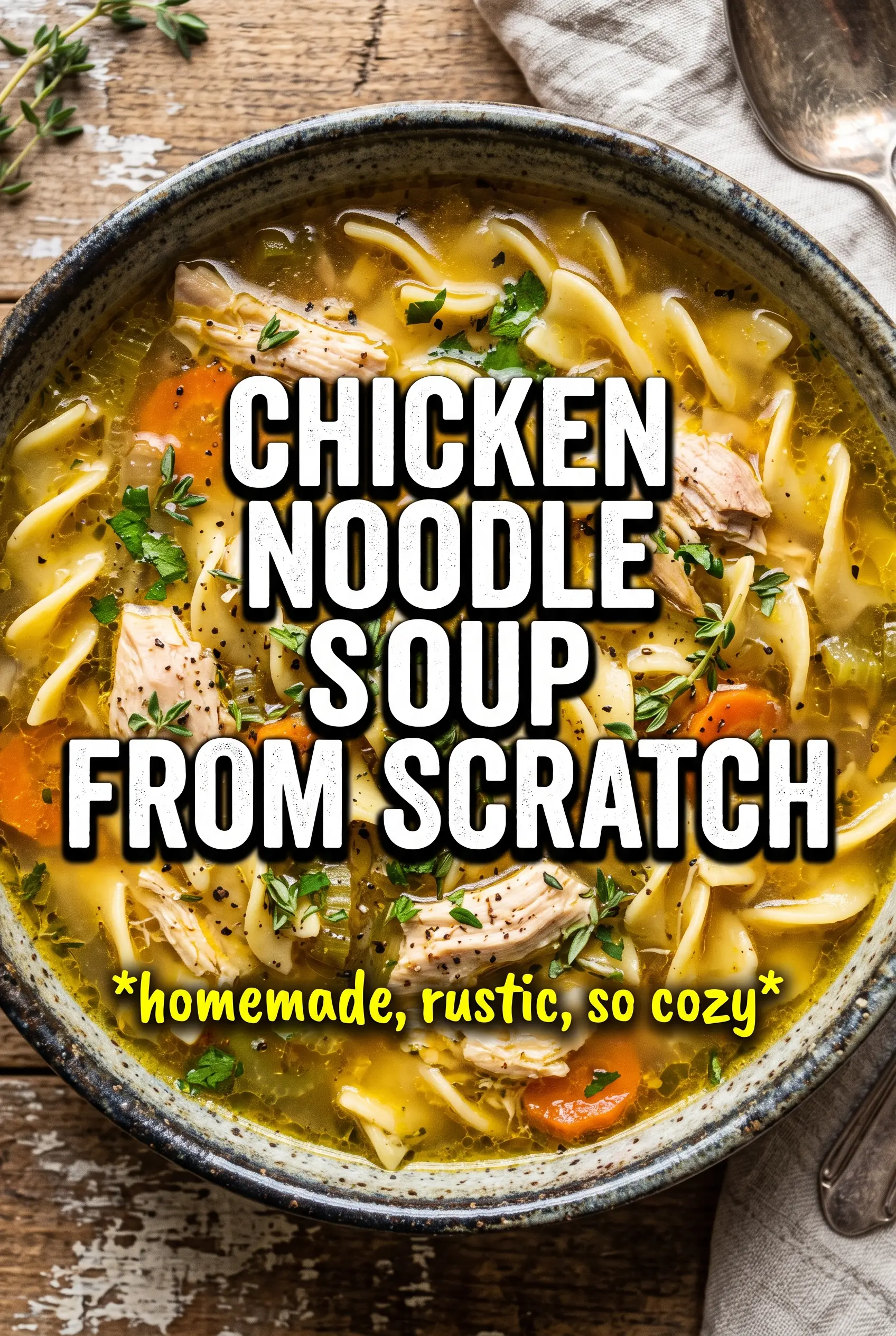
Chicken Noodle Soup From Scratch
Ingredients
Equipment
Method
- Place the whole chicken and carrots, celery, onion, garlic, bay leaves, peppercorns, parsley stems, thyme, and cold water in a very large pot. Bring to a boil, skim off foam, then reduce heat to maintain a gentle simmer.
- Simmer the broth for 1.5 hours, until the chicken is very tender and easily pulls apart. Keep the simmer steady so the broth stays flavorful and clear.
- Strain the broth, discarding the used vegetables and aromatics. Remove all meat from the chicken and shred it into bite-size pieces.
- Return the strained clear broth to the pot and taste it. Season with salt until the broth is balanced.
- Bring the seasoned broth to a simmer, then add sliced carrots, celery, and diced onion. Stir to distribute the vegetables through the broth.
- Simmer for 10 minutes, until the vegetables are tender when pierced with a fork. You should see the broth bubbling consistently around the vegetables.
- Add the wide egg noodles and cook for 10 minutes until the noodles are starting to soften. Check the texture visually so the noodles don’t overcook.
- Cook for an additional 6-8 minutes, until the noodles are tender, then add the shredded chicken and chopped fresh parsley. Continue heating just until the chicken is warmed through and the parsley turns brighter green.
- Adjust seasoning with salt and pepper to taste. Serve while hot for the best noodle texture.