
Golden chicken breasts swimming in garlic butter sauce hit that sweet spot between weeknight practical and restaurant-worthy. The chicken stays juicy because it gets a hard sear first, then finishes in the sauce just long enough to soak up all that garlicky butter without drying out. The sauce is glossy, pan-scraped, and full of little browned bits that give it more depth than a straight butter-and-garlic skillet ever could.
This version works because the garlic cooks gently in the butter instead of scorching in the oil, and the broth loosens everything into a real sauce instead of a greasy coating. A squeeze of lemon at the end keeps the butter from tasting heavy, and the parsley gives the whole pan a clean finish. If you’ve ever had garlic chicken come out flat or the sauce turn dull, the order here fixes both problems.
Below, I’ve included the small details that matter most: how to get a deep sear on the chicken, when to add the garlic so it stays sweet instead of bitter, and a few smart swaps if you need to work with what you’ve got.
The sauce thickened just enough to coat the chicken, and the garlic stayed sweet instead of bitter. I served it with bread to mop up the pan and my husband asked if I could make it again next week.
Save this garlic butter chicken for the nights when you want a golden pan-seared dinner with a buttery garlic sauce and almost no cleanup.
The Reason the Sauce Stays Rich Instead of Greasy
The biggest mistake with garlic butter chicken is adding the garlic too early or cooking it too hot. Garlic burns fast, and once it turns bitter, no amount of broth can hide it. Here, the chicken gets its color first, then the heat drops before the butter and garlic go in, which keeps the garlic sweet and fragrant instead of harsh.
Using the same skillet matters. Those browned bits from the chicken dissolve into the broth and turn the sauce from melted butter into something deeper and more savory. If the pan looks dry after you add the broth, keep scraping; that’s where the flavor is hiding.
What Each Ingredient Is Actually Doing in the Pan
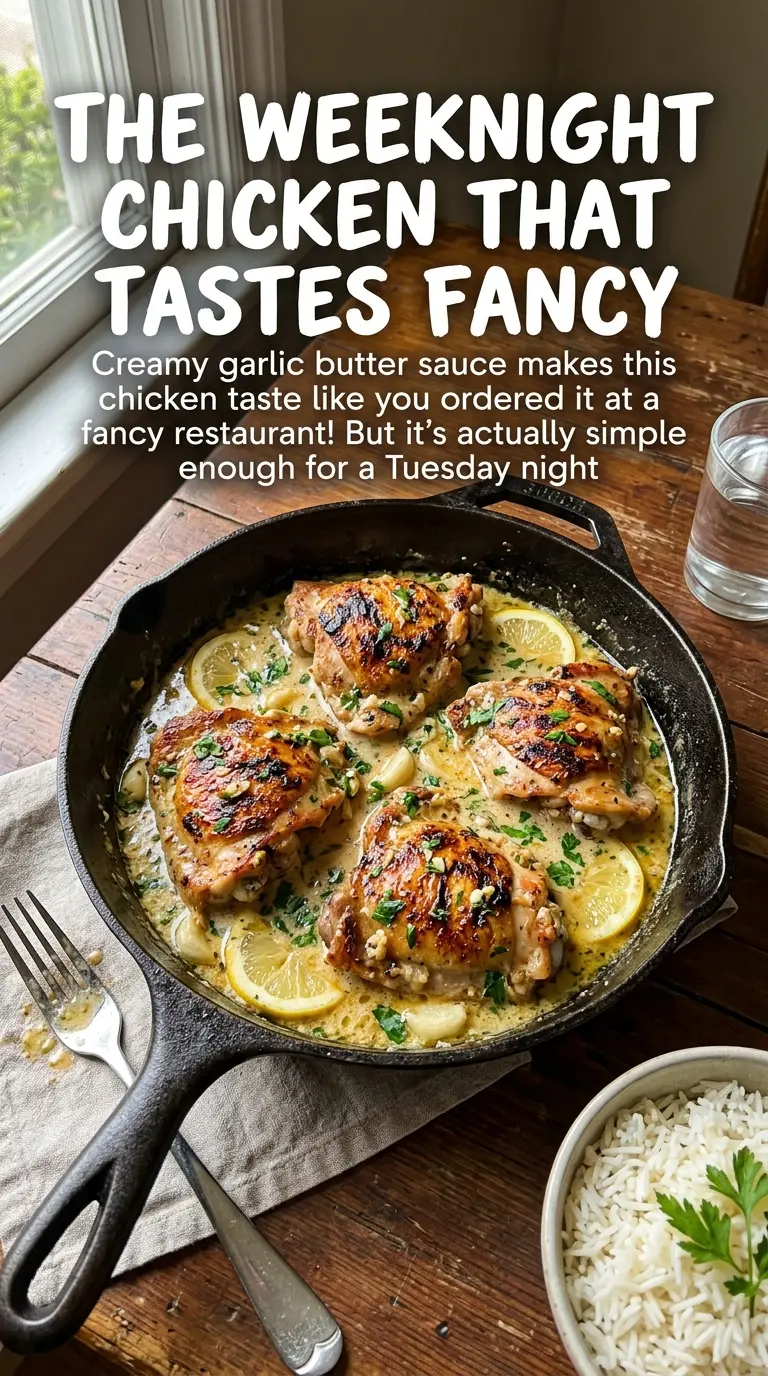
- Chicken breasts — Boneless breasts cook quickly and slice nicely for serving, but they dry out if you blast them too long. If yours are thick, pound them to an even thickness so the outside doesn’t overcook before the center reaches 165°F.
- Olive oil — This gives you the high-heat sear before the butter enters the pan. Butter alone would brown too fast and burn before the chicken is cooked through.
- Butter — Use real butter here. It’s what gives the sauce its body and that silky finish, and there isn’t a substitute that tastes quite the same.
- Garlic — Fresh minced garlic is the point of the dish. Jarred garlic works in a pinch, but it tastes flatter, so add it only long enough for the aroma to bloom before the broth goes in.
- Chicken broth — This loosens the butter into a spoonable sauce and carries the thyme. Water won’t give you the same savory backbone.
- Thyme, parsley, and lemon — Thyme adds a woodsy note, parsley keeps the finish bright, and lemon cuts through the richness so the sauce tastes balanced instead of heavy.
Getting the Sear Right Before the Sauce Goes In
Seasoning and Searing the Chicken
Season the chicken generously with salt and pepper before it hits the skillet. The pan needs to be hot enough that the chicken sizzles immediately; if it quietly steams, you won’t get that deep golden crust. Let it cook without moving it for most of each side, because constant flipping prevents browning and leaves you with pale chicken and a thin sauce base.
Building the Garlic Butter Base
Once the chicken comes out, lower the heat before adding the butter and garlic. That drop in temperature is what keeps the garlic from burning in the hot pan drippings. Cook it just until fragrant, then add the broth right away so the garlic flavor gets pulled into the sauce instead of staying stuck to the skillet.
Finishing the Pan Sauce
Let the broth simmer for a couple of minutes so it reduces slightly and picks up the browned bits from the pan. When the chicken goes back in, spoon the sauce over the top so the outside stays glossy. Add the lemon juice at the end, not earlier, or the sauce can taste sharp before it has a chance to round out.
How to Adapt It When You Need a Small Change
Use chicken thighs for a richer, juicier result
Boneless thighs hold up better if you tend to overcook chicken breasts. They take a few extra minutes, but they stay tender and add a little more richness to the pan sauce.
Make it dairy-free with olive oil instead of butter
You’ll lose the classic buttery finish, but the garlic broth still works well with a good olive oil. Add an extra splash of lemon at the end to keep the sauce lively.
Turn it gluten-free without changing the method
This recipe is naturally gluten-free as written if your broth is certified gluten-free. The sauce thickens from reduction, not flour, so nothing about the texture has to change.
Add cream for a softer, richer sauce
A splash of cream at the end turns this into a fuller, smoother pan sauce. Keep the heat low when you stir it in, or the dairy can split and lose that silky finish.
Storage and Reheating
- Refrigerator: Store leftovers for up to 3 days. The sauce will tighten as it chills, but it loosens again when warmed.
- Freezer: It freezes, but the sauce can separate a little when thawed. If you want the best texture, freeze the chicken and sauce in a tight container for up to 2 months and whisk gently while reheating.
- Reheating: Warm it slowly in a skillet over low heat with a splash of broth. High heat dries out the chicken fast and can push the butter sauce into a greasy split.
Answers to the Questions Worth Asking
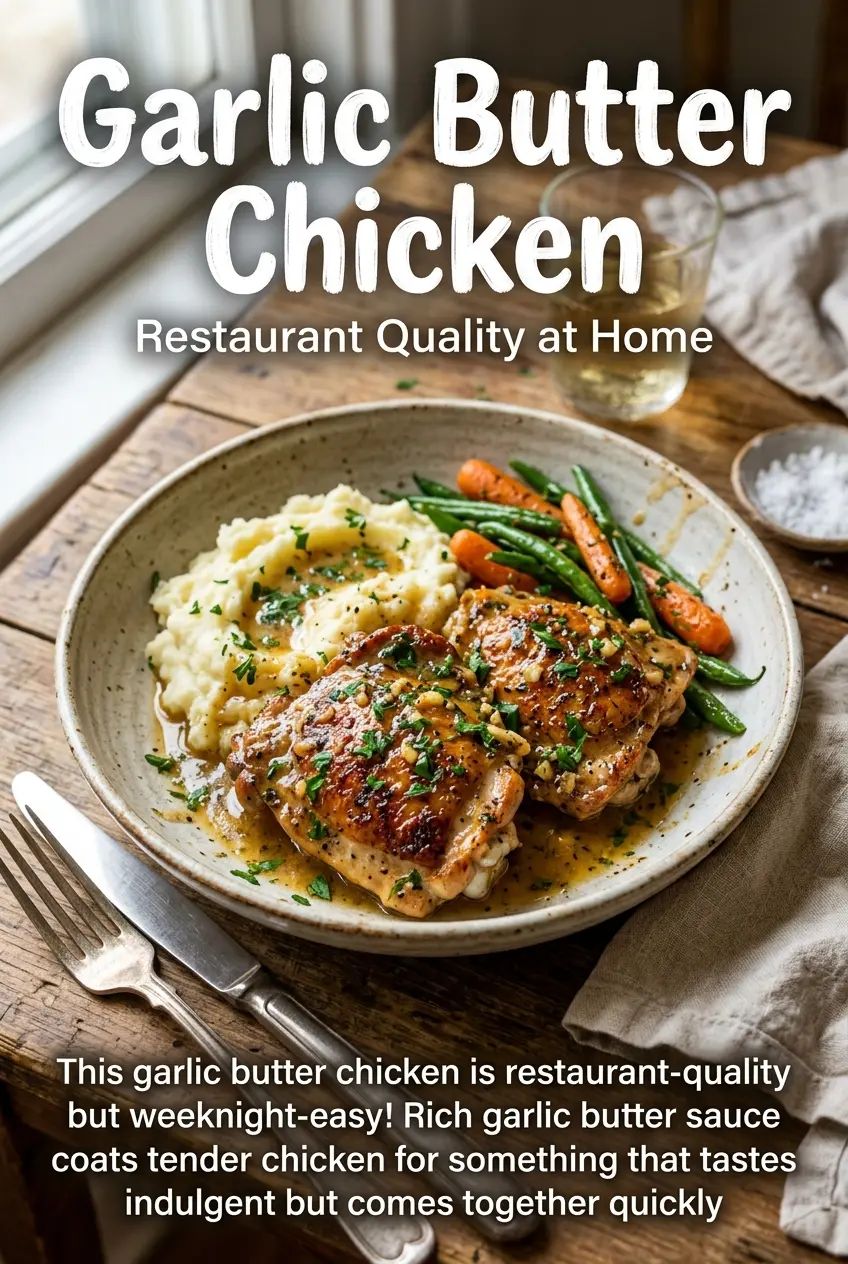
Garlic Butter Chicken
Ingredients
Equipment
Method
- Season the chicken breasts generously with salt and pepper.
- Heat the olive oil in a large skillet over medium-high heat, then sear the chicken for 6-7 minutes per side until golden and cooked through to 165°F (cue: browned crust on both sides).
- Remove the chicken and set aside, then reduce the heat to medium.
- Add the butter and garlic to the skillet, cooking for 1-2 minutes until fragrant (cue: visible garlic pieces sizzling and turning lightly golden).
- Add the chicken broth and dried thyme, scraping up any browned bits, then simmer for 2-3 minutes (cue: sauce looks glossy and lightly reduced).
- Return the chicken to the pan, spoon the sauce over top, and add lemon juice to taste (cue: sauce coats the chicken).
- Add the chopped fresh parsley and serve immediately (cue: fresh green garnish on the golden chicken).


