
Citrus-Dijon grilled chicken lands with a sharp, glossy marinade that turns into a bronzed, juicy finish on the grill. The mustard gives the chicken backbone, the citrus keeps it lively, and the honey rounds off the edges so the flavor tastes balanced instead of aggressively tangy. It’s the kind of marinade that makes plain chicken feel intentional.
The trick is in the ratio. Dijon brings both flavor and a little emulsifying power, which helps the oil, juice, and honey stay together long enough to coat the chicken evenly. Orange juice gives sweetness and fragrance, while lemon juice adds the cleaner acid that keeps the result from tasting flat. I’ve tested this with breasts, thighs, and drumsticks, and it works across all of them as long as you don’t rush the marinating time.
Below, I’ve added the part that matters most: how to keep the marinade bright without making the chicken mushy, how to adjust the cut you’re using, and what to do if you want to cook it indoors instead of on the grill.
The chicken came off the grill with that perfect sticky-golden edge, and the orange-Dijon flavor was bright without being overpowering. I marinated it for about 4 hours and it stayed juicy all the way through.
Save this citrus Dijon grilled chicken marinade for juicy, bronzed chicken with bright orange-lemon flavor.
The Marinade Works Because It Balances Acid, Fat, and Mustard
People run into trouble with citrus marinades when the acid gets too dominant. The chicken can taste sharp on the outside and bland in the middle, or the surface can turn a little stringy if it sits in the marinade for too long. This version stays steady because the Dijon and olive oil soften the citrus while still letting the lemon and orange read clearly.
That mustard matters more than most people think. It helps the marinade cling instead of sliding off the chicken, and it keeps the mixture from separating into an oily top layer and a watery bottom layer. If your marinade looks broken in the bowl, just whisk it hard for 15 to 20 seconds before adding the chicken.
What Each Ingredient Is Actually Doing in This Marinade
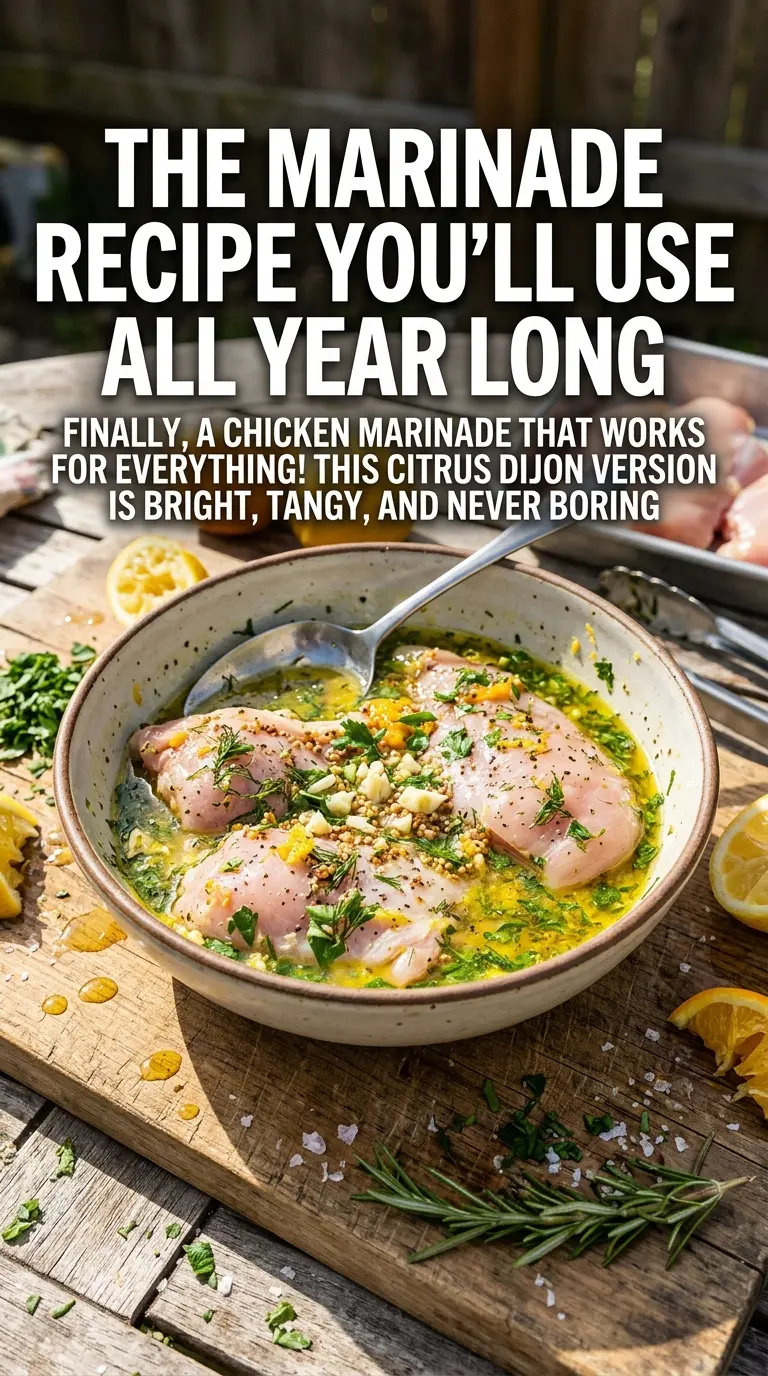
- Chicken — Any cut works here, but the cooking time changes fast. Thighs stay forgiving on the grill, while breasts need more attention so they don’t dry out.
- Dijon mustard — This is the backbone of the marinade. It brings tang, salt, and emulsifying power, so the citrus doesn’t taste thin or one-note. Yellow mustard won’t give the same depth.
- Orange juice — Use fresh if you can. Bottled juice works in a pinch, but fresh orange juice gives a cleaner sweetness and better aroma, especially once the chicken hits the grill.
- Lemon juice — This is the sharper acid in the mix. Don’t skip it, because it keeps the orange from turning syrupy and gives the chicken that bright finish.
- Honey — It softens the edges and helps the chicken brown. Without it, the marinade can taste a little austere and the grill marks won’t be as deep.
- Olive oil — This carries the marinade across the chicken and helps protect the surface during grilling. A standard olive oil works fine here; there’s no need to use your fanciest bottle.
- Garlic and thyme — Garlic adds bite, and thyme gives the marinade a French-style herbal note that fits the Dijon and citrus. Dried thyme is fine because it has enough time to hydrate in the marinade.
How to Keep the Chicken Juicy on a Hot Grill
Whisk the Marinade Until It Looks Glossy
Start by whisking the oil, mustard, juices, honey, garlic, thyme, salt, and pepper until the mixture looks smooth and slightly thickened. You want it to coat a spoon, not sit in separate layers. If the citrus and oil pull apart right away, the chicken will still taste fine, but the flavor won’t distribute as evenly.
Marinate Long Enough for Flavor, Not So Long the Texture Turns Soft
Move the chicken into a zip-top bag or shallow dish and coat it well with the marinade. Two hours gives you the flavor you need; eight is the outer limit if you want the surface to stay pleasant. Go much longer with a very acidic marinade and the outside can start to feel soft instead of juicy.
Grill to Temperature, Not to a Fixed Timer
Preheat the grill to medium-high so the chicken sears and cooks through without burning the sugar from the honey. Timing depends on the cut, thickness, and how hot your grill runs, so use 165°F as the real finish line. If the outside is browning too quickly, move the chicken to a cooler part of the grill and let it finish there.
Rest Before Slicing
Let the chicken sit for about 5 minutes after grilling. That pause keeps the juices in the meat instead of running onto the cutting board. If you slice immediately, even well-cooked chicken can look dry because all the moisture leaves at once.
Three Ways to Adjust This Marinade Without Losing What Makes It Good
For Chicken Breasts That Stay Juicy
Use thinner breasts or pound them to an even thickness before marinating. Even thickness matters more than extra marinade time, because the thinner spots won’t dry out while the thicker center catches up.
For a Dairy-Free, Gluten-Free Dinner
This marinade already fits both of those needs as written, which is one reason it’s such a useful grill recipe. Just check your Dijon label, since a few brands sneak in additives or thickeners that aren’t necessary here.
For Extra Char and a Slightly Sweeter Finish
Brush on a little fresh marinade during the first few minutes of grilling, then stop once the chicken starts to brown. The honey helps the surface caramelize, but too much wet marinade near the end can turn sticky before it turns golden.
If You Want to Cook It Indoors
A cast-iron skillet or grill pan gives the best close substitute for outdoor grilling. Pat the chicken lightly before it hits the pan so it sears instead of steaming, and don’t move it too early or you’ll lose the browned crust.
Storage and Reheating
- Refrigerator: Store cooked chicken in an airtight container for up to 4 days. The citrus note softens a bit by day two, but the flavor holds well.
- Freezer: Freeze cooked chicken for up to 2 months, wrapped tightly to protect the surface from freezer burn. The texture is best if you slice it after reheating rather than before freezing.
- Reheating: Rewarm gently in a covered skillet over low heat with a splash of water or broth, or use a 300°F oven until just heated through. High heat is the usual mistake here, and it dries the leaner cuts out fast.
Answers to the Questions Worth Asking

Citrus Dijon Grilled Chicken Marinade
Ingredients
Equipment
Method
- Whisk together olive oil, Dijon mustard, orange juice, lemon juice, garlic, honey, dried thyme, salt, and pepper until smooth and combined.
- Place chicken in a large zip-top bag and pour marinade over it, making sure the chicken is evenly coated.
- Refrigerate the bag of chicken and marinade for 2 to 8 hours, keeping it cold until ready to grill (2 hours minimum for flavor, longer for deeper tang).
- Preheat the grill to medium-high heat and lightly oil the grates.
- Grill the chicken until the internal temperature reaches 165°F, timing varies by cut and thickness.
- Let the chicken rest for 5 minutes before serving to keep it juicy and tender.


