
Charred jerk chicken with crackly edges and a deep, smoky heat earns its place in the regular dinner rotation fast. The marinade sinks into the chicken instead of sitting on the surface, so every bite tastes seasoned all the way through, with that sharp lime, allspice, thyme, and pepper combination that makes jerk chicken unmistakable. When it comes off the grill right, the outside is dark and blistered while the inside stays juicy enough to pull apart with a fork.
The difference here is in the balance and the rest time. Scotch bonnet peppers bring the real backbone of heat, but the brown sugar and lime keep the marinade from tasting harsh. Scoring the chicken helps the marinade get into the meat, and the long chill in the refrigerator gives the spices time to settle in and do their work. If you rush that part, the flavor stays on the outside.
Below, I’ll walk through the small details that matter most: how to keep the grill from scorching the sugars too early, how to judge when the chicken is cooked through, and what to swap if you need a milder version without losing the jerk character.
The marinade clung to the chicken beautifully, and after grilling the edges were charred without drying out the meat. The lime at the end made the whole thing pop.
Save this jerk chicken for the nights you want smoky char, fiery spice, and a marinade that actually gets into the meat.
The Marinade Needs Time to Get Past the Surface
Jerk chicken fails when the seasoning stays on top and the grill heat blasts it before it can work inward. The score marks matter because they give the marinade a path into the meat, especially on thicker pieces like thighs or drumsticks. A quick rub and a short rest won’t give you that deep, layered flavor; you’ll get chicken that tastes spicy outside and plain inside.
The other thing people miss is the sugar. Brown sugar helps the chicken caramelize, but on a grill it can burn fast if the heat is too high or the pieces sit in one spot too long. Medium heat and frequent turning keep the outside dark and charred instead of bitter.
What Each Ingredient Is Actually Doing in This Jerk Chicken
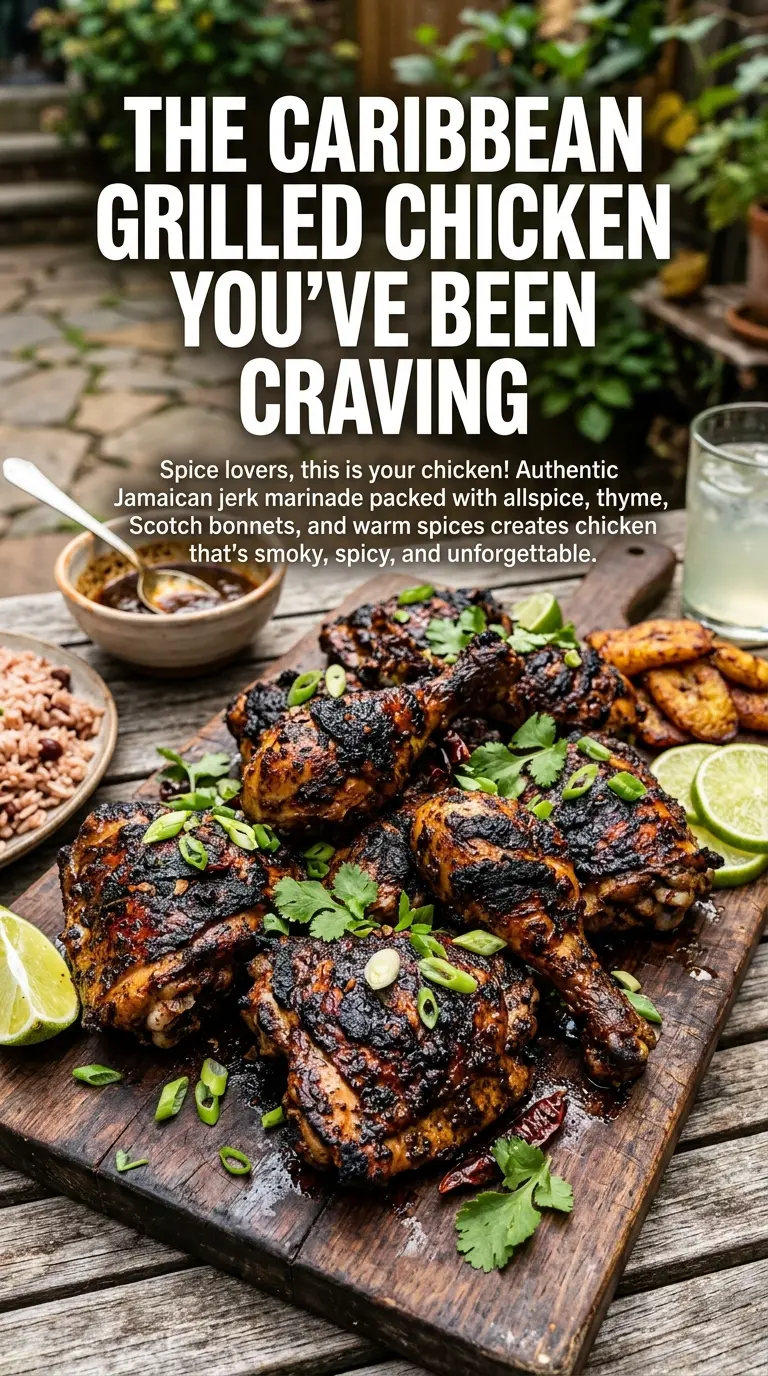
- Chicken pieces — Bone-in pieces stay juicier on the grill and hold up better to the long marinade. Thighs and drumsticks are the safest choice if you want that dark, sticky exterior without drying out the meat.
- Scotch bonnet peppers — These bring the real jerk heat and fruity burn that habaneros can imitate but not fully copy. If you need a milder version, use seeded habaneros, but don’t drop the pepper entirely or the marinade loses its backbone.
- Fresh thyme and allspice — This is the flavor base that makes the dish taste like jerk instead of just spicy grilled chicken. Dried thyme can work in a pinch, but use less because it reads sharper and less green.
- Brown sugar, soy sauce, and lime juice — These three balance each other: sweetness for caramelization, salt and depth from the soy, and acidity to keep the marinade bright. That balance is what keeps the spices from tasting flat or harsh after grilling.
- Garlic, black pepper, cinnamon, and nutmeg — They round out the marinade and give it warmth. Don’t overdo the cinnamon or nutmeg; jerk should smell layered, not like dessert spices.
Getting Charred Edges Without Burning the Jerk Marinade
Blend the Marinade Until It’s Smooth
Blend everything until the mixture looks thick, green, and almost paste-like, with no obvious chunks of garlic or scallion left behind. That texture helps the seasoning cling to the chicken instead of sliding off into the bowl. If the blender stalls, add just enough extra lime juice to get it moving, but don’t thin it out so much that it becomes watery.
Score, Coat, and Chill
Cut a few shallow slashes into the thickest parts of the chicken, then rub the marinade over every surface and work some into the cuts. The goal is even coverage, not a heavy blanket sitting on top of the skin. Cover and refrigerate for at least 4 hours; overnight is even better if you want the spices to penetrate more deeply.
Grill Over Medium Heat and Keep Turning
Set the grill to medium, not high. Too much heat will blacken the sugar before the chicken cooks through, especially around the edges. Turn the pieces frequently so the marinade chars in layers instead of turning one side into a crust and leaving the center underdone. The chicken is done when the juices run clear and the thickest part reaches 165°F.
Finish with a Bright Hit of Lime
Let the chicken rest for a few minutes after grilling so the juices settle back into the meat. A squeeze of lime right before serving wakes up the char and cuts through the richness of the grilled spices. Serve it with rice and peas while the exterior is still crisp and the center is hot.
How to Adapt This Jerk Chicken Without Losing the Character
Milder Heat with the Same Jerk Backbone
Use seeded habaneros instead of scotch bonnets, or start with one pepper and taste the marinade before committing to the second. You’ll still get heat and fruitiness, just with less burn. The thyme, allspice, and lime need to stay in place so the chicken still tastes like jerk, not generic spicy chicken.
Oven-Baked Jerk Chicken
Bake the marinated chicken on a wire rack set over a sheet pan at 425°F, then broil it at the end for a few minutes to pull out some char. You won’t get the same smoke from the grill, but the high heat still caramelizes the surface and keeps the skin from turning soft and pale.
Boneless Chicken Thighs for Faster Cooking
Boneless thighs cook faster and soak up marinade quickly, which makes them a good weeknight option. They won’t have the same dramatic grill bite as bone-in pieces, so pull them off as soon as they’re cooked through to keep them juicy. The marinade still gives you plenty of flavor, just with a softer texture.
Gluten-Free Version
Swap in gluten-free tamari for the soy sauce. That keeps the salty depth without changing the way the marinade browns on the grill. Check the label on your spices if you’re cooking for someone with a strict gluten-free need, since seasoning blends can sometimes hide additives.
Storage and Reheating
- Refrigerator: Store leftovers in an airtight container for up to 4 days. The char softens a bit, but the flavor stays strong.
- Freezer: The cooked chicken freezes well for up to 2 months. Wrap it tightly and freeze in portions so it thaws evenly.
- Reheating: Warm it gently in a covered skillet over low heat or in a 325°F oven until hot. High heat dries out the meat and can make the sugars on the outside taste burnt instead of smoky.
Answers to the Questions Worth Asking
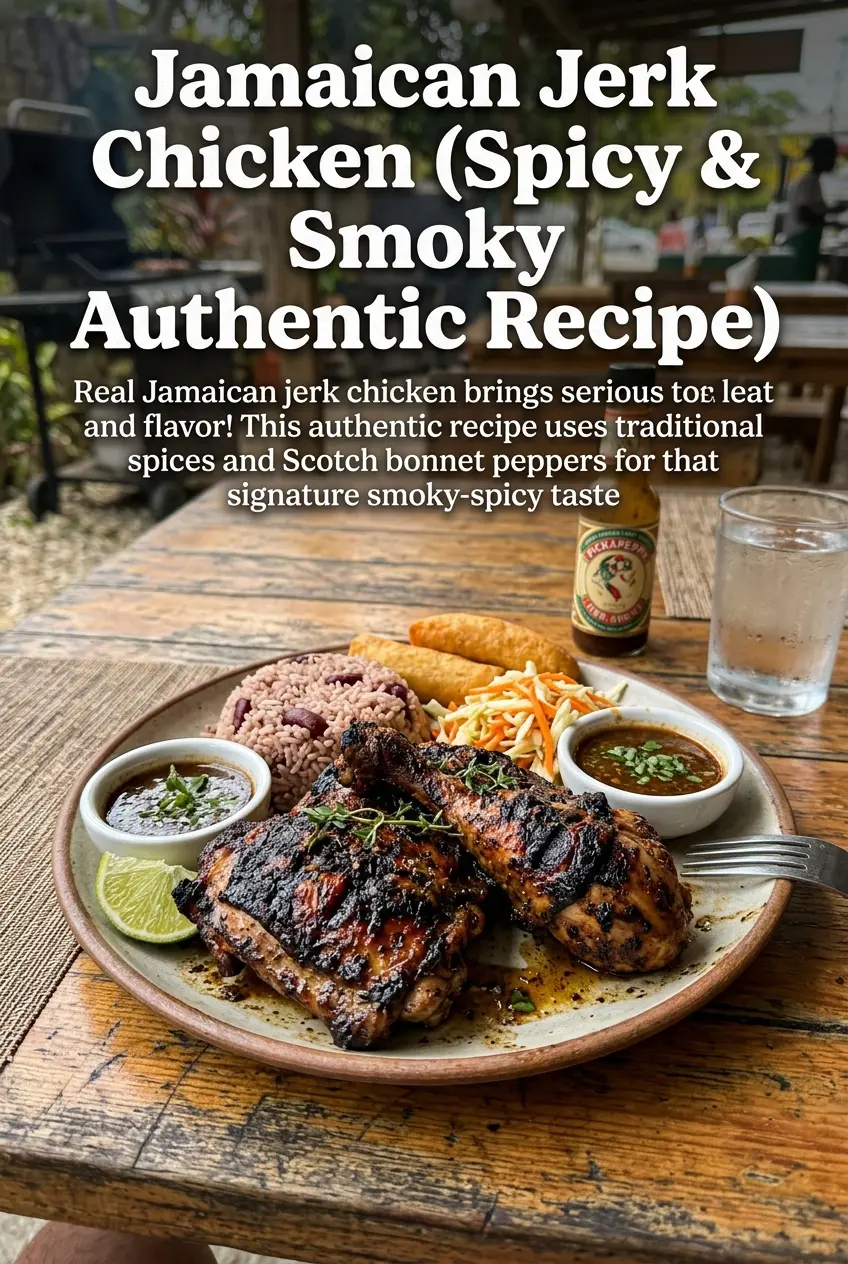
Jamaican Jerk Chicken
Ingredients
Equipment
Method
- Blend green onions, scotch bonnet peppers (or habaneros), garlic, fresh thyme, brown sugar, soy sauce, lime juice, allspice, black pepper, cinnamon, nutmeg, and salt until smooth, scraping down as needed for a thick paste.
- Score chicken pieces and rub the jerk marinade all over, getting it into cuts so the spicy paste clings to the surface.
- Marinate chicken in the refrigerator for 4-24 hours, uncovered for the first 1 hour if possible, then covered, until the surface looks evenly coated and fragrant.
- Preheat the grill to medium heat, then oil the grates lightly so the chicken sears without sticking.
- Grill chicken, turning frequently, for 30-40 minutes until charred with dark grill marks and the thickest pieces are cooked through.
- Serve jerk chicken with rice and peas and lime wedges so you can squeeze over the charred, spice-coated edges.


