
Sticky honey garlic chicken skewers come off the grill with charred edges, juicy centers, and a glaze that clings instead of sliding off into the flame. The chicken gets a deep caramelized finish while the garlic and soy sauce keep the sweetness in check, so every bite tastes balanced rather than sugary.
What makes this version work is the split marinade. Most of it seasons the chicken from the inside while a small reserved portion gets brushed on at the end, which builds that glossy finish without risking undercooked sauce. A short marinade is enough here; chicken breast can start to turn mealy if it sits too long in a salty, acidic mix.
Below, I’ll walk through the one step that keeps the glaze from burning, the ingredient swap I use when I’m out of fresh lemon, and the timing that keeps the chicken tender from first bite to last.
The marinade made the chicken taste like it had been soaking all day, and the glaze caramelized perfectly on the grill without burning. I basted at the end like you said and the skewers came out sticky, juicy, and full of garlic flavor.
Save these honey garlic chicken skewers for the nights when you want sticky grilled chicken with a caramelized glaze and almost no cleanup.
Why the Glaze Stays Sticky Instead of Burning Off
The biggest mistake with honey-based marinades is putting all of that sugar on the chicken too early and then cooking over heat that’s too aggressive. Honey browns fast. If the grill is screaming hot, the outside darkens before the chicken has time to cook through, and the glaze ends up tasting bitter instead of caramelized.
That’s why this recipe works better with a two-part approach: marinate first, then baste near the end. The reserved marinade gets brushed on during the last few minutes, when the chicken is already mostly cooked and the sugars have less time to scorch. The result is a glossy coating that sticks to the meat and sets into a lacquer-like finish.
- Medium-high heat gives you enough energy for color without turning the honey black in seconds.
- Chicken breast chunks cook quickly and stay tender when cut into even pieces.
- Reserved marinade builds the sticky finish, but only if it’s kept separate from the raw chicken.
- A short rest after grilling keeps the juices in the meat instead of running out the second you slide it off the skewer.
What Each Ingredient Is Actually Doing in These Skewers

- Honey is the backbone of the glaze. It brings the shine, the sweetness, and the caramelization. There isn’t a perfect substitute here if you want the same sticky finish, but maple syrup can work in a pinch; the flavor will be deeper and less bright.
- Soy sauce keeps the marinade from tasting one-note. It adds salt and umami, and it also helps the glaze darken on the grill. Low-sodium soy sauce is fine if that’s what you have.
- Olive oil softens the marinade and helps the chicken brown more evenly. You don’t need anything fancy; a standard bottle is fine.
- Garlic is strongest when it’s freshly minced. Garlic powder won’t give you the same sharp, savory bite, and in this recipe that fresh flavor matters.
- Lemon juice lightens the sweetness and wakes everything up. If you’re out, rice vinegar is the best swap because it keeps the marinade bright without taking it in a totally different direction.
- Chicken breasts should be cut into even chunks so they finish cooking at the same time. Uneven pieces are what leave you with dry bits next to undercooked ones.
Building the Skewers So the Chicken Stays Juicy
Mix the marinade and split it right away
Whisk the honey, soy sauce, olive oil, garlic, lemon juice, and pepper until the honey is fully dissolved and the mixture looks glossy. Before the chicken goes in, set aside one-quarter cup of the marinade in a clean bowl for basting later. If you skip that step and use the same bowl for brushing, you’ll either have to boil the marinade or risk serving raw chicken juices on the finished skewers.
Marinate just long enough to season the meat
Toss the chicken pieces in the remaining marinade and let them sit for 1 to 4 hours. Less than an hour and the flavor stays mostly on the surface; much longer than 4 hours and the salt in the soy sauce can start to change the texture of the chicken breast. You want the pieces to look lightly lacquered, not wet and swimming in sauce.
Thread and grill with space between the pieces
Skewer the chicken onto soaked wooden skewers, leaving tiny gaps so the heat can reach the sides. A packed skewer steams in the middle and takes longer to cook. Grill over medium-high heat for 5 to 6 minutes per side, turning only when the chicken releases cleanly from the grates; if it sticks hard, it needs another minute.
Baste at the end for the sticky finish
Brush on the reserved marinade during the last few minutes of grilling, not at the beginning. That’s when it has enough heat to bubble and glaze without burning into a bitter crust. Pull the skewers when the chicken is cooked through and the edges have a little char, then let them rest briefly before adding parsley and serving.
Three Useful Ways to Work These Skewers Into Your Own Kitchen
Dairy-Free and Naturally Gluten-Free
This recipe already fits both of those needs as written if you use gluten-free soy sauce or tamari. The flavor stays the same, but tamari tends to taste a little rounder and less sharp, which works nicely with the honey.
Using Chicken Thighs Instead of Breasts
Boneless, skinless thighs give you a richer bite and are a little harder to overcook. They’ll usually need a few extra minutes on the grill, and the final texture is juicier and more forgiving than breast meat.
Oven or Broiler Backup
If grilling isn’t an option, arrange the skewers on a foil-lined sheet pan and broil them close to the heat source, turning once and basting near the end. The glaze will still caramelize, but the flavor will be a little less smoky than straight grilling.
How to Make the Marinade Less Sweet
Cut the honey slightly and add a bit more lemon juice or a splash of rice vinegar. You’ll lose some gloss, but you’ll get a sharper, more savory finish that works well if you’re serving these with rice or noodles.
Storage and Reheating
- Refrigerator: Store leftovers in an airtight container for up to 3 days. The glaze will thicken as it chills.
- Freezer: The cooked chicken freezes well for up to 2 months, though the glaze softens a bit after thawing. Freeze the skewers off the sticks if space is tight.
- Reheating: Rewarm gently in a covered skillet over low heat or in a 325°F oven until heated through. High heat dries out the chicken fast and can make the honey glaze turn sticky in the wrong way.
Answers to the Questions Worth Asking
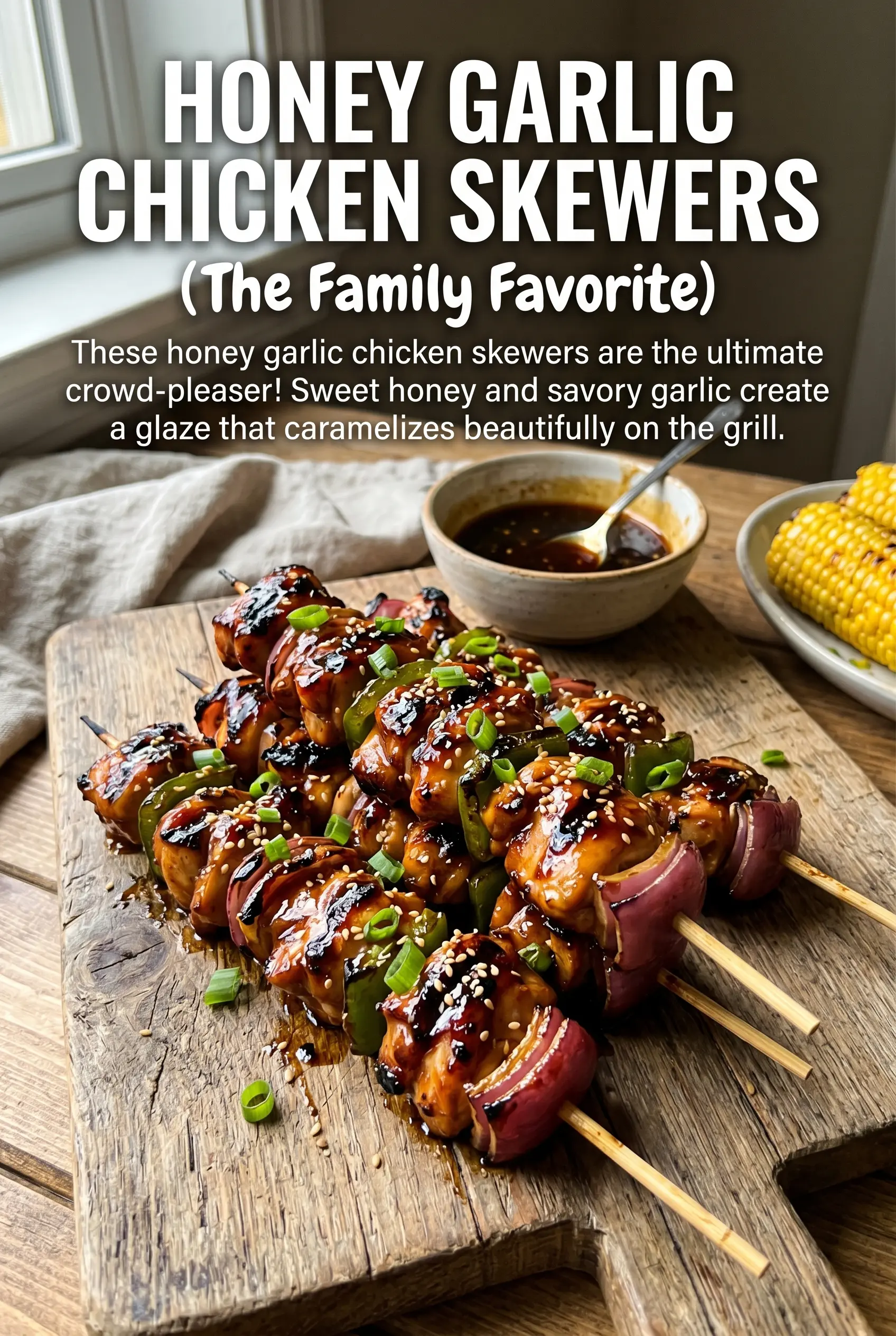
Honey Garlic Chicken Skewers
Ingredients
Equipment
Method
- Whisk together honey, soy sauce, olive oil, garlic, lemon juice, and black pepper until fully combined and glossy.
- Reserve 1/4 cup of the marinade for basting, then set it aside.
- Marinate the chicken in the remaining marinade for 1-4 hours, keeping it covered in the refrigerator.
- Thread the marinated chicken onto soaked wooden skewers, leaving a little space between pieces.
- Preheat the grill to medium-high heat and grill the skewers for 5-6 minutes per side until caramelized and browned, basting with the reserved marinade during cooking.
- Garnish the hot skewers with fresh parsley for a fresh green finish and serve immediately.


