
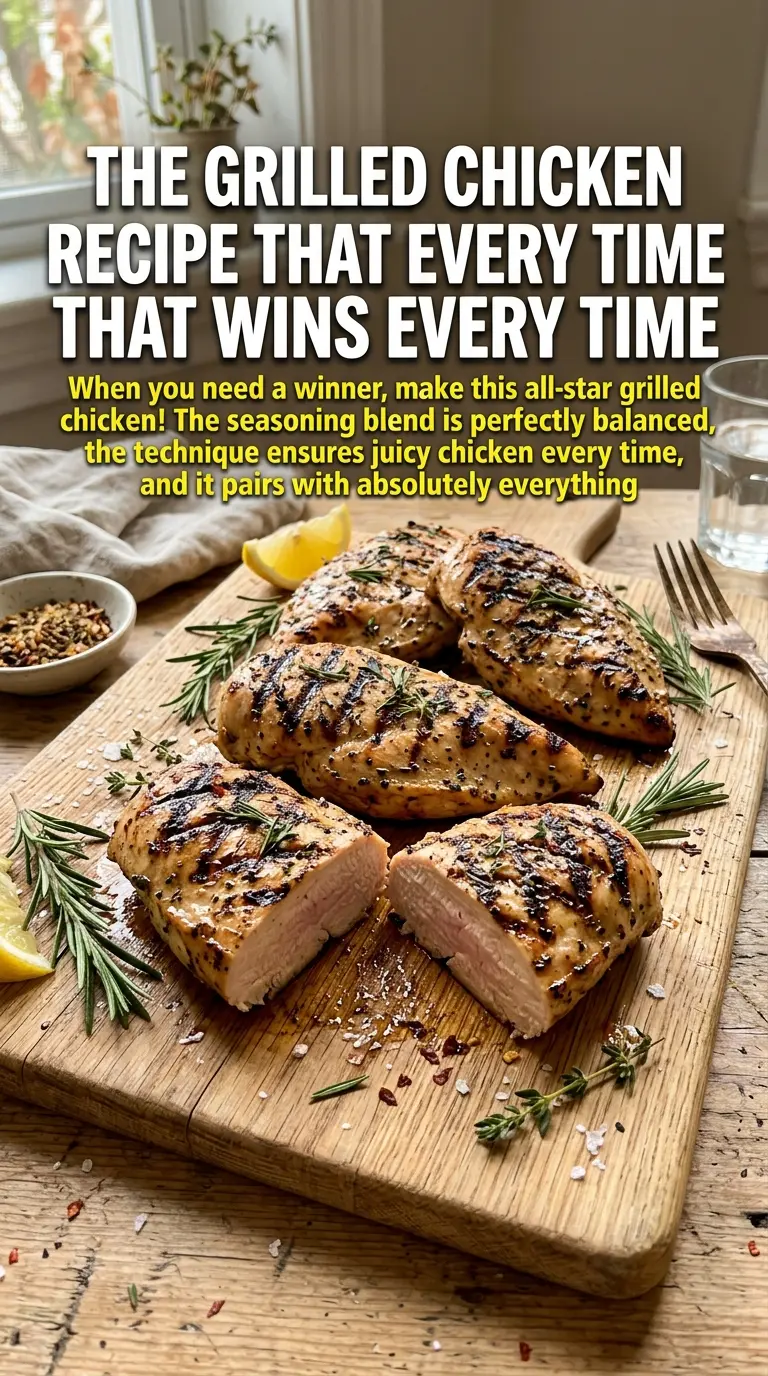
Juicy grilled chicken with a deep, savory marinade and clean grill marks earns its place in the rotation fast. The flavor hits that sweet spot between tangy, smoky, and just a little bit sweet, and the meat stays tender instead of drying out on the fire. It’s the kind of dinner that looks like you put in more effort than you did.
The trick is in the balance of the marinade and the timing. Soy sauce and Worcestershire bring salt and depth, lemon juice sharpens everything up, and Dijon helps the marinade cling to the chicken instead of sliding off. Brown sugar doesn’t make this taste sugary; it helps with browning and gives the edges a little lacquer on the grill.
Below, I’ll walk you through the one marinade detail that matters most, how to keep the chicken from scorching before it cooks through, and a few ways to adjust this for different cuts or dietary needs.
The marinade was spot on and the chicken stayed juicy even with the grill running a little hot. The lemon and Worcestershire together made the flavor taste like it had been cooked all day.
Love a classic grilled chicken with a bold marinade? Save this all-star version for your next BBQ night.
The Marinade Needs Time, Not Just Flavor
Grilled chicken gets dry when the outside cooks before the inside catches up, or when the marinade is too aggressive and never has time to work into the meat. This version avoids both problems by using enough acid to wake up the flavor, but not so much that the chicken turns mushy. Two to eight hours in the fridge is the sweet spot; any longer and the lemon starts to work against the texture, especially with smaller pieces.
The other thing that matters is the sugar. Brown sugar helps the chicken pick up color, but it will also brown faster than plain chicken, so a hot grill and constant attention keep you out of burnt-sugar territory. If the chicken is blackening before it reaches 165°F, the heat is too high or the grate is too close to the flame.
What the Marinade Ingredients Are Doing Here
- Olive oil — It carries the flavors across the chicken and helps prevent sticking on the grill. A standard olive oil is fine here; you don’t need a fancy finishing oil. If you swap in another neutral oil, keep the amount the same so the marinade still coats the meat evenly.
- Soy sauce — This is the main source of salt and deep savory flavor. Low-sodium soy sauce works if that’s what you keep in the pantry, but regular soy sauce gives a fuller, more seasoned result. Don’t replace it with straight salt; you’d lose the complexity.
- Lemon juice — The acid brightens the marinade and keeps the chicken tasting clean instead of heavy. Fresh lemon juice gives the best pop, though bottled works in a pinch. Keep it at the listed amount so it seasons without tightening the meat too much.
- Worcestershire sauce — This adds the background depth that makes the marinade taste like more than soy and lemon. It’s one of the ingredients you can’t quite fake with a single substitute. If you’re out, a small splash of balsamic plus a pinch of extra soy sauce gets you partway there.
- Dijon mustard — Dijon helps the marinade emulsify, so the oil and acid don’t separate while the chicken sits. It also gives the finished chicken a subtle tang. Yellow mustard will work, but the flavor is sharper and less rounded.
- Brown sugar — This is there for balance and browning, not sweetness. It rounds off the acid and helps create that lightly caramelized surface on the grill. Light or dark brown sugar both work; dark brown sugar gives a deeper molasses note.
- Garlic, black pepper, and paprika — These are the seasoning backbone. Fresh garlic makes the biggest difference, and paprika adds color as much as flavor. If you want a little smoke without a smoker, use smoked paprika instead of sweet paprika.
Getting the Chicken Cooked Through Without Burning the Marinade
Whisking the Marinade Until It Looks Unified
Start by whisking the oil, soy sauce, lemon juice, Worcestershire, Dijon, brown sugar, garlic, pepper, and paprika until the mixture looks glossy and connected. You want the sugar mostly dissolved and the Dijon fully broken up so the marinade coats the chicken evenly. If you leave it streaky, the seasoning settles in the bowl instead of on the meat.
Marinating With a Clear Time Limit
Put the chicken and marinade in a bag or shallow dish and refrigerate for 2 to 8 hours. Smaller pieces need less time; bone-in pieces can handle the full window. If the chicken sits too long in the lemon juice, the outside can take on a slightly tight, cured texture instead of staying tender.
Grilling Over Medium-High Heat
Preheat the grill before the chicken goes on, then oil the grates if they tend to stick. Lay the chicken down and let it sear long enough to release cleanly before turning it, because forcing a turn too early tears the skin and leaves the best color behind. Move thicker pieces to a cooler spot if the outside is browning faster than the center can cook.
Resting Before Serving
Pull the chicken when the thickest part reaches 165°F and let it rest for 5 minutes. That short pause keeps the juices from flooding out the second you slice in. If you cut it immediately, the meat still tastes good, but you lose the juiciness that makes this recipe work.
Ways to Adjust the Grill and the Marinade
Boneless chicken breasts for a faster dinner
Boneless breasts cook faster and are easier to serve, but they dry out sooner than bone-in pieces. Pound them to an even thickness so the thin end doesn’t turn chalky before the center is done. Start checking early and pull them the moment they hit 165°F.
Gluten-free version
Use a gluten-free soy sauce or tamari and keep the rest of the marinade the same. Worcestershire sauce can vary by brand, so check the label if you need the whole dish to stay gluten-free. The flavor stays bold and the texture doesn’t change.
A little more smoke on the grill
Swap the paprika for smoked paprika and let the chicken cook over a slightly cooler part of the grill after the first sear. That gives you a deeper barbecue-style finish without adding a bottled sauce. Don’t overdo the smoke, or it will crowd out the lemon and garlic.
Storage and Reheating
- Refrigerator: Store leftovers in an airtight container for up to 4 days. The flavor holds up well, though the chicken will be a little less juicy after the first day.
- Freezer: Freeze cooked chicken for up to 2 months. Slice it first if you want faster thawing, and wrap it tightly so the edges don’t dry out in the freezer.
- Reheating: Warm gently in a covered skillet with a splash of water or chicken broth over low heat, or reheat in a 300°F oven until just hot. High heat is what turns grilled chicken stringy, so keep the heat low and stop as soon as it’s warmed through.
Questions I Get Asked About This Recipe

All-Star Grilled Chicken
Ingredients
Equipment
Method
- Whisk together olive oil, soy sauce, lemon juice, Worcestershire sauce, Dijon mustard, minced garlic, brown sugar, black pepper, and paprika until evenly combined and glossy.
- Marinate the chicken pieces in the refrigerator for 2-8 hours, turning once halfway so every piece is coated.
- Preheat the grill to medium-high heat and set up for direct grilling so the grates are hot before the first piece hits.
- Grill the chicken, turning occasionally, until the internal temperature reaches 165°F at the thickest part, leaving clear grill marks as it cooks.
- Let the grilled chicken rest for 5 minutes before serving so the juices redistribute and the texture stays tender.


