
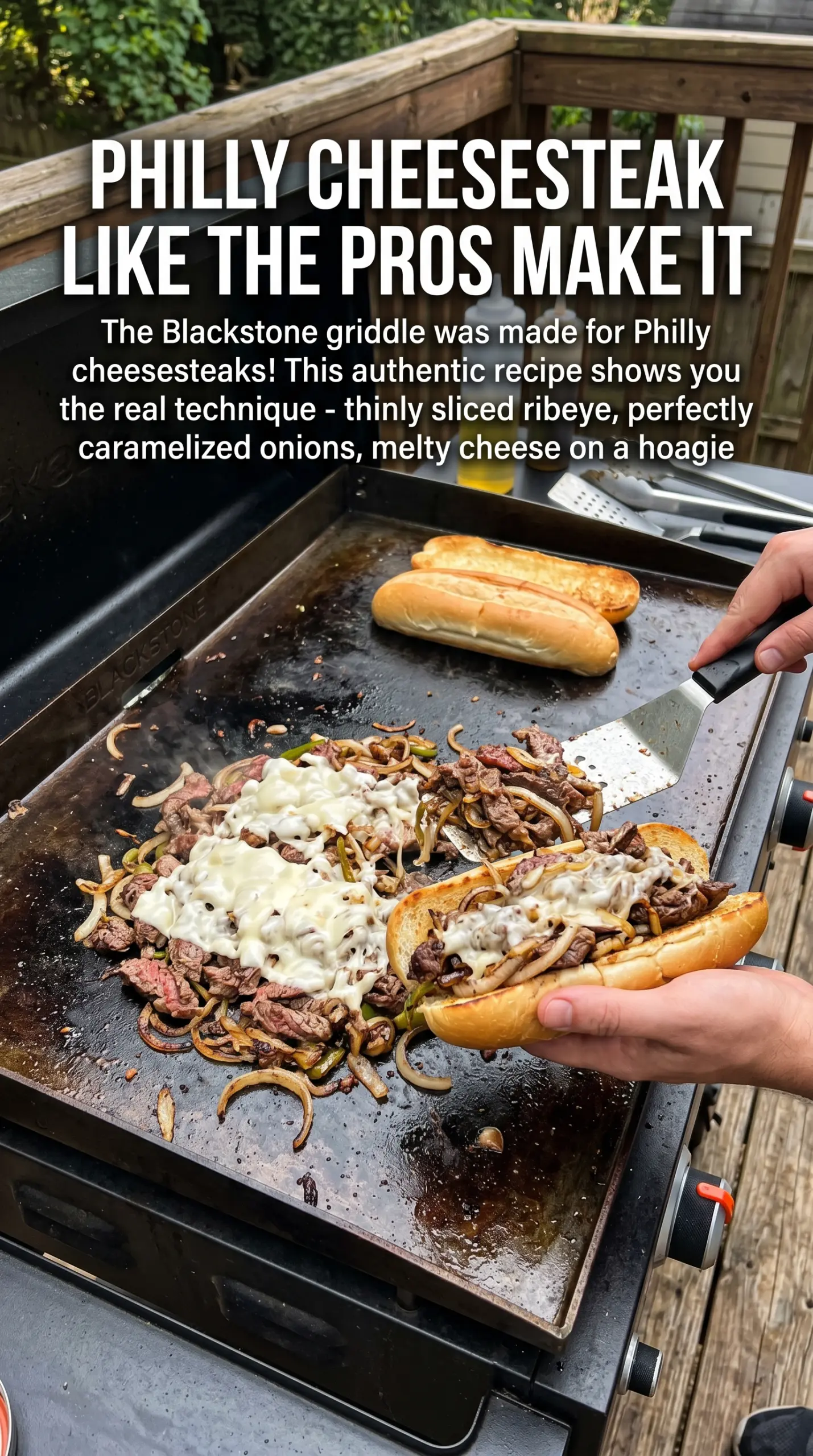
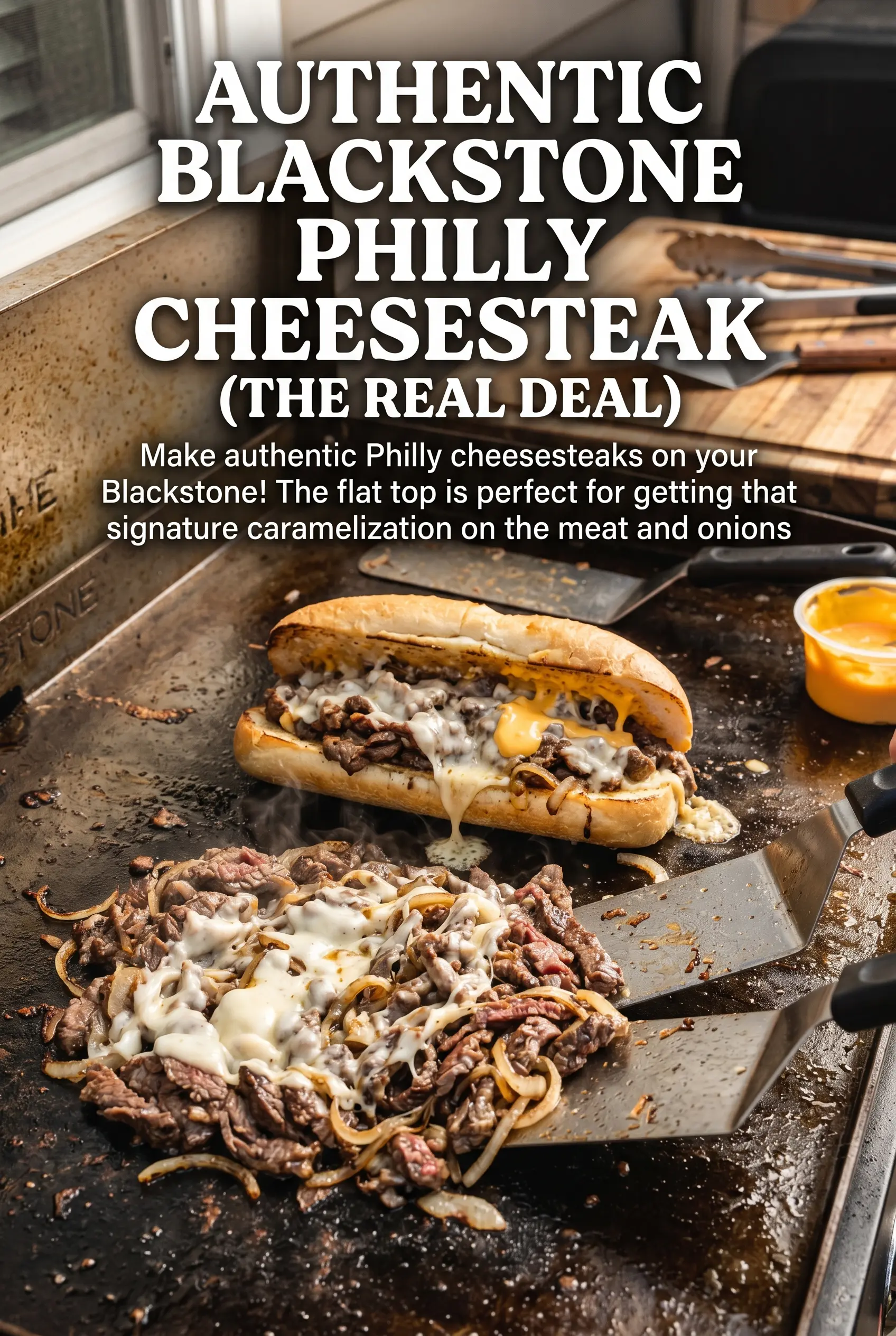
Thin-sliced ribeye, sweet onions, melted cheese, and a toasted hoagie roll hit all the right notes in a Blackstone Philly cheesesteak. The griddle gives you fast browning on the meat, soft caramelized vegetables, and just enough room to keep everything moving without crowding the pan. What you end up with is a sandwich that eats hot, juicy, and messy in the best way.
The trick here is spacing the work out across the griddle instead of piling everything together. Onions and peppers need enough contact with the surface to soften and pick up color, while the steak needs high heat and a quick chop so it stays tender instead of steaming. Ribeye carries the flavor, but the real payoff is the melted cheese pulling everything into one tight bite.
Below, I’ve added the small details that matter most: how thin to slice the steak, why the rolls should be toasted on the griddle, and what to do if you want the classic Cheez Whiz version instead of provolone.
The ribeye stayed tender and the onions got that perfect sweet edge without turning mushy. Toasting the rolls on the Blackstone made the sandwich hold together instead of going soggy.
Like this Blackstone Philly cheesesteak? Save it to Pinterest for the nights when you want a hot, cheesy sandwich with caramelized onions and a crisp toasted roll.
The Reason the Steak Stays Tender Instead of Turning Gray
The biggest mistake with a cheesesteak on a griddle is giving the steak too much time before the chop. Ribeye cooks fast, and once it hits the hot surface, the goal is browning on the outside while the inside stays juicy. If the meat sits in one thick layer too long, it steams and loses the loose, chopped texture that makes a cheesesteak feel right.
Working the steak in small batches keeps the griddle hot enough to sear. The onions and peppers should already be soft and deeply colored before the meat goes on, because they’ll finish quickly once the sandwich is being assembled. That sequencing matters more than most people think. It keeps the vegetables sweet, the steak hot, and the whole sandwich from becoming watery.
What Each Ingredient Is Actually Doing in This Sandwich
- Ribeye steak — This is the cut that gives you tenderness and flavor without extra effort. It has enough fat to stay juicy on the griddle, which leaner cuts can’t fully match. Slice it as thin as you can while it’s very cold; that makes it easier to chop fast when it hits the heat.
- Onions — They’re not just filler. As they caramelize, they bring sweetness that balances the salt and richness of the beef and cheese. Yellow onions work best, but white onions are fine if that’s what you have.
- Green bell peppers — They add the classic Philly-style bite and a little bitterness that keeps the sandwich from tasting one-note. If you skip them, the sandwich will still work, but it loses that familiar edge.
- Provolone or Cheese Whiz — Provolone gives you a cleaner melt and a slightly sharper finish; Cheese Whiz gives you the classic diner-style beefy richness. Both work, but don’t use a dry slicing cheese that won’t melt smoothly over the chopped steak.
- Hoagie rolls — The roll matters because it has to hold hot meat and melted cheese without collapsing. A soft roll with a little chew is ideal. Toasting the cut side in butter keeps the sandwich sturdy and adds a crisp edge.
How to Layer the Griddle Work So Everything Lands Hot
Softening the onions and peppers first
Heat the Blackstone to medium-high and add the oil, then get the onions and peppers down before anything else. They need the longest time on the surface, and you want them browned at the edges and soft all the way through, not limp and pale. If they start to scorch before they soften, the griddle is too hot in that spot, so slide them to a cooler area and keep moving them around.
Chopping the steak as it cooks
Season the ribeye with salt and pepper and spread it out on the hot surface. Let it brown for a moment before you start chopping, because if you break it up immediately, you lose the seared edges that give the sandwich its best texture. Work fast with two spatulas until the meat is no longer pink and the pieces are small enough to pile cleanly into the rolls.
Melting the cheese over the meat
Divide the steak into four portions and place the cheese directly on top. A little steam trapped by the hot meat helps the cheese melt smoothly. If it sits there and refuses to soften, the meat isn’t hot enough anymore, so keep the portions on the griddle for another minute instead of forcing it in the roll too soon.
Toasting the rolls and assembling fast
Butter the hoagie rolls and toast them cut-side down until they’re golden. This step keeps the bread from soaking through the second the meat goes in. Spoon in the steak, top with the onions and peppers, and serve immediately while the cheese is still stretchy and the roll still has some crunch.
Ways to Adjust the Sandwich Without Losing What Makes It Work
Classic provolone version
Use provolone if you want a cleaner, slightly sharper sandwich with a neat melt. It won’t give you the same saucy finish as Cheese Whiz, but it keeps the steak flavor front and center. This is the best choice if you want the sandwich to feel a little less heavy while still tasting authentic.
Cheese Whiz for the old-school version
Spoon warm Cheese Whiz over the chopped steak instead of layering slices of cheese. It gives you the creamy, salty, unmistakably Philly-style finish that many people expect from a cheesesteak. The sandwich will be messier, but that’s part of the appeal.
Gluten-free build
Swap in gluten-free hoagie rolls that can handle hot fillings without crumbling. Toast them well so they hold up better against the steak juices. The filling itself is already gluten-free, so the bread swap is the only real change.
Dairy-free version
Use dairy-free cheese slices that melt well, or skip the cheese and add a little extra oil for richness on the griddle. You’ll lose some of the classic stretch, but the beef, onions, and peppers still carry the sandwich. Choose a roll with good texture so the filling feels substantial without the cheese.
Storage and Reheating
- Refrigerator: Store the steak, vegetables, and rolls separately for up to 3 days. The filling holds fine, but the bread softens quickly once assembled.
- Freezer: The cooked steak mixture freezes well for up to 2 months. Freeze it without the rolls or cheese for the best texture, then thaw overnight in the fridge.
- Reheating: Reheat the steak and vegetables in a skillet or on the griddle over medium heat until hot. Don’t microwave the assembled sandwich unless you want soggy bread; toast fresh rolls and build it after the filling is hot.
Answers to the Questions Worth Asking
Authentic Blackstone Philly Cheesesteak
Ingredients
Equipment
Method
- Heat your Blackstone griddle to medium-high heat and add the oil. Let it warm until it looks shimmery.
- Cook the sliced onions and green bell peppers until caramelized, about 8-10 minutes. Move them to the side when they’re browned and tender.
- Season the thinly sliced ribeye with salt and pepper to taste. Spread the meat on the hot griddle in an even layer.
- Cook the steak for 3-4 minutes, chopping with spatulas as it cooks. Aim for browned edges and quick, hot cooking.
- Divide the steak into 4 portions and top each with the provolone cheese (or Cheese Whiz). Allow the cheese to melt for a few moments over the hot meat.
- Butter the hoagie rolls and toast them on the griddle until golden. Toast cut sides down to get crisp color.
- Scoop each steak portion with the onions and peppers into the toasted rolls. Serve immediately so the cheese stays melted.


