
These grilled garlic butter steak and shrimp kabobs land with the kind of sizzle that gets people moving toward the grill before you even call them to the table. The steak picks up a deep savory crust, the shrimp stay plump and tender, and the vegetables catch just enough char to balance the richness of the butter. Every bite gives you a little of everything: smoke, garlic, lemon, and that glossy finish that makes kabobs feel a little special without asking for much more than a hot grill.
The trick is keeping the garlic butter divided from the start. Half goes on as a quick marinade to season the steak and shrimp, and the other half stays clean for basting at the end, which keeps the finished kabobs bright instead of muddy. I also like to cut the steak into even pieces and thread the shrimp snugly, so everything cooks at the same pace and nothing dries out while you’re waiting for the rest of the skewer to catch up.
Below, I’ll walk through the small choices that matter here: which steak cuts hold up best, why shrimp should be peeled before grilling, and how to keep the butter from turning the whole thing greasy. The process is straightforward, but a few details make the difference between good kabobs and the kind people ask you to bring again.
The garlic butter soaked into the steak just enough, and the shrimp stayed juicy instead of turning rubbery. I loved that the reserved butter brushed on at the end kept everything shiny and flavorful without burning on the grill.
Save these grilled garlic butter steak and shrimp kabobs for the nights when you want surf and turf with smoky char and an easy garlic butter finish.
The Best Part Is Saving Half the Garlic Butter
The easiest mistake with butter-based kabobs is using the same mixture for marinating and finishing. Once raw steak and shrimp have sat in that butter, it’s no longer the clean, bright sauce you want to brush on at the end. Splitting it in half solves that problem and gives you two jobs for one mixture: seasoning before grilling and glossing the kabobs after they come off the heat.
That second portion matters more than people think. Fresh butter, lemon juice, and parsley keep the final flavor lively, while the marinating half picks up enough savory depth from the seafood and beef to do its job without wasting anything. If your kabobs taste heavy, it’s usually because all the butter went on too early and cooked down on the grill instead of finishing the dish.
What Each Ingredient Is Doing in These Kabobs
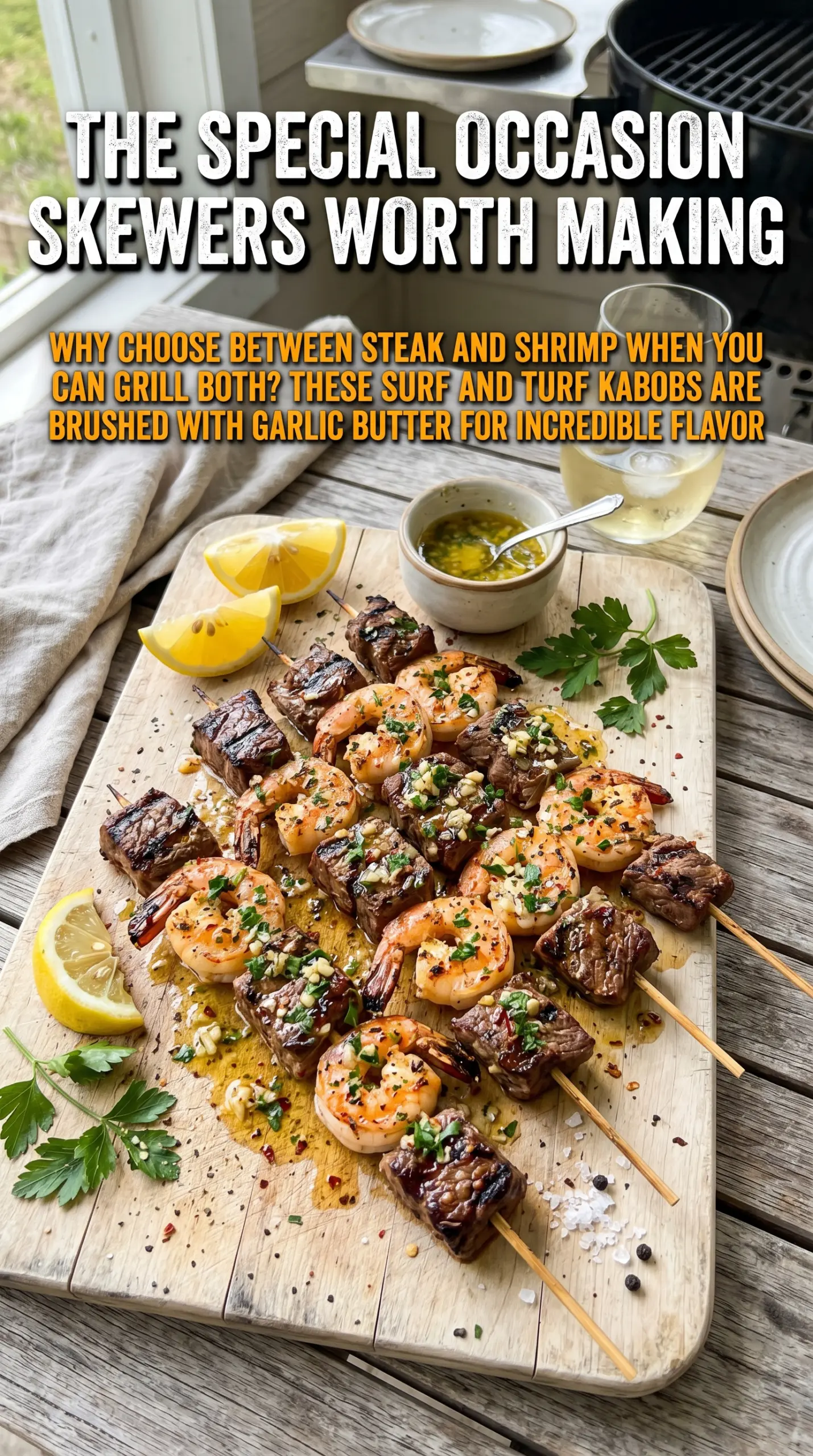
- Sirloin steak — Sirloin holds up well on skewers because it stays tender without falling apart. Cut it into even cubes so it reaches medium in the same window the shrimp turn opaque.
- Large shrimp — Use large shrimp if you can. They’re easier to skewer and less likely to overcook before the steak is done. Peel them first so the garlic butter can coat the meat directly.
- Butter — This carries the garlic, lemon, and herbs and gives the kabobs their finished shine. Real butter matters here; margarine won’t brown or taste the same, and the sauce won’t feel as rich.
- Lemon juice — A little acid keeps the butter from tasting flat and helps the shrimp pop on the palate. Don’t overdo it or the marinade starts to taste sharp instead of balanced.
- Bell peppers and onions — These add sweetness and a little char, which helps the kabobs feel complete. Cut them into pieces that are big enough to stay on the skewer and small enough to cook through in the same time as the meat.
- Metal or wooden skewers — Metal skewers conduct heat and help the center pieces cook a little faster. If you’re using wooden skewers, soak them long enough that the exposed ends don’t scorch on the grill.
Getting the Grill Timing Right So the Shrimp Stay Tender
Mixing the Garlic Butter
Stir the melted butter, garlic, parsley, lemon juice, salt, and pepper until everything looks evenly suspended, not separated into streaks. The garlic should be fine enough to cling to the meat without falling straight into the grill grates. If the butter starts to firm up while you work, warm it just enough to loosen it again, but don’t let it get hot enough to cook the garlic.
Marinating Without Overdoing It
Coat the steak and shrimp in half the butter mixture and let them sit for 30 minutes. That’s enough time for flavor to settle in without the shrimp turning soft from the acid or the seafood picking up a mushy texture. If you leave it much longer, the lemon starts doing more damage than good and the shrimp can go slightly tough on the outside before they ever hit the grill.
Threading for Even Cooking
Alternate the steak, shrimp, peppers, and onions so each skewer has a mix of ingredients, but don’t cram everything tightly together. A little space helps the heat circulate and gives you more caramelization instead of steaming. If the pieces are packed too close, the vegetables go limp before the meat gets any color.
Grilling and Basting at the End
Grill over medium-high heat for 3 to 4 minutes per side, brushing with the reserved garlic butter as the kabobs cook. Watch for the shrimp to turn pink and opaque and for the steak to pick up good grill marks without going gray and dry in the center. The final baste should happen near the end, not at the beginning, or the butter can flare up and burn before the kabobs are done.
How to Adapt These Kabobs Without Losing What Makes Them Work
Dairy-Free Version
Swap the butter for a good olive oil or a plant-based butter that melts cleanly. You’ll lose some of the classic richness, but the garlic, lemon, and parsley still carry the dish, and the kabobs will still grill beautifully without the dairy.
Steak-Only Kabobs
If you want to skip the shrimp, use extra steak and add more onion and pepper so the skewers still feel balanced. The cook time stays close, but you’ll want to pull them when the steak reaches your preferred doneness instead of waiting for seafood cues.
Gluten-Free as Written
These kabobs are naturally gluten-free as long as your butter and seasonings are plain. This is one of those cases where the best move is not to change anything, just check that any pre-mixed seasoning or garlic butter shortcut hasn’t added fillers.
Make-Ahead Skewers for a Crowd
You can cut the steak, clean the shrimp, and mix the butter earlier in the day, then assemble everything just before grilling. Keep the meat cold until it’s time to skewer so the shrimp stay firm and the steak doesn’t sit in the marinade longer than intended.
Storage and Reheating
- Refrigerator: Store leftovers in an airtight container for up to 2 days. The shrimp will lose a little of its just-grilled tenderness, so don’t expect the same texture the next day.
- Freezer: I don’t recommend freezing cooked kabobs. The shrimp turns watery and the vegetables go soft when thawed.
- Reheating: Warm them gently in a skillet over low heat with a small splash of water or extra butter, just until heated through. High heat will overcook the shrimp fast and make the steak tough.
Questions I Get Asked About This Recipe
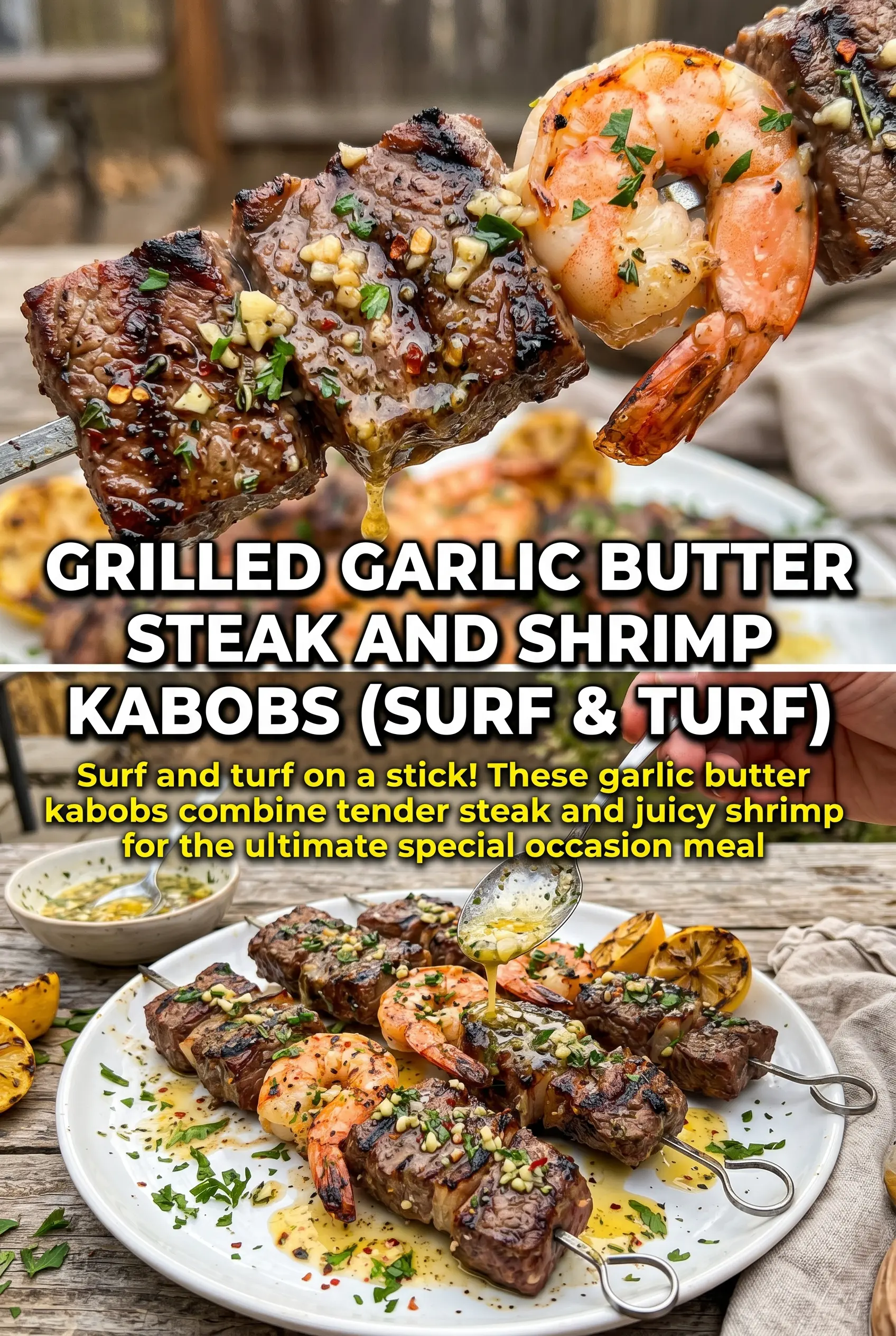
Grilled Garlic Butter Steak and Shrimp Kabobs
Ingredients
Equipment
Method
- In a bowl, mix melted butter, minced garlic, chopped parsley, lemon juice, salt, and pepper until evenly combined, then set the mixture aside.
- Reserve half of the garlic butter for basting and pour the remaining half into a dish with the cubed sirloin steak and peeled shrimp.
- Marinate the steak and shrimp for 30 minutes.
- Thread steak, shrimp, and bell peppers and onions alternately onto skewers, keeping pieces snug so they cook evenly.
- Grill the kabobs over medium-high heat for 3 minutes per side, basting with the reserved garlic butter until browned on the steak.
- Grill another 1 to 4 minutes per side, basting as needed, until shrimp turn pink and opaque.
- Serve immediately while the garlic butter is hot and the skewers are visually blistered and saucy.


