
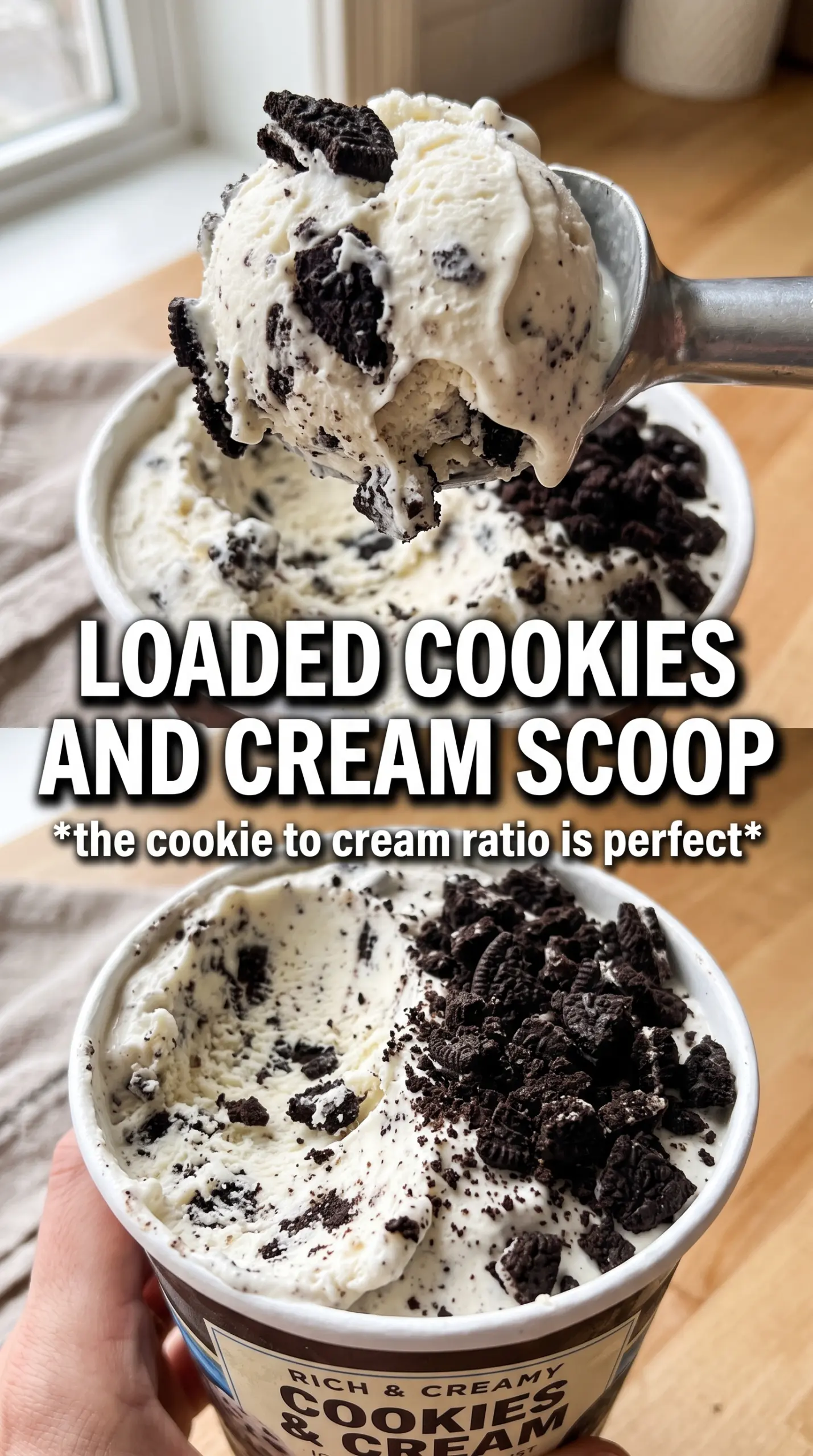
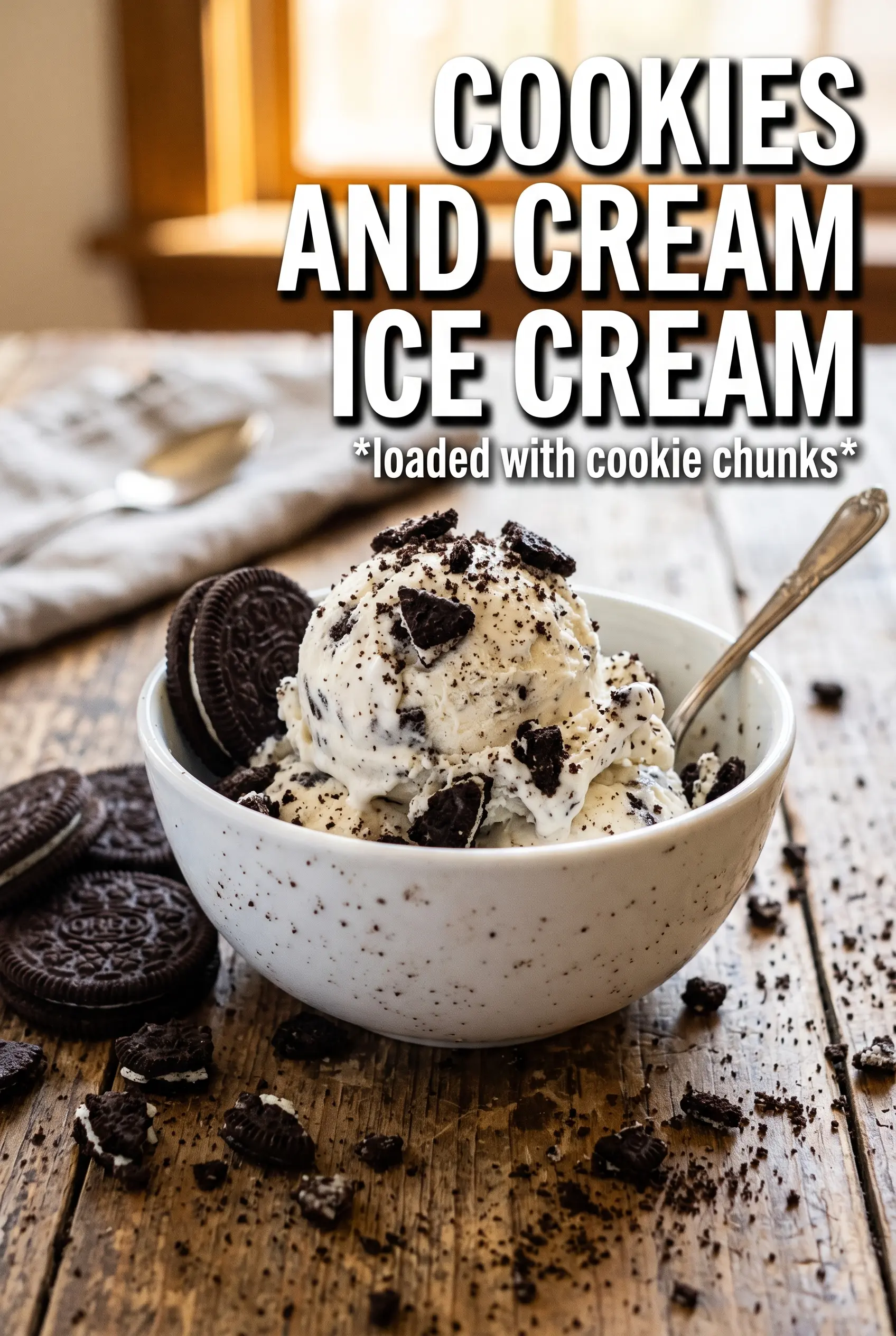
Cookies and cream ice cream hits the sweet spot between rich custard and crunchy cookie pieces, and the best versions keep both textures intact. The base should taste clean and creamy, not heavy, with enough vanilla to let the chocolate cookies stand out instead of disappearing into the background.
What makes this version work is the custard. Heating the dairy gently before whisking it into the egg yolks keeps the base smooth, and cooking it only to 175°F gives you body without scrambling the eggs. The cookies go in near the end of churning, which matters more than people think — add them too early and they turn muddy and lose that dark, crisp bite.
Below, I’ll show you the exact moment to stop cooking the custard, how to keep the cookie pieces from sinking, and a few smart swaps if you want to tweak the richness or make the recipe work with what you’ve got.
The custard came out silky and the cookie pieces stayed chunky instead of turning soggy. I chilled it overnight and the flavor was even better the next day.
Save this cookies and cream ice cream for the creamiest Oreo-packed scoops with real vanilla custard and big cookie chunks.
The Custard Window That Keeps This Ice Cream Smooth
Ice cream gets grainy when the custard cooks too fast or too hot. The eggs tighten up, the dairy separates a little, and you end up with a base that tastes cooked instead of creamy. The fix is slow heat and constant stirring, then pulling the pan as soon as the custard hits 175°F. That temperature gives you enough thickness for a scoopable freeze without crossing into scrambled territory.
The other mistake is skipping the strain. Even if the custard looks smooth in the pan, a fine-mesh sieve catches the tiny cooked bits that would otherwise show up later as little eggy flecks. This is a small step with a big payoff.
What Each Ingredient Is Actually Doing in the Bowl
- Heavy cream — This brings the lush texture and the fat content that keeps the ice cream from freezing into a block. Lower-fat cream won’t give the same plush mouthfeel.
- Whole milk — It lightens the base just enough so the finished ice cream doesn’t taste like frozen whipped cream. You can swap in 2% in a pinch, but the texture will be a little icier.
- Egg yolks — These thicken the custard and give the ice cream its smooth body. There isn’t a true one-to-one substitute here if you want this classic custard texture.
- Vanilla extract — Vanilla does more than flavor the base; it softens the chocolate-cookie edge and makes the whole dessert taste rounded instead of one-note. Use the good stuff if you have it.
- Chocolate sandwich cookies — Roughly crush them, don’t powder them. You want a mix of shards and chunks so the ice cream has actual cookie bites instead of gray streaks.
How to Build the Base Without Curdling the Eggs
Warming the Dairy
Heat the cream and milk until they’re steaming and small bubbles form around the edge, then take the pan off the heat. You’re not trying to boil it. Hot dairy helps temper the yolks gradually, which keeps them from seizing into little bits when they hit the pan.
Tempering and Thickening
Whisk the sugar into the yolks until they look lighter and a little thick, then add the hot dairy slowly in a thin stream while whisking constantly. Once it’s all combined, return everything to the saucepan and stir over medium-low heat until it coats the back of a spoon and reads 175°F. If you rush this over high heat, the bottom sets first and the custard turns lumpy before you know it.
Cooling Before Churning
Strain the custard, stir in the vanilla and salt, then cool it completely before it goes into the ice cream maker. Warm base in the machine takes longer to freeze and usually traps a softer, less stable structure. A full chill in the fridge for at least 4 hours gives you a cleaner churn and better cookie distribution later.
Adding the Cookies at the End
Fold in the crushed cookies during the last couple of minutes of churning, when the ice cream is already thick and nearly done. That timing keeps some pieces intact while letting a few soften just enough to streak the base. If you add them at the beginning, they sink, break down too far, and muddy the whole batch.
Extra-Chunky Cookie Swirls
Crush the cookies by hand or in a bag with a rolling pin so you get uneven pieces instead of crumbs. The bigger chunks stay distinct in the finished ice cream and give you that classic cookies-and-cream bite.
No Egg Yolks Version
Use a no-churn base with sweetened condensed milk and whipped cream if you want to skip the custard step. The result is lighter and a little sweeter, but you’ll lose the rich, scoop-shop texture that egg yolks give this version.
Dairy-Free Cookies and Cream
Swap in full-fat coconut milk and a dairy-free cookie that doesn’t contain milk solids. The texture will be a little softer and the coconut will show through, but it still churns into a creamy, scoopable dessert.
Storage and Reheating
- Refrigerator: The base can be chilled up to 2 days before churning, but once frozen, store the ice cream in the freezer. If it sits out too long in the fridge after churning, it will melt unevenly and refreeze icy.
- Freezer: Store in an airtight container for up to 2 weeks for the best texture. Press a piece of parchment directly on the surface to reduce ice crystals.
- Reheating: Let it sit at room temperature for 5 to 10 minutes before scooping. If it’s rock hard, the base was likely over-frozen or stored with too much air exposure.
Questions I Get Asked About This Recipe
Cookies and Cream Ice Cream
Ingredients
Equipment
Method
- In a saucepan, heat the heavy cream and whole milk until steaming, not boiling.
- In a bowl, whisk the egg yolks with the granulated sugar until smooth, then slowly whisk in the steaming cream-milk mixture.
- Return the mixture to the saucepan and cook over medium-low heat, stirring constantly, until the custard reaches 175F.
- Strain the custard through a fine mesh sieve, then stir in the vanilla extract and salt.
- Let the custard cool completely, then refrigerate for at least 4 hours.
- Churn the chilled custard in an ice cream maker according to the manufacturer’s instructions until thickened to soft-serve consistency.
- In the last 2 minutes of churning, add the roughly crushed chocolate sandwich cookies, so some stay chunky and some dissolve slightly for a cookies-and-cream swirl effect.
- Transfer the ice cream to a container and freeze until firm, about 4 hours (or until scoopable).


