
Golden-seared Greek chicken tenders land on the plate with the kind of bright, savory crust that keeps you reaching for one more piece. The lemon, oregano, and garlic cling to the chicken instead of sliding off, and the quick stovetop sear gives you browned edges without drying out the center. Served over cool tzatziki, they taste fresh and substantial at the same time.
What makes this version work is the balance in the marinade. Lemon juice and zest wake up the chicken, but there’s enough olive oil to carry the herbs and help the spices bloom in the pan. A short 20-minute rest is enough here; if you push the marinating time too long, the lemon starts to tighten the meat instead of seasoning it gently. The result is chicken that cooks fast, stays juicy, and still tastes like it had time to think about what it was doing.
Below, I’ve included the little details that matter most: how to keep the tenders from steaming in the skillet, which serving add-ins make the plate taste complete, and what to change if you want to turn this into a full meal with pita on the side.
The marinade gave the chicken that lemon-oregano punch, and the tenders stayed juicy even after a fast sear. I served them over tzatziki with cucumber and feta, and the whole pan disappeared.
Save these Greek chicken tenders for a fast lemon-oregano dinner with crisp edges and creamy tzatziki.
The Trick to Keeping Greek Chicken Tenders Juicy Instead of Bland
The biggest mistake with chicken tenders is treating them like they need a long soak to pick up flavor. They don’t. The lemon and garlic in this marinade work fast, and 20 minutes is enough to season the meat without turning the outside chalky or mushy. Past that point, the acid starts to do more textural damage than good.
Another thing that matters here is heat. A skillet that’s barely warm will give you pale chicken and a pan full of liquid, which is how the tenders end up steaming instead of searing. You want the chicken to hit a properly hot pan and sizzle the second it lands. That’s what locks in the juices and gives the oregano and paprika something to cling to.
- Short marinade time — keeps the tenders tender while still giving the lemon and herbs time to penetrate.
- Smoked paprika — adds warmth and color without pushing the dish away from that classic Greek-style profile.
- Medium-high heat — builds a browned crust fast enough that the chicken stays juicy inside.
- Don’t crowd the pan — space between the pieces lets moisture cook off instead of collecting under the chicken.
What Each Ingredient Is Actually Doing in These Greek Chicken Tenders
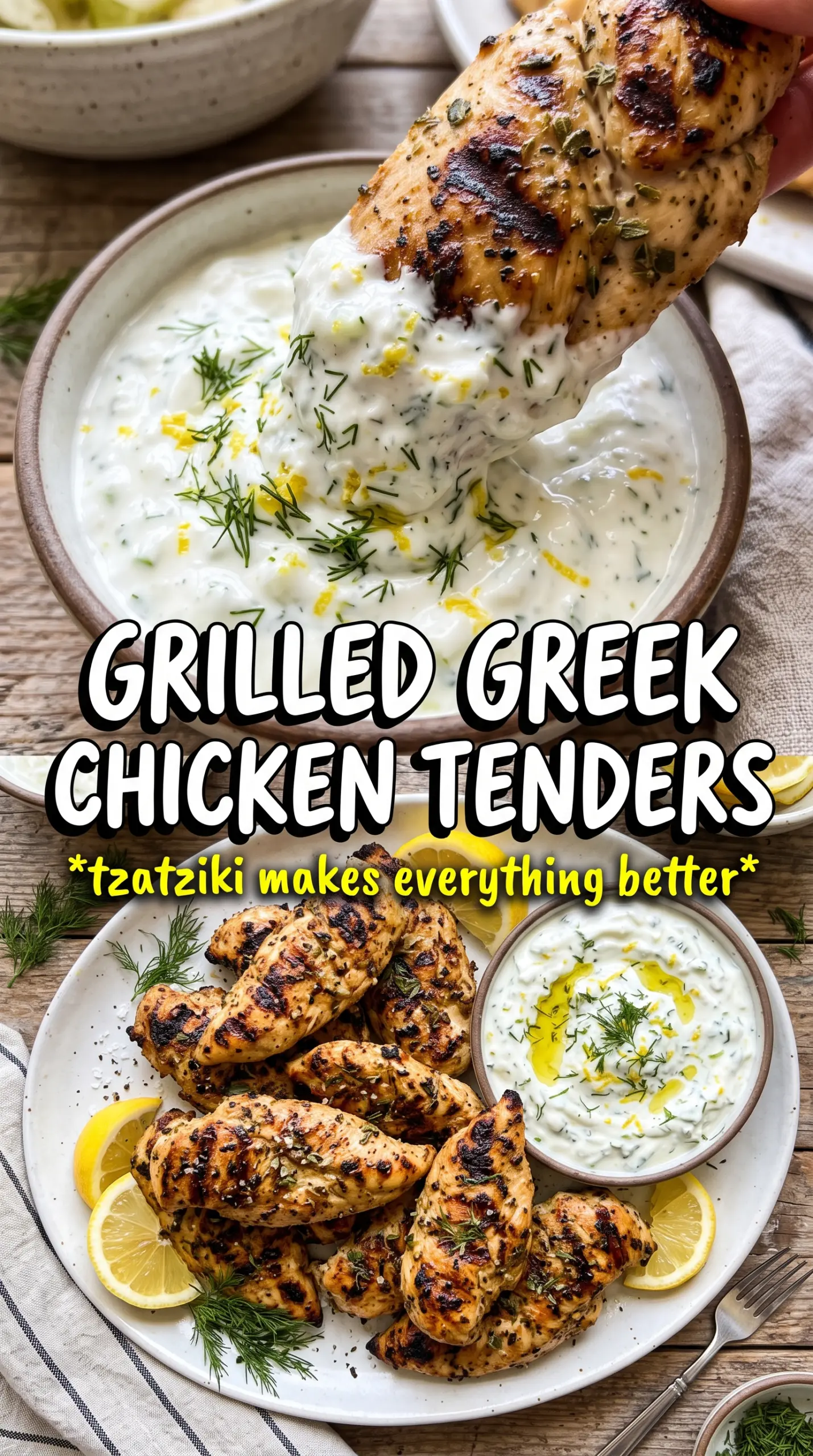
- Chicken tenders — They cook quickly and stay naturally tender, which makes them ideal for a fast marinade and high-heat sear. If you substitute chicken breasts, slice them into even strips so they cook at the same rate.
- Olive oil — It carries the garlic and herbs, helps the marinade coat every piece, and keeps the surface from drying out in the pan. Use a decent olive oil here; you’ll taste it.
- Lemon juice and zest — Juice brings the brightness, while zest gives you the louder lemon flavor without extra acid. Skipping the zest makes the marinade taste flatter.
- Oregano, paprika, and cumin — Oregano is the Greek backbone, paprika adds color and a little smoke, and cumin gives the marinade depth. You can leave out the cumin if you want a cleaner herb-forward flavor, but don’t skip the oregano.
- Tzatziki, feta, olives, cucumber, and dill — These aren’t just garnish. They turn the chicken into a complete plate with cool, salty, creamy contrast against the hot seared meat.
How to Sear the Marinade Without Burning the Garlic
Let the Chicken Drain a Little First
Pull the tenders out of the marinade and let the excess drip off before they hit the pan. If you dump in all the liquid, the skillet will flood and the garlic will scorch before the chicken has a chance to brown. A light coating is enough. You want flavor clinging to the surface, not a puddle under the meat.
Get the Pan Hot Before the Chicken Goes In
Heat the skillet over medium-high until a drop of water flicks and sizzles on contact. Add just a little olive oil, then lay the tenders in with space between each piece. If they’re touching, they’ll release steam and lose that crust you’re after. Listen for an immediate steady sizzle; that sound is your cue that the pan is doing its job.
Cook Until the Edges Brown and the Center Is Just Done
Three to four minutes per side is usually enough, depending on the thickness of the tenders. Flip when the bottom releases easily and shows a deep golden color with a few darker spots. If the chicken sticks hard, give it another 30 seconds; it’s not ready to turn yet. Pull it at 165°F in the thickest part and rest it briefly so the juices settle instead of running all over the cutting board.
How to Adapt These Greek Chicken Tenders for Different Nights
Dairy-Free Plate, Same Bright Finish
Skip the feta and use extra tzatziki only if it’s dairy-free. The chicken itself is already dairy-free, so this version changes almost nothing about the cooking method. You still get the same lemon-herb sear and a cool creamy contrast on the side.
Keto-Friendly Serving Style
Serve the chicken over cucumber ribbons, chopped lettuce, or a tomato-cucumber salad instead of pita. Tzatziki, olives, and feta still fit beautifully, so you don’t lose the Greek feel. The result is lighter, but the flavor stays the same.
Chicken Breast Swap
Use boneless chicken breasts sliced into narrow strips so they cook at the same pace as tenders. Breasts need close attention because they go from juicy to dry fast, so start checking early. The marinade still works, but the sear window is narrower.
Make It a Full Pita Night
Warm pita, sliced cucumber, tomato, red onion, and extra tzatziki turn this from a fast main dish into a build-your-own dinner. The chicken stays the anchor, but the vegetables soften the salt and smoke and make each bite feel fuller. This is the best move when you want dinner to look like more than the 15 minutes it took to cook.
Storage and Reheating
- Refrigerator: Store the cooked chicken in an airtight container for up to 4 days. It stays juicy, though the crust softens a little in the fridge.
- Freezer: Freeze the cooked tenders for up to 2 months. Wrap them tightly and freeze in a single layer first so they don’t stick together.
- Reheating: Reheat in a skillet over low heat with a small splash of water or olive oil, or warm in a 300°F oven until just heated through. High heat dries out the chicken fast and can make the garlic taste harsh.
Answers to the Questions Worth Asking
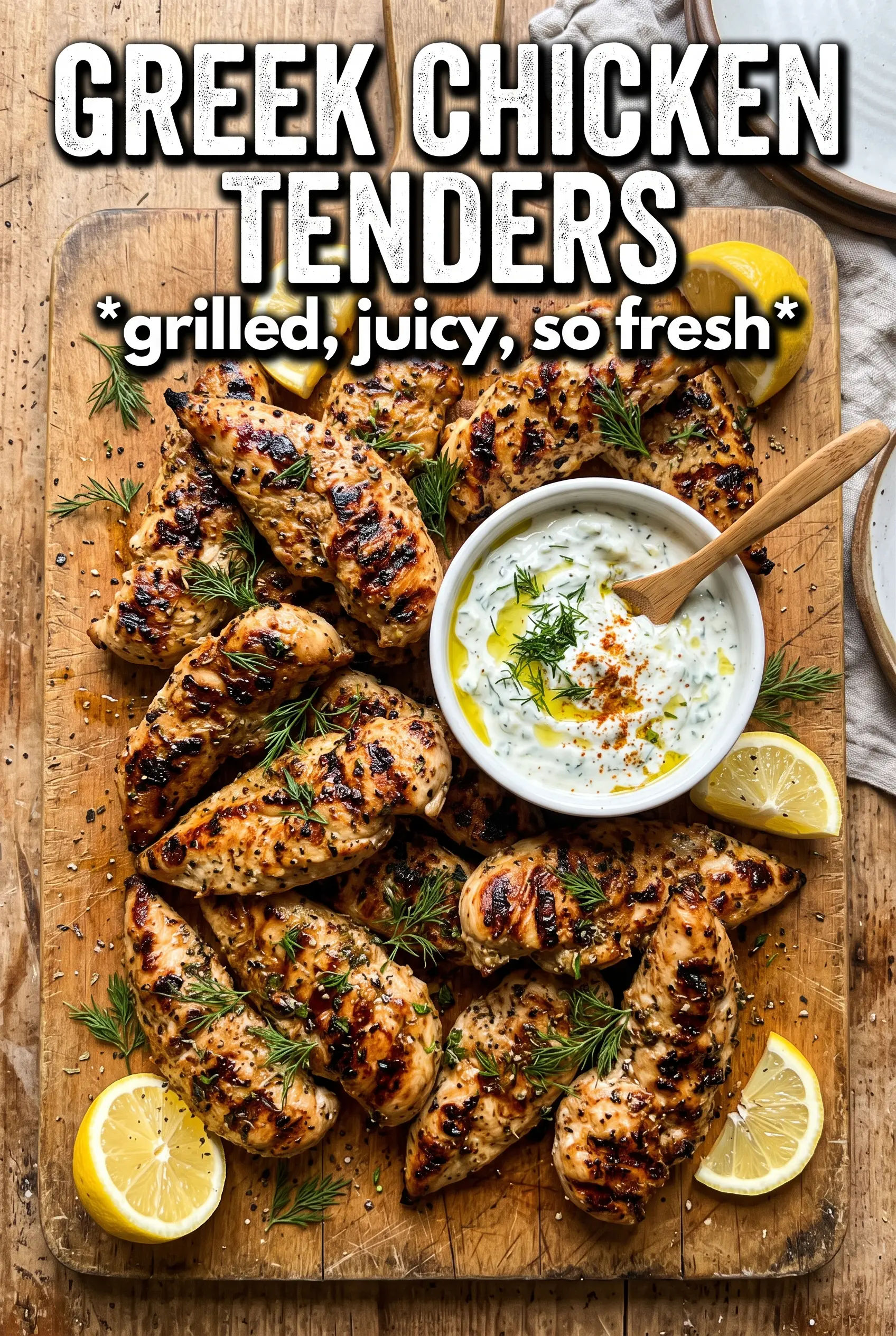
Greek Chicken Tenders
Ingredients
Equipment
Method
- Whisk together olive oil, lemon juice, lemon zest, garlic, dried oregano, smoked paprika, cumin, salt, and pepper until evenly combined, then toss chicken tenders in the marinade.
- Cover and rest the marinated chicken for 20 minutes to let the herb-lemon coating cling and season through.
- Heat a large skillet or grill pan over medium-high heat and add a drizzle of olive oil.
- Cook chicken tenders for 3-4 minutes per side until golden, flipping once, and continue until the internal temperature reaches 165°F.
- Spread tzatziki on a serving platter and arrange the chicken tenders over the top.
- Scatter crumbled feta, Kalamata olives, cucumber slices, and fresh dill around the chicken for a bright, fresh finish.
- Serve with warm pita and lemon wedges on the side.


