
Golden-seared chicken under a pile of buttery onions, mushrooms, and melted Monterey Jack hits that steakhouse comfort note without needing a reservation. The chicken stays juicy because it gets a hard sear first, then finishes under the broiler just long enough to melt the cheese and pull everything together into one pan.
What makes this version work is the order. The chicken sears before the vegetables go in, which gives you a deep browned base instead of gray, steamed meat. The onions cook long enough to turn sweet and jammy, and the mushrooms pick up all that flavor from the same skillet. A quick deglaze keeps the pan from drying out and lifts every browned bit into the sauce, which is exactly where the best flavor lives.
Below, I’ll show you how to keep the chicken from overcooking under the broiler, which cheese melts best here, and the one swap that still gives you that restaurant-style finish if you want to skip the whiskey.
The onions turned sweet and the cheese got bubbly without the chicken drying out. I used broth instead of whiskey and it still tasted like something I’d order at a restaurant.
Save this Texas Roadhouse Smothered Chicken Copycat for the nights when you want seared chicken, caramelized onions, and melted Jack cheese in one skillet.
The Sear Comes First, or the Chicken Turns Watery
Texas Roadhouse-style smothered chicken depends on contrast: browned chicken, soft onions, juicy mushrooms, and cheese that melts over the top instead of sinking into a soupy pan. If you cook the vegetables first, they release moisture before the chicken ever hits the skillet, and the whole dish loses that restaurant-style finish.
The other place people trip up is heat control. The chicken needs enough heat to brown, but the onions and mushrooms need a gentler medium heat so they soften instead of scorching. Once the cheese goes on, the broiler finishes the job fast; leave it in too long and the chicken keeps cooking while the cheese turns oily.
- Chicken breasts — Pounding them to an even thickness helps them cook at the same rate, which keeps the thinner end from drying out before the thicker part is done.
- Cajun or steak seasoning — This does more than add flavor; it builds the salty, savory crust that gives the chicken a steakhouse feel. If your blend is heavy on salt, season lightly with extra salt later.
- Monterey Jack — This melts smoothly and gives you that soft, stretchy top layer. Cheddar will work, but it sets firmer and tastes sharper.
- Whiskey or broth — The splash in the pan loosens the browned bits and keeps the mushroom-onion mixture from tasting flat. Broth is the easiest swap, and it still gives you a savory finish without the alcohol.
What Each Ingredient Is Actually Doing in This Recipe

- Primary ingredient (the star) — Quality matters most. Choose the best you can find.
- Cooking medium (oil, butter, or broth) — This carries flavors and prevents dryness.
- Seasonings (salt, pepper, spices, herbs) — Layer flavors so nothing overpowers. Build depth gradually.
- Aromatics (garlic, onion, herbs) — Cook with fat to bloom flavors. Become the foundation.
- Supporting ingredients — Complement the main ingredient without overpowering it.
- Sauce or liquid (if applicable) — Brings flavors together. Balance richness with acid.
- Acid (lemon, vinegar, wine, or other) — Brightens and prevents flat-tasting results.
- Final finish (garnish, glaze, or sauce) — Prevents one-dimensional taste and adds visual appeal.
Building the Smothered Topping Without Turning It Soggy
Getting a Proper Sear
Season the chicken generously, then sear it in hot olive oil in an oven-safe skillet until the outside is deeply browned and the center is still underdone. Those 5 to 6 minutes per side matter because they build the flavor base for the whole dish. If the pan is crowded, the chicken steams instead of searing, so cook in batches if needed.
Softening the Onions the Right Way
Use the same skillet and add the butter, then cook the onions over medium heat until they turn golden and sweet. This takes patience; rushed onions stay sharp and watery, which makes the topping slip off the chicken instead of clinging to it. Stir often enough to keep them moving, but let them sit long enough between stirs to pick up color.
Mushrooms, Garlic, and the Deglaze
Once the onions are deepened, add the mushrooms and garlic and cook until the mushrooms release their moisture and start to brown. Pour in the whiskey or broth and scrape the bottom of the pan until the dark bits dissolve into the liquid. If the pan looks dry after that, you haven’t deglazed enough; those browned streaks are the flavor you want in the final bite.
Cheese and Broiler Finish
Return the chicken to the skillet, spoon the topping over each breast, and lay the Monterey Jack slices across the top. Slide the pan under the broiler just until the cheese melts, bubbles, and gets a few golden spots. Watch it closely here, because the difference between perfectly smothered and overcooked is less than a minute.
How to Adapt This Copycat When You Need a Different Finish
Use broth instead of whiskey
Broth gives you the same pan-deglazing effect without the alcohol. The flavor lands a little cleaner and less bold, but the mushrooms and onions still pick up the browned bits from the skillet.
Make it dairy-free
Use a dairy-free butter alternative for the onions and swap in a good melty dairy-free cheese. The topping won’t brown quite the same way, but the seared chicken and caramelized vegetables still carry the dish.
Turn it into a gluten-free plate
This recipe is naturally gluten-free as written if your Cajun or steak seasoning is certified gluten-free. The only thing that tends to hide gluten here is the seasoning blend, so check the label before you start.
Swap the cheese for a sharper finish
Provolone or a mild white cheddar changes the dish from mellow and creamy to a little more pronounced. That sharper cheese tastes great, but it doesn’t melt as loosely as Monterey Jack, so the top will set a bit firmer.
Storage and Reheating
- Refrigerator: Store leftovers in an airtight container for up to 3 days. The cheese softens and the onions loosen a bit, but the flavor holds up well.
- Freezer: You can freeze it, but the mushrooms and cheese both change texture a little. Freeze the chicken and topping together for up to 2 months, then thaw in the fridge before reheating.
- Reheating: Warm it covered in a 325°F oven until heated through, then uncover for the last few minutes so the cheese loosens again. The biggest mistake is blasting it in the microwave, which makes the chicken rubbery and the topping watery.
Answers to the Questions Worth Asking
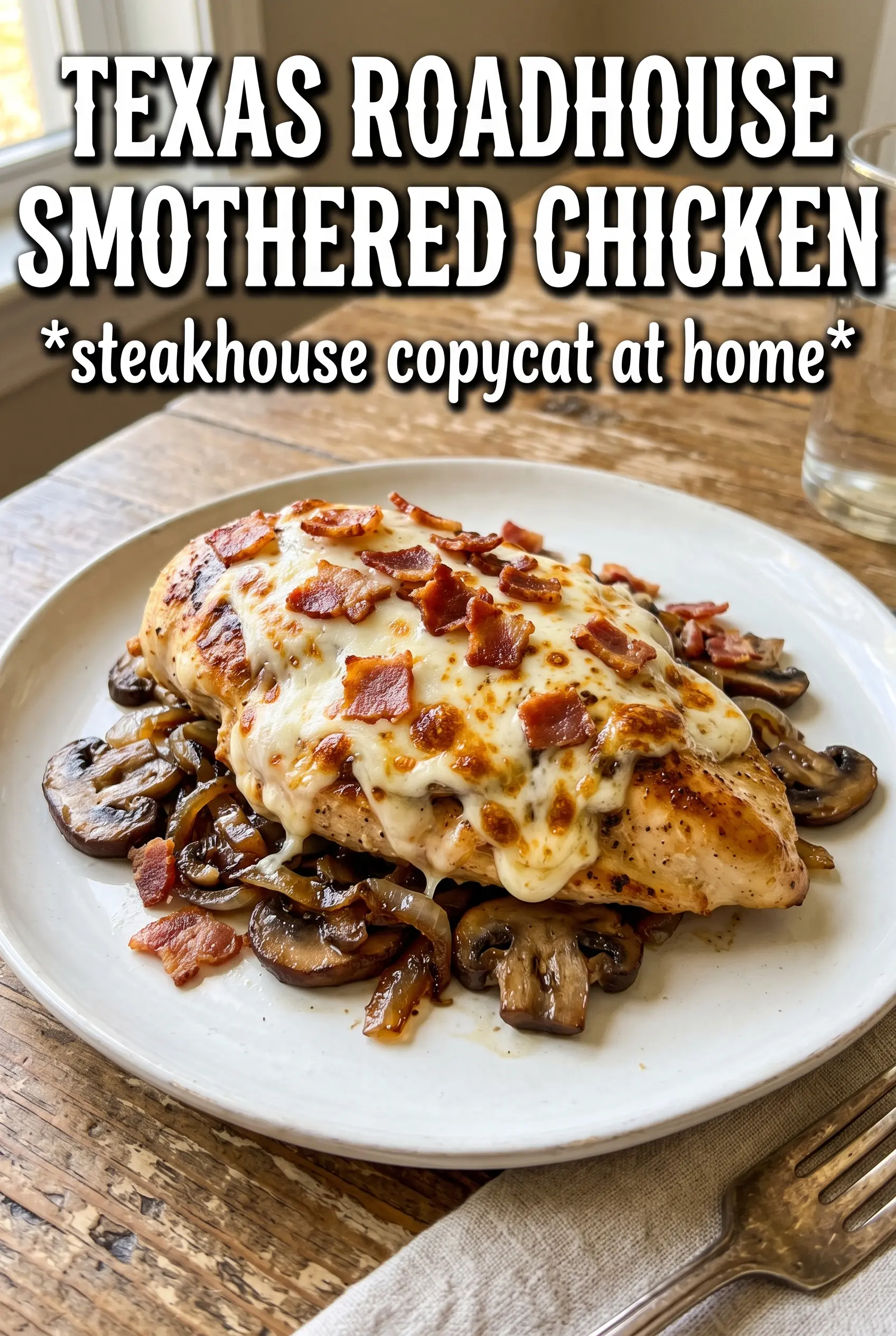
Texas Roadhouse Smothered Chicken Copycat
Ingredients
Equipment
Method
- Season the chicken generously with Cajun seasoning; heat olive oil in an oven-safe skillet over medium-high heat and sear until golden, 5-6 minutes per side, until the internal temperature reaches 165°F. Remove the chicken from the pan when done.
- Melt the butter in the same pan, then cook the sliced onions over medium heat until deeply caramelized, 8-10 minutes, stirring occasionally. The onions should look dark golden and soft.
- Add the mushrooms and minced garlic and cook until golden, 4-5 minutes. Pour in the whiskey or chicken broth to deglaze, then season with salt and pepper.
- Return the chicken to the pan and top each breast with the mushroom and onion mixture. Lay 2 slices of Monterey Jack cheese over each breast so it covers the top.
- Broil until the cheese is melted, bubbly, and golden, 2-3 minutes. Keep an eye on it so the cheese browns without burning.
- Garnish with fresh parsley and serve right away. The smothered topping should be hot and glossy from the melted cheese.


