
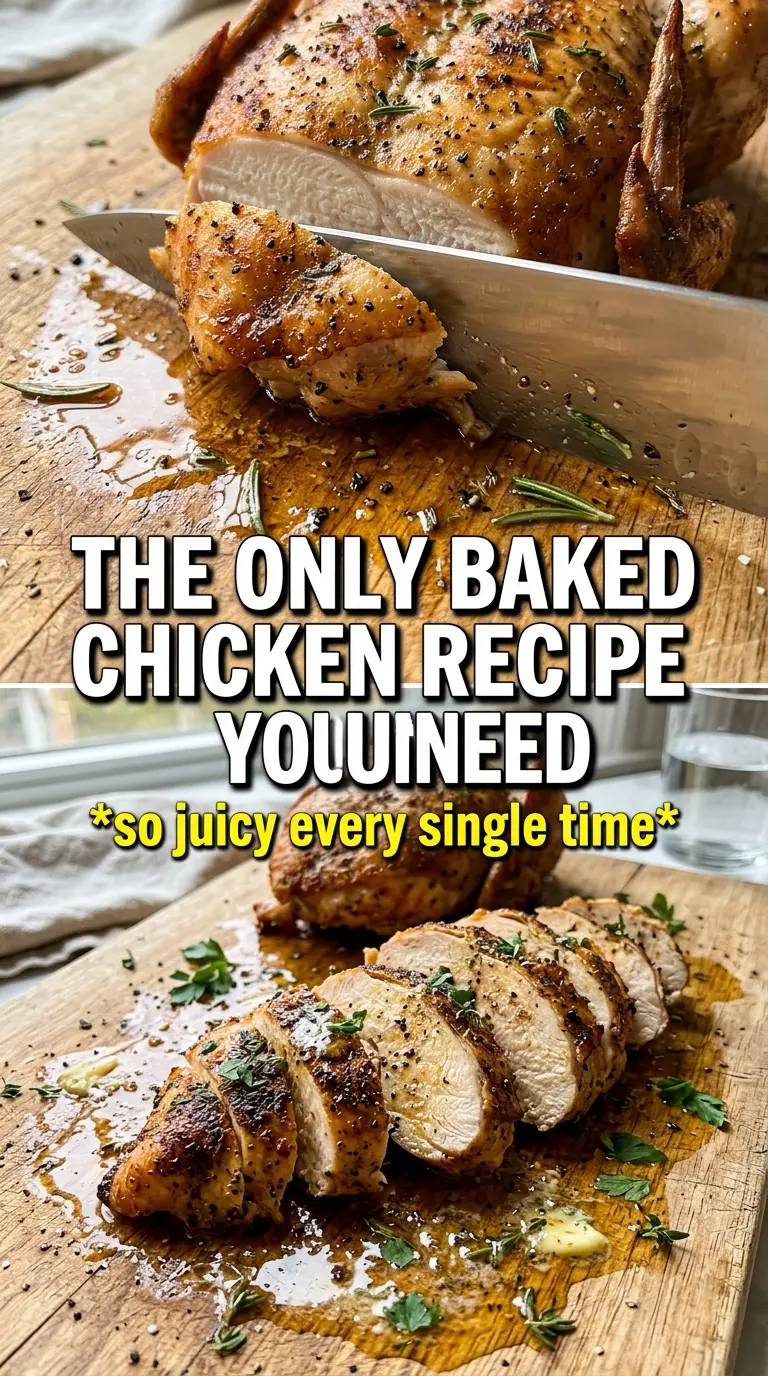
Golden baked chicken breasts are at their best when the crust is fragrant and lightly caramelized but the center still stays juicy enough to slice without shedding all its moisture onto the board. This version lands in that sweet spot because the chicken gets pounded to an even thickness, coated with oil, and baked hot enough to color the spices without drying out the meat.
The real difference here is the balance of heat and timing. A 425°F oven gives the seasoning a chance to toast, but the chicken still finishes fast enough to stay tender. Smoked paprika brings color and a little depth, while garlic powder, onion powder, and Italian seasoning build a savory crust that tastes like more work than it actually is.
Below, I’ll show you the simple checks that matter most: how thick the chicken should be, what the top should look like when it’s done, and how to avoid the one mistake that makes baked chicken breast turn stringy instead of juicy.
The seasoning actually stayed on the chicken and the edges turned golden instead of drying out. I pulled mine right at 165 and it was still juicy after the rest.
Like this juicy baked chicken breasts recipe? Save it to Pinterest for an easy oven chicken dinner with a golden herb crust.
The Part Most People Miss When Baking Chicken Breasts
The biggest reason baked chicken breasts turn dry isn’t the oven alone. It’s uneven thickness. The thinner ends race ahead while the thick center is still catching up, so by the time the middle is safe, the edges have already lost too much moisture. Pounding the chicken to an even 3/4-inch thickness fixes that problem before it starts.
High heat helps here, but the real goal is controlled browning without lingering in the oven. Once the chicken hits 165°F in the thickest part, pull it out. If you keep baking until it looks deeply browned all over, the juices will have already moved out of the meat and onto the pan.
- Even thickness — This matters more than anything else. A consistent shape gives you one finish line instead of one end overcooking while the other catches up.
- Olive oil — It helps the seasoning cling and encourages the spices to toast on the surface instead of drying into dust.
- Smoked paprika — This gives the chicken color and a deeper savory note. Regular paprika works in a pinch, but you’ll lose some of the warm, smoky edge.
- Fresh parsley and lemon — They’re not just garnish. A squeeze of lemon wakes up the seasoned crust and cuts through the richness of the oil.
What Each Seasoning Is Doing on the Chicken
Chicken breasts — Use boneless, skinless breasts of similar size so they cook at the same pace. If one is much thicker than the others, butterfly it or pound it down.
Garlic powder and onion powder — These season the meat evenly without adding moisture that can steam the surface. Fresh garlic can burn at this bake time, so powder is the right tool here.
Italian seasoning — This gives you a built-in herb blend without having to measure multiple dried herbs. If yours is old and dull, replace it; dried herbs lose their punch faster than most people realize.
Salt and black pepper — Salt pulls the whole crust together and helps the chicken taste seasoned all the way through. Pepper adds a little bite on the finish, especially when it catches in the browned edges.
How to Get a Golden Crust Without Drying Out the Chicken
Preheating and Pan Prep
Set the oven to 425°F before you do anything else so the chicken goes into a fully heated oven. A lightly greased baking dish helps the seasoning stay on the meat instead of sticking behind, and it makes cleanup easier after the juices caramelize. If the pan is crowded, the chicken will steam, so leave a little space around each piece.
Seasoning the Surface
Brush both sides with olive oil, then rub the spice mixture over the chicken in an even layer. You want a thin coating, not a paste. If the seasoning looks patchy, it usually means the chicken was still damp or the oil wasn’t spread far enough. Dry the breasts first with paper towels and the crust will set more cleanly.
Baking to the Right Temperature
Bake for 18 to 22 minutes, depending on thickness, and start checking early if your breasts are on the smaller side. The top should look golden and the juices should run clear, but the real answer is the internal temperature in the thickest part. Pull the chicken when it reaches 165°F, not after it has sat there for several more minutes.
The Rest That Keeps the Juices Inside
Let the chicken rest for 5 minutes before slicing. This gives the juices time to settle back into the meat instead of flooding the cutting board. If you slice too soon, even perfectly cooked chicken can seem dry because all the moisture runs out at once.
How to Adapt This for Different Nights at the Table
Dairy-Free and Naturally Gluten-Free
This recipe already fits both of those needs without any changes. The seasoning blend is just spices, herbs, oil, and chicken, so there’s no flour, breadcrumbs, butter, or dairy to work around. That makes it a useful base recipe when you need dinner to stay simple and still feel complete.
Make It Spicier
Add 1/4 to 1/2 teaspoon cayenne to the spice mix, or use hot smoked paprika if you want heat with a little extra depth. The chicken still bakes in the same time, but the finish will be warmer and more assertive, especially if you serve it with lemon.
Using Chicken Thighs Instead
Boneless, skinless thighs work well and stay juicy, but they need a longer bake and won’t have quite the same lean, sliced look. Start checking around 25 minutes and cook until they reach 165°F in the thickest part. The seasoning formula stays the same.
Storage and Reheating
- Refrigerator: Store in an airtight container for up to 4 days. The crust softens a bit, but the chicken stays useful for salads, wraps, or a fast dinner.
- Freezer: Freezes well for up to 2 months. Slice or portion it first, wrap tightly, and thaw overnight in the refrigerator for the best texture.
- Reheating: Warm gently at 300°F covered with foil, or reheat in short bursts in the microwave with a splash of broth. High heat is the fastest way to turn leftover chicken stringy.
Questions I Get Asked About This Recipe

Baked Chicken Breasts
Ingredients
Equipment
Method
- Preheat oven to 425°F and lightly grease a baking dish with a thin film of oil.
- Pound chicken breasts to an even 3/4-inch thickness if they vary in size, so they bake uniformly.
- Brush both sides of each chicken breast with olive oil to help the herbs caramelize.
- Mix together garlic powder, onion powder, smoked paprika, Italian seasoning, salt, and cracked black pepper, then rub evenly over both sides of the chicken.
- Bake for 18-22 minutes at 425°F until internal temperature reaches 165°F and the tops are golden; do not overbake.
- Rest baked chicken breasts for 5 minutes before slicing to keep the juices from spilling out.
- Garnish with fresh parsley and lemon wedges and serve while hot.


