
Butternut squash casserole lands on the table with a soft, spoonable center and a pecan topping that crackles under the fork. The filling turns smooth and custardy instead of watery, and the brown sugar-cinnamon layer gives it that classic Southern side dish sweetness without pushing it into dessert territory. It’s the kind of casserole that disappears fast, especially when the topping bakes into a deep golden crumble and the edges bubble up around the pan.
The part that matters most is drying the squash after boiling. Butternut squash holds onto water, and if you skip that extra minute of draining and steam-off time, the casserole turns loose instead of rich and creamy. The other smart move is keeping the topping crumbly, not paste-like, so the butter can melt through the flour and pecans into a crisp layer rather than sinking into the filling.
Below, I’ll walk through the little details that keep the texture right, plus a few ways to adapt it if you need a different nut, a lighter finish, or a make-ahead side dish for a bigger meal.
The squash baked up creamy instead of watery, and the pecan topping stayed crisp even after sitting on the table for a bit. That brown sugar and cinnamon combo was spot on.
Save this butternut squash casserole for the side dish with the creamy center and crunchy pecan streusel.
The Trick to Keeping Butternut Squash Casserole Creamy Instead of Watery
Most squash casseroles go wrong before they ever reach the oven. The squash gets boiled, drained for a second, then mashed while it’s still carrying a lot of surface moisture. That extra water thins the custard base and keeps the casserole from setting into that plush, scoopable texture you want.
The fix is straightforward: drain the squash until no liquid is pooling in the bottom of the pot, then let the steam escape for a minute or two before mashing. The eggs help the filling set, but they can only do their job if the squash base isn’t diluted. You’re aiming for a thick mash that holds a spoon for a moment before settling back into itself.
What the Butter, Brown Sugar, and Pecans Are Really Doing Here
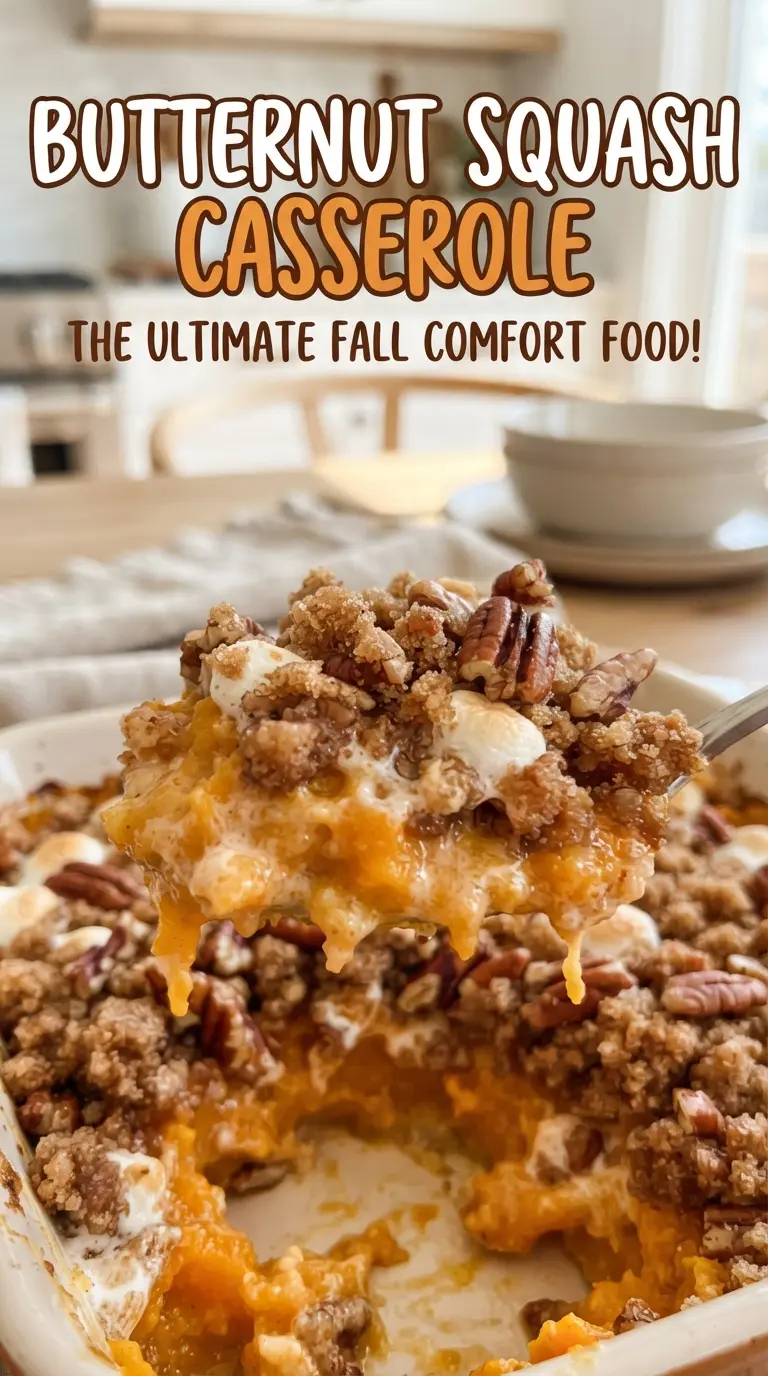
- Butternut squash — This is the body of the dish, and its natural sweetness is what lets the casserole taste rich without needing a long ingredient list. Fresh squash gives the best texture here because frozen squash usually brings extra water with it.
- Butter — Melted butter goes into both the filling and the topping, so it has a double job. In the filling, it adds richness and helps the mash taste silky; in the streusel, it binds the flour and pecans into clumps that brown instead of drying out.
- Brown sugar — This is what gives the casserole its warm, caramel note. White sugar will work in a pinch, but you’ll lose some of the depth that makes the filling taste rounded instead of one-note sweet.
- Pecans — They’re not just there for crunch. Pecans toast as the casserole bakes, which gives the top a nutty bitterness that keeps the sweet filling from feeling heavy. Walnuts can step in if that’s what you have, but the flavor will be a little sharper.
- Eggs and milk — The eggs set the casserole, and the milk loosens the mash just enough so it bakes up tender instead of dense. Whole milk gives the best finish, but 2% will still work.
Building the Filling and Streusel So Each Layer Keeps Its Job
Cooking the Squash Until It Breaks Apart Easily
Boil the cubed squash until a fork slides through with no resistance and the pieces are falling soft at the edges. If the squash is even a little firm, you’ll end up with lumpy pockets in the finished casserole. Drain it well, then let it sit in the hot pot for a minute so leftover moisture can evaporate before you mash it.
Mashing the Base to a Smooth, Thick Spoonful
Mash the squash with the butter, brown sugar, eggs, milk, vanilla, cinnamon, and salt until the mixture looks smooth and spreadable. A few tiny bits are fine, but big chunks make the casserole bake unevenly. If the mixture looks loose, keep mashing for a moment longer; it should mound softly in the bowl rather than run flat.
Mixing the Topping Until It Crumbles, Not Pastes
Combine the flour, pecans, remaining butter, and remaining brown sugar just until the mixture forms damp crumbs. If you overwork it, the topping turns into a paste and bakes up heavy instead of crisp. The right texture looks like coarse, sandy pebbles that you can pinch into little clusters.
Baking Until the Edges Bubble
Spread the filling in the dish, scatter the topping evenly, and bake until the top is golden and the edges are actively bubbling. Those bubbles tell you the custard has heated through and set underneath the streusel. If the topping darkens too quickly before the center is hot, lay a loose piece of foil over the dish for the last few minutes.
Three Ways to Work This Casserole Into Your Meal Plan
Make-ahead for a holiday table
Assemble the filling and topping separately, then refrigerate them up to a day ahead. Keep the topping dry until just before baking so it stays crumbly. If you bake it straight from the fridge, add a few extra minutes in the oven so the center heats through.
Dairy-free version
Use a plant-based butter and an unsweetened non-dairy milk with a neutral flavor, like oat or almond milk. The casserole still sets because the eggs do the structural work, but the flavor will be a little less rich than the original.
Nut-free topping
Leave out the pecans and replace them with an equal amount of extra flour plus a tablespoon or two of oats for texture. You’ll lose the toasty nut flavor, but the topping will still bake into a sandy, crisp layer.
Leftovers that reheat without drying out
Cover and refrigerate leftovers for up to 4 days. Reheat portions in a 325°F oven until warmed through so the topping stays closer to crisp; the microwave works, but it softens the pecans and turns the top steamy.
Questions I Get Asked About This Recipe
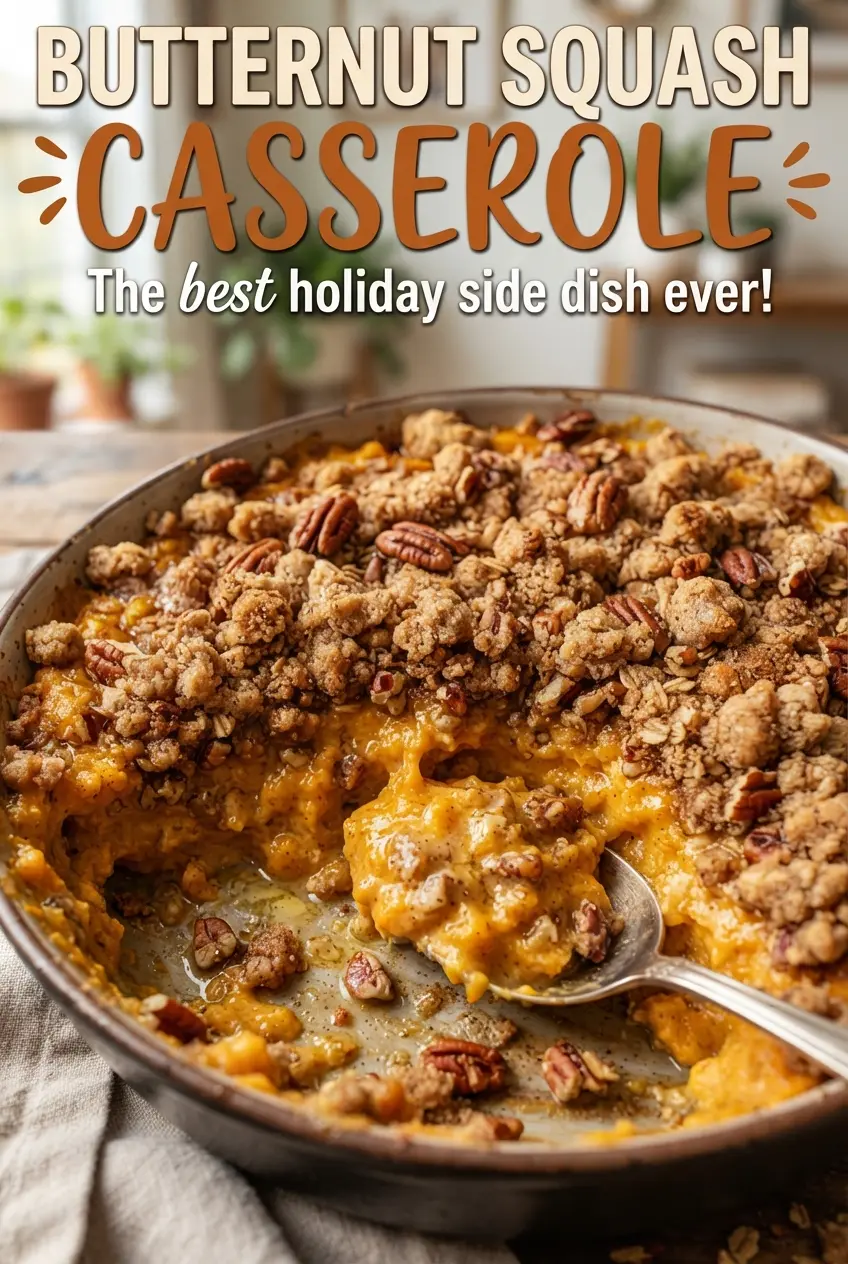
Butternut Squash Casserole
Ingredients
Equipment
Method
- Boil the butternut squash for 15 minutes until very tender, then drain well so the mash stays thick. Visual cue: the cubes should easily break when pressed with a fork.
- Mash the butternut squash with 1/4 cup melted butter, 1/4 cup brown sugar, eggs, milk, vanilla extract, ground cinnamon, and salt until smooth. Visual cue: no lumps remain and the mixture looks creamy and uniform.
- Spread the mashed butternut squash into a greased 9x13-inch baking dish. Visual cue: the top is level and evenly filled.
- Mix the all-purpose flour, chopped pecans, remaining butter, and remaining brown sugar until a crumbly topping forms. Visual cue: you should see dry crumbs clinging together rather than a paste.
- Sprinkle the pecan topping evenly over the squash. Visual cue: the surface is covered with an even layer of golden crumbs.
- Bake at 350°F for 35-40 minutes until the topping is golden and the edges bubble. Visual cue: the streusel looks toasted and the casserole gently bubbles around the perimeter.


