
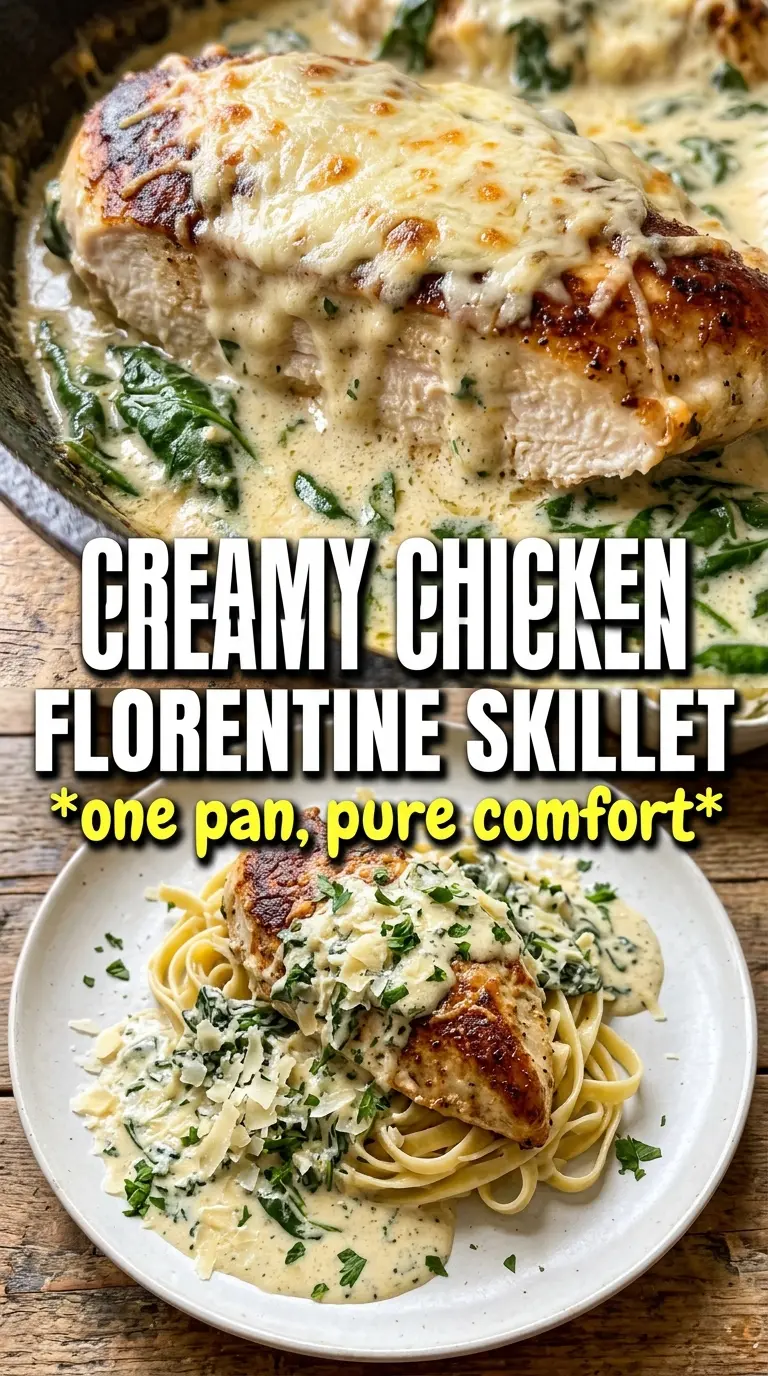
Golden seared chicken breasts set in a silky spinach cream sauce are the kind of dinner that gets scraped clean from the skillet. The sauce clings instead of pooling thinly, the chicken stays juicy, and the whole dish tastes polished without asking for much more than one pan and a little attention at the stove.
What makes this version work is the order. The chicken gets a proper sear first, which gives the sauce a little depth before the cream ever goes in. Then the garlic, wine, broth, cream, and Parmesan build the sauce in stages, so it thickens smoothly instead of turning grainy or flat. The lemon at the end matters too; it keeps the cream sauce from feeling heavy and wakes up the spinach.
Below, I’ve included the small details that matter here: how to keep the sauce from breaking, when to add the cheese, and what to do if you want to serve it with pasta, rice, or something a little lighter.
The sauce thickened up beautifully and the spinach stayed bright instead of collapsing into mush. I served it over pasta and my husband went back for seconds, which almost never happens with chicken.
Save this Chicken Florentine for a creamy one-pan dinner with seared chicken, spinach, and a lemony Parmesan sauce.
The Sauce Breaks When You Rush the Dairy
The biggest mistake in Chicken Florentine is dumping cream and Parmesan into a pan that’s too hot. That’s how you get a sauce that looks greasy, grainy, or split around the edges. The wine needs a minute to reduce first, and the cream wants a gentle simmer, not a hard boil.
The other thing worth respecting is the chicken fond left in the pan. Those browned bits are what give the sauce its restaurant-style depth, so don’t wash the skillet between searing and making the sauce. If the pan looks a little dark after the chicken comes out, that’s a good sign.
- Chicken breasts — Pound them to an even thickness if one end is much thicker than the other. Even pieces sear at the same pace and stay juicy instead of giving you one dry end and one underdone one.
- Dry white wine — This isn’t just for acidity. It loosens the browned bits from the pan and gives the sauce a sharper, more layered finish than broth alone can manage. Use something you’d actually drink, like Sauvignon Blanc or Pinot Grigio.
- Heavy cream — This is what gives the sauce its body. Half-and-half can work in a pinch, but it won’t cling the same way and it’s more likely to thin out once the spinach goes in.
- Parmesan — Grate it fresh if you can. Pre-shredded cheese often has anti-caking agents that can make the sauce a little sandy instead of smooth.
What Each Ingredient Is Actually Doing in This Recipe
- Primary ingredient (the star) — Quality matters most. Choose the best you can find.
- Cooking medium (oil, butter, or broth) — This carries flavors and prevents dryness.
- Seasonings (salt, pepper, spices, herbs) — Layer flavors so nothing overpowers. Build depth gradually.
- Aromatics (garlic, onion, herbs) — Cook with fat to bloom flavors. Become the foundation.
- Supporting ingredients — Complement the main ingredient without overpowering it.
- Sauce or liquid (if applicable) — Brings flavors together. Balance richness with acid.
- Acid (lemon, vinegar, wine, or other) — Brightens and prevents flat-tasting results.
- Final finish (garnish, glaze, or sauce) — Prevents one-dimensional taste and adds visual appeal.
Building the Chicken Florentine Sauce in the Right Order
Getting the Sear
Season the chicken generously, then sear it in hot olive oil until you get a deep golden crust and the chicken releases easily from the skillet. If it sticks, give it another minute; pulling too soon tears the surface and leaves you with pale, patchy chicken. You’re looking for cooked-through chicken at 165°F, but the crust matters just as much because it flavors the sauce later.
Using the Same Pan for the Sauce
After the chicken comes out, add the garlic to the same pan and stir it just until fragrant, about 30 seconds. Then pour in the white wine and scrape the pan clean with a wooden spoon; that’s where the depth comes from. Let the wine simmer until it loses the raw alcohol smell and the pan looks glossy instead of watery.
Finishing with Cream, Cheese, and Spinach
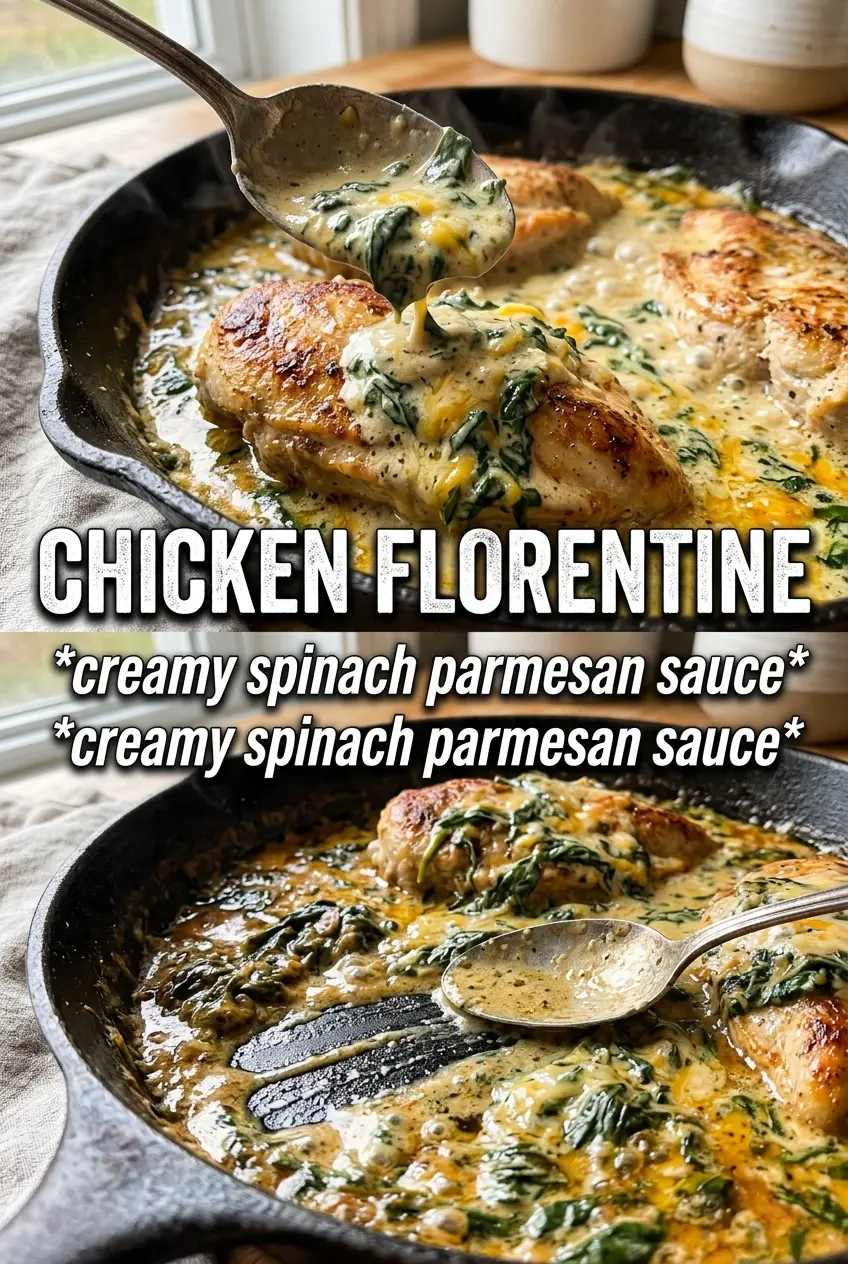
Stir in the cream and broth and let the sauce simmer until it starts to lightly coat a spoon. Add the Parmesan off the hottest part of the burner so it melts smoothly instead of clumping, then finish with lemon juice, zest, and spinach. The spinach should wilt in a minute or two, not disappear completely, and the sauce should look pale, silky, and just thick enough to spoon over the chicken.
How to Adapt Chicken Florentine Without Losing the Silkiness
Dairy-Free Version
Use full-fat canned coconut milk in place of the cream and skip the Parmesan, then finish with an extra squeeze of lemon and a pinch of salt. The sauce will be a little less sharp and more rounded, but it still turns silky enough to coat the chicken well.
Lighter Sauce with Half-and-Half
Half-and-half can replace the cream if you want a lighter dish, but keep the simmer gentle and expect a thinner sauce. If it looks too loose, let it reduce a little longer before the cheese goes in; boiling it hard is what usually makes it separate.
Gluten-Free Serving Idea
The recipe itself is naturally gluten-free as written, so the only thing to watch is what you serve under it. Rice, mashed potatoes, or gluten-free pasta all work well and hold the sauce without fighting the spinach and lemon.
Storage and Reheating
- Refrigerator: Store in an airtight container for up to 3 days. The sauce will thicken as it chills, and the spinach softens a bit, but the flavor stays good.
- Freezer: I don’t recommend freezing this one. Cream sauces can separate after thawing, and the spinach turns watery.
- Reheating: Warm it slowly in a skillet over low heat with a splash of broth or cream. High heat is the fastest way to break the sauce, and microwaving tends to overcook the chicken before the center is hot.
Questions I Get Asked About This Recipe
Chicken Florentine
Ingredients
Equipment
Method
- Season the chicken breasts generously with salt, pepper, garlic powder, and Italian seasoning on both sides.
- Heat the olive oil in a large skillet over medium-high heat and sear the chicken for 5-6 minutes per side until golden and cooked through to 165°F; remove and set aside.
- Cook the minced garlic in the same pan for 30 seconds.
- Add the dry white wine to deglaze the pan, then simmer for 2 minutes to reduce slightly.
- Stir in the heavy cream and chicken broth, then simmer for 4-5 minutes until slightly thickened.
- Stir in the grated Parmesan, fresh lemon juice, and lemon zest until the sauce is smooth and pale.
- Add the fresh baby spinach and stir until wilted.
- Return the chicken to the pan and spoon the sauce over each breast.
- Garnish with fresh parsley and lemon, then serve over pasta or rice.


