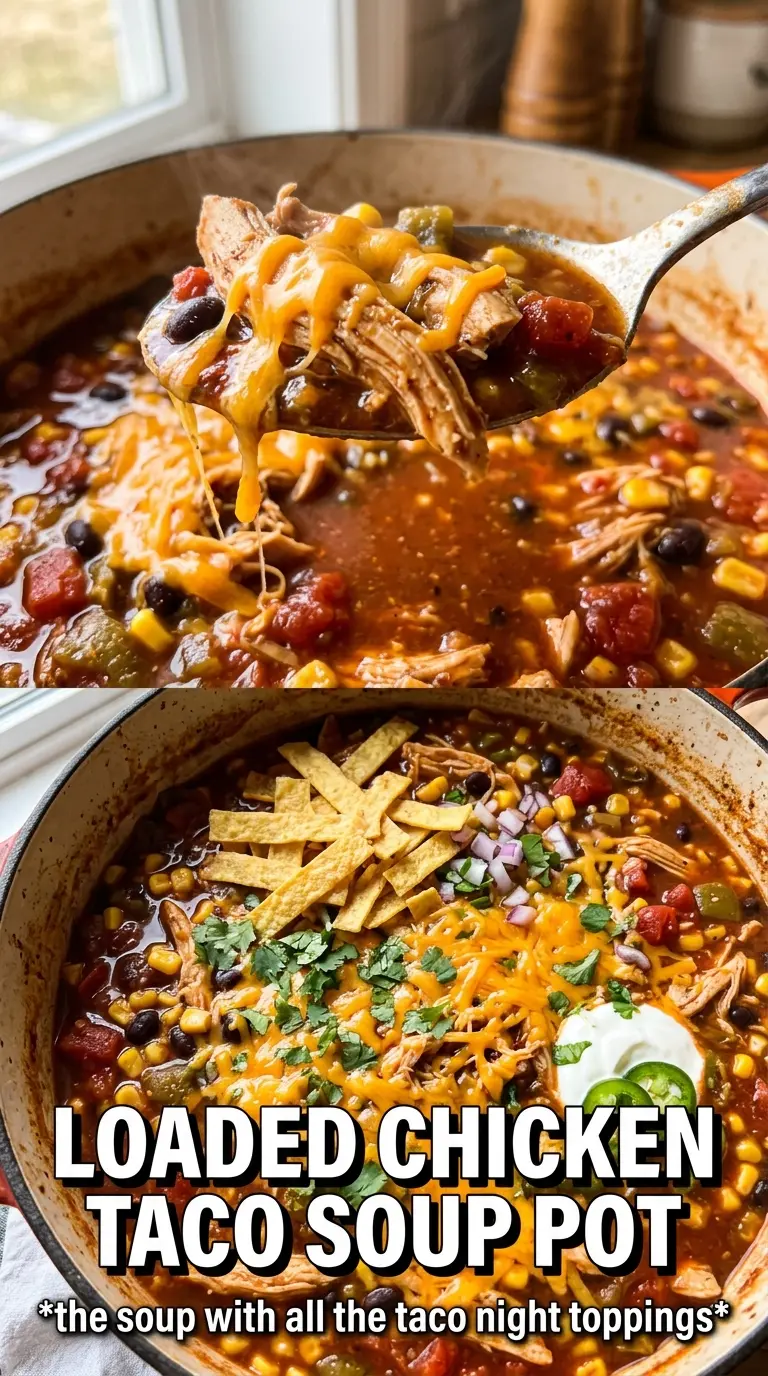
Chicken taco soup lands in that sweet spot between hearty and light, with a broth that tastes layered instead of flat and a bowlful that eats like a full meal. The chicken stays tender, the beans hold their shape, and the tomatoes and taco seasoning give the broth that familiar Tex-Mex edge without turning it heavy. Topped with sour cream, cheddar, and a handful of crunchy tortilla strips, it has the kind of contrast that keeps every spoonful interesting.
What makes this version work is that the chicken gets poached in the broth first, which seasons the base before anything else goes in. That step matters. You’re not just cooking chicken; you’re building the soup’s backbone at the same time. The ranch packet adds a little savory depth and a faint herbiness, while the cream cheese is optional but useful if you want a smoother, richer finish.
Below, I’ll walk through the part that actually matters most: how to keep the broth bold, the chicken juicy, and the toppings from getting lost. I’ve also included a few swaps that still keep the soup tasting like itself, plus the storage notes I rely on when I make a big pot for leftovers.
The broth had so much flavor after simmering the chicken first, and the cream cheese melted in smoothly without turning grainy. My husband went back for a second bowl and asked if I could make it again next week.
Pin this chicken taco soup for a cozy bowl with shredded chicken, black beans, and a creamy Tex-Mex broth.
The trick is seasoning the broth before the soup gets crowded
With a soup like this, the biggest mistake is treating the broth like an afterthought. If the chicken simmers in plain liquid and everything else gets dumped in later, the finished bowl tastes one-note, even with taco seasoning on the ingredient list. Poaching the chicken first gives the broth a head start, and that seasoned liquid becomes the base for the beans, corn, tomatoes, and ranch mix.
The other place people get tripped up is texture. Too aggressive a boil after the chicken goes back in can shred the meat into tiny dry strings and make the beans break down faster than they should. A steady simmer is enough. You want the soup moving gently, with the broth taking on a deeper color and the chicken staying in tender pieces rather than disappearing into the pot.
- Chicken breast or thighs — Breast stays lean and shreds cleanly, while thighs give you a little more forgiveness and a richer bite. Either works. If you use thighs, pull them as soon as they’re cooked through so they don’t go stringy.
- Rotel tomatoes — This is where the soup gets its little kick and a lot of its personality. Regular diced tomatoes won’t give you the same lift, so if you swap them, add a pinch of cumin and a little diced green chile or hot sauce.
- Ranch dressing mix — It sounds unusual until you taste it. The herbs and savory notes round out the taco seasoning and keep the soup from tasting thin. There isn’t a perfect substitute, but a mix of dried dill, parsley, garlic powder, and onion powder gets you close.
- Cream cheese — Optional, but it smooths the broth and gives the soup a slightly richer finish without making it heavy. Cube it first so it melts evenly. If you add it in a big cold block, it takes longer to disappear and can leave little soft lumps behind.
What Each Ingredient Is Actually Doing in This Recipe
- Primary ingredient (the star) — Quality matters most. Choose the best you can find.
- Cooking medium (oil, butter, or broth) — This carries flavors and prevents dryness.
- Seasonings (salt, pepper, spices, herbs) — Layer flavors so nothing overpowers. Build depth gradually.
- Aromatics (garlic, onion, herbs) — Cook with fat to bloom flavors. Become the foundation.
- Supporting ingredients — Complement the main ingredient without overpowering it.
- Sauce or liquid (if applicable) — Brings flavors together. Balance richness with acid.
- Acid (lemon, vinegar, wine, or other) — Brightens and prevents flat-tasting results.
- Final finish (garnish, glaze, or sauce) — Prevents one-dimensional taste and adds visual appeal.
Building the bowl without overcooking the chicken
Poaching the chicken in seasoned broth
Start the chicken in the broth with the taco seasoning and let it come up to a gentle simmer, not a hard boil. The liquid should bubble lazily around the edges, with the chicken turning opaque and pulling apart with a fork after 18 to 20 minutes. If the heat is too high, the outside tightens before the center cooks through, and the meat ends up dry by the time you shred it.
Layering in the vegetables and canned ingredients
Once the chicken is out, add the onion, garlic, ranch mix, beans, corn, Rotel, and diced tomatoes to the same pot. Don’t drain away all the poaching flavor by starting over. The broth already carries the seasoning, and this is where the soup gets its body. Keep the simmer steady for about 10 minutes so the onion softens and the tomatoes lose their raw edge.
Finishing with shredded chicken and cream cheese
Return the chicken to the pot once the vegetables have had time to blend. If you’re using cream cheese, add it in cubes and stir patiently over low heat until it disappears into the soup. The mistake here is rushing with high heat, which can leave the dairy looking grainy instead of silky. Finish with salt and pepper only after the soup has simmered together, since the taco seasoning and broth already bring plenty of salt.
Ways to adjust the soup without losing the point of it
Dairy-free and still creamy
Leave out the cream cheese and top each bowl with avocado or a spoonful of dairy-free sour cream. The soup will be a little brothier, but the flavor stays right where it should be. If you want extra body, mash a small scoop of the beans into the pot before serving.
Lower-carb version
Skip the corn and add extra diced zucchini or bell pepper for more vegetable bulk. You’ll lose a little sweetness, but the soup stays hearty and the Tex-Mex seasoning still carries it. Keep the beans if you want the most satisfying texture.
Make it with rotisserie chicken
Use about 3 cups shredded rotisserie chicken and simmer it only long enough to heat through. This saves time, but the broth won’t get quite as much chicken flavor as it does when you poach the meat in the pot first. To compensate, let the soup simmer a few extra minutes before adding the chicken.
Storage and Reheating
- Refrigerator: Store in an airtight container for up to 4 days. The broth thickens a little as it sits, and the flavors get even deeper.
- Freezer: Freezes well for up to 3 months, but the cream cheese can change the texture slightly. For the smoothest result, freeze the soup without the cream cheese and stir it in after reheating.
- Reheating: Reheat gently on the stove over medium-low heat, stirring now and then. A hard boil can make the chicken stringy and push the dairy into a grainy texture.
Answers to the questions worth asking before you make it

Chicken Taco Soup
Ingredients
Equipment
Method
- Simmer the chicken breasts in the chicken broth with the taco seasoning for 18–20 minutes, until cooked through, keeping the surface lightly bubbling. Set aside the chicken after it reaches doneness and reserve the broth.
- Shred the cooked chicken and set it aside so it’s ready to return to the soup. Keep the reserved broth in the pot for the next step.
- Return the seasoned broth to the pot, then add the diced onion, minced garlic, ranch dressing mix, and all canned ingredients (black beans, corn, Rotel tomatoes, and diced tomatoes).
- Bring the mixture to a boil, then reduce to a simmer and cook for 10 minutes, stirring occasionally as it thickens slightly. The vegetables and beans should be heated through and the flavors combined.
- Return the shredded chicken to the pot and stir to distribute it evenly through the broth. Cook until the soup is hot throughout.
- Stir in the cream cheese if using and cook until melted, creating a lightly creamy texture. Watch for the broth to turn smoother and cohesive.
- Season with salt and pepper to taste and adjust any seasoning as needed. Serve hot with shredded cheddar, sour cream, tortilla chips, lime wedges, and cilantro on top.